

Buyer’s Guide
Service Charges Explained for French Apartments: A Complete Buyer’s Guide
Everything you need to know about charges de copropriété — how they work, what they cover, what they cost, and how to avoid unpleasant surprises.
25 Jun 2024
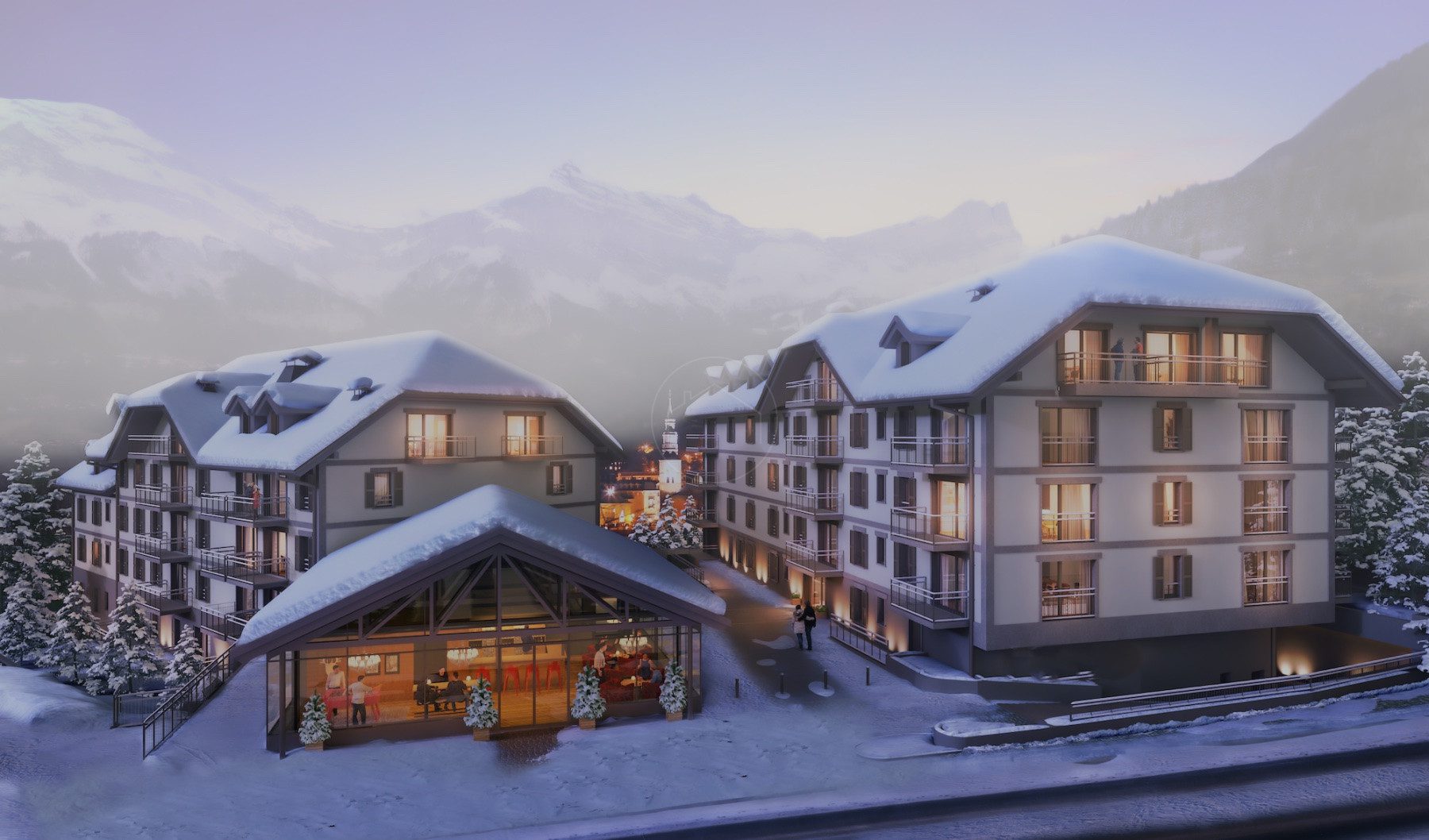
If you are buying an apartment in France — whether a ski property in the Alps, a city flat in Paris, or a coastal apartment on the Riviera — you will encounter charges de copropriété. These are the service charges that every apartment owner pays towards the maintenance, insurance, and management of the shared building and its communal areas. Understanding how they work, what they cover, and what they typically cost is essential for any buyer, because service charges can add hundreds of euros per month to your ownership costs and significantly affect both your net rental yield and your resale value.
The French copropriété system is well-regulated and transparent, but it differs from the British leasehold/freehold model in important ways. In France, every apartment building with shared areas is governed by a syndic (management company or individual) elected by the co-owners’ assembly, and every owner automatically becomes a member of the copropriété. The charges you pay are determined by your share of ownership (measured in tantièmes or millièmes), the building’s specific costs, and the decisions taken at the annual general meeting. These are not optional extras — they are legally binding obligations that transfer to new owners on purchase.
This guide explains the system in practical terms for British and international buyers approaching the French property market. We cover what service charges include, how they are calculated and allocated, what typical costs look like for ski property investment apartments, and the red flags to watch for when reviewing a building’s charges before purchase. Our buying process guide covers the broader purchase mechanics, and our Domosno team can help you interpret service charge documentation for any property we market.
The Basics
What Are Charges de Copropriété and Why Do They Matter?
Charges de copropriété are the shared expenses that apartment owners collectively pay for the maintenance, management, and operation of their building’s common areas and shared services. In France, any building with two or more independently owned units is legally a copropriété, governed by the Law of 10 July 1965 and its subsequent amendments. Each owner holds a private lot (their apartment) plus a proportional share of the common areas (halls, stairs, lifts, gardens, façades, roof, and any shared amenities like swimming pools or ski lockers).
The charges matter for three reasons. First, they are a significant recurring cost that directly affects your monthly outgoings and net rental yield — an apartment with €300/month in service charges has very different economics from one with €100/month. Second, the level and trajectory of charges tells you a great deal about the building’s condition, management quality, and upcoming maintenance requirements. Third, service charges are a factor in resale value: buildings with unreasonably high or poorly managed charges are harder to sell and typically trade at a discount to comparable properties with efficient management.
For ski property buyers specifically, charges tend to be higher than for standard residential apartments because mountain buildings typically include amenities like heated ski lockers, swimming pools, saunas, underground parking, and concierge services. A new-build residence with full spa facilities in a resort like Les Gets or Morzine will have materially higher charges than a simple village apartment — but those amenities also command higher rental rates, so the net effect depends on how efficiently the building is managed.
€40–€80/m²
Typical annual service charge range for a managed ski residence with spa, lockers and reception services in the French Alps.
5%
Minimum mandatory annual contribution to the fonds de travaux reserve fund, as required by the ALUR law of 2014 for all French copropriétés.
€50.95/m²
French national average for service charges per square metre per year — but ski properties typically run 50–100% above this figure.
15–25%
Service charges as a typical percentage of gross rental income for well-managed Alpine ski apartments — a key metric for rental investors.
What’s Included
Breaking Down the Charges: Insurance, Management, Maintenance and More
French service charges typically cover several distinct categories of expenditure. Building insurance (assurance de l’immeuble) is the premium for the master building policy covering the structure and common areas against fire, water damage, natural disasters, and third-party liability. This is mandatory for every copropriété and represents one of the larger fixed costs — typically €500–€1,500 per year for the entire building, allocated proportionally among owners.
Management fees (honoraires du syndic) cover the cost of the professional property management company (syndic professionnel) that administers the building. The syndic handles day-to-day maintenance, accounting, correspondence, annual general meetings, insurance claims, and contractor coordination. Fees vary by building size and complexity but typically run €150–€300 per lot per year for a professionally managed Alpine building. Some smaller buildings opt for a syndic bénévole (volunteer owner acting as manager), which reduces costs but increases the administrative burden on individual owners.
Ongoing maintenance covers the regular costs of keeping the building operational: heating of common areas, electricity for halls and lifts, cleaning, gardening, lift servicing, snow clearance (critical for Alpine properties), and minor repairs. For ski residences, add heated ski lockers, swimming pool and spa maintenance, and potentially reception/concierge staffing. These operational costs are typically the largest component of service charges and are where the most significant variations between buildings occur.
A crucial component is the fonds de travaux — a mandatory reserve fund for future major repairs and renovations. Since the ALUR law of 2014, all copropriétés must maintain this fund, with a minimum annual contribution of 5 per cent of the building’s total provisional budget. The fund prevents situations where owners face sudden large lump-sum demands for roof replacements, façade renovations, or lift installations. For buyers, the size of the existing fonds de travaux relative to upcoming works is a key due diligence item.
Typical Annual Service Charges by Building Type (€/m²)
Premium ski residence (spa, pool)
Modern managed residence
Standard Alpine apartment
Simple village co-ownership
French national average
Paris average
How Charges Are Set
Tantièmes, Millièmes and How Your Share Is Calculated
Every apartment in a French copropriété is assigned a specific number of tantièmes (or millièmes in larger buildings, where the total adds up to 1,000 or 10,000 respectively). These represent the owner’s proportional share of the common areas and determine both their voting weight at general meetings and their share of service charges. The allocation is typically based on the apartment’s relative value, which considers factors including floor area, floor level, orientation, view, and access to specific amenities.
The allocation of tantièmes is set out in the règlement de copropriété (building regulations) and the état descriptif de division (descriptive statement of division), both of which are notarial documents registered at the land registry. These documents are prepared when the building is first divided into separate lots and can only be modified by a vote of the co-owners’ assembly. In practice, tantième allocations rarely change unless the building undergoes a significant restructuring such as the addition of new lots.
For buyers, this means your share of charges is predictable and documented before you commit to purchase. A two-bedroom apartment of 65 square metres on the second floor might hold 45 tantièmes out of 1,000, meaning the owner pays 4.5 per cent of the total building charges. If the building’s annual budget is €80,000, that apartment’s annual charges would be €3,600 (€300/month). This proportional system ensures that larger or better-positioned apartments contribute more — but it also means buyers of larger units should model their charges carefully before committing.
“The most expensive apartment to own is not the one with the highest purchase price — it is the one with poorly managed service charges and a fonds de travaux that has been neglected.”
Typical Costs
What Service Charges Actually Cost for Ski Apartments
National averages can be misleading because ski property charges tend to be significantly higher than those for standard residential apartments. The French national average is approximately €50/m² per year, but for a managed ski residence with spa, heated lockers, and reception services, expect €40–€80/m² per year. A 65-square-metre two-bedroom apartment in a well-managed Alpine residence might pay €2,600–€5,200 per year in charges (€215–€435/month). A premium residence with full spa, pool, and concierge could push towards €80–€100/m², reaching €5,200–€6,500 annually for the same sized unit.
Older buildings without lifts, spas, or reception services are generally cheaper — perhaps €25–€40/m² per year for a simple co-ownership structure with minimal amenities. However, older buildings may face higher one-off special assessments (appels de fonds exceptionnels) for major works like roof replacement, façade renovation, or lift installation. A well-maintained new-build with higher annual charges but lower risk of special assessments may actually cost less over a ten-year period than a cheap-charges older building facing €30,000 in upcoming works.
For rental investors, the key metric is charges as a percentage of gross rental income. In a well-managed Alpine property, service charges typically represent 15–25 per cent of gross annual rental income — a manageable proportion that still leaves meaningful net yield. If charges exceed 30 per cent of gross rental, investigate why: it may indicate inefficient management, expensive shared amenities with low utilisation, or a building approaching major maintenance milestones. Our French mortgage calculator can model charges alongside mortgage costs and rental income.
| Charge Component | Typical Annual Cost | Frequency | Notes |
|---|---|---|---|
| Building insurance | €500–€1,500 (building total) | Annual | Allocated proportionally by tantièmes |
| Syndic management fees | €150–€300 per lot | Annual | Higher for professional syndics; lower for bénévole |
| Heating & utilities (common) | €800–€2,500 per lot | Quarterly | Major variable; depends on building efficiency |
| Lift maintenance | €200–€500 per lot | Annual | Mandatory safety inspections; higher in older buildings |
| Fonds de travaux | Min 5% of budget | Annual | Mandatory reserve fund; builds over time |
| Spa/pool maintenance | €500–€1,500 per lot | Annual | Only for residences with these facilities |
Due Diligence
What to Check Before You Buy: Red Flags and Essential Documents
French law requires sellers to provide extensive documentation about the copropriété as part of the pre-sale disclosure process. The key documents you should review include the last three years of procès-verbaux (minutes of the annual general meetings), the current provisional budget and actual accounts, the règlement de copropriété, and the carnet d’entretien (maintenance logbook). These documents reveal the building’s financial health, upcoming works, management quality, and any disputes between owners.
Red flags to watch for include: a very low or non-existent fonds de travaux (suggesting insufficient reserves for future works); repeated special assessments in the AGM minutes (indicating ongoing expensive maintenance); unpaid charges by other owners (which can lead to cash flow problems for the copropriété); planned major works that have been voted but not yet executed (which may trigger significant charges in the near future); and a history of changing syndics (suggesting management disputes or dissatisfaction).
The pré-état daté and état daté documents, prepared by the syndic at the point of sale, summarise the building’s financial position and the selling owner’s specific obligations. These confirm any outstanding charges owed by the seller, any special assessments that have been voted, and the balance of the fonds de travaux. Your notaire will review these documents as part of the conveyancing process, but as a buyer you should request and review them independently — ideally with the help of someone who reads French financial documents fluently. Our Domosno team provides this guidance as part of our buyer support service.
Before Purchase
Review Copropriété Documents
Request and review the last three years of AGM minutes, current budget, actual accounts, règlement de copropriété, and the état daté from the syndic.
At Purchase
Notaire Verification
Your notaire reviews the pré-état daté to confirm the seller has no outstanding charges and to identify any voted but unexecuted special assessments.
Year 1
First Annual General Meeting
Attend your first AG to understand the building’s governance culture, meet fellow owners, and participate in budget and management decisions.
Years 1–3
Establish Baseline
Track your actual charges against the provisional budget. Identify any discrepancies and raise them at the next AG. Build familiarity with recurring cost patterns.
Years 3–5
Optimisation Phase
Propose efficiency improvements: renegotiate insurance and cleaning contracts, consider energy renovation, ensure fonds de travaux is building adequately.
Ongoing
Active Governance
Maintain engagement with the AG process. Well-governed copropriétés consistently deliver lower charges and higher property values over the long term.
Annual General Meeting
The Assemblée Générale: How Charges Are Decided and What Owners Can Influence
The annual general meeting (assemblée générale, or AG) is where the co-owners collectively make decisions about the building’s management, approve the annual budget, vote on major works, elect or renew the syndic, and set the provisional charges for the coming year. Every owner has the right to attend (or to appoint a proxy), and voting weight is determined by tantièmes. Understanding how the AG works is important because it is the mechanism through which you can influence your building’s charges and management quality.
Decisions at the AG are taken by different majority thresholds depending on the nature of the vote. Simple majority (of tantièmes represented at the meeting) applies to routine matters like approving the budget and electing the syndic. Absolute majority (of all tantièmes in the building) is required for larger decisions like authorising major works or changing the building regulations. Unanimity is required for the most fundamental changes, such as altering the allocation of tantièmes or changing the building’s designation. These thresholds protect minority owners from being overridden on significant matters.
For non-resident owners — particularly British buyers who may not attend every AG — appointing a trusted proxy is essential. The syndic can vote on your behalf if you grant them a power of attorney, but this creates an obvious conflict of interest on votes relating to syndic fees or contract renewal. A better approach is to appoint a fellow owner or a professional representative who can advocate for your interests. Reading the AG minutes from previous years before purchase gives you a clear picture of the building’s governance culture and any ongoing disputes or concerns.
Optimisation
How to Keep Charges Under Control: Practical Tips for Owners
Once you own, there are practical steps to help manage and optimise your service charges. Attend the AG (or send an informed proxy) and actively participate in budget discussions. Challenge the syndic’s proposed budget if items seem inflated — professional syndic fees, insurance premiums, and maintenance contracts should be regularly market-tested and renegotiated. In many buildings, simply requesting competitive quotes for the cleaning contract or insurance policy can reduce charges by 10–20 per cent.
Consider proposing energy efficiency improvements that reduce long-term operational costs. Replacing old communal boilers, installing LED lighting in common areas, improving insulation, and optimising heating schedules can deliver meaningful savings over time. The French government offers various grants and tax incentives (MaPrimeRénov’, CEE certificates) for energy renovation works in copropriétés, which can offset the upfront investment cost. For Alpine buildings, efficient snow clearance contracts and well-insulated common areas are particularly impactful.
Finally, maintain a watching brief on the fonds de travaux and upcoming major works. If you know the roof will need replacing in five years, ensure the reserve fund is being built up adequately rather than leaving it to a sudden special assessment. Well-governed copropriétés plan ahead; poorly governed ones lurch from crisis to crisis. As a buyer, choosing a building with good governance is as important as choosing the right apartment — and the AG minutes tell you everything you need to know. Our ski property investment articles cover additional ownership topics for Alpine property investors.
Common Questions
Frequently Asked Questions
What do French service charges typically cover?
Charges de copropriété cover building insurance, syndic management fees, maintenance of common areas, heating and electricity for shared spaces, lift servicing, cleaning, and contributions to the mandatory fonds de travaux reserve fund. For ski residences, they may also include spa, pool, ski locker heating, and concierge services.
How much should I expect to pay for a ski apartment?
For a managed ski residence with amenities (spa, heated lockers, reception), expect €40–€80 per square metre per year. A 65m² two-bedroom apartment would pay approximately €2,600–€5,200 annually (€215–€435/month). Premium residences with extensive facilities may reach €80–€100/m². Simple buildings without amenities are cheaper at €25–€40/m².
Can I reduce my service charges?
You can influence charges through active participation at the annual general meeting. Requesting competitive quotes for insurance, cleaning, and maintenance contracts can reduce costs by 10–20 per cent. Proposing energy efficiency improvements (LED lighting, insulation, heating optimisation) delivers long-term savings. Challenge inflated syndic fees by comparing market rates.
What is the fonds de travaux?
The fonds de travaux is a mandatory reserve fund for future major repairs and renovations, required by the ALUR law of 2014. All copropriétés must contribute at least 5 per cent of the annual budget to this fund. It prevents sudden large lump-sum demands on owners when major works like roof replacement or lift installation become necessary.
What happens if another owner does not pay their charges?
Unpaid charges by one owner can create cash flow problems for the entire copropriété. The syndic is responsible for pursuing unpaid charges through legal channels, and French law provides strong enforcement mechanisms including liens on the property. Before purchasing, check the état daté for any outstanding debts owed by other owners in the building.
Do service charges affect my rental yield?
Yes, significantly. Service charges typically represent 15–25 per cent of gross annual rental income for a well-managed Alpine property. If charges exceed 30 per cent of gross rental, investigate the reasons — this may indicate inefficient management or expensive underutilised amenities. Always model charges alongside mortgage costs and rental income before purchasing.
What documents should I review before buying?
Essential documents include: the last three years of AGM minutes (procès-verbaux), current provisional budget and actual accounts, the règlement de copropriété, the carnet d’entretien (maintenance logbook), and the pré-état daté/état daté prepared by the syndic at sale. These reveal the building’s financial health and upcoming obligations.
Are charges different for new-build versus older buildings?
New-build residences often have higher annual charges due to premium amenities (spa, concierge, modern lifts) but lower risk of special assessments for major works. Older buildings may have lower routine charges but face significant one-off costs for roof, façade, or infrastructure renovation. Over a ten-year period, total costs may be comparable or even favour new-build.
Featured Properties
Popular Ski Resorts
Morzine
Megève
Chamonix
Les Gets
Alpe d’Huez
Les Deux Alpes
Les Arcs
La Plagne
Courchevel
Méribel
Saint-Martin-de-Belleville
Val Thorens
Val d’Isère
Tignes
Thollon-les-Mémises
Quick Links
All New-Build Ski Properties
All Ski Apartments
All Ski Chalets
New-Build Ski Apartments
New-Build Ski Chalets
Resale Ski Apartments
Resale Ski Chalets