Avoriaz 2026
Avoriaz at 60: Inside the Portes du Soleil Resort’s 2026 New-Build Boom
Six decades after Jacques Labro’s radical cliff-top vision opened for skiers, the French Alps’ most architectural ski village is pushing through a wave of RE2020-compliant new-builds. Here is what ski property buyers need to know about Avoriaz in spring 2026.
16 Apr 2026
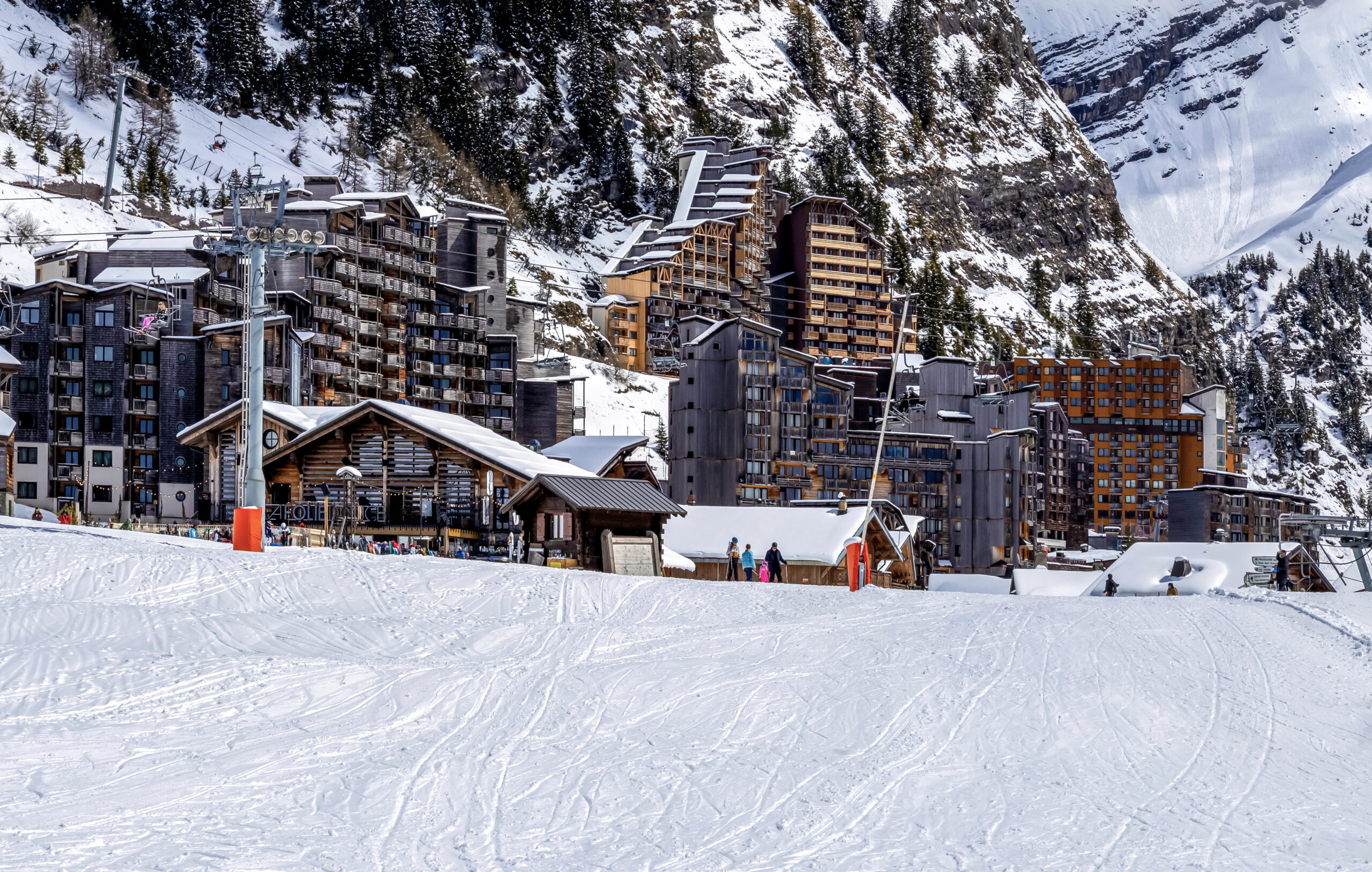
Avoriaz turned sixty this winter. On 13 January 1966, the cliff-top resort above Morzine cut its ribbon with a handful of wood-and-concrete buildings by a 27-year-old architect called Jacques Labro, a single chairlift and a conviction that mountain tourism could be designed rather than accidentally built. Six decades later, Avoriaz is still France’s most architecturally coherent ski resort — and, quietly, one of its most active new-build markets. The 60th-anniversary season has coincided with a cluster of VEFA launches, the arrival of RE2020 environmental rules for mountain construction and a fresh conversation among British ski property buyers about whether the Portes du Soleil’s flagship resort is the smartest mid-market entry in the French Alps today.
This is Domosno’s full spring 2026 view of Avoriaz new-builds: what is under construction, what has just launched, how the resort’s unique architectural covenant shapes what developers can and cannot do, what RE2020 means for buyers of off-plan apartments, and why — even at 1,800m with snow-sure slopes, 600km of connected Franco-Swiss terrain and a completely car-free village — prices here remain roughly 40% below equivalent units in Courchevel 1850 or Val d’Isère. The short version: Avoriaz in 2026 is in the middle of its biggest construction wave since the original Jean Vuarnet plan of the early 1970s, and the new-build window is unusually wide for a resort of this quality.
Origins & Heritage
From Jean Vuarnet’s Cliff to Labro’s Masterplan
The story of Avoriaz is inseparable from two people. Jean Vuarnet, the 1960 Olympic downhill gold medallist and Morzine local, had the geographic vision — he grasped that the high plateau above Les Prodains, at 1,800m, offered reliable snow where the valley floor could not. Jacques Labro, together with Jean-Jacques Orzoni and Jean-Marc Roques, had the architectural vision. Their proposal — wooden cedar-shingle cladding, silhouettes echoing the surrounding cliffs, no cars, no tarmac, ground-floor ski storage — was so radical that it required a full derogation from French planning norms. The first buildings opened to the public in January 1966, and the masterplan has guided every subsequent phase.
What makes Avoriaz unusual among French ski resorts is that the design code has held. New buildings in 2026 must still respect the cedar-shingle exterior palette, step-back roof lines, integrated ski access and pedestrian-only public realm. That constraint is the resort’s competitive moat: it cannot become another faceless concrete plateau, because the founding architects — and now their successors at Atelier d’Architecture en Montagne (AAM) — are still signing off on facades. For buyers, this matters more than it sounds. Architectural coherence protects long-run resale values in a way that the patchwork of 1970s, 1990s and 2010s buildings in many Tarentaise resorts cannot.
The 60th anniversary is being marked not with a nostalgia tour but with a new development pulse. According to the resort tourism office and France Montagnes, Avoriaz currently has more than 820 new-build beds in active construction or pre-launch for the 2026-2028 delivery window — the highest pipeline figure since the 1990s Quartier des Dromonts extension. For the first time in decades, the resort is growing meaningfully in supply, and most of the new stock is aimed squarely at the international lifestyle-plus-rental buyer Domosno serves.
1,800m
Altitude of the Avoriaz village plateau, making it one of the highest purpose-built resorts in the French Alps
820+
New-build beds in active construction or pre-launch pipeline across the 2026-2028 delivery window
+5.4%
Year-on-year new-build price growth in Avoriaz through the 2025/26 season (Notaires de France, MeilleursAgents)
600km
Of connected Franco-Swiss piste accessible on a single lift pass via the Portes du Soleil circuit
The 2026 Pipeline
What Is Actually Being Built in Avoriaz Right Now
A walk through Avoriaz this spring makes the scale of activity obvious. The Quartier de la Falaise extension at the northern edge of the village is the largest single project, with three interlocking blocks delivering 112 apartments from studio to four-bed configurations across three winters. The Amara programme, developed by Pierre & Vacances-MGM and positioned in the upper price tier, adds 74 higher-spec apartments with full hotel services, spa and a ski concierge. Two smaller developments, Horizon Neige near the Plateau lift and a boutique six-apartment chalet-style block on Rue des Traineaux, round out the visible pipeline.
All four programmes share three things. First, they are sold on VEFA — vente en l’état futur d’achèvement — France’s tightly regulated off-plan system. Buyers pay in phased milestones tied to construction progress, benefit from the ten-year builder warranty (garantie décennale) and the two-year dommages-ouvrage cover, and pay roughly 2-3% in notary fees against 7-8% on a resale. The VEFA framework, codified in the French buying process we walk every client through, is one of the single biggest reasons Domosno’s British and Irish clients choose new-build over resale in Avoriaz.
Second, every unit delivered from May 2026 onwards must meet RE2020 — France’s replacement for the earlier RT2012 thermal rules. RE2020 is an environmental regulation, not just a thermal one: it assesses lifetime carbon emissions (including the embodied carbon of materials), summer heat-wave resilience and primary energy use. For a cedar-clad building at 1,800m this is less onerous than it sounds — wood cladding already has favourable lifecycle carbon — but it is forcing developers to upgrade insulation, glazing (typically triple-pane) and heat-pump systems. The net effect is higher sticker prices but materially lower winter running costs for end owners.
Third, and critically for the British buyer profile: nearly all 2026 launches include full-service rental management options — typically operated by Pierre & Vacances-MGM, CGH Résidences, Bellevue Chalets or similar. That matters because opting into a professional rental mandate is what unlocks the 20% VAT recovery on a new-build VEFA purchase. For a €750,000 apartment, that is €150,000 back to the buyer over the construction period — real money, and a structural feature that makes Avoriaz new-builds among the most tax-efficient ski purchases in Europe.
Avoriaz vs Peer Resorts: Entry-Level New-Build Price (€/m²)
Les Carroz
Morzine
Avoriaz
Méribel
Val d’Isère
Why Avoriaz Works
The Mountain Case for a 60-Year-Old Resort
Architectural pedigree is pleasant but does not sell ski property. The mountain case for Avoriaz does. The resort sits at 1,800m on a south-facing plateau, with ski-in, ski-out access from nearly every building thanks to the original 1965 masterplan that placed all lifts at village boundaries. Annual snow depth averages more than eight metres of cumulative snowfall — the highest of any French resort at comparable altitude and one of the deepest in the entire Alps — and 2,700m of vertical lift-served skiing is immediately accessible.
Avoriaz is the linchpin of the Portes du Soleil, a 600km twelve-resort circuit that crosses the Franco-Swiss border, connecting Morzine, Les Gets, Châtel, Champéry, Champoussin and Morgins on skis. For a British family that wants one house that works for school holidays, half-terms and a week in Verbier-style terrain without Verbier prices, the Portes du Soleil offers unusual value. Domosno Portes du Soleil properties for sale consistently outperform on rental-yield-to-purchase-price metrics against equivalent Three Valleys or Espace Killy units.
Summer matters too. Avoriaz has transitioned aggressively into a four-season resort: the Chapelle d’Abondance-Châtel-Morzine-Les Gets MTB network, the Pass’Portes du Soleil enduro event each July and the Rock the Pistes festival pull occupancy from late June to early September. For buyers building a rental-income case, a property that rents twenty weeks rather than sixteen changes the maths substantially.
“Avoriaz is the only French ski resort where a founding architect’s masterplan still governs what can be built — sixty years in, that discipline is what protects your investment.”
Prices & Market
Avoriaz Prices in Spring 2026 — The Real Numbers
Headline prices in Avoriaz have risen roughly 5.4% year-on-year through the 2025/26 season, according to aggregated Notaires de France and MeilleursAgents regional data. The entry point on a new-build one-bed apartment now sits around €395,000, with typical two-bed family units delivering in 2027 coming to market in the €520,000-€780,000 range depending on ski-in-ski-out adjacency and altitude within the resort. Prime four-bed duplexes and the handful of boutique chalet-style units clear €1.8M and occasionally reach €3M for Quartier des Dromonts positions.
Compared to the two Three Valleys prime resorts — Courchevel 1850 and Val d’Isère — Avoriaz runs at roughly 35-45% of the per-square-metre pricing, while delivering comparable altitude, superior architectural coherence and, debatably, a livelier village atmosphere outside peak weeks. Against Morzine town-centre resale, Avoriaz new-builds trade at roughly a 25-30% premium per square metre, which is entirely explained by altitude, ski-in-ski-out access and the reduced-fee VEFA structure. The tradeoff is scale: Avoriaz is a purpose-built resort, not a living village, so buyers looking for a year-round local population and a Savoyard farmhouse feel tend toward Morzine, Les Gets or Samoëns instead.
Rental performance is where Avoriaz’s 1,800m altitude really tells. A well-specified two-bed apartment with ski locker and garage space in a 2026-delivered VEFA programme can reasonably target €42,000-€58,000 gross rental income per year under a managed mandate — a net yield of roughly 3.4-4.2% after charges and management fees. That is not a get-rich number, but it is a genuinely self-financing second-home proposition for most of our UK buyer profile, particularly once the 20% VAT rebate is factored against a French mortgage, which for non-residents is currently running around 3.55% fixed on 20-year terms through our French mortgage referral partners.
| Project | Delivery | Apartment Range | Starting Price |
|---|---|---|---|
| Quartier de la Falaise (Block A) | Winter 2026/27 | 1-bed to 3-bed | From €412,000 |
| Amara by MGM | Autumn 2026 | 2-bed to 4-bed + services | From €695,000 |
| Horizon Neige | Summer 2027 | Studio to 3-bed | From €298,000 |
| Rue des Traineaux boutique chalet | Winter 2027/28 | Duplex 3-bed only (6 units) | From €1.24M |
| Quartier de la Falaise (Block B & C) | Winter 2027/28 | 1-bed to 4-bed duplex | From €445,000 |
Legal & Tax
What British and International Buyers Need to Know
Buying in Avoriaz is, mechanically, the same as buying anywhere else in France — the process runs through a French notaire, not an estate agent, and takes roughly 10-14 weeks from compromis to acte authentique on a VEFA off-plan purchase. Domosno coordinates bilingual notaires as part of every transaction; buyers pay no fees to us and no stand-alone notaire shopping is required. For the full walk-through of contracts, deposit schedules and completion calls, see our the new-build buying process guide.
The post-Brexit picture for British buyers is, in the spring of 2026, more settled than it has been at any point since 2020. British buyers can own French property without restriction, can obtain non-resident mortgages at up to roughly 85% LTV depending on profile, and continue to benefit from the UK-France double-taxation treaty on rental income. The only meaningful change post-Brexit is the 90-in-180-day Schengen rule on physical presence, which bites for buyers wanting to use their Alpine home for more than three months at a stretch — we discuss mitigation routes (long-stay visitor visas, residency, the talent passport) with clients on a case-by-case basis in legal and taxes reviews.
On the ownership structure, we normally guide clients away from French SCI (Société Civile Immobilière) structures unless there is a clear inheritance-planning reason to use one. For most British buyers, straightforward joint ownership with a proper tontine or indivision clause and an up-to-date UK will covering French assets is simpler, cheaper and more tax-efficient. Every case is bespoke, but the default recommendation for a husband-and-wife couple buying a single-family Avoriaz apartment is direct personal ownership, not an SCI.
1960
Jean Vuarnet Wins Olympic Gold
The Morzine downhill champion becomes convinced the Avoriaz plateau at 1,800m is the future of French snow-sure skiing.
1966
Avoriaz Opens to the Public
Jacques Labro’s cedar-clad masterplan opens on 13 January with the first chairlift and a handful of wooden apartment blocks. France’s architecturally designed ski resort is born.
1975
Quartier des Dromonts Phase II
The first major expansion triples the resort’s bed-base and establishes Avoriaz as a credible international destination within the emerging Portes du Soleil circuit.
2012
RT2012 Thermal Regulation Arrives
France introduces tight thermal performance standards. Avoriaz developers retrofit specifications. Energy efficiency becomes a pricing factor for new-builds.
2020
MGM and CGH Lead the New Wave
The two dominant new-build operators begin a generational rebuild cycle. The Falaise and Amara masterplans are submitted for planning approval.
2026
Avoriaz at 60 — RE2020 and the New Pipeline
The 60th-anniversary season coincides with the RE2020 regulation taking effect for new mountain construction and the largest new-build wave since the 1990s.
Who Should Buy
The Avoriaz Buyer Profile in 2026
Avoriaz is not right for everyone. The resort is car-free by design, which means arriving requires leaving the car at Les Prodains (15 minutes below) and taking the cable car or resort shuttle up. Logistics with small children and heavy luggage need planning. The village is purpose-built and compact — beautiful if you like modernist mountain architecture, challenging if you want the Savoyard hamlet experience. Our clients who buy in Avoriaz almost universally cite three things: the architectural character, the ski-in-ski-out convenience, and the rental economics at 1,800m altitude.
Where Domosno sees the strongest Avoriaz fit is with the second-time Alpine buyer. Clients who have already owned in Morzine, Les Gets, Samoëns or Chamonix often move up to Avoriaz for the altitude premium and the ski-in-ski-out lifestyle. First-time buyers who prioritise rental yield and minimal fuss — no summer garden to maintain, no wooden shutters to repaint, no access road to worry about in January — also fit the profile well. For the complete resort alternatives, our Morzine properties for sale, Les Gets properties for sale and Châtel properties for sale pages cover the wider Portes du Soleil comparison set.
Looking Ahead
Avoriaz in 2030 — What Happens Next
The Avoriaz pipeline is visible through 2028: completions of the Amara programme late 2026, Quartier de la Falaise rolling through 2027-2028, and a smaller luxury project under the Montagnettes brand flagged for 2028. Beyond that, the resort’s self-imposed architectural cap and the Haute-Savoie planning constraints mean new-build supply will once again tighten materially. This is the structural scarcity argument for buying now rather than in 2030: the current wave of 800-plus beds is unusual, probably not repeatable and almost certainly the last major expansion before the masterplan reaches its envelope limits.
The 2030 Winter Olympics — which the French Alps will host, with events distributed across the Tarentaise and the Maurienne — does not directly touch Avoriaz (the resort is not an Olympic venue). But the pan-Alpine marketing lift, the infrastructure investment (including the Paris-Alps rail upgrades and the Lyon-Geneva airport expansion), and the general capital inflow into French ski property should lift all French ski markets, including the Portes du Soleil. Avoriaz buyers today are positioning for that tailwind at pre-Olympic pricing.
The final variable is currency. Sterling-euro parity has been unusually stable through 2025 and early 2026, trading in a €1.16-€1.20 band. For British buyers, that is a materially better entry than the €1.08-€1.12 ranges of the Brexit years. Combined with the RE2020 pipeline, the 60th-anniversary marketing effect and the structural supply cap, spring 2026 looks like one of the better windows in this cycle to commit to an Avoriaz new-build. Whether it turns out to be the best — we will not know until we look back from 2028. But it is hard to construct the bearish case.
Common Questions
Frequently Asked Questions
Can a British buyer still own a ski apartment in France post-Brexit?
Yes, without restriction. British citizens can purchase, own and sell French property on exactly the same legal footing as any EU national. The only post-Brexit change that affects use (not ownership) is the Schengen 90-in-180-day rule, which limits continuous presence for non-resident British passport-holders. Domosno’s buyer profile is approximately 90% British, and none of our 2025-2026 transactions have been affected by any Brexit-related ownership restriction.
What is VEFA and why does every Avoriaz new-build use it?
VEFA stands for Vente en l’État Futur d’Achèvement — a highly regulated off-plan purchase framework that has governed French new-build property since 1967. You pay in phased milestones tied to construction progress (typically 5% reservation, 35% at foundation, 70% at roof, 95% at completion, 5% on handover), benefit from statutory ten-year builder warranty and two-year defect cover, and pay reduced notary fees of roughly 2-3% against 7-8% on resale. Every new-build Avoriaz apartment delivered in 2026-2028 is sold on VEFA.
Can I recover the 20% VAT on a new-build Avoriaz apartment?
Yes, provided the apartment is entered into a qualifying rental management mandate with a registered operator (CGH, MGM, Pierre & Vacances and similar). The 20% TVA is refunded by the French tax authority across the construction period and the first years of rental operation. For a €750,000 purchase, that is €150,000 back. The rental commitment is typically 9-11 years. For a full walk-through, see our VAT recovery explainer on the new-build buying process page.
What is RE2020 and why should buyers care?
RE2020 is France’s environmental building regulation that replaces RT2012. It became generally applicable to housing from January 2022 and was extended to further building types from May 2026. It measures three things: operational energy performance, lifetime carbon (including embodied carbon of building materials) and summer thermal comfort. For Avoriaz buyers, RE2020 translates to better insulation, triple-glazing, heat-pump heating as standard and materially lower winter energy bills — roughly 30-40% below equivalent pre-2022 construction.
How does Avoriaz compare to Morzine for second-home buyers?
Avoriaz is a purpose-built resort at 1,800m with ski-in-ski-out as standard, no cars and architectural coherence. Morzine is a working Savoyard town at 1,000m with a year-round local population, more restaurants and shops, but requires a bus or car to reach the lifts. Price-wise, Avoriaz new-builds trade at roughly a 25-30% premium per square metre over Morzine town-centre resale, which is explained by altitude, ski-in-ski-out access and the reduced-fee VEFA structure. Families who ski hard tend to favour Avoriaz; buyers who prioritise summer lifestyle lean toward Morzine.
Can non-residents get a French mortgage for an Avoriaz purchase?
Yes. French banks — BNP Paribas, Crédit Agricole des Savoies, Société Générale International and the specialist non-resident lenders — routinely lend to non-resident buyers, including British, Irish, American and EU nationals. Loan-to-value is typically capped at 70-85% depending on profile, with 20-year fixed rates currently around 3.55% for non-residents in spring 2026. Domosno refers clients to bilingual mortgage brokers who specialise in cross-border cases; we do not charge for this introduction.
What is the minimum budget to buy new-build in Avoriaz?
Studios and one-bedroom apartments in current 2026-2028 pipeline programmes start around €298,000-€395,000, with most British buyers looking at two-bed family units in the €520,000-€780,000 range. Sub-€300,000 budgets in Avoriaz are generally better served by resale stock in Morzine or Les Carroz, where entry prices are materially lower. Domosno’s client distribution currently concentrates in the €500,000-€1.2M range for Avoriaz.
Do I pay any fees to Domosno as a buyer?
No. Domosno charges no buyer-side fees. Our commission is paid by the developer or seller on completion, which is the standard French estate-agency model. Buyers pay only the notary fees (reduced for VEFA at around 2-3% of purchase price), the French mortgage arrangement fees if applicable, and the building’s quarterly service charges once in ownership. There are no hidden search fees, agency retainers or buyer-side commissions in any Domosno transaction.
Featured Properties
Popular Ski Resorts
Morzine
Megève
Chamonix
Les Gets
Alpe d’Huez
Les Deux Alpes
Les Arcs
La Plagne
Courchevel
Méribel
Saint-Martin-de-Belleville
Val Thorens
Val d’Isère
Tignes
Thollon-les-Mémises
Quick Links
All New-Build Ski Properties
All Ski Apartments
All Ski Chalets
New-Build Ski Apartments
New-Build Ski Chalets
Resale Ski Apartments
Resale Ski Chalets