Morzine Focus
The Beau Regard and the Morzine Luxury Landmark Story in 2026
How the restoration of Morzine’s most iconic historic hotel signalled a deeper shift in the resort’s luxury property market — and what it tells today’s buyers about where Morzine is heading.
23 Jun 2023
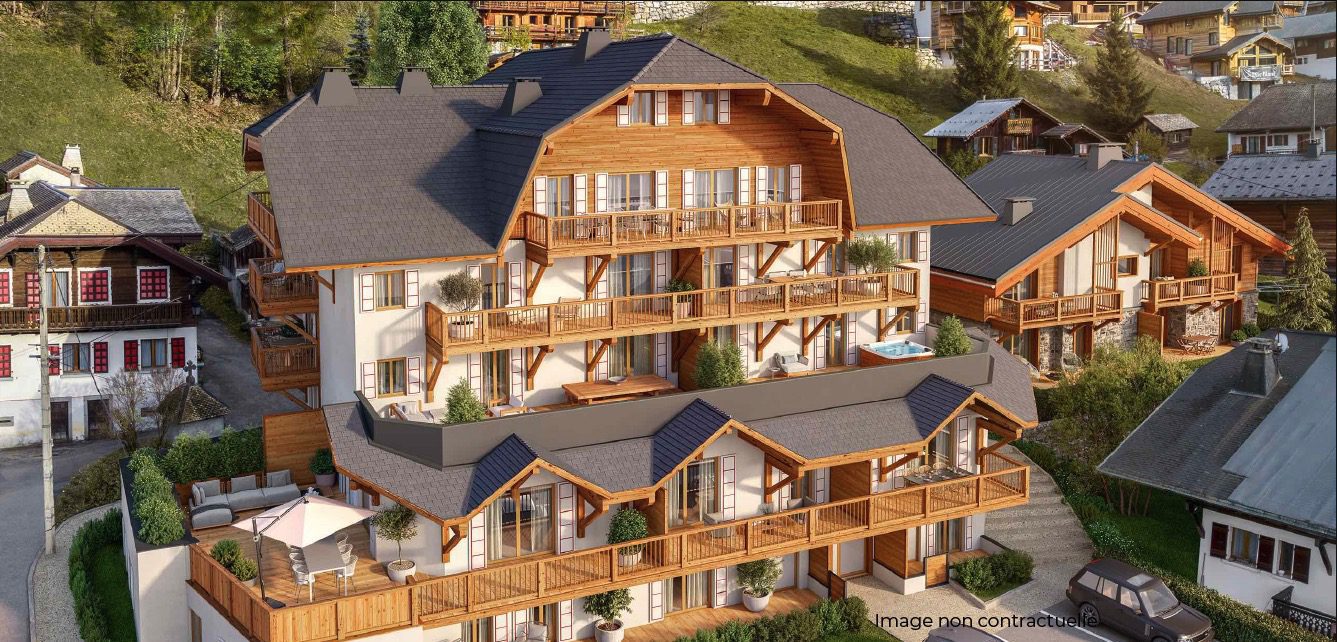
The Beau Regard hotel in Morzine has been one of the landmark buildings of the resort’s central village for over a century, and the restoration project that was announced in 2023 and completed through 2024 and 2025 was widely interpreted — correctly, in our view — as an important signal about the direction of the Morzine luxury property market. The Beau Regard sits on one of the most prominent central sites in the village, directly on the main street, and the decision by a well-capitalised operator to invest in a full historic restoration rather than a demolition-and-rebuild was an early sign that the Morzine luxury market was moving decisively in the direction of material quality, historical continuity and specification discipline rather than the ‘maximum floor area’ approach that had dominated some parts of the Portes du Soleil new-build market in the previous decade. For Morzine property buyers, the signal matters.
This guide covers the Beau Regard restoration and its wider significance for the Morzine luxury property market in 2026, the current state of the Morzine new-build and resale pipelines, the pricing dynamics that make Morzine one of the strongest performing mid-market resorts in the French Alps, and the practical considerations for buyers looking to enter the market at various price points. It also covers the sub-resort distinctions that matter — Morzine centre, Les Prodains, the Pleney quarter, the Ardent area and Avoriaz above — because these sub-areas have increasingly different price trajectories and buyer profiles through 2024-2026.
The underlying story of Morzine over the last five years is a story of the resort growing up. Morzine has always been a strong mid-market resort with good Geneva access, genuine Savoyard village character and solid winter sports infrastructure. What has changed through 2020-2025 is that the luxury end of the Morzine market has become a meaningful segment in its own right rather than an afterthought. The Beau Regard restoration is one of the clearest expressions of that maturation, and the residential market has tracked broadly in the same direction.
The Restoration Project
What the Beau Regard Investment Tells Us
The Beau Regard restoration involved substantial structural work to the original building, including reinforcement of the historic timber frame, replacement of the roof with traditional slate and copper detailing, complete rebuild of the plumbing, electrical and heating systems, full reconfiguration of the room plan to match modern four- and five-star hotel expectations, and careful restoration of the historic facade including the original balcony ironwork, stone detailing and window surrounds. The project was not a facelift — it was a genuine ground-up restoration that retained the building’s architectural character while bringing the internal specification to current luxury hotel standards.
The choice to restore rather than rebuild was significant. Morzine commune planning policy has become progressively more restrictive on demolition-and-rebuild in the historic village centre, and well-capitalised developers have increasingly favoured restoration projects that both comply with planning policy and generate marketing differentiation. The Beau Regard is the highest-profile example of this approach in the resort, but it is not the only one — several smaller restoration projects have followed a similar pattern in the central village through 2023-2025.
The hotel reopened in late 2024 with a mix of suite accommodation, a wellness area, two restaurants and a ground-floor bar that has quickly become one of the most popular evening venues in the village. Booking rates through the first winter and summer after reopening have been strong, and the project has been widely cited as a successful case study in alpine historic restoration. The economic signal — that a careful restoration project at this price point could deliver both heritage value and commercial performance — has not been lost on the residential development community.
The direct residential implication is that Morzine central village properties with genuine historical character are now being priced differently from generic new-build or generic 1970s-era resale stock. Historical properties in good condition, or with restoration potential, have seen stronger price appreciation through 2024-2025 than the generic stock, and buyers with the appetite for restoration projects have been able to capture significant value if they choose carefully and work with knowledgeable local partners.
€10,850/m²
Average price per square metre for well-located central Morzine apartments at the end of 2025
5.5-6.5%
Typical gross rental yield range on well-specified two-bedroom central Morzine apartments in 2025
~70 min
Typical drive time from Geneva airport to central Morzine — the key catchment metric for hybrid buyers
60-80
Approximate premium new-build apartment unit count in the 2026 Morzine central village pipeline
Morzine Luxury Segment
The Emergence of a Genuine Premium Market
Morzine has historically sat firmly in the mid-market segment of the French Alps, with strong volumes in the €500,000-€1.2m range and relatively little activity above €2m. That has changed over the last five years. The 2020-2025 period has seen Morzine develop a genuine luxury segment with meaningful activity in the €2-5m range and occasional chalet sales above €5m. The catalyst has been the combination of improved resort infrastructure, strong Geneva proximity, reliable summer operating season and the hybrid-work buyer profile we see across the Portes du Soleil more broadly.
The luxury segment is currently dominated by three property types. First, high-specification new-build penthouse apartments in central Morzine developments, which typically price at €13,000-€15,000 per m² and target the same buyer profile as premium Les Gets new-build. Second, renovated or restoration-potential historic chalets in the central village, which can trade anywhere from €2m to €6m depending on plot size, condition and the specifics of the restoration potential. Third, architect-designed new-build chalets on premium plots in the Les Prodains area and the slopes around the village, which represent the highest-end new-build in the resort.
Rental performance in the luxury segment is strong but operationally demanding. Five-star chalets in central Morzine can generate gross rental income of €180,000-€300,000 per year at peak season plus a useful summer income, but the operational overhead is significant and the properties are typically run through full-service management operators like Alpine Escape, Emerald Stay, Kaluma or Morzine Chalets — operators that charge 25-35% of gross rental revenue but deliver the hands-off ownership experience that luxury buyers typically want.
The broader point is that Morzine is no longer a pure mid-market resort. It now supports a meaningful luxury segment alongside its traditional mid-market volume, and the two segments interact — strong luxury activity at the top of the market pulls up the ceiling for the strongest mid-market stock, and the mid-market volume provides the buyer pipeline that sometimes converts to luxury purchases as buyers move up the market over time. The Beau Regard restoration sits squarely inside this ecosystem.
Morzine Price per m² by Sub-Area — Late 2025
Morzine Centre (new-build)
Morzine Centre (resale)
Les Prodains
Pleney Quarter
Avoriaz
Ardent / Montriond
Pricing Snapshot
Morzine in Numbers — Late 2025 to Early 2026
Central Morzine apartment pricing is currently running around €10,850 per m² on average across well-located resale and new-build stock, with premium new-build reaching €13,500-€15,000 per m² and heritage resale trading at a range that depends heavily on restoration requirements. The centre-of-village premium over the satellite areas (Les Prodains, Ardent, Montriond) is around 20-30% for comparable specification, and buyers who prioritise walkability to the main lift station at Le Pleney should typically pay the centre premium rather than save on a peripheral location.
Historic chalet pricing in Morzine is inherently variable because the properties are unique and the condition range is wide. A small historic chalet in need of full restoration in the central village might trade at €1.2-1.8m, a mid-size restored chalet at €2.5-4m, and a large fully restored chalet with modern specification at €4-6m or above. Plot size, proximity to the village centre and the presence of planning permission for extension or restoration work are the main price drivers.
Rental yield on well-located Morzine stock is currently running 5.5-6.5% gross on two-bedroom apartments in central locations and 4-5% gross on larger luxury chalets. The yield differential reflects the easier booking profile of mid-size apartments compared to larger chalets, and the lower operational overhead. For rental-focused buyers, the best yield-to-capital ratio is typically on well-specified two-bedroom apartments in the central village rather than on either the entry-level studio segment or the top-end chalet segment.
Price trajectory through 2024-2025 has been firm at 4-7% per year depending on specific location and specification. The best-specified central new-build has appreciated faster than the resale stock, and restoration-potential historic properties have also outperformed the generic resale average. Below-average specification stock — 1970s and 1980s apartments without meaningful renovation — has been the weakest segment and has been effectively flat or slightly negative on a like-for-like basis.
“The Beau Regard restoration was the clearest signal yet that Morzine has become a genuine luxury property market — not because of the hotel itself, but because of the economics that made the restoration viable at that price point.”
Morzine Sub-Areas
Where to Buy — and Where to Avoid
Morzine centre (the area within 500m of the main Le Pleney lift station and the main village square) is the strongest sub-area of the resort and should be the default target for most buyers. Walkability to lifts, restaurants, bars and the weekly market is a significant operational advantage for both personal use and rental performance, and the centre command a meaningful premium for good reasons. Central new-build and well-located central resale should be the first focus for serious buyers.
Les Prodains is the secondary area on the north-west side of the village, with direct cable car access to Avoriaz and a high concentration of chalets and larger apartments. Les Prodains is a strong area for buyers who want a quieter base with direct Avoriaz ski access, but it is not walking distance to the main Morzine village centre and owners will typically need a car or rely on the village shuttle bus for evening outings. Prices in Les Prodains run at roughly a 15-20% discount to Morzine centre for comparable spec.
The Pleney quarter (on the south-east side immediately above the village) is a strong area for buyers prioritising direct lift access to the Pleney-Nyon ski area — which is the main Morzine-side ski area — without needing to walk through the main village. The Pleney quarter has seen meaningful new-build activity through 2023-2025 and offers a good balance of convenience and price. Ardent and Montriond are further out and should be considered only by buyers willing to accept car-dependent access or significantly lower pricing as compensation.
Avoriaz above Morzine is technically a separate resort but part of the same municipality, and it operates as a car-free purpose-built high-altitude station reached by cable car from Les Prodains. Avoriaz property is architecturally distinctive (the Jacques Labro designs from the 1960s-1970s are a marmite aesthetic) and pricing is typically 10-20% below Morzine centre for comparable floor area. Buyers who want genuine ski-in ski-out at altitude with strong snow reliability should give Avoriaz serious consideration as an alternative or complement to the Morzine centre search.
| Morzine Segment | Typical Entry Price | Typical Yield | Buyer Profile |
|---|---|---|---|
| Central studio / 1-bed | €480,000-€680,000 | 6-7% | Entry-level, rental-focused |
| Central 2-bed apartment | €780,000-€1.1m | 5.5-6.5% | Hybrid-work family |
| Central 3-bed / penthouse | €1.3-2.2m | 4.5-5.5% | Family / early-retired |
| Historic chalet (restored) | €2.5-4m | 4-5% | Lifestyle luxury |
| Architect new chalet | €3.5-6m+ | 3.5-4.5% | Premium luxury |
| Avoriaz apartment | €520,000-€1.2m | 5-6.5% | Ski-in ski-out altitude |
Buyer Profile
Who Is Buying in Morzine in 2026?
The dominant Morzine buyer profile through 2024-2025 has been British and European hybrid-working families in the 35-55 age bracket, typically with school-age children, buying central village apartments in the €700,000-€1.5m range. This profile is looking for year-round usage, strong rental yield during non-personal-use weeks, and proximity to Geneva airport for efficient travel. Morzine delivers very well against this brief, which explains why it has been one of the top 3 resorts on the Domosno books by transaction volume through the period.
A secondary profile is early-retired British and European buyers in the 55-65 age bracket, typically selling a primary residence in the UK, Netherlands or Belgium and buying a larger Morzine property in the €1.2-3m range for genuine second-home use. This profile is less sensitive to rental yield and more sensitive to lifestyle quality, build quality and resort amenities. The Beau Regard restoration has been particularly well-received by this demographic because the combination of historical character and premium specification matches their buying criteria precisely.
The luxury segment (above €2m) is driven by a mix of European high-net-worth buyers (typically French, Swiss, British and Dutch), and an increasing share of early-retired tech and finance professionals who have cashed in equity and want a top-tier lifestyle purchase. This segment is smaller by volume but meaningful by value, and it has supported the emergence of the genuine Morzine luxury market over the last five years. Trophy buyers from outside Europe are less common in Morzine than in Courchevel or Megève, which keeps the market character more organic and less polarised than the trophy-luxury segments.
What all these profiles share is a focus on year-round utility, strong Geneva proximity and the specific combination of village character and modern specification that Morzine has been able to deliver over the last five years. The Morzine buyer is typically more sophisticated and more operationally engaged than the traditional ski-week buyer of the 2000s — they run the numbers, they ask the right specification questions and they are willing to pay premium prices for genuinely premium stock.
2020
Pre-shift Morzine
Morzine is a strong mid-market resort but without a meaningful luxury segment; luxury buyers default to Megève or Courchevel.
2021-2022
Hybrid work catalyst
Pandemic-era hybrid work normalisation drives significant new buyer interest in Morzine from high-income British and European families.
2023
Beau Regard announcement
Restoration of Morzine’s landmark historic hotel signals a deeper shift toward heritage-quality luxury investment in the resort.
2024
Luxury segment emerges
Morzine luxury transactions in the €2-5m range become common; new-build premium prices hit €14,000+ per m² in the central village.
2025
Beau Regard reopens
Restored hotel reopens to strong booking performance; restoration projects become a meaningful sub-segment of the Morzine luxury market.
2026
Mature market
Morzine supports a genuine luxury segment alongside its traditional mid-market volume; planning-constrained pipeline keeps pricing firm.
The 2026 Pipeline
New Developments and Restoration Projects
The 2026 Morzine new-build pipeline is modest by historical standards — a total of roughly 60-80 premium apartment units across three central village developments, with prices running €12,500-€15,500 per m² and typical two-bedroom apartments entering around €780,000-€1.1m. Planning policy restrictions in the central village have kept the pipeline tight, and pre-launch access through specialist agents is typically necessary to secure units in the best projects. Walk-in buyers arriving at the developer showrooms after launch typically find the best units already sold.
Restoration projects have become a meaningful sub-segment of the Morzine luxury market and are worth serious consideration by buyers with the appetite and the capital to run them. A typical Morzine central village historic chalet restoration might cost €1.5-3m for the building, €1.2-2.5m for the restoration work (18-24 month timeline), and produce a completed property with genuine character and premium specification at a total cost that is often competitive with equivalent new-build. The Domosno team can connect buyers with specialist restoration architects and project managers with Morzine-specific experience.
Resale market activity remains strong across the full price range and most serious buyers will be looking at both new-build and resale options in parallel. Well-specified, well-located resale apartments often offer better yield-to-capital ratios than new-build and come with the advantage of immediate occupation rather than the 18-24 month VEFA build timeline. For buyers who value speed of completion or who want to avoid the construction-phase uncertainty of off-plan purchases, the resale route is often more appropriate.
The operational considerations for Morzine ownership are well-established by 2026 — reliable property management is available from multiple operators, the rental booking channels are mature, the local notaires and lawyers are experienced with British and European buyer profiles, and the infrastructure (fibre broadband, parking, village services) is consistently good in the central area. The Morzine properties for sale page on the Domosno website is updated regularly with current stock and is the best single starting point for serious search.
Next Steps
How to Buy Well in Morzine
The first step for any serious Morzine buyer is to establish a clear brief — target budget, target usage pattern, target rental strategy, and specific sub-area preferences within the resort. Morzine is a big enough market that being specific about these variables allows the search to target the right 10-15 properties rather than the noisy 40-50 that come up in a generic search. Most buyers find that 3-4 hours of brief-building at the start of the process saves several weeks of wasted viewings later.
The second step is a viewing weekend focused on 5-8 shortlisted properties across a mix of new-build, resale and (where relevant) restoration opportunities. Morzine viewings are easy to organise because the stock is all within a compact geographical area and the local agents are responsive. A well-organised weekend can typically see 6-8 properties, give the buyer a real sense of the micro-locations and produce a clear shortlist of 1-2 properties to pursue seriously.
The third step is due diligence — Notice Descriptive review for new-build, survey and title check for resale, tax and rental structuring advice for any purchase, and mortgage pre-approval if leverage is part of the plan. The Domosno team coordinates this process on behalf of buyers and works with trusted French notaires and mortgage brokers to keep the process moving efficiently. Typical timelines from first conversation to notaire completion are 10-18 weeks for resale and 12-18 months for off-plan VEFA.
Finally, buyers should think hard about operational management before completion. Choice of rental management partner, furniture specification, insurance, utility setup and ongoing maintenance arrangements all need to be in place by handover, and buyers who plan these items in parallel with the purchase process have a significantly smoother post-completion experience than buyers who leave them until afterwards. The Domosno team offers a handover support service to streamline this phase for first-time French Alps owners.
Common Questions
Frequently Asked Questions
Is Morzine overpriced in 2026?
No, in our view. Morzine pricing reflects genuine underlying demand from the hybrid-work buyer profile, strong rental yield support, tight new-build supply and the Geneva proximity premium. Prices are high by historical Morzine standards but are in line with or below comparable Portes du Soleil alternatives like Les Gets. We see further selective firming through 2026-2027 in the best central village stock.
Should I buy new-build or resale in Morzine?
It depends on your priorities. New-build offers top-tier specification, VEFA warranty protection, potential VAT recovery and immediate hotel-equivalent finish. Resale offers immediate occupation, often better yield-to-capital ratios and more architectural variety. For most buyers a parallel search across both is the right approach, with the final decision depending on which specific properties come up in the shortlist.
What is the minimum realistic budget for central Morzine?
Around €480,000-€550,000 for a compact central studio or small one-bedroom in a well-located building. Serious two-bedroom apartments with genuine living-area utility start around €780,000. Below €480,000 most Morzine options will be peripheral locations (Montriond, Ardent) that compromise the walkability and rental-yield profile.
How does Morzine compare with Les Gets for buyers?
They are close competitors and the choice often comes down to micro-preferences. Morzine has a larger, livelier village centre with more restaurant and bar activity year-round; Les Gets is slightly quieter with a stronger family focus. Les Gets central new-build pricing currently runs slightly higher than Morzine. Both have strong Geneva proximity and both have strong summer operating seasons. We often recommend a viewing weekend that covers both resorts before committing to one.
Is Avoriaz a good alternative to Morzine centre?
For buyers prioritising ski-in ski-out altitude access, yes. Avoriaz offers genuine ski-in ski-out, strong snow reliability at 1,800m and a car-free village experience. The trade-off is the distinctive 1960s-1970s architecture (which is not to every taste) and the lack of the traditional Savoyard village character that defines Morzine centre. Pricing is typically 10-20% below Morzine centre for comparable floor area.
What are the annual operating costs for a typical Morzine apartment?
For a central two-bedroom apartment in the €800,000-€1m range: service charges €3,000-€4,500 per year, taxe foncière around €1,500, insurance €400-€700, utilities €2,000-€3,500 depending on usage, maintenance reserve €1,500-€2,500. Total operating costs before management fees typically run €8,500-€13,000 per year, comfortably covered by typical rental income.
How hard is the non-resident mortgage process for Morzine?
Routine. Several French banks and specialist lenders offer non-resident mortgages at 70-75% LTV for British and European buyers, with interest rates sitting around 3.6-4.1% in early 2026 and typical terms of 20-25 years. The full process from application to approval takes 8-12 weeks. Domosno works with trusted mortgage brokers and can connect buyers to the right lender for their profile.
What is the best time of year to visit Morzine for a buying trip?
Either late September or late May — both periods give you a view of the village outside peak ski weeks, good weather for walking and assessing the outdoor environment, and easier appointment availability with local agents. Winter viewing trips are also valuable for assessing snow cover and resort operations, but the agents are busier and the logistical overhead is higher.
Featured Properties
Popular Ski Resorts
Morzine
Megève
Chamonix
Les Gets
Alpe d’Huez
Les Deux Alpes
Les Arcs
La Plagne
Courchevel
Méribel
Saint-Martin-de-Belleville
Val Thorens
Val d’Isère
Tignes
Thollon-les-Mémises
Quick Links
All New-Build Ski Properties
All Ski Apartments
All Ski Chalets
New-Build Ski Apartments
New-Build Ski Chalets
Resale Ski Apartments
Resale Ski Chalets