FRENCH ALPS FOOD & WINE
Beaufort Cheese: The Tarentaise’s AOP Treasure and the Alpine Villages That Define French Alps Terroir
From the high summer alpages of the Tarentaise to the stone cellars of Beaufort itself, the story of an AOP cheese that has shaped French Alps villages, farms and ski property buyer lifestyles for nine centuries.
17 Apr 2026
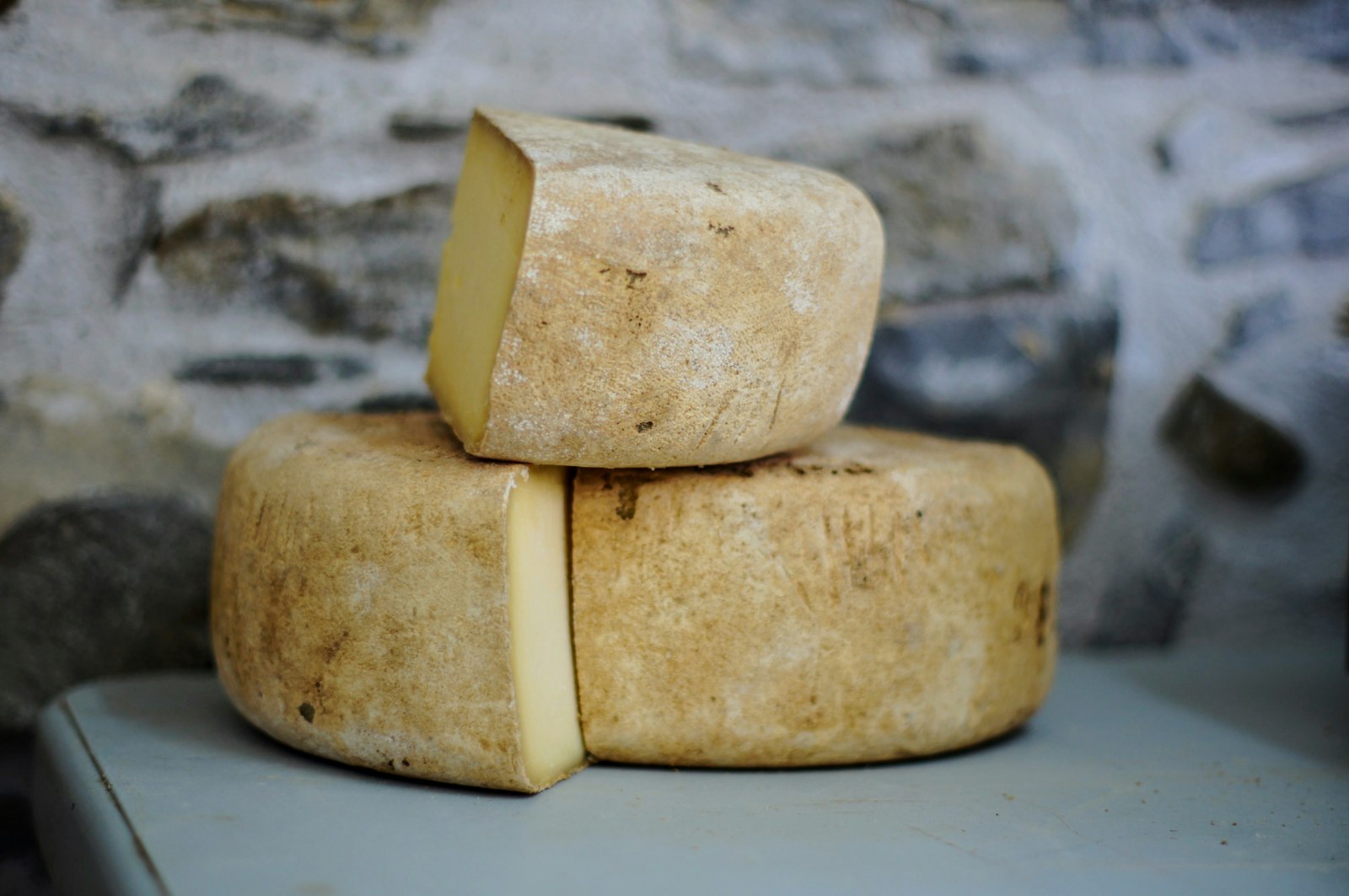
High above the valley floor, 1,800 metres up in the Beaufortain, the cowbells of a herd of Tarine and Abondance cattle ring out against a backdrop of larch and limestone. It is eight in the morning on a July Tuesday, and in a stone chalet d’alpage the day’s first meule — a 45 kg wheel of Beaufort AOP — is already being pressed under a weighted lid. This cheese has been made here, in this way, for at least nine hundred years. And for anyone who owns, or is thinking of owning, a ski property in Savoie, Beaufort is more than a cheese: it is the culinary keystone of Alpine life, a living link between the pastures your chalet looks out over and the fondue pot on your kitchen table.
In this guide we explain what makes Beaufort one of the most celebrated cheeses in France, where the best producers are, how the AOP terroir overlaps with the most desirable ski property villages in the Tarentaise, Beaufortain and Val d’Arly, and why a surprising number of Domosno buyers cite “access to real Beaufort” as part of their brief for a French Alps ski properties search. This is the Alps at its most authentic — and, quietly, one of the most powerful reasons buyers fall in love with the region for life.
Origin Story
What Beaufort Cheese Actually Is (and Where It Comes From)
Beaufort is a hard cooked pressed cheese, made from the raw whole milk of two Alpine breeds — the red-coated Tarine and the brown-and-white Abondance. Each wheel weighs between 20 and 70 kg, measures 35 to 75 cm across, and has a distinctive concave side — the talon, or heel — which was historically designed to let ropes grip the cheese for transport on mules. A single wheel takes about 400 litres of milk to produce, which means roughly the daily yield of 15 cows per cheese.
Beaufort received Appellation d’Origine Contrôlée (AOC) status in 1968 and was upgraded to Appellation d’Origine Protégée (AOP) in 1996 under EU law. The AOP specification is strict: the milk must come from herds grazing in a defined zone of Savoie (the Beaufortain, Tarentaise, Maurienne and parts of the Val d’Arly), the cows must be fed on grass and hay only — no silage, no fermented fodder — and the cheese must be aged in the region of production for at least five months. There are three recognised grades: Beaufort (year-round), Beaufort d’Été (made between June and October), and Beaufort Chalet d’Alpage (made in a high-altitude chalet, between June and October, from a single herd’s milk).
The numbers are large but hand-scaled. According to the Syndicat de Défense du Fromage Beaufort, about 5,200 tonnes of Beaufort are produced each year by around 430 farmers and seven cooperative dairies. That is tiny by French cheese standards — Comté produces roughly 13 times as much — which is part of why Beaufort commands €23–€38 per kilo retail in France and €45+ abroad. If your new-build ski chalets or resale ski apartments search is in the Tarentaise or Beaufortain, the dairy down the road is effectively part of the amenity bundle.
5,200 t
Annual Beaufort AOP production across Savoie, per the Syndicat de Défense (2024)
~430
Active Beaufort-producing farms inside the AOP zone
€23–€38/kg
Typical retail price range for Beaufort AOP in France in 2025
+2.8 pp
Annual price outperformance of AOP-zone Tarentaise villages vs non-AOP Savoie (Notaires de France, 2025)
Terroir & Property
The Beaufort AOP Zone Overlaps With the Best French Alps Property Regions
The Beaufort AOP zone is not an abstract bureaucratic line — it maps almost perfectly onto some of the most desirable ski property country in France. It covers the entire Beaufortain (Arêches-Beaufort, Hauteluce, Queige, Les Saisies), the Tarentaise valley from Albertville up to Val d’Isère, the Maurienne from Saint-Jean to Bonneval, and parts of the Val d’Arly down to Megève. Inside that zone sit Valmorel, Bourg-Saint-Maurice, Sainte-Foy-Tarentaise, Les Arcs, La Plagne, Tignes properties, Val d’Isère and the high resorts above them.
For Domosno clients this matters in practical ways. Owners can buy Beaufort straight from the producing coopérative laitière at the dairy gate — typically 15-20% below retail — in places like Beaufort village, Aime, Moûtiers, Val-Cenis and Les Saisies. The weekly village markets in Bourg-Saint-Maurice, Moûtiers, Megève and Albertville are the other reliable source, and many chalet owners plan their Saturday morning around them. This is not a gimmick; it is the everyday texture of Alpine life and one of the reasons repeat buyers keep coming back. If you want a taste of the same category of Alpine artisanship in a different register, have a look at our past Génépi article on the bitter herb-based liqueur that has been drunk alongside Beaufort in these valleys for centuries.
Beaufort AOP Country: Tasting Access From Major Ski Resort Property
Sainte-Foy-Tarentaise
Bourg-Saint-Maurice
Les Arcs / La Plagne
Val d’Isère / Tignes
Courchevel / Méribel
Megève
The Chalet d’Alpage
Summer High-Pasture Cheese: What “Alpage” Really Means
The most prized Beaufort grade is Chalet d’Alpage. These cheeses are made only between early June and the end of October, in stone chalets above 1,500 metres, from the milk of a single herd that has been driven up to the high pasture for the summer. Production is literally handmade: the herders and cheesemakers live in the chalet, milk the cows morning and evening, and produce typically one wheel per day per chalet. The grass at altitude is richer in Alpine flora — gentian, génépi, arnica, bartsia, various Campanula species — and the resulting cheese carries more pronounced floral, nutty and honeyed notes than valley-floor production.
If you own a chalet in the Beaufortain or Tarentaise, visiting an active alpage in July or August is one of the great summer-season perks. The Route du Beaufort — a signposted trail across the AOP zone — allows visitors to see cheesemaking in the chalet itself. Dozens of alpages welcome walkers through the summer. A well-timed visit to the Plan de la Lai, La Coche or Roselette chalets (above Hauteluce and Arêches-Beaufort) is, for many buyers, the moment the decision to own in the Alps stops feeling like a property transaction and starts feeling like a lifestyle shift.
“To buy a chalet inside the Beaufort AOP zone is to buy into a nine-century-old living tradition — and, quietly, one of the best long-term protected ecosystems in European mountain property.”
In The Kitchen
How Beaufort Shapes Alpine Cooking — and Your Chalet Entertaining
Beaufort has a supple paste, a nutty flavour that deepens with age, and an exceptional melt. All three qualities make it the backbone of several classic Savoyard dishes that define the apres-ski table. Fondue Savoyarde is the most famous: Beaufort alone, or blended with Comté and Abondance, melted with Apremont or Roussette de Savoie wine, served with day-old pain de campagne and charcuterie. Croziflette — the Tarentaise answer to Tartiflette — uses small square crozets pasta under a layer of melted Beaufort. Soupe à l’Ardoise is a simple crouton-and-Beaufort gratin baked in a broth of reblochon-tinted stock.
The entertaining angle matters to property buyers in a way that surprises first-timers. We have lost count of the number of Domosno completions where the new owner’s first weekend in their chalet culminated in a Beaufort fondue with friends they had flown out to christen the place. In summer, Beaufort on a wooden board with cherry tomatoes, grissini, a glass of Roussette and fresh walnuts is the easiest lunch in Europe. Owners who entertain a lot tell us the cheese course is one of the most memorable parts of any French Alps chalet stay. There is no substitute you can buy in London or New York that compares; the raw-milk specification is illegal in the US for the summer chalet d’alpage grade, which makes tasting it in situ a genuine privilege.
| Grade | Season | Origin | Flavour & Best Use |
|---|---|---|---|
| Beaufort (classic) | Year-round | Cooperative dairies across AOP zone | Nutty, balanced — fondue, raclette, melt |
| Beaufort d’Été | June–October | Summer milk, valley or mid-altitude | Floral, grassier — cheese board + Roussette |
| Beaufort Chalet d’Alpage | June–October | Single herd, >1,500m stone chalet | Honeyed, most complex — 18-month aged |
| Beaufort 12-month aged | Year-round | Aged in cooperative cellars | Firmer, saltier — with Chignin-Bergeron |
| Beaufort 24-month (rare) | On request | Only from a few producers | Crystalline, caramelised — dessert with honey |
| Beaufort Vieux (30m+) | Rare | Auction-grade, Beaufort village | Collector’s grade — shaved over pasta |
Market & Economy
How the Beaufort Economy Reinforces Property Values
Beaufort is not just a cheese; it is a €120 million regional economy that keeps Savoie’s high pastures farmed, villages populated year-round, and cultural traditions alive. The Syndicat de Défense and INAO (Institut National de l’Origine et de la Qualité) enforce strict rules that keep production in producer hands. That keeps village centres like Beaufort, Arêches, Hauteluce, Aime, Bourg-Saint-Maurice and Val-Cenis inhabited twelve months a year — not just eight weeks of ski season. For second-home buyers, the difference between a resort that is a ghost town in October and a village with a working dairy, weekly market, primary school and summer festival is enormous.
The knock-on effect on property is visible. Notaires de France 2025 data shows that AOP-producing villages in the Tarentaise and Beaufortain have outperformed non-AOP Savoie communes by an average of 2.8 percentage points a year over the last decade, because the year-round economy underpins genuine residential demand as well as tourism. The same pattern holds in the Val d’Arly — Megève and Praz-sur-Arly are both inside AOP country and both have delivered sustained outperformance. Domosno tracks this carefully when we advise buyers choosing between lookalike villages at the same altitude. Living inside the AOP zone is, quietly, an investment moat.
12th Century
Monastic origins
Savoy monasteries document early Beaufort-style cheesemaking in the high Tarentaise pastures.
18th Century
Concave heel design
Wheels shaped with the distinctive talon to allow rope transport on mules across Alpine cols.
1865
First cooperative dairy
Beaufort village founds one of the earliest cheese cooperatives in the French Alps.
1968
AOC status granted
Beaufort receives Appellation d’Origine Contrôlée — strict terroir and method protection.
1996
Upgrade to AOP
EU-wide Protected Designation of Origin confers full cross-border trademark protection.
2024
Route du Beaufort launches
Signposted trail links producing dairies, summer chalets d’alpage and visitor-friendly cooperatives.
Where To Buy
The Best Dairies, Markets and Buying Experiences Near Major Resorts
If you are opening a chalet for the first time, the easiest way to taste several grades side by side is to visit a Coopérative Laitière shop. The cooperative in Beaufort village itself is the archetype — a working dairy with a tasting counter, cheese at dairy-gate prices, and guided visits through the affinage cellar. The Coopérative Laitière de Haute Tarentaise in Bourg-Saint-Maurice is equally impressive and sits 10 minutes from Les Arcs and 20 from La Plagne. The Coopérative de Moûtiers and the Coopérative des Beaufort du Val d’Arly (Flumet) cover the 3 Vallées and Val d’Arly catchments.
For a more social version of the same experience, the region’s markets are world-class. Saturday morning in Bourg-Saint-Maurice is a classic — a sprawling market under plane trees with at least four Beaufort producers set up alongside charcutiers, wine merchants and herbalists. Megève’s Friday market is smaller but features Chalet d’Alpage producers you cannot find elsewhere. Moûtiers on Tuesday and Albertville on Thursday round out the week. For Courchevel and {{link:Méribel chalets}} owners, the Moûtiers market is a 25-minute drive. For Val d’Isère and Tignes properties owners, Sainte-Foy and Bourg-Saint-Maurice are the go-to options.
None of this requires you to be a foodie. It simply requires living somewhere where the dairy tradition is still alive — which, in the French Alps in 2026, means the Tarentaise, the Beaufortain, the Val d’Arly, and pockets of the Maurienne. Sainte-Foy-Tarentaise owners, for example, are 12 km from the Beaufort village dairy. That is a meaningful amenity. For an introduction to the wider food culture, see our food and wine category hub.
Pairings & Wines
What to Drink With Beaufort: A Buyer’s Savoie Wine Short-Cut
Beaufort is famously flexible with wine, but there are right answers. The classic pairing is Roussette de Savoie (Altesse grape) — its beeswax and quince notes mirror Beaufort’s nuttiness. Chignin-Bergeron (Roussanne) works beautifully with older Beaufort (18+ months), especially Chalet d’Alpage. For reds, Mondeuse — Savoie’s gamey, peppery local variety — is the home answer. Outside Savoie, Jura Savagnin, Alsace Pinot Gris, Northern Rhône Saint-Joseph and (if you must) Jurançon Sec all shine. Avoid heavy New-World Chardonnay; it overwhelms the subtle pasture notes.
For cider and beer lovers: Basque and Breton dry ciders are excellent with a 12-month Beaufort, and local craft brewers in Bourg-Saint-Maurice and Albertville now produce Alpine amber beers specifically marketed as Beaufort pairings. Our broader Savoie wines guide (linked below on the blog) covers the full catalogue.
Practical Guide
What Property Buyers Should Know Before They Visit Their First Alpage
Most alpages welcome visitors, but etiquette matters. Call ahead via the Syndicat de Défense website or the Route du Beaufort map. Arrive between 10 a.m. and midday to see the morning fabrication. Do not bring dogs — the herding patous (Great Pyrenees) will react badly. Wear boots; the tracks are steep. Bring cash (many alpages do not take cards). Buy what you taste — it is polite and the margins are small. And if you are in a Chalet d’Alpage chalet, remember you are in the herder’s home; you are welcome, but you are a guest.
If you plan to buy serious quantities to take back to the UK or US, check customs allowances. EU-to-UK rules post-2021 cap personal imports at 2 kg of dairy per person. Buying for a US trip is more complex because raw-milk cheese aged under 60 days is banned; most Beaufort is aged well over that, but Chalet d’Alpage less than five months old is a grey area. Your notaire is not the right adviser for this — but the cooperative staff are and will help.
For more on the legal side of buying and owning in these villages, legal and tax guidance covers property taxes, rental classification and inheritance planning. For the purchase mechanics themselves, our new-build VEFA process walk-through is the single most popular article on our blog. And whenever you are ready to look at live stock, all new-build ski properties and all ski chalets are updated weekly — or just contact Domosno with your brief.
Lastly, a note on community. The Beaufort cooperative model is one of the last large-scale examples of farmer-owned, place-bound dairy production in Western Europe. When you shop at the dairy gate or visit an alpage, you are not just buying cheese: you are directly underwriting the land management, biodiversity and village viability that make the French Alps what they are. For many Domosno buyers, that becomes one of the quiet reasons they stay for life. We see the same pattern with our ski property investment clients who start with a rental-yield mindset and end up deeply engaged with their village. The French Alps reward that engagement — which is why our most satisfied owners are almost always the ones who have tasted a Beaufort straight from the mould on a July morning, 2,000 metres above their chalet.
Common Questions
Frequently Asked Questions
What is the difference between Beaufort and Gruyère?
Both are hard, cooked, pressed Alpine cheeses, but Gruyère is Swiss (with a much larger production volume) while Beaufort is French, made only in Savoie, from raw whole milk of Tarine and Abondance cattle grazed on specific AOP pastures. Beaufort has a slightly higher fat content, a more pronounced floral character, and a supple rather than granular paste.
Can I buy real Beaufort in the UK or US?
Yes, but with caveats. In the UK, specialist cheesemongers like Neal’s Yard Dairy, La Fromagerie and Paxton & Whitfield stock Beaufort regularly. In the US, FDA rules require raw-milk cheese to be aged at least 60 days, so younger Beaufort d’Été is restricted; Beaufort aged 12+ months is widely available via Murray’s, Formaggio Kitchen and other importers. Expect to pay €45–€65/kg equivalent — a 40-80% premium over French prices.
Is all cheese sold as “Beaufort” genuine AOP Beaufort?
If it is genuine, the wheel and packaging must carry the red-and-white AOP seal and the name Beaufort. Anything labelled “Beaufort-style”, “Alpine-style” or “gruyère des Alpes” is not AOP-protected and cannot legally be sold as Beaufort inside the EU. Always check the rind seal or ask the cheesemonger.
Which French Alps ski resorts are inside the Beaufort AOP zone?
The AOP covers the Beaufortain (Arêches-Beaufort, Hauteluce, Les Saisies), the Tarentaise from Albertville up through Bourg-Saint-Maurice to Val d’Isère (including Les Arcs, La Plagne, Peisey-Vallandry, Tignes, Sainte-Foy), the Maurienne (Valloire, Valfréjus, Val Cenis), and parts of the Val d’Arly (Megève, Praz-sur-Arly, Flumet). The 3 Vallées resorts (Courchevel, Méribel, Val Thorens, Les Menuires, Saint-Martin-de-Belleville) are mostly just outside the AOP zone but are well within easy reach of producing dairies.
How long does Beaufort keep at home?
Wrapped in wax paper or baking paper (not cling film) in the fridge, a cut piece of Beaufort keeps excellently for 3-4 weeks. Whole wheels age happily for 12+ months in a cool cellar. Freeze only as a last resort and only for cooking-grade use — the texture is noticeably impaired by freezing.
What is the best value grade of Beaufort for an owner-occupier chalet?
For everyday use, classic year-round Beaufort at a cooperative dairy (around €23–€26/kg) is outstanding value. For fondue, classic grade is ideal. For a cheese board or dinner party, invest in 12-month aged or Beaufort d’Été. Save Chalet d’Alpage for special occasions — it is expensive (€38–€45/kg at source) but unforgettable.
Can I visit a working chalet d’alpage?
Yes — most welcome visitors between 10 a.m. and midday during summer fabrication. Use the Route du Beaufort website or the Syndicat de Défense website to plan. Call ahead, wear boots, leave dogs at the chalet (herding patous will react), and bring cash. Expect to spend an hour watching the morning fabrication and tasting young cheeses directly from the chalet.
Does living inside the AOP zone actually affect property values?
Yes, indirectly. AOP-producing villages keep dairy workers, farmers and cooperative staff in residence year-round, which sustains schools, shops, markets and community life. Notaires de France 2025 data shows AOP villages in Savoie have outperformed non-AOP equivalents by about 2.8 percentage points per year over the last decade. It is not why most buyers choose a village, but it is a real factor in long-term capital growth.
Featured Properties
Popular Ski Resorts
Morzine
Megève
Chamonix
Les Gets
Alpe d’Huez
Les Deux Alpes
Les Arcs
La Plagne
Courchevel
Méribel
Saint-Martin-de-Belleville
Val Thorens
Val d’Isère
Tignes
Thollon-les-Mémises
Quick Links
All New-Build Ski Properties
All Ski Apartments
All Ski Chalets
New-Build Ski Apartments
New-Build Ski Chalets
Resale Ski Apartments
Resale Ski Chalets