CHALET DESIGN
Chamonix Chalet Architecture: How the Mont Blanc Valley’s Contemporary Design Movement Is Reshaping Luxury Ski Property in 2026
Beneath the shadow of Mont Blanc, a new generation of architects is rewriting the Alpine chalet — and Chamonix’s most ambitious new-build programmes are rewarding buyers who pay attention to design.
18 Apr 2026
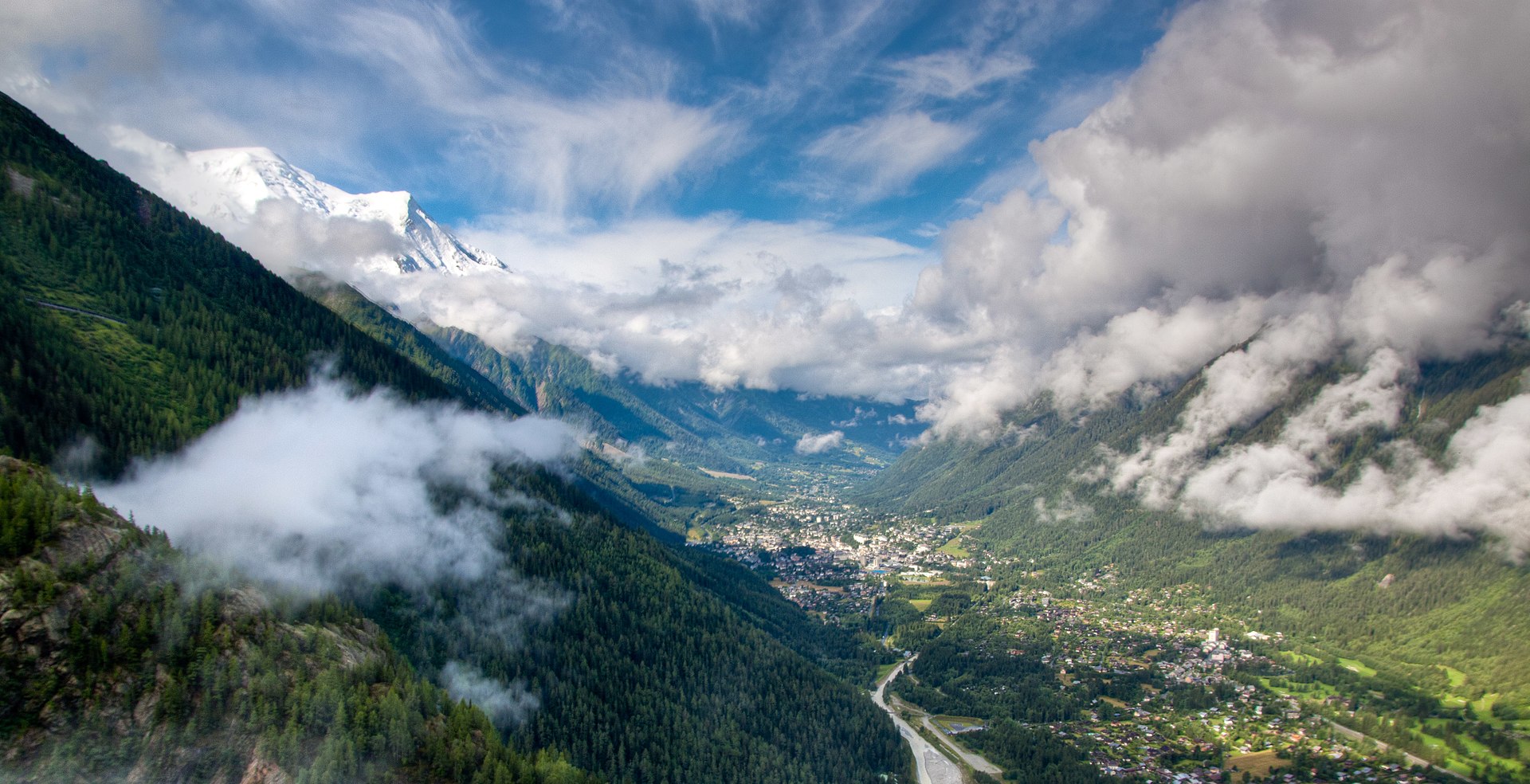
For more than a century, the Chamonix chalet has been a shorthand for Alpine authenticity — heavy timber balconies, generous eaves, shingle roofs and stone plinths that anchored each building against winter. That template was never an accident. It was the product of real constraints: snow loads, avalanche paths, short building seasons, and the need to shelter families and livestock under one pitched roof. But walk through the Mont Blanc valley today and a different architectural conversation is unfolding. Chamonix is quietly becoming France’s most interesting laboratory for contemporary Alpine design, and the shift is beginning to show up clearly in resale values.
The driver is not fashion. It is a convergence of four forces: France’s RE2020 environmental building code, the commune’s strict Plan Local d’Urbanisme, a generation of Haute-Savoie architects trained in sustainable building, and a buyer pool — heavily British, increasingly global — that now pays a real premium for considered design. At Domosno we work across the full Chamonix Valley, from Les Houches at the mouth of the valley to Argentière at its head, and the pattern is consistent: the new-build and ambitious renovation projects that get both the heritage envelope AND the contemporary interior right are the ones that sell fastest and hold value best. This guide sets out what is changing, why it matters, and how buyers should read the 2026 market.
Origins & Heritage
The Savoyard Chalet: A Functional Answer to a Hostile Winter
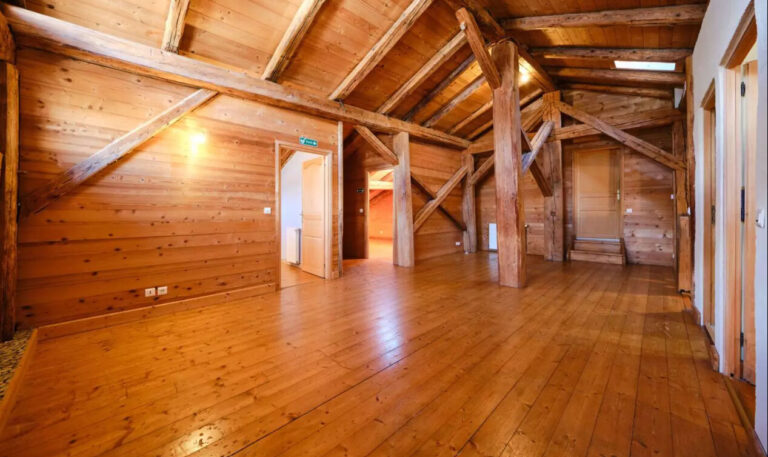
To understand where Chamonix architecture is going, it helps to understand where it came from. The traditional Savoyard ferme-chalet is one of the most intelligent vernacular buildings in Europe. Built on a stone base (the soubassement) to lift living quarters above the snowpack, with a timber upper storey insulated by hay, cattle stalls on the ground floor generating heat for the rooms above, and a steeply pitched lauze or tavaillon-shingle roof designed to shed up to three metres of snow — every element answered a specific winter problem.
Chamonix itself has a slightly different architectural DNA than, say, Megève or Courchevel. Because the valley was opened to English-speaking travellers relatively early (the first recorded tourist visit was 1741, and Chamonix hosted the first Winter Olympics in 1924), Chamonix buildings blended Savoyard structure with Belle-Époque hotel-town confidence. Broad balconies, decorative eaves, polychrome shutters and stone ground floors became the template. Most of the valley’s protected heritage buildings date from the 1880–1930 window, and they form the reference point every contemporary Chamonix architect still negotiates with.
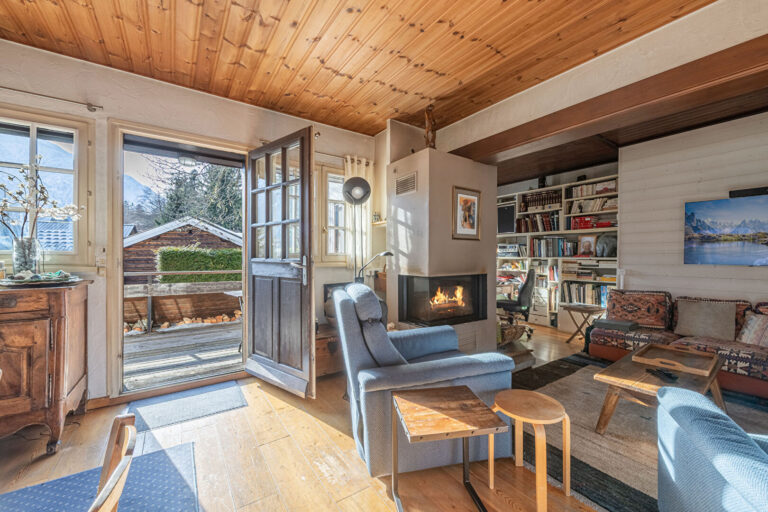
That heritage is the reason you cannot simply drop a minimalist glass box into central Chamonix. The commune’s PLU enforces roof pitch, materials, volumes and colour palettes in most of the valley. What the new generation of architects has done is far more interesting: they have learned to operate within the envelope and innovate inside it. As one local architect puts it, the Chamonix chalet of 2026 looks Savoyard from the street and lives like a Scandinavian loft inside.
€14,000/m²
Typical price for architect-led new-build chalets in the prime Chamonix Valley zones (Notaires de France, Q4 2025)
+38%
Chamonix Valley property price growth between 2019 and 2024 (Notaires de France, Tendances Immobilières)
10,000+
Estimated second homes in the Chamonix Valley, representing over 60% of housing stock
20%
VAT potentially recoverable on new-build VEFA chalets classified for rental use
The Contemporary Shift
How Chamonix Went Modern Without Losing Its Face
The contemporary chalet movement in the Chamonix Valley started seriously around 2008–2012, led by a small cluster of Haute-Savoie practices — Chevallier Architectes in Chamonix itself, studios working across the Mont Blanc massif, and a handful of Geneva-based studios commuting over. Their insight was that the exterior language of the Savoyard chalet — timber cladding, pitched roofs, stone bases — was not the problem. It was the interior that needed to change.
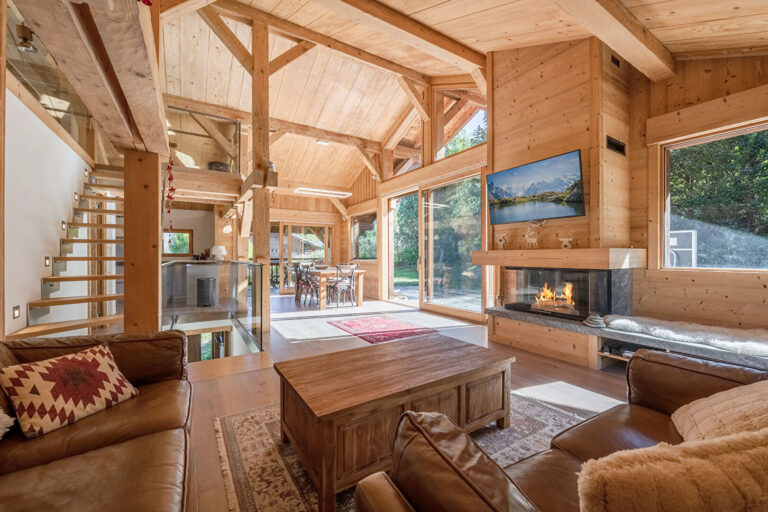
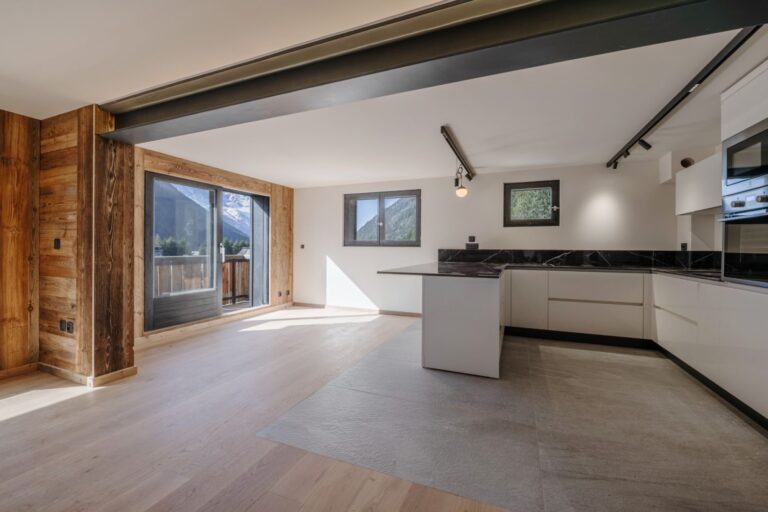
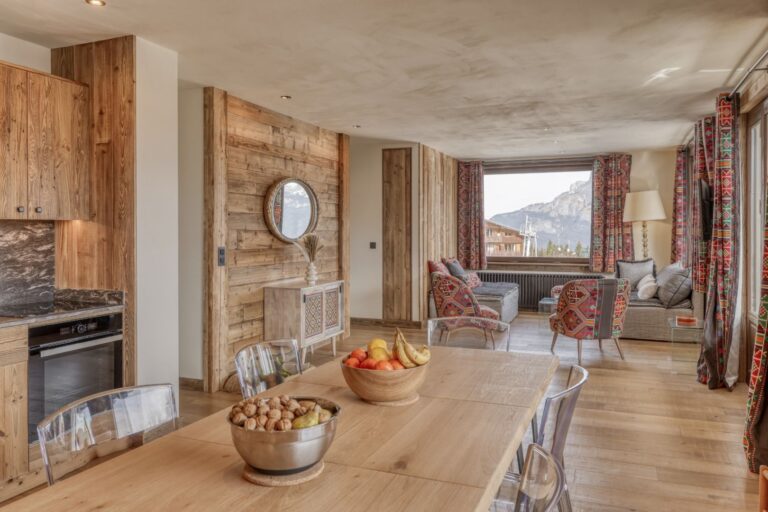
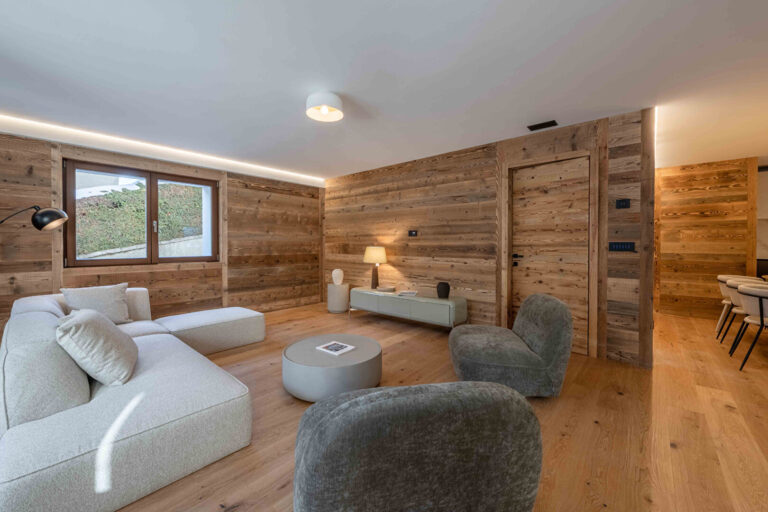
Three moves characterise the new generation. First, opening up the plan: knocking through the old cellular ground floor (kitchen, lounge, dining) into one glazed volume facing the mountain. Second, bringing light deep into the building with double-height voids, clerestory windows and glass stair-wells. Third, integrating technology invisibly — underfloor heating, heat-recovery ventilation, solar thermal panels tucked behind traditional roof lines, and smart home systems that disappear into the wall.
The result is a style the local press calls néo-chalet or chalet contemporain. From the outside it reads as an honest Savoyard building. From the inside, it behaves like a very well-insulated contemporary home. Crucially for buyers, this approach survives planning scrutiny in the Chamonix PLU, where a genuinely modern exterior would often be refused.
Design Premium Across the Chamonix Valley (€/m², 2026)
Les Houches
Argentière
Chamonix Sud
Central Chamonix
Les Praz / Les Nants
Materials
Old Timber, New Performance
The materials palette in contemporary Chamonix design is deliberately conservative on the outside and quietly radical inside. Mélèze (larch) cladding remains standard — it silvers to a natural grey, resists rot, and is sourced from French and Italian Alpine forests. What has changed is how it’s used: horizontal board-and-batten in contemporary projects, deeper shadow lines, sometimes combined with burnt-wood (shou sugi ban) panels for texture.
Behind that timber skin, the story is more dramatic. Contemporary Chamonix chalets are increasingly built in cross-laminated timber (CLT) — solid engineered wood panels that serve as both structure and insulation — a move we covered in depth in our cross-laminated timber analysis. CLT allows wider spans, faster build times, lower embodied carbon, and finished interior surfaces that need no additional lining. It is arguably the most important structural change in French Alpine building in the last decade.
Roofs have also evolved. Steel standing-seam has partly replaced traditional lauze in contemporary projects — lighter, easier to ventilate, and compliant with RE2020 thermal standards — though the communal planning authority still requires a recessive colour in most zones. Stone has become the feature material rather than a structural element: hand-selected pierre de Morillon and local granite is used for feature walls, fireplaces and site retaining rather than whole ground floors. For buyers, the rule of thumb is simple — look for natural materials executed with restraint, and be wary of fake-timber cladding or plastic shutters, both of which signal a cheaper build.
“The Chamonix chalet of 2026 looks Savoyard from the street and lives like a Scandinavian loft inside — and the market pays a clear premium for getting that balance right.”
The Panoramic Imperative
Mont Blanc Views and the Glazing Revolution
The single most visible change in contemporary Chamonix chalets is glazing. Traditional ferme-chalets had small windows, with the main orientation dictated by wind rather than view. Contemporary Chamonix architects have reversed that entirely. The defining feature of a high-quality new-build chalet in the valley is a large glazed elevation facing Mont Blanc — typically south or south-east — with triple-glazed units set in thermally broken frames.
Making that work in practice is harder than it looks. Chamonix sits at 1,035m altitude with significant solar gain in summer, deep shade in winter, and wind funnelling down the Arve valley. Best-in-class projects now combine high-performance triple glazing (U-values around 0.8 W/m²K) with external fixed brise-soleil, integrated motorised blinds, and deep balcony overhangs that provide summer shading while admitting winter sun. RE2020 has effectively mandated this level of thermal thinking — there is no longer a cheap way to put a wall of glass in a Chamonix chalet.
From an investment standpoint, the glazing story matters. Two otherwise similar chalets in the same micro-location can trade at a 15–25% premium differential based purely on view management: how the living space frames Mont Blanc, whether the master suite gets sunrise over Aiguille du Midi, whether the terrace is usable in shoulder season. These are the details our buyers notice and our rental management partners price for.
| Chalet Type | Price per m² | Architectural Signature | Best For |
|---|---|---|---|
| Traditional ferme-chalet (renovated) | €12,000–€16,000 | Stone plinth, timber upper, pitched roof | Heritage buyers, rental character |
| New-build VEFA apartment | €8,500–€13,000 | Mélèze cladding, shared services | First-time Alps buyers, VAT recovery |
| Néo-chalet (contemporary interior) | €14,000–€20,000 | Pitched timber shell, open glazed interior | Design-led buyers, long-let income |
| Architect-signed standalone chalet | €18,000–€25,000 | CLT structure, Mont Blanc glazing | Ultra-prime owners |
| Partially renovated resale | €9,000–€12,000 | Mixed fit-out, inconsistent finish | Renovation projects, value-add buyers |
The Regulatory Frame
PLU, RE2020 and the Architectural Straitjacket That Works
Chamonix’s Plan Local d’Urbanisme is one of the strictest in the French Alps. Combined with the commune’s designation within a protected natural zone, it governs plot coverage (typically 20–30% of land area), building height, roof pitch (usually 30–45%), cladding materials, window-frame colour, even the species of trees planted on the boundary. For buyers this can sound restrictive. In practice, it is the main reason Chamonix’s architectural character has survived sixty years of ski-resort expansion.
Layered on top is RE2020, France’s environmental regulation that came into force in 2022 and has tightened progressively each year. For new-build chalets, RE2020 effectively requires near-passive thermal performance, carbon caps on construction materials (favouring timber over concrete), and on-site renewable generation. The RE2020 regulations that govern all new French construction are reshaping Alpine building more aggressively than anywhere else in France, because Alpine heating loads are where the standards bite hardest.
The net effect is that it is now essentially impossible to build a cheap, poorly insulated new chalet in Chamonix. That sets a floor under new-build quality that simply did not exist ten years ago — and it is one of the reasons new-build VEFA in the valley commands such a clear premium over older resale stock. For buyers, new-build is no longer just about finish; it is about regulatory-driven performance that older properties cannot replicate without extensive (and expensive) retrofit.
1741
First recorded tourism visit
Windham and Pococke visit Chamonix and publish accounts that establish the valley’s identity as a European Alpine destination.
1880–1930
Belle-Époque hotel-town era
Chamonix’s iconic architectural vocabulary is codified — broad balconies, decorative eaves, stone ground floors.
1924
First Winter Olympic Games
Chamonix hosts the Games. Infrastructure investment reshapes the town and drives a wave of chalet construction.
2008–2012
Néo-chalet movement begins
Local practices including Chevallier Architectes define a contemporary Alpine language that respects the PLU.
2022
RE2020 takes effect
France’s environmental building code raises the performance floor for all new Alpine construction.
2026
CLT becomes mainstream
Cross-laminated timber structures now account for a growing share of premium Chamonix new-build.
Market Impact
What Buyers Are Paying for Design
Design translates directly into price in Chamonix. According to Notaires de France Q4 2025 data, the spread between standard and architect-led new-build in the Chamonix Valley has widened meaningfully over the last three years. Generic new-build apartments in less central locations in the valley sit around €8,500–€11,000 per m². Architect-designed chalets in the valley’s prime zones — Chamonix centre, Les Praz, Les Nants — regularly trade at €14,000–€20,000 per m², with ultra-prime standalone new-build chalets reaching €25,000+ per m² for the most ambitious projects.
Resale follows the same pattern. A thoughtfully renovated ferme-chalet with contemporary interior insertions typically trades at a 25–35% premium to a comparable untouched property. The margin is large enough that well-executed renovation is now a defensible investment strategy in the valley — particularly at the mid-market level where buyers want character without the heating bill. The properties that struggle are the ones caught in between: partially renovated, inconsistent finishes, no coherent architectural story.
Rental performance shows the same split. Data from our rental management partners indicates that contemporary-interior chalets achieve 15–30% higher nightly rates in peak weeks than traditional fit-outs of equivalent size, and book out several weeks further in advance. Design is no longer just an aesthetic preference; it is a measurable performance variable in the Chamonix investment case.
Who’s Building Now
The Architects and Programmes Defining Chamonix in 2026
The contemporary Chamonix scene is concentrated around a small number of practices. Chevallier Architectes — based in Chamonix and active since the early 2000s — has defined much of the néo-chalet language through projects like the Aperture Chalet and their work across Les Praz and Argentière. Their signature is honest material expression, deep overhangs and uncompromising detailing.
Around them, a cluster of Annecy- and Geneva-based studios operate on the larger new-build programmes, while local practices handle renovation work across the Chamonix valley. The 2026 pipeline in the valley includes several ambitious small-scale collective-residence programmes in Les Houches and Les Praz, a handful of exceptional one-off chalets above Les Bossons, and a slow but steady flow of contemporary renovations within the historic fabric of central Chamonix.
For buyers, the practical upshot is that brand recognition in Chamonix architecture matters far more than it did a decade ago. A chalet signed by a reputable practice holds its value more reliably at resale, insures easier, and tends to be better detailed beneath the visible finish — underfloor heating zoning, vapour control, acoustic separation between floors. In a market where the price spread between good and bad design now runs to 25% or more, that provenance is worth paying attention to.
Buyer Perspective
What to Look for Across the Chamonix Valley
If you are reading this as a prospective buyer, four practical rules cut through the marketing. First, always check the actual construction method — the good new-builds in Chamonix are now predominantly CLT or high-performance timber frame, and the sales brochure will tell you. Second, look at the glazing spec: U-value 0.8 or better, argon-filled triple units, thermally broken frames. Third, verify the PLU permission and the architect’s licence — Chamonix has a long tail of partially authorised buildings that cause problems at resale.
Fourth, weight the micro-location heavily. The valley is long and its sub-zones behave quite differently: Les Houches is family-oriented and offers the valley’s best value; central Chamonix is the amenity-rich core; Les Praz and Les Nants are leafy, premium and quiet; Argentière sits above the others with arguably the best snow reliability. Design premiums attach most consistently in the prime central and Praz zones, where buyer demand is deepest.
Contemporary Chamonix chalet design is, in the end, the most rational response the French Alps has produced to a very specific set of constraints: heritage rules, extreme weather, demanding buyers, and a planet that no longer tolerates leaky buildings. The valley’s architects have found a way to honour 200 years of vernacular tradition while delivering the performance and light levels modern owners expect. For buyers willing to look past the surface, that combination — traditional envelope, contemporary interior, regulated performance — is why Chamonix new-build continues to trade at a clear premium to the rest of the valley, and why we expect that spread to widen further through 2026–2030.
Common Questions
Frequently Asked Questions
Can foreign buyers purchase architect-designed chalets in Chamonix?
Yes. There are no restrictions on foreign ownership of French real estate. Around 90% of our Chamonix buyers are British, with the rest split between American, Irish, Dutch, Belgian and Scandinavian clients. The notaire process is identical regardless of nationality, and English-speaking notaires are well established in the valley.
What’s the difference between VEFA new-build and resale in Chamonix architecture?
VEFA (Vente en l’État Futur d’Achèvement) is new-build purchased off-plan with a 10-year builder warranty, reduced notary fees of 2–3% (vs 7–8% on resale), potential 20% VAT recovery if classified as rental use, and full RE2020 compliance. Resale properties typically need renovation to reach contemporary thermal standards but may offer heritage character and established micro-locations unavailable in new-build.
Does RE2020 apply to renovation of historic Chamonix chalets?
RE2020 applies primarily to new construction. Renovation of existing properties falls under different rules, typically triggered above certain energy thresholds or work thresholds. That said, most high-quality Chamonix renovations now voluntarily target near-RE2020 performance because resale value depends on it and rental regulation is moving in the same direction.
How much does an architect-designed new-build chalet cost in Chamonix?
Typical architect-led new-build in the prime Chamonix Valley zones trades at €14,000–€20,000 per m² in 2026, with ultra-prime standalone chalets reaching €25,000+ per m². A three-bedroom néo-chalet of around 180m² in Les Praz or central Chamonix therefore typically costs €2.5–3.5M, excluding notary fees and furniture.
Which Chamonix architects should buyers look for?
Chevallier Architectes is the most established local practice defining contemporary Chamonix chalet design, alongside a small cluster of Annecy- and Geneva-based studios working on the valley’s larger programmes. Buying an architect-signed property tends to improve both finish quality and resale value. We can make introductions via our developer network.
Are mortgages available for architect-designed Chamonix chalets?
Yes. Non-resident French mortgages are available up to approximately 85% loan-to-value depending on profile, with competitive rates for British and other foreign buyers. We work with a handful of French mortgage brokers who specialise in Alpine property and second-home finance. Our French mortgage page sets out the typical process and timeline.
Is Chamonix still snow-reliable for a long-term investment?
Yes, particularly at altitude. Chamonix town sits at 1,035m but the ski domain rises to 3,842m at the Aiguille du Midi, meaning the valley remains one of the most snow-sure in Europe. Argentière at the head of the valley is particularly reliable. Climate trends favour higher-altitude resorts and the Mont Blanc massif is at the top of that list.
What’s the best micro-location in the Chamonix Valley for architectural new-build?
It depends on the buyer. Central Chamonix offers amenity and liquidity at resale. Les Praz and Les Nants are quieter, leafier, and command the highest per-square-metre prices. Les Houches is family-friendly and offers the valley’s best value. Argentière is preferred by serious skiers and big-mountain buyers. All four zones support contemporary design; the PLU simply requires sympathetic exteriors.
Featured Properties
Popular Ski Resorts
Morzine
Megève
Chamonix
Les Gets
Alpe d’Huez
Les Deux Alpes
Les Arcs
La Plagne
Courchevel
Méribel
Saint-Martin-de-Belleville
Val Thorens
Val d’Isère
Tignes
Thollon-les-Mémises
Quick Links
All New-Build Ski Properties
All Ski Apartments
All Ski Chalets
New-Build Ski Apartments
New-Build Ski Chalets
Resale Ski Apartments
Resale Ski Chalets