Resort Spotlight
Chamonix: A Buyer’s Guide to New-Build Chalets, Market Prices & Property Investment in 2025
Why Europe’s most prestigious ski resort delivers consistent rental yields despite higher prices and what new-build buyers should know about VAT recovery.
18 Apr 2024
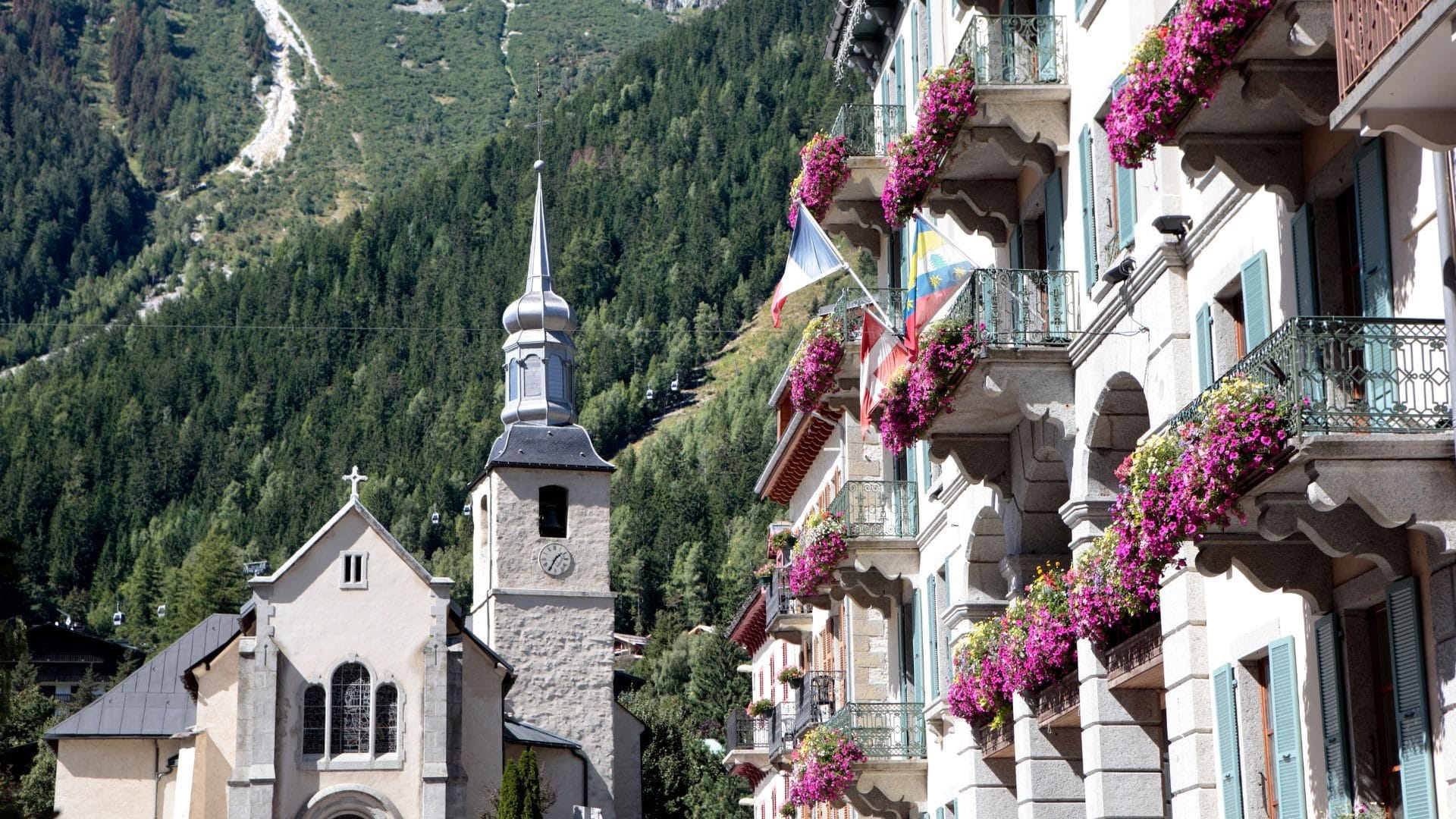
Chamonix stands alone among the world’s ski resorts. At 1,035 metres elevation with ski terrain rising to 3,842m, it combines European prestige with unmatched vertical: the Aiguille du Midi cable car climbs 3,840m in a single ascent, the longest vertical cable pull on earth. For British buyers, Chamonix represents the absolute apex of Alpine property investment—a status that commands premium pricing and, crucially, delivers sustained premium rental demand. New-build chalets and apartments here sit at €14,500–€15,500/m², notably higher than sister resorts Morzine or Les Gets, but that premium reflects genuine scarcity, unparalleled prestige, and the fact that a Chamonix address opens doors to guests and investors worldwide.
This guide walks you through the current Chamonix property market in 2025, the geography of the valley (Chamonix centre, Les Houches, Argentière, Les Praz), what new-build VEFA purchases offer in terms of VAT recovery, how the dual-season appeal (winter skiing plus 30% more summer visitors than winter guests) affects rental yields, and the practical buyer mechanics that matter most for non-resident British investors. We’ve layered in current market data from recent property transactions and insights from the wider Alpine property community to give you numbers rather than marketing copy.
If you’re comparing Chamonix against other Alpine destinations, or considering whether premium pricing justifies investment returns, this guide provides the context. We’ll also address the shift in Chamonix’s short-term rental regulation (one property per owner from May 2025 onwards) and why that actually strengthens long-term investment fundamentals. For Domosno clients, our specialist team can walk you through new-build opportunities and arrange viewings of the Chalets Du Paradis Blanc scheme and other current VEFA inventory.
Location & Valley Geography
Understanding Chamonix Valley: Chamonix Centre, Les Houches, Argentière & the High Altitude Advantage
Chamonix Valley stretches roughly 25km north-south and comprises four distinct sectors, each with different buyer appeal. Chamonix Centre — clustered around the main ski lifts and the famous old town with its cobbled streets, restaurants and bars — remains the most expensive and most sought-after address, particularly for luxury chalets and primary residences. Here, metre prices can reach €15,000–€18,000 on premium properties, and the walking experience of town living combined with slope proximity is what justifies the premium.
Les Houches (1,005m) sits 15km southwest and offers a quieter, more family-oriented village feel with gentler slopes and good beginner terrain. It’s also lower in elevation, which can make spring and early winter less reliable for snow coverage. New-build apartments and chalets here trade around €12,000–€14,000/m², a meaningful discount to central Chamonix. Argentière (1,250m), at the far north of the valley, is higher and attracts serious skiers with direct access to the Chamonix/Argentière ski circuit and excellent off-piste when conditions allow. It’s more of a working village than a resort, with accordingly lower prices (€11,000–€13,500/m²) but less rental volume.
Les Praz is the smallest sector, essentially the hamlet at the base of the Brevent and Flégère lifts on the west side of the valley. Buyers here prioritise quiet and views; pricing is mid-valley (€12,500–€14,500/m²). For new-build investment, location within the valley matters enormously: Centre properties command the highest rents and the strongest buyer interest, while Les Houches and Argentière offer better value and appeal to owner-occupiers. The decision comes down to whether you’re optimising for rental yield (choose Chamonix Centre or Les Houches on the main lift) or for your own use (consider Argentière or Les Praz if you value quiet).
€14,500–€15,500
Typical 2025 new-build apartment prices per m² in central Chamonix (reaching €17,000/m² for prime chalets)
1h45
Drive from Geneva Airport — the longest transfer among major French Alps resorts, offset by unmatched prestige
3,842m
Summit altitude accessed by the Aiguille du Midi cable car — the highest vertical cable pull in Europe
2.5–3.5%
Typical net rental yield for well-managed Chamonix properties with dual-season appeal
Market Data
2025 Chamonix Property Prices: What New-Build Actually Costs
New-build (VEFA) properties in Chamonix are trading at €14,500–€15,500/m² for apartments and €15,000–€17,000/m² for chalets in central locations. For comparison, resale properties sit around €13,000–€14,500/m² for apartments and €14,000–€16,000/m² for chalets — resale generally undercuts new-build, but the VAT reclaim advantage (20% on gross VEFA purchase price for managed rentals) narrows the gap significantly. A new-build €600,000 apartment in a professional rental programme nets approximately €120,000 in VAT recovery post-completion, meaning your effective cost is closer to €480,000 — materially better than a resale equivalent.
Pricing data from recent market analysis shows average Chamonix property values at €13,680/m², with a wider range of €10,342–€18,783 depending on location and specification. The 2025 forecast anticipates annual price growth of 8–10% through 2026, driven primarily by scarcity (new-build collective housing development has been effectively halted by planning restrictions) and prestige. That doesn’t mean every Chamonix property will appreciate at 8–10% annually, but it reflects analyst sentiment on the broader valley trend.
For context: Les Gets trades at €7,000–9,000/m² new-build, Morzine at €6,500–8,500/m², and Megève at €9,000–12,000/m². Chamonix’s premium to other major French Alps destinations is real and reflects its status. If your investment thesis depends on capitalisation yields above 4%, Chamonix may not tick the box; if it depends on capital preservation, prestige, dual-season appeal, and reliable 2.5–3.5% net rental yield, Chamonix becomes defensible despite premium entry prices.
Chamonix Valley Sectors: Where to Buy by Buyer Profile
Chamonix Centre
Les Houches
Argentière
Les Praz
Skiing & Altitude
The Skiing: Altitude, Cable Car Access & Why 3,842 Metres Matters
Chamonix’s skiing is defined by altitude and variety. The resort rises from 1,035m in the town to 3,842m on the Vallée Blanche — accessed by the Aiguille du Midi cable car — and intermediate terrain spreads across multiple sectors. The Brevent-Flégère sector on the west side offers excellent intermediate-to-advanced tree skiing with views into the Mont Blanc massif. The Lognan-Grands Montets sector on the east (accessed from Argentière) is steeper and more technical, popular with experts. The Chamonix valley itself has beginner zones and family-friendly slopes suitable for all levels.
What makes Chamonix distinct from lower-altitude resorts is snow reliability and summer potential. The altitude and glacier access — particularly the Mer de Glace and Vallée Blanche runs — mean reliable skiing through to late April and, in strong snow years, into May. The cable car access to 3,842m is a revenue engine for the resort (year-round sightseeing, mountaineering training, mountain-biking in summer) and crucially for property owners, it positions Chamonix as a 24-week-plus annual property asset: 16–20 weeks of ski season, plus 6–10 weeks of summer mountain tourism demand.
For comparison, lower-altitude resorts like Les Gets (1,172–2,002m) are vulnerable to poor snow years and climate change. Chamonix’s elevation provides natural snow-holding advantage. That said, buyers should note that the 30% summer visitor boost over winter cannot substitute entirely for winter rental shortfalls in poor seasons. The takeaway: Chamonix’s altitude is a genuine competitive advantage, but it doesn’t eliminate seasonal variation in rental income.
“Chamonix’s altitude and prestige deliver dual-season appeal and capital preservation that justify premium entry prices for buyers who value the world’s finest address as much as Return on Investment.”
New-Build & VAT
New-Build VEFA Purchases & the 20% VAT Reclaim: Mechanics & Timing
VEFA (Vente en l’État Futur d’Achèvement) purchases — off-plan contracts signed before completion — in Chamonix qualify for 20% VAT recovery if the property is entered into a classified managed rental programme (location meublée, LMNP tax regime). The math is straightforward: a €600,000 apartment with 20% VAT = €120,000 tax. If you commit to 9 years of professional rental management, you reclaim €120,000 post-completion. This dramatically improves the investment return and is not available on resale properties.
The process: you sign the off-plan contract, pay a sequence of advances (typically 5% at signing, 10% at start of construction, 40% at 50% completion, 45% at final completion), and claim the VAT refund at final signing (acte de vente). French notaries and tax specialists handle the filing; Domosno refers clients to specialist mortgage brokers and notaries who have processed dozens of these transactions. The 9-year rental commitment is enforced by the rental management company (not the government), and properties can be sold at any point — the new owner inherits or releases the rental obligation depending on negotiation.
Current Chamonix VEFA projects include the Chalets Du Paradis Blanc near Les Houches (prices €495,000–€1,335,000, completion 2025–2026), and a handful of apartment blocks in central Chamonix and Argentière at various stages. New-build supply is tight due to planning restrictions, so VEFA projects that come to market are typically pre-sold or heavily subscribed. If you’re considering Chamonix VEFA investment, moving quickly (within weeks of project release) is essential.
| Property Type | 2025 Price Range | Best For | Rental Appeal |
|---|---|---|---|
| 1-bed apartment (new-build) | From €415,000 | Investors, first-time buyers | Moderate (2.5–3%) |
| 2-bed apartment (new-build) | From €620,000 | Small families, renters | Strong (2.8–3.5%) |
| 3-bed apartment/chalet (new-build) | From €945,000 | Families, owner-occupiers | Strong (3–3.5%) |
| 4-bed chalet (new-build) | From €1,300,000 | Luxury investment, families | Strong (3–3.5%) |
| Central resale apartment | €400k–€1.2M | Owner-occupiers, immediate use | Varies widely |
| Premium chalet (resale) | €2.5M–€8M+ | Ultra-prime owner-occupiers | Lifestyle premium |
Rental Market
Rental Yields, Dual-Season Appeal & the Impact of May 2025’s Short-Term Rental Changes
Chamonix’s short-term rental occupancy rate sits around 55–60% annually (reaching 80–90% in peak weeks), and net rental yields on well-managed properties run 2.5–3.5%, comparable to Les Gets but achieved at much higher absolute prices. A €600,000 apartment at 3% net yield generates €18,000 annual income before property tax and maintenance — solid but not dramatic in percentage terms. However, Chamonix’s 30% summer visitor boost over winter is a genuine revenue advantage: a property that earns €12,000 in winter (16 weeks) can earn €8,000–10,000 in summer (10–12 weeks) — two-season appeal that winter-only resorts cannot match.
May 2025 brought a regulatory change: non-primary residents can now own only one short-term rental property in Chamonix. This has suppressed portfolio investors (buyers who accumulated multiple units) but strengthened single-property fundamentals. An owner-occupier or modest investor with one quality apartment is now in a stronger competitive position: the pool of portfolio supply has shrunk, rental demand remains robust, and landlords with a single unit face less regulatory friction than they did when permits were per-property rather than per-owner.
For British buyers specifically, Chamonix offers a unique combination: prestige that justifies higher prices to wealthy owner-occupiers and family groups (who aren’t sensitive to per-m² cost), dual-season yield appeal, and strong English-speaking infrastructure (British buyers represent a disproportionate share of Alpine ownership, and Chamonix’s status means notaries, brokers, and property managers are well-practised in English-language transactions). If you’re buying for personal use and treating rental income as a bonus, Chamonix is defensible. If you’re buying purely on yield and absolute return metrics, Morzine and Les Gets may offer better numbers.
1924
Winter Olympics host
Chamonix hosts the first Winter Olympic Games, establishing its global prestige and attracting wealthy international visitors and property buyers.
1955
Aiguille du Midi cable car opens
The iconic 3,840m cable car ascent becomes an engineering marvel and permanent symbol of Chamonix’s high-altitude advantage.
1980s
Property boom begins
International wealth discovers Chamonix’s property market; prices begin their steady climb relative to other Alpine resorts.
2015
EU inheritance tax advantage
EU cross-border inheritance rules exempt French real estate from British inheritance tax, strengthening appeal to British property owners.
May 2025
Short-term rental regulation change
Chamonix introduces one-property-per-owner limit on short-term rentals, reducing portfolio speculation and strengthening single-property investment fundamentals.
2025–26
Steady 8–10% annual appreciation forecast
Market analysts forecast continued price growth driven by scarcity (no new collective housing) and sustained prestige demand from global ultra-high-net-worth buyers.
Buyer Mechanics
Mortgages, Non-Resident Status & What British Buyers Need to Know
Non-resident British buyers can typically access French mortgages at 70–80% LTV, with premium profiles (strong deposit, stable income, long-term holding intent) reaching up to 85%. Non-EU citizens should expect a cap closer to 70%. In April 2026, fixed-rate mortgages for non-residents run 3.4–4.2%, reflecting the ECB’s recent rate cuts and non-resident premium. Most specialist Alpine mortgage brokers can arrange funds within 8–12 weeks of offer acceptance, which is important if you’re on a VEFA construction timeline.
Notary fees on new-build (VEFA) run 2–4% of purchase price, versus 7–9% on resale — a meaningful cost saving. Stamp duties and land taxes (taxe foncière) apply but are modest. For VAT reclaim processing, you’ll need a French tax number and should file the reclaim within 2 years of completion; the refund typically lands within 6–12 months of filing. Domosno’s referral brokers and notaries handle most of this administratively for clients; you provide income documents and sign forms, and the specialist manages the filing.
Beyond the mechanics: British non-residents pay 0% inheritance tax on French real estate held within EU borders (a 2015 EU cross-border rule), which is a material advantage over UK-owned property. You’ll need a French bank account (trivial, any high-street bank in Chamonix or online will open one), and the buying process guide walks through the timeline step by step. If you have a mortgage broker or notary in the UK who handles Alpine property, they’ll typically coordinate with local French specialists; if not, Domosno’s referral network includes vetted brokers and English-speaking notaries in Chamonix.
Getting There
Access & Logistics: Why Geneva Is Your Gateway
Chamonix sits 85km southeast of Geneva Airport, roughly 1h45 by road (versus 1h15 for Morzine and Les Gets, the closest major resorts). Shuttle services, private transfers, and car rental are all straightforward; multiple operators run scheduled shuttles daily during ski season, and private transfer costs run €80–150 one-way depending on vehicle and operator. For a property owner planning 4–6 weeks of personal use annually, the longer transfer isn’t a deal-breaker; for frequent weekenders from London (4–5 times a season), the extra 30 minutes each way adds up.
Alternative: Eurostar to Paris, then TGV to Le Fayet (near Chamonix, 90km south) takes 7–8 hours but appeals to buyers who prefer rail travel or want to bring substantial luggage. Bus and train combinations exist but require more planning. For rental guests (your investment audience), the Geneva-Chamonix drive is considered standard and doesn’t materially impact booking appeal — most guests flying from London, Manchester or other UK hubs will route through Geneva anyway.
Summer access is simpler than winter: good road conditions and no weather delays mean the 1h45 transfer is reliable year-round. For property owners targeting summer mountain-biking events (Chamonix hosts major UCI competitions) or hiking tourism, logistics are straightforward. The key point: location matters less for rental demand (guests will travel for Chamonix prestige) but more for your personal use frequency if you’re planning regular short trips.
The Verdict
Who Chamonix Is Right For (And Who Should Look Elsewhere)
Chamonix is the right choice for wealthy owner-occupiers and families who want the world’s most prestigious ski address, don’t have tight per-m² budget constraints, and are happy to pay €15,000–€18,000/m² for central chalets and apartments. It’s also suitable for long-term investors (10+ years) who believe in Alpine scarcity value, want stable 2.5–3.5% net yields with capital appreciation upside, and are comfortable with non-resident complexity (mortgages, tax, notaries). The dual-season appeal and altitude advantage make it defensible versus lower-altitude competitors.
Chamonix is probably not right for yield-chasers seeking 5%+ net returns (Morzine and Les Gets will deliver better numbers), buyers on tight budgets (entry price is materially higher), or those prioritising ski-in/ski-out convenience (central Chamonix has some, but Les Houches and outlying villages don’t). If you’re comparing Chamonix against Megève, Courchevel or the ultra-prime markets, Chamonix is actually better value due to lower prices and stronger British buyer demand (which supports rental yields).
For British buyers specifically, Chamonix remains the undisputed prestige play — the address that resonates internationally and justifies premium prices in the prime rental market. If owning the best matters as much as Return on Investment, and you’re committed to the Alps long-term, Chamonix delivers both prestige and defensible investment metrics. Our Chamonix properties page lists current inventory, and the Domosno team can walk through VEFA opportunities and new-build projects in detail.
Common Questions
Frequently Asked Questions
Is Chamonix actually worth the premium over Morzine and Les Gets?
For owner-occupiers and investors who value prestige, yes. Chamonix commands 40–50% higher prices per m² but delivers comparable rental yields (2.5–3.5%) and superior capital appreciation (8–10% annually forecast). If you’re buying purely on yield percentage, Morzine and Les Gets offer better returns. If you’re buying for 10+ year horizons and valuing prestige and dual-season appeal, Chamonix’s premium becomes defensible.
Can I really get €120,000 in VAT recovery on a €600,000 new-build?
Yes, if you enter the property into a classified rental programme (LMNP). The 20% VAT is refundable post-completion on the gross purchase price, and a €600,000 apartment nets exactly €120,000. You must commit to 9 years of professional rental management, but the property can be sold at any point. Non-VEFA (resale) properties do not qualify for VAT recovery.
What’s the snow reliability like at Chamonix’s 1,035m base elevation?
The base is vulnerable to poor early and late season snow, but the altitude (skiing rises to 3,842m) and glacier access provide strong mid-winter protection. Expect reliable skiing December–March; November and April-May are variable. Summer mountain-biking and sightseeing (cable car access) offset seasonal volatility and justify the dual-season rental appeal.
Will the May 2025 short-term rental regulation hurt property values?
No — it strengthens long-term fundamentals. Portfolio investors exit, reducing supply. Single-property owners face less friction. Rental demand remains robust because Chamonix’s prestige attracts guests globally. The change benefits serious owner-occupiers and disciplined investors over speculative landlords with multiple units.
How does the 1h45 transfer from Geneva impact my rental bookings?
Minimally. Guests flying to Chamonix expect the Geneva route and build transfer time into their trip. In fact, the longer journey reinforces Chamonix’s prestige — clients are willing to travel further for the world’s premier ski address. Rental demand is not materially hurt by the extra 30 minutes versus Morzine.
Is it hard to get a French mortgage as a British non-resident?
No, if you have stable income and a 15–30% deposit. Non-residents typically access 70–85% LTV. 2026 rates run 3.4–4.2%, slightly above resident rates. Specialist Alpine mortgage brokers have decades of experience with British buyers; Domosno refers clients to vetted brokers who handle the paperwork and French coordination.
What happens after the 9-year VEFA rental commitment ends?
You can sell, remove the rental obligation (if the buyer doesn’t want it), or continue renting indefinitely. The 9-year commitment is enforced by the rental management company, not the government. At any point you can sell to an investor, an owner-occupier, or another managed-rental buyer; the new owner negotiates terms with the management company or walks away from professional rental.
Is Chamonix a good long-term hold for British buyers?
Yes, for 10+ year horizons. The scarcity (no new collective housing), international prestige, altitude advantage, dual-season appeal, and 8–10% annual appreciation forecast all support long-term holds. Transaction costs (notary, mortgage setup, potential annual taxes) make short-term trading inefficient, but patient investors benefit from capital preservation and steady rental income. The English-speaking infrastructure makes ongoing ownership stress-free.
Featured Properties
Popular Ski Resorts
Morzine
Megève
Chamonix
Les Gets
Alpe d’Huez
Les Deux Alpes
Les Arcs
La Plagne
Courchevel
Méribel
Saint-Martin-de-Belleville
Val Thorens
Val d’Isère
Tignes
Thollon-les-Mémises
Quick Links
All New-Build Ski Properties
All Ski Apartments
All Ski Chalets
New-Build Ski Apartments
New-Build Ski Chalets
Resale Ski Apartments
Resale Ski Chalets