Espace Diamant Guide
Saint-Nicolas-la-Chapelle: Authentic Mountain Village at the Heart of Espace Diamant — Property Guide 2025
A 14th-century village with year-round mountain access, links to six resorts across Espace Diamant, and surprisingly affordable property prices near one of France’s largest ski areas.
19 Jul 2024

Saint-Nicolas-la-Chapelle is a genuine working village in the Val d’Arly region — not a purpose-built resort, but an authentic mountain community with roots in the 14th century. It sits at the foot of Mont Charvin, opposite Mont Blanc, and serves as one of the main gateways to the Espace Diamant ski system, which unites six separate resorts across 192km of pistes and 138 ski lifts. For buyers seeking immersion in authentic Alpine life rather than resort infrastructure, Saint-Nicolas-la-Chapelle offers something increasingly rare: a genuine village with year-round residents, a functioning school, artisan shops, and a 14th-century church, all within 15 minutes’ shuttle of Les Saisies and complete ski-area access.
The village straddles altitudes from 750m in the valley floor to 2,277m on the high ridges, giving it a surprising range of exposures and seasons. Winter brings reliable snow at the ski-area elevations thanks to the Espace Diamant network and regional weather patterns. Summer transforms the village into a hiking and mountain-biking hub, with direct trail access to some of the central Alps’ finest terrain. This guide covers the village itself, its property market, the Espace Diamant network it connects to, seasonal rental dynamics, and what British buyers should know before committing to purchase.
Compared to more famous Les Saisies or Megève, Saint-Nicolas-la-Chapelle attracts fewer international day-trippers, maintains lower property prices, and offers substantially more authentic character. For investors, this positioning is an asset — lower entry costs, less competition for short-term rental guests from larger resorts, and genuine year-round village life rather than seasonal tourism. We’ll walk through the data, the investment mechanics, and the practical logistics of owning property here.
Village Character
Why Saint-Nicolas-la-Chapelle Works: Authenticity in the Age of Purpose-Built Resorts
Saint-Nicolas-la-Chapelle has been continuously inhabited for centuries — the church dates to the 14th century, the village cemetery holds graves spanning 500+ years, and the community maintains its own schools, shops, and local identity independent of tourist seasons. This authenticity matters profoundly to the experience of living in or owning property here. The village has a functioning post office, a small supermarket (Carrefour-branded), a baker, a butcher, a pharmacy, and several artisan shops. Restaurants range from casual village bistros to mountain-focused dining. The local community self-organises events — fairs, markets, traditional celebrations — that tourists don’t drive, which creates a qualitatively different ownership experience than resort-dependent communities.
Altitude-wise, the village core sits at 750m on the valley floor, with residential and development zones climbing the slopes toward 1,100–1,400m where newer apartment blocks take advantage of mountain views and proximity to hiking trails. This elevation variation means that winter snow sits reliably at the 1,000m+ residential bands while the lower valley occasionally sees rain-on-snow conditions; summer is cooler and greener than lowland France, but not so high that afternoon thunderstorms dominate. The Val d’Arly region’s weather sits between the ultra-continental extremes of Chamonix (very cold, very dry) and the Atlantic-influenced western Alps (softer, wetter).
For buyers, the practical advantage of a genuine village is straightforward: you’re not betting entirely on tourism. If short-term rental markets soften (as they periodically do), you’re living in a place with year-round resident demand for services, schools, and community. If you want to reduce time away from family or personal use, the village offers restaurants, social structures, and activities independent of ski season. This ‘village anchor’ reduces portfolio risk compared to pure-resort properties whose viability depends entirely on visitor flows.
€4,319/m²
Average furnished property pricing — 40% cheaper than Les Saisies, 65%+ cheaper than Megève.
192km / 138 lifts
Espace Diamant network span across six linked resorts — the fourth-largest system in France.
6–8%
Gross rental yield range (year-round) for well-positioned apartments; 3–4.5% net after expenses.
18–22%
Cumulative price appreciation over five years — steady growth reflecting known (not discovery) market.
Market Data
Property Prices: Accessible Entry Points Near Espace Diamant
Current property pricing in Saint-Nicolas-la-Chapelle averages approximately €4,319/m² for furnished apartments (the standard investor-oriented sale format). For context, nearby Les Saisies averages €6,200–€7,500/m², while Megève reaches €12,000–€18,000/m² — placing Saint-Nicolas-la-Chapelle roughly 40% cheaper than Les Saisies and 65%+ cheaper than Megève for comparable quality. Furnished listings in Saint-Nicolas typically start from €184,000 for a modest studio or one-bedroom, climbing to €350,000–€550,000 for quality two-bedroom apartments, and €600,000–€1,200,000 for chalets or larger residences.
New-build (VEFA) projects in the village offer the standard French investor advantages: 20% VAT recovery (VAT recovery applies if the property is rented with para-hotel services for a minimum 20-year commitment), notary fees of 2–3% (vs. 7–8% on resale), and structured payment schedules tied to construction phases. Recent VEFA completions in the village have registered transaction prices of €5,200–€6,100/m² for new-build apartments in well-positioned projects with modern amenities and lift access. Resale apartments, reflecting age and condition variation, trade in the €3,800–€5,200/m² range.
Price appreciation over the past five years has been modest compared to discovery-phase areas like Balme or Chamonix — approximately 18–22% cumulative growth. This reflects Saint-Nicolas’ position as a known (rather than newly-discovered) market. The 2026 outlook is for steady 2–4% annual appreciation, driven by regional infrastructure investments (Espace Diamant lift upgrades, improved valley-floor transport links) and growing interest from UK and European buyers in authentic villages rather than resort-centre properties.
Espace Diamant & Comparable Regions: Property Price Comparison
Saint-Nicolas-la-Chapelle
Les Saisies
Megève
Chamonix
Morzine
Courchevel
Espace Diamant Network
Six Resorts, 192km of Pistes, 138 Lifts: Understanding Your Ski Access
Espace Diamant is a linked ski system spanning six separate resort villages across the Val d’Arly region. Les Saisies (the largest hub, 60 pistes, 30 lifts, 1,150–1,941m) sits 15 minutes by shuttle from Saint-Nicolas and serves as the primary entry point. Hauteluce, Chedde-Planpraz, Notre-Dame-de-Bellecombe, Praz-sur-Arly, and Flumet round out the network, offering intermediate-focused terrain across 192km of marked pistes and 138 total lifts. Terrain mix is roughly 40% blue (beginner-easy intermediate), 45% red (intermediate-advanced intermediate), and 15% black (steeper). There are no extreme off-piste areas or glacier access, making Espace Diamant entirely family and intermediate-friendly.
For buyers in Saint-Nicolas specifically: the village connects via shuttle bus to Les Saisies (the network hub) where lift bases and the greatest density of beginner and intermediate terrain exist. Some Saint-Nicolas properties offer longer ski-walk commutes (20–30 minutes on foot) to intermediate lift bases within the village zone, though most residents rely on the shuttle (€2–4 per journey) or private transport. The 2025–26 season runs Dec 20 2025–Apr 6 2026, with snowmaking ensuring reliable coverage on main arteries even in marginal seasons. The network’s altitude profile (1,150–2,069m) sits between sea-level European weather systems and true high-altitude continental patterns, meaning less rain-on-snow than lower areas but less extreme cold than 2,500m+ resorts.
Compared to single-mountain resorts (Chamonix, Morzine), Espace Diamant offers less extreme terrain but more total ski variety — you can ski different resorts on different days without leaving the linked system. Compared to mega-networks like Portes du Soleil or 3 Vallées, Espace Diamant is smaller and quieter, making it appealing to buyers seeking volume and variety without the crowds. The trade-off is limited access to glacier ski touring, extreme terrain, or the international resort culture that drives some buyer demand.
“Saint-Nicolas offers authentic Alpine village life combined with Espace Diamant access, at property prices 40% below Les Saisies and year-round rental potential that makes 6–8% gross yields realistic.”
Seasonal Dynamics
Winter Skiing, Summer Hiking & Year-Round Rental Potential
Winter (Dec–Mar) is the primary revenue season for rental properties in Saint-Nicolas, with rates typically ranging €80–150 nightly for one-bedroom apartments and €120–200 for two-bedroom units depending on location, renovation standard, and booking source (direct, agency, Airbnb). Professional management companies typically achieve 50–65% winter occupancy (Dec–Feb is peak, Jan–Feb stronger than Dec early-season or Mar late-season). A well-positioned two-bedroom apartment averaging €130/night at 60% occupancy generates approximately €15,300 in gross winter revenue over a 90-day season.
Summer (Jul–Aug) brings hikers, mountain bikers, and families escaping lowland heat. Nightly rates drop to €60–100 for comparable apartments — lower than winter but still meaningful. July and August occupancy typically reaches 45–55%, adding €7,500–€9,600 to annual revenue for the same property. Shoulder seasons (May–Jun, Sep–Oct) see sporadic bookings from hiking enthusiasts, contributing an additional €3,000–€5,000 annually for well-marketed properties. Properties positioned near trailheads or with strong online reviews command the highest shoulder-season premiums.
Total annual rental revenue for a quality €400,000 two-bedroom apartment typically ranges €26,000–€32,000 gross (6.5–8% gross yield), dropping to €18,000–€24,000 net after management fees (30%), maintenance (€2,000–€3,000 annually), utilities, insurance, and property tax. Net yields of 3–4.5% are realistic for well-maintained, well-located properties. These returns are competitive with European real estate generally and superior to savings-account or bond yields available to UK investors.
| Metric | Saint-Nicolas | Les Saisies | Espace Diamant Total |
|---|---|---|---|
| Typical furnished apartment | €4,319/m² | €6,200–€7,500/m² | €5,100/m² (average) |
| 2-bed apartment cost | €280,000–€380,000 | €380,000–€520,000 | €350,000–€450,000 |
| Winter nightly rate (2-bed) | €100–€150 | €130–€180 | €110–€160 |
| Summer nightly rate (2-bed) | €60–€100 | €80–€120 | €70–€110 |
| Typical winter occupancy | 50–65% | 60–75% | 55–70% |
| Annual gross yield (2-bed) | 6–8% | 7–9% | 6.5–8.5% |
Infrastructure & Location
Val d’Arly Position: Transport, Proximity & Geographic Advantage
Saint-Nicolas sits in the Val d’Arly between Chamonix valley (55km northwest) and the 3 Vallées (80km southeast), making it a geographic middle ground that appeals to multi-region explorers. From Geneva Airport (approximately 130km, 2h drive), Saint-Nicolas is slightly farther than Chamonix but closer and easier-accessed than Tignes or La Plagne. Annecy (45km, 1h drive) is the nearest substantial town with full services, shopping, and dining; most residents use Annecy for serious medical appointments, shopping, or car services.
Within the village itself, the shuttle bus network connects Saint-Nicolas to Les Saisies (15 min) and links through to other Espace Diamant resorts. A car is genuinely useful but not strictly essential — the shuttle covers primary ski access and Annecy connections. Mountain biking and hiking trails depart directly from the village, requiring no transport other than shoes and water. Summer access to Annecy lake for swimming or Annecy itself for cultural activities is straightforward.
The Val d’Arly’s position offers a subtle advantage: you’re neither in the extreme remoteness of deep Chamonix (Balme/Le Tour) nor the crowded-resort bubble of Megève or Morzine. You have year-round village life, genuine outdoor access, and meaningful contact with French Alpine culture without the relentless tourism that dominates bigger resorts. This positioning suits buyers valuing authenticity and willing to trade some convenience (fewer restaurants immediately adjacent) for genuine Alpine immersion.
Pre-2005
Agricultural & Tourism Base
Saint-Nicolas was primarily an agricultural community with modest seasonal tourism. Winter skiing was local (day-trip level) rather than destination-level tourism.
2005–2015
Espace Diamant Consolidation
The six Val d’Arly resorts formally linked as ‘Espace Diamant,’ marketing coordinated, lift infrastructure improved. Saint-Nicolas became a recognised alternative to Les Saisies for lodging.
2015–2020
French Second-Home Boom
French domestic buyers discovered Saint-Nicolas as an affordable mountain alternative to Chamonix/Mégève. Property investment accelerated, new apartment blocks developed, shuttle bus service modernised.
2020–2023
International Investor Discovery
UK and Northern European buyers, working remotely during COVID, recognised year-round rental potential. Property prices appreciated 18–22%, English-language property marketing emerged.
2023–2025
Established Alternative Status
Saint-Nicolas solidified as a known (rather than emerging) property market. Professional property management companies expanded services, VEFA projects marketed internationally.
2025+
Steady Growth Phase
Continued 2–4% annual appreciation expected as awareness spreads and regional infrastructure investments mature. Property market likely to remain less volatile than discovery-phase areas.
Investment Mechanics
Mortgages, Tax Optimization & Buying as a Non-Resident
Non-resident French mortgage financing is accessible for Saint-Nicolas properties at typical terms of 70–80% LTV (loan-to-value) with fixed 20–25 year rates currently running 3.4–4.8%. A €400,000 property purchase with 70% LTV financing (€280,000 borrowed) at 4.0% fixed costs approximately €1,340/month in principal and interest — fully coverable by winter rental income plus 30–40% of summer income for well-positioned properties. Notary costs run 7–8% on resale purchases, or 2–3% on new-build VEFA with the option for 20% VAT recovery on long-term rental commitments.
The furnished rental (LMNP or BIC regime in France) structure is standard for investor-buyers: rental income is taxed at French marginal rates (approximately 25% combined national and local) after expense deductions. Deductible expenses include: management company commission (30%), property tax (typically €800–€1,200 annually), insurance, utilities, maintenance, and a notional 25% depreciation allowance on the building structure (excluding land). In practice, most well-maintained properties see net (after-tax) returns of 3–4.5% on capital invested.
British buyers holding property directly face UK tax complications: French rental income is UK-taxable at UK marginal rates, and capital gains on eventual sale trigger UK capital-gains tax. Holding property through a French company or UK company structure can defer or optimise these implications, but requires specialist cross-border tax advice (typically €1,500–€3,000 in setup costs). Our buying process guide covers these structures in depth. The upfront tax planning investment is essential for investors targeting multi-property portfolios.
Summer & Year-Round Appeal
Trail Access, Mountain Biking & Summer Income Streams
The Val d’Arly is famous among French hikers as a comprehensive network of well-maintained trails spanning beginner forest walks to serious alpine-scramble ascents. Mont Charvin itself (2,004m, directly above Saint-Nicolas) is a 3-hour ascent offering 360-degree views across to Mont Blanc, the 3 Vallées, and the Giffre massif. La Tournette (2,351m) is a half-day scramble from the village. Col de Loze (1,658m) is a gentle morning walk. The Roselend lake circuit offers afternoon family walks with water views and picnicking areas.
Mountain biking has become substantial — the Val d’Arly hosts regional and national-level events, with trail networks graded from beginner-friendly forest roads (suitable for families renting bikes) to advanced gravity-terrain and slack-line challenges. A well-optimised property rental strategy might combine winter-ski bookings with summer-hiking/biking guest rotations. Professional management companies increasingly market properties for these dual-season audiences, expanding the summer-yield potential significantly above the pure-accommodation model.
Year-round rental appeal is the key differentiator for Saint-Nicolas vs. winter-only resorts. A property generating €16,000 winter revenue plus €8,000 summer revenue (€24,000 total) achieves 6% gross yield on a €400,000 purchase — comparable to quality rental markets globally. This year-round potential, combined with modest entry prices and professional property-management availability, explains why Saint-Nicolas has attracted growing UK investor interest over the past 3–4 years.
Common Questions
Frequently Asked Questions
Is Saint-Nicolas-la-Chapelle better than Les Saisies for property investment?
Les Saisies offers ski-in/ski-out convenience and stronger winter rental demand. Saint-Nicolas offers 40% lower prices, more authentic village character, and comparable year-round rental yields. For pure winter-ski demand: Les Saisies. For balanced year-round returns: Saint-Nicolas.
Can I get financing as a non-resident British buyer?
Yes. Non-residents can typically borrow 70–80% LTV at 3.4–4.8% fixed for 20–25 years from major French banks. Notary costs run 7–8% on resale (2–3% on new-build VEFA). Specialist cross-border tax advice is strongly recommended for UK tax planning.
What’s realistic rental yield for a Saint-Nicolas property?
6–8% gross (year-round), 3–4.5% net after management (30%), maintenance, tax and insurance. Winter alone yields 4.5–6% gross; summer adds 1–2.5%. Professional management is strongly recommended to achieve consistent occupancy across both seasons.
Is the village suitable for permanent residence?
Yes, more so than Balme/Le Tour. Saint-Nicolas has shops, schools, year-round services, and authentic community structures. It’s ideal for semi-retired buyers, families seeking mountain life with village amenities, or investors wanting personal-use weeks mixed with rental seasons.
What’s the difference between winter and summer seasons?
Winter (Dec–Mar): skiing, nightly rates €100–150, 50–65% occupancy. Summer (Jul–Aug): hiking/biking, nightly rates €60–100, 45–55% occupancy. Shoulder seasons (May–Jun, Sep–Oct) see sporadic bookings at hiking rates. Year-round potential is a key advantage.
How does Espace Diamant compare to other French ski networks?
Espace Diamant (192km, 138 lifts across six resorts) is France’s fourth-largest system. It’s intermediate-friendly with no extreme terrain or glacier access — ideal for families and recreational skiers but less appealing to experts seeking off-piste or steep terrain.
What tax implications should I be aware of?
Furnished rental income is French-taxable (25% marginal rate) after expense deductions. British buyers face UK tax on French rental income plus capital-gains tax on sale. French company or UK tax-efficient structures can optimise this — specialist advice is essential (€1,500–€3,000 setup).
Is property management essential?
Strongly recommended. Professional management achieves 50–65% occupancy vs. 30–40% typical for self-managed properties. Commission runs 20–30% of revenue but is deductible. For non-resident owners managing from the UK, professional management is practically essential.
Featured Properties
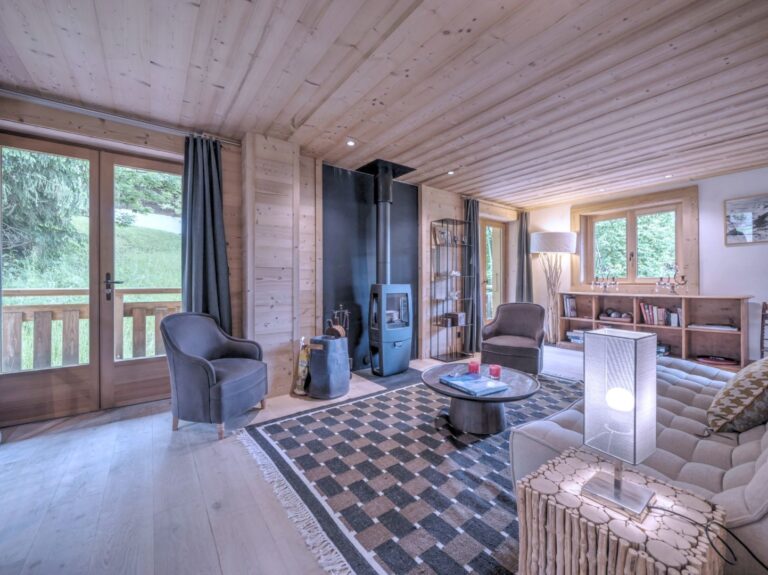
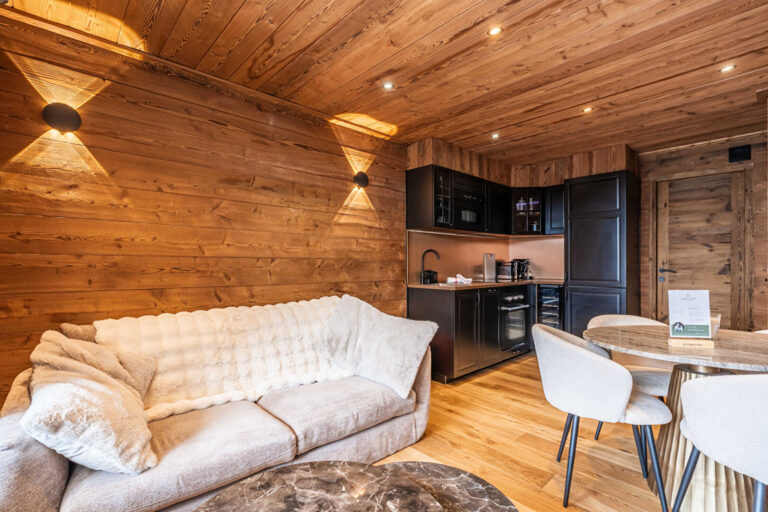
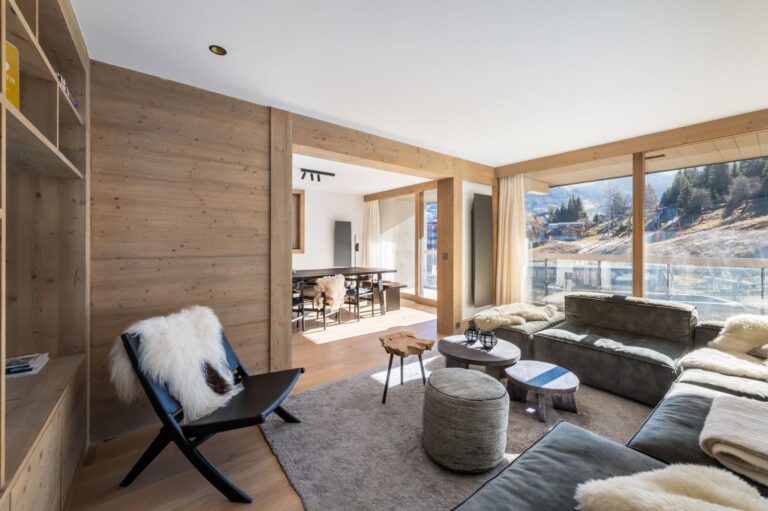
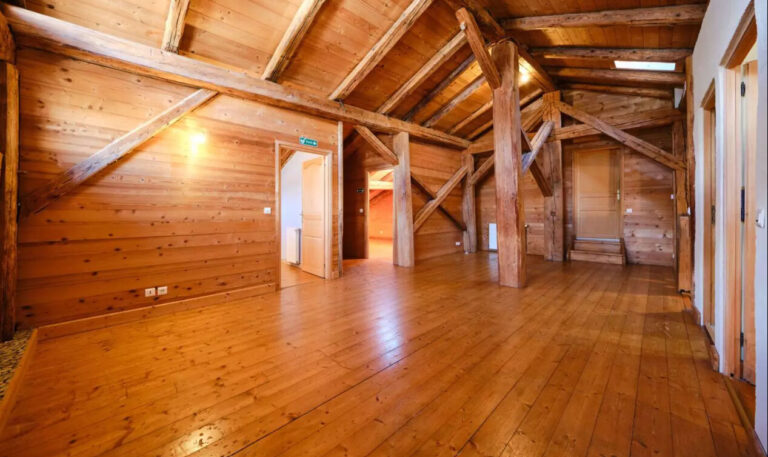
Popular Ski Resorts
Morzine
Megève
Chamonix
Les Gets
Alpe d’Huez
Les Deux Alpes
Les Arcs
La Plagne
Courchevel
Méribel
Saint-Martin-de-Belleville
Val Thorens
Val d’Isère
Tignes
Thollon-les-Mémises
Quick Links
All New-Build Ski Properties
All Ski Apartments
All Ski Chalets
New-Build Ski Apartments
New-Build Ski Chalets
Resale Ski Apartments
Resale Ski Chalets