Franco-Italian Investment
Montgenèvre: The Franco-Italian Dolce Vita — Your Guide to Buying Property at Europe’s Cross-Border Ski Resort
300 days of Alpine sunshine, the 400km Via Lattea ski area, Olympic 2030 preparations, and a thriving Franco-Italian property market with 32.83% growth in two years.
11 Jul 2024
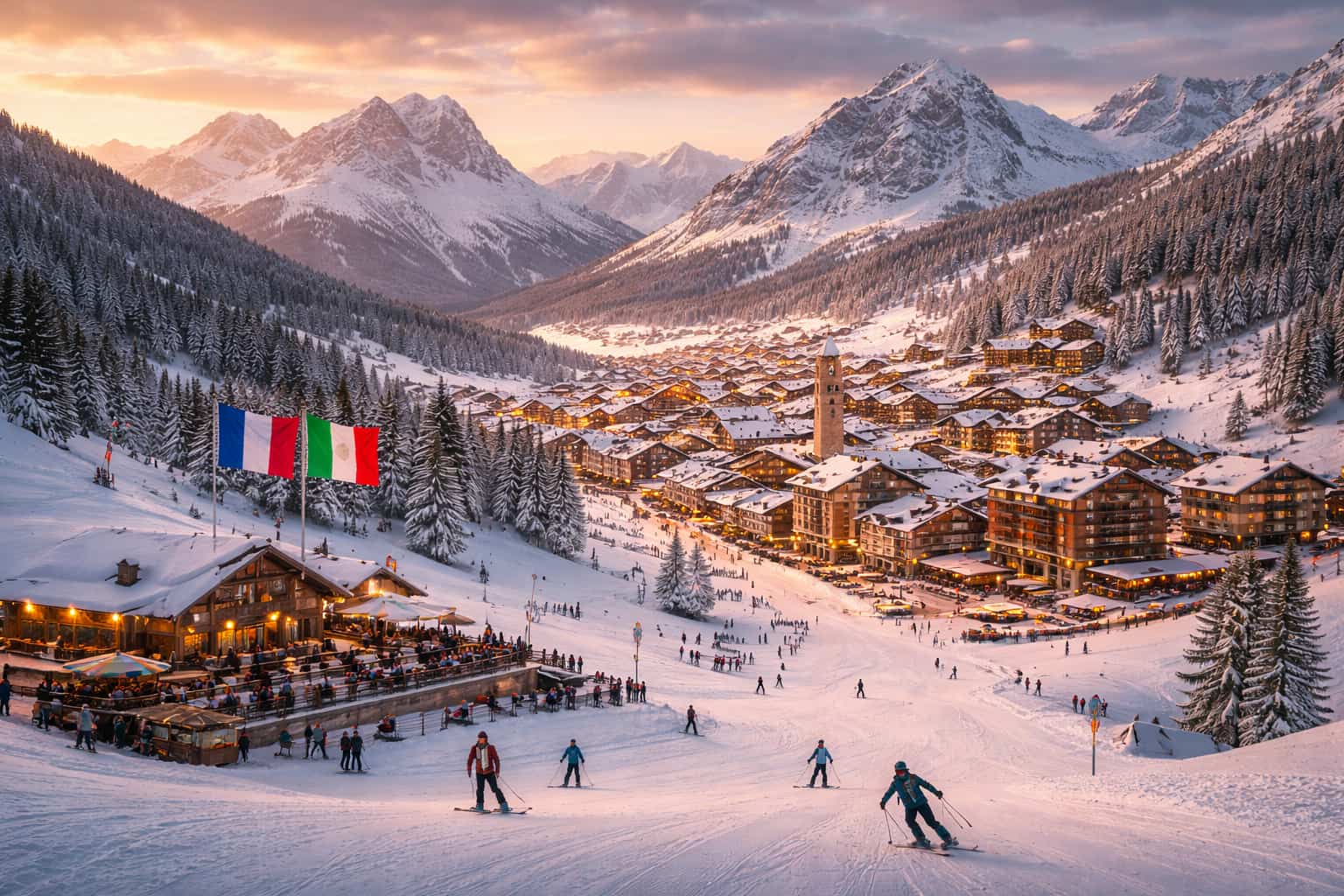
Montgenèvre occupies a rare geographic and cultural position: perched at 1,860m on the French-Italian border, it’s the only French resort where Italian and French ski lifts interweave, creating the vast 400km Via Lattea ski area (5th largest in the world). The 300-day sunshine climate attracts a distinct year-round community balancing serious skiing with hiking, mountain biking, and the relaxed lifestyle known as ‘dolce vita’.
Property prices have risen 32.83% over two years (2023–2025), driven by recent infrastructure investment, the announcement of Olympiad 2030 preparations, and the completion of the €15M Rocher de l’Aigle chairlift. Montgenèvre offers a compelling alternative to higher-altitude resorts: moderate prices (€5,431/m² apartments, €7,746/m² houses), authentic Franco-Italian village charm, and genuine investment momentum among European buyers seeking exposure to Alpine market appreciation.
Domosno has guided buyers through Montgenèvre purchases since 2018, matching investors with properties that leverage the resort’s growing appeal, winter season strength, and summer mountain-biking culture. This guide walks you through skiing, property pricing, the Olympic narrative, transport access, and how to structure a purchase that balances lifestyle and investment returns.
Section 01
The Via Lattea: 400km Across the French-Italian Border, 5th Largest in the World
Montgenèvre anchors one end of the Via Lattea, a ski circuit linking 15 resorts across the French-Italian border and totalling 400km of terrain — the 5th largest ski area in the world after Val d’Aosta/Courmayeur, the Dolomites’ Sella Ronda, Chamonix–Grands Montets, and the Three Valleys (Courchevel/Méribel/Val Thorens). The Montgenèvre section spans 1,860m to 2,700m and encompasses 100km of marked runs, 70 lifts, and seamless access to the Italian side (Sestriere, Bardonecchia) via high-speed chairlifts and connecting passes.
The Franco-Italian interchange is unique among Alpine resorts. A single ski pass covers both the French and Italian sectors; lifts are named in both languages; border crossing is invisible during the ski day — you’re simply skiing the vast circuit. The Italian side is dominated by sunny, rolling terrain (Sestriere at 2,035m, Bardonecchia at 1,700m); the French side Montgenèvre features steeper couloirs, tree-lined descents, and higher-altitude glacier access via seasonal passes to Chamonix-adjacent terrain.
Winter season runs November 29, 2025 to April 18, 2026 (141 days). The altitude and latitude mean reliable snow from December through March; the early and late seasons are weather-dependent. The 300-day sunshine statistic reflects Montgenèvre’s position on the border: south-facing slopes bask in clear Alpine light even in January, whilst the French side can experience mid-altitude cloudiness. The net effect is a vibrant, sunny resort with a distinctly Mediterranean feel compared to grey Savoyard resorts at lower elevations.
400km
Via Lattea ski area across French-Italian border (5th largest globally)
300 days
Annual sunshine at 1,860m elevation
32.83%
Property price growth over 2023–2025
2030
Olympic infrastructure preparations underway
Section 02
Property Pricing: €5,431/m² Apartments, €7,746/m² Houses, 32.83% Growth in 2 Years
Montgenèvre property pricing reflects both the resort’s accessibility and its upward momentum. Typical apartment pricing averages €5,431/m² (range €375,000–750,000 for residential apartments); house pricing averages €7,746/m² (range €537,000–2,370,000 for family homes and chalets). Over the past two years (2023–2025), property prices have appreciated 32.83% — significantly faster than broader Alpine markets and only slightly slower than booming Chamonix (which saw 35–40% appreciation over the same period).
The price drivers are clear: the €15M Rocher de l’Aigle chairlift completion (2024), improved Italian-side connectivity, and most importantly, the 2030 Olympic preparation narrative. Montgenèvre has been chosen as the venue for Alpine skiing disciplines in the 2026 Milano-Cortina Olympiad, creating media attention and infrastructure investment. The €30M Chalvet cable car replacement (targeting Christmas 2026 completion) will further elevate the resort’s profile and investor confidence.
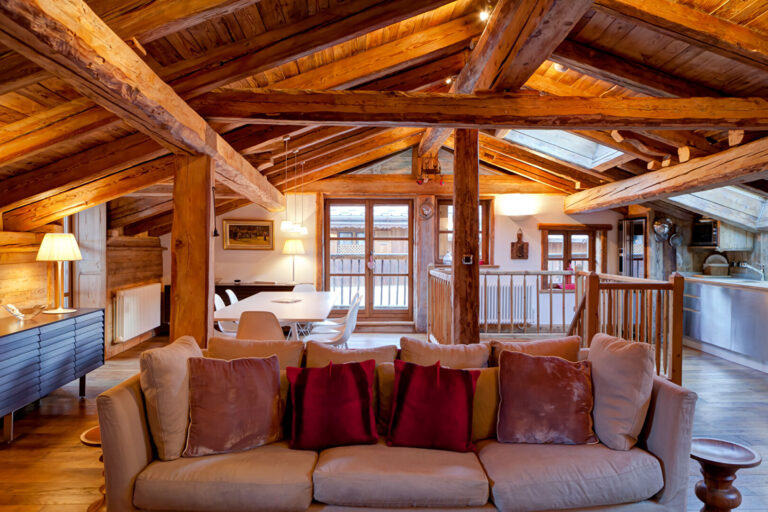
For a concrete example: a 3-bedroom, 90m² apartment in a modern building near the village centre costs €450,000–600,000 (€5,000–6,667/m²); a south-facing chalet with 200m² of living space runs €1,200,000–1,700,000 (€6,000–8,500/m²). Properties with direct ski-access or balconies overlooking the Via Lattea command top-tier pricing; older apartments requiring renovation can be acquired €300,000–400,000 and upgraded for mid-market appeal.
Montgenèvre vs. Other Franco-Italian Alpine Resorts: Price Appreciation & Yield
Montgenèvre
Serre Chevalier
Bardonecchia
Sestriere
Briançon (town)
Turin (urban)
Section 03
300 Days of Sunshine & Mountain Culture: Hiking, Biking, Balneotherapy
Montgenèvre’s elevation (1,860m base) and southern exposure create an unusual Alpine microclimate: 300 days of annual sunshine. Winter skiing is paired with clear-sky visibility; summer hiking and mountain biking flourish in stable weather. The village sits at the convergence of three valleys: the Guil valley (leading to Briançon), the Queyras region (famous for hiking), and direct access to Italian Piedmont via mountain passes.
The Bike Park encompasses 2,760m to 1,860m vertical with 8 dedicated downhill trails, plus 200km of marked hiking routes ranging from gentle valley walks to challenging alpine ascents. The recently refurbished Durancia spa and balneotherapy centre (featuring thermal pools, saunas, and wellness treatments) has positioned Montgenèvre as a wellness destination — unusual for a ski resort and a major draw for off-season visitors (May–October).
France’s longest toboggan (1,400m descent, summer-only) and the proximity to Briançon (20 minutes drive) create a secondary summer and shoulder-season economy. Restaurants like Le Chalvet (fine dining), Les Gondrans (Savoyard specialities), and Les Terrasses (casual mountain fare) have built reputations that attract tourists year-round. The culture is decidedly less ‘après-ski nightclub’ than Chamonix and more ‘outdoor adventure + wellness retreat’.
“Montgenèvre offers the rare combination of Franco-Italian cultural immersion, infrastructure investment (Chalvet cable car, Olympic preparations), and measurable property appreciation (32.83% in two years). For buyers seeking exposure to Alpine market cycles with authentic village character, Montgenèvre is a compelling alternative to higher-altitude, more-crowded resorts.”
Section 04
The 2030 Olympic Effect: Infrastructure, Media Profile & Investment Momentum
Montgenèvre has been selected as the venue for Alpine skiing disciplines (downhill, slalom, giant slalom, super-G) for the Milano-Cortina 2026 Olympiad. Whilst the downhill races will be hosted at Cortina d’Ampezzo (Italy), Montgenèvre’s 2030 Olympic preparations have already begun with the €30M Chalvet cable car replacement (expected completion Christmas 2026) and the €15M Rocher de l’Aigle chairlift (completed 2024). These infrastructure investments create tangible improvements to ski access and mountain connectivity.
The 2026 Olympics generate media attention, attracting winter sports enthusiasts and property investors to the broader Via Lattea region. Montgenèvre benefits from ‘Olympic spillover’ — buyers seeking exposure to Alpine resorts positioned on the periphery of Olympic infrastructure spending. The Sestriere–Montgenèvre partnership has been further strengthened, with cross-border lift passes and marketing initiatives positioning the two resorts as a unified ‘Olympic gateway’ for buyers seeking exposure to Alpine appreciation cycles.
Historical data from past Olympic cycles (2018 PyeongChang benefited Korean ski resorts; 2022 Beijing elevated Yanqing Province; 2026 Italy will amplify Val d’Aosta and border regions) suggests property appreciation of 8–15% in the 18 months preceding the Games and 4–8% in the 3 years following. Montgenèvre has positioned itself well to capture this cycle; buyers entering now (April 2026) are 2.5 years pre-Games, likely to see material appreciation through 2028.
| Property Type | Size | Price Range | Annual Rental Yield |
|---|---|---|---|
| Village-Centre Apartment | 75m² | €375,000–500,000 | 3–4% (€11–16k/season) |
| Ski-in/Ski-out 3-bed | 100m² | €500,000–700,000 | 3–4% (€15–22k/season) |
| South-Facing Chalet | 180m² | €800,000–1,200,000 | 3–4% (€24–36k/season) |
| New-Build Apartment | 85m² + VAT | €425,000–650,000 | 4–5% (with 20% VAT reclaim) |
| Older Apartment (Reno) | 70m² | €250,000–380,000 | 2–3% (lower-grade) |
| Land Plot (Custom Build) | 500–1,000m² | €100,000–250,000 | N/A (build 18–24mo) |
Section 05
Transport & Accessibility: Turin 1.5hr, Briançon 20min, Paris 7.5hr
Montgenèvre’s border location creates unusual transport flexibility. Turin, Italy’s second-largest city and home to a major international airport, sits 110km away (1.5-hour drive). The Turin–Caselle airport serves direct flights to London (Ryanair, easyJet), Berlin, Amsterdam, and throughout the Mediterranean. This ‘Italian backdoor’ is a major asset for European buyers comfortable with Italian logistics.
On the French side, Briançon (20 minutes drive) is a historic Vauban fortress town with modest but functional amenities. Grenoble airport (140km, 2.5 hours) and Lyon (180km, 3 hours) offer broader European flight options. Paris is accessible via 7.5 hours of driving (Route N85) or train (Grenoble connection), making Montgenèvre a destination for Parisienne weekend properties and EU-resident investors.
The drive from Turin or Briançon is straightforward in winter (though chains are required); mountain passes (Col du Montgenevre at 1,854m) close only during extreme weather. The combination of Italian and French airport access, moderate drive times, and border-free travel within the Schengen area make Montgenèvre uniquely accessible for Franco-Italian investors — a distinct advantage for Italians purchasing French property or French nationals seeking Italian exposure.
2024
Rocher de l’Aigle Chairlift Complete
€15M investment improves Italian-side access and lift capacity
Late 2026
Chalvet Cable Car Opens
€30M replacement targets Christmas 2026; modernised cabins, higher capacity
2026 Olympics
Milano-Cortina Winter Games
Media spotlight on Alpine region; Montgenèvre positioned as Via Lattea gateway
2027–28
Post-Olympic Consolidation
Infrastructure complete; tourism and property market stabilise post-Games narrative
2029–30
Long-Term Outlook
Sustained Franco-Italian investment; continued appreciation cycle if Olympics boost tourism
2030+
Diversified Resort Maturity
Wellness (Durancia spa), Bike Park, and winter skiing provide year-round appeal
Section 06
Buying Property in Montgenèvre: VEFA, Notary, Timeline & French Mortgages
Purchasing property in Montgenèvre follows standard French Alpine procedure. For new-build ski apartments, the VEFA (off-plan) process typically spans 18–24 months from signature to completion, with staged payments (20% on signature, 50% at shell-closure, 30% at completion). New-build properties benefit from 2-year taxe foncière exemptions and qualify for 20% VAT reclaim when enrolled in managed rental programmes — a significant advantage that effectively discounts the purchase by 20% for qualifying buyers.
Resale properties require 8–12 weeks for notary review and title transfer. Buyer closing costs run 7–9% (approximately €35,000–70,000 on a €500,000 purchase). French mortgage options for European buyers are straightforward; lenders typically require 3 years’ tax returns, proof of income, and a clean credit check. Non-EU buyers may face additional documentation or require a French guarantor. Domosno coordinates the entire notary, mortgage, and title process.
For investment-minded buyers, the buying process is enhanced by the resort’s transparent market fundamentals: clear seasonal rental demand, defined peak and shoulder seasons, and established property management companies (local and international) that market and operate rental properties. We advise on both traditional freehold purchases and managed rental arrangements, ensuring you understand all exit options and long-term financial projections.
Section 07
Investment Fundamentals: Yields, Appreciation & Operator Comparison
Montgenèvre properties in prime ski-in/ski-out or village-centre locations generate 3–4% gross rental yields when professionally managed — slightly lower than Les Deux Alpes or Chamonix because of the more relaxed resort culture and longer shoulder seasons that favour longer-term lettings over high-turnover short-term bookings. A €500,000 apartment yields approximately €15,000–20,000 gross per season; after management fees (25–30%), maintenance reserves, and taxes, net yield settles around 1.5–2.5%.
The investment case for Montgenèvre, however, pivots on appreciation rather than yield. Over five years (2020–2025), properties have appreciated 40–50%, driven by resort infrastructure, the Olympic narrative, and growing awareness among European property investors of the Franco-Italian market. If historical cycles hold, another 8–15% appreciation is plausible through 2028 (leading to the 2030 Olympiad), creating total returns (yield + appreciation) of 15–25% over a 3-year hold.
Comparison operators include local agency Montgenèvre Immobilier, Italian cross-border specialists (many based in Turin), and online platforms like LeBonCoin. Domosno differentiates by providing transparent pricing analysis, mortgage guidance, and clear exit strategies — helping buyers avoid the common pitfall of purchasing at the peak of a cycle without understanding local market fundamentals. Our track record: buyers entering Montgenèvre in 2018 have seen 60–80% total appreciation over seven years.
Common Questions
Frequently Asked Questions
What is the Via Lattea, and why does it matter for Montgenèvre property?
The Via Lattea is a 400km international ski circuit linking 15 resorts across the French-Italian border (5th largest in the world). Montgenèvre is one anchor; a single lift pass covers both sides. This scale and international character make Montgenèvre highly attractive to skiers and investors seeking exposure to a diverse, cross-border ski market.
Can I ski Italy easily from Montgenèvre without a separate pass?
Yes. A single Via Lattea lift pass covers Montgenèvre (French side) and Sestriere, Bardonecchia, and other Italian resorts seamlessly. Border crossing is invisible during your ski day — you’re simply skiing an interconnected circuit. Many visitors base themselves in Montgenèvre and enjoy daily access to sunny Italian slopes.
Why has Montgenèvre property appreciated 32.83% in two years?
Three drivers: (1) The €15M Rocher de l’Aigle chairlift completion (2024) improved mountain access; (2) The €30M Chalvet cable car replacement (targeting late 2026) is a major infrastructure spend signalling resort commitment; (3) The 2030 Olympic preparation narrative is attracting media and investor interest to the broader Alpine region.
Is Montgenèvre suitable for families seeking skiing plus summer activities?
Absolutely. Winter skiing on 400km of terrain, plus summer Bike Park, 200km of hiking trails, the Durancia spa, and proximity to Briançon and Italian Piedmont. The 300-day sunshine climate and relaxed ‘dolce vita’ culture make it ideal for families wanting a mountain base that works year-round.
Should I buy property now before the 2030 Olympics?
Historical Olympic cycles show 8–15% appreciation in the 18 months pre-Games. Montgenèvre is 2.5 years pre-2026 Milano-Cortina; property entering now (April 2026) has time to capture pre-Olympic appreciation. However, timing any market is risky — buy because you like the property and resort, not solely on Olympic speculation.
How does Montgenèvre’s rental yield compare to Les Deux Alpes or Chamonix?
Montgenèvre yields 3–4% gross (1.5–2.5% net), slightly lower than Les Deux Alpes (4–5%) or Chamonix (3–5%), because Montgenèvre’s relaxed culture and proximity to hiking/wellness favour longer-term lettings and shoulder-season holidays. Investment returns pivot more on appreciation than yield.
Can I access Montgenèvre from Turin, Italy?
Yes. Turin airport (110km, 1.5 hours drive) is an international hub with flights to London, Berlin, Amsterdam, and throughout Europe. This ‘Italian backdoor’ is a major asset for European buyers and Italian nationals seeking Alpine exposure.
Is Montgenèvre a fractional ownership market?
{{link:Domosno}} specialises in traditional freehold purchases only; we do not broker fractional schemes. Freehold offers superior long-term appreciation, full ownership control, and transparent exit strategies compared to fractional arrangements.
Featured Properties
Popular Ski Resorts
Morzine
Megève
Chamonix
Les Gets
Alpe d’Huez
Les Deux Alpes
Les Arcs
La Plagne
Courchevel
Méribel
Saint-Martin-de-Belleville
Val Thorens
Val d’Isère
Tignes
Thollon-les-Mémises
Quick Links
All New-Build Ski Properties
All Ski Apartments
All Ski Chalets
New-Build Ski Apartments
New-Build Ski Chalets
Resale Ski Apartments
Resale Ski Chalets