Resort Spotlight
Les Arcs Property Guide: Arc 1600, 1800, 1950 & 2000 — Which to Buy in 2025
The four villages of the Les Arcs ski area, from 1600’s wooded calm to Arc 2000’s high-altitude snow certainty — and the 2025 price-per-m², Paradiski context and buyer tradeoffs for each.
23 Jan 2024
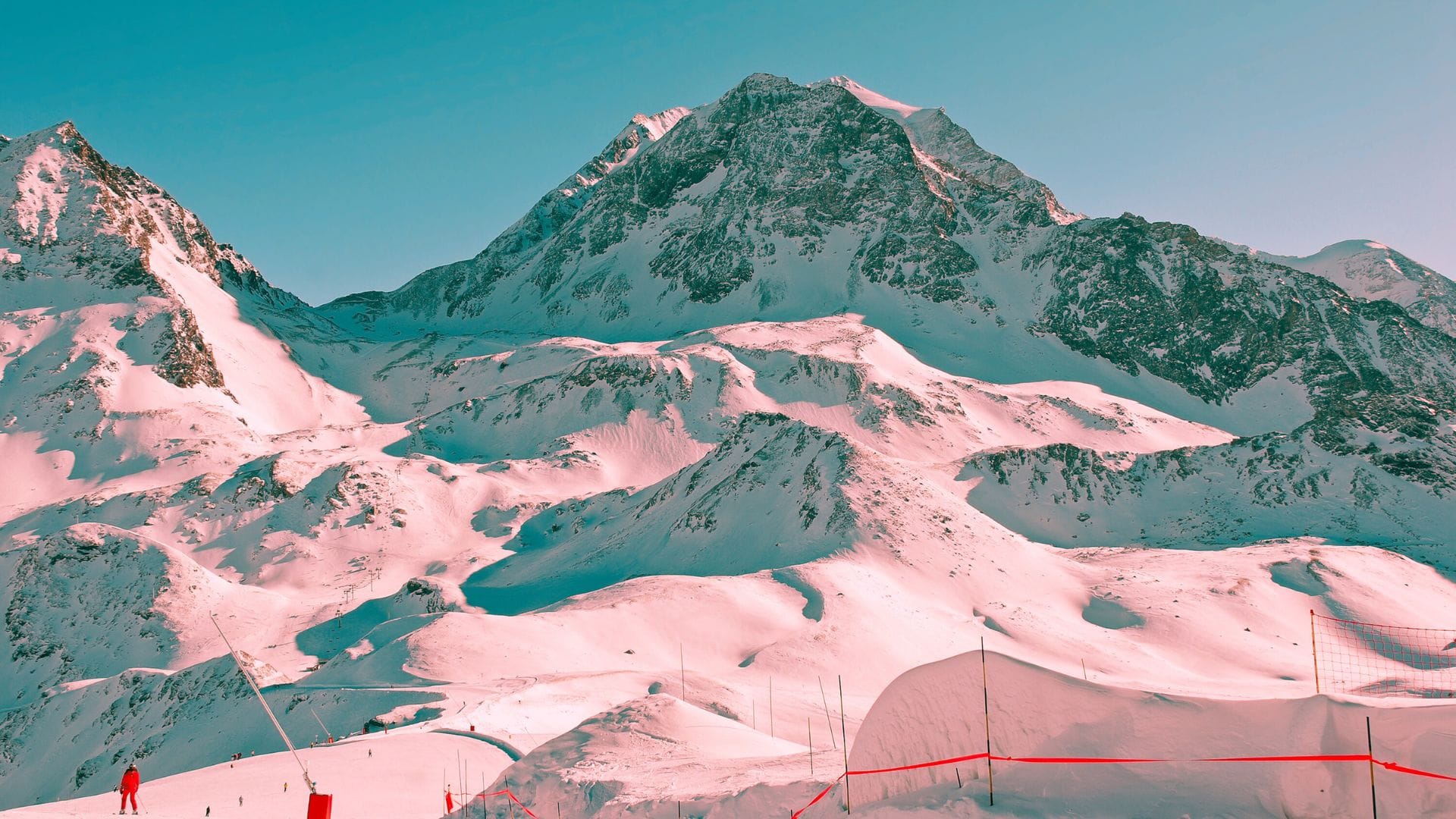
Les Arcs is one of the French Alps’ most misunderstood resorts, and much of the confusion comes down to the fact that it isn’t really one resort at all — it’s four separate villages at four distinct altitudes, each with its own character, architecture, clientele and price level. The spread is genuinely dramatic: from Arc 1600, the original 1960s pioneer village tucked into the pine trees, to Arc 2000, the high-altitude modernist outpost within ski-walk of glacier terrain. A buyer who comes to Les Arcs looking for ‘a property in Les Arcs’ is actually choosing between four different investments with four different rental profiles and four different lifestyle propositions.
This guide is the Domosno buyer’s walkthrough of all four villages, updated for 2025 with current property prices, the Paradiski area context that makes Les Arcs one of the most extensive skiing propositions in the Alps, the transport upgrades that have quietly transformed accessibility (including the Bourg-Saint-Maurice funicular from the TGV station), and the specific tradeoffs that matter most when choosing between Arc 1600, 1800, 1950 and 2000. Whether you’re considering a compact studio in the original village or a premium three-bed ski-in chalet at altitude, there is almost certainly a Les Arcs address that fits your brief — but only once you understand how the four villages actually differ.
For context, the full Les Arcs ski domain covers 200km of its own pistes and connects via the Vanoise Express cable car to La Plagne, creating the combined Paradiski area of 425km of linked skiing — the third-largest connected ski area in France, behind only the 3 Vallées and the Portes du Soleil. This scale, combined with Les Arcs’ altitude range from 1,600m to 3,226m at the Aiguille Rouge, is the fundamental property-value driver across all four villages. Our live listings for the whole resort are on our Les Arcs property page.
Arc 1600
Arc 1600: The Original Pioneer Village at the Treeline
Arc 1600 (also known as Arc Pierre Blanche) is the original Les Arcs village, opened in 1968 at the heart of the pine forests that define the lower mountain. It sits at 1,600m altitude, directly above Bourg-Saint-Maurice, and is connected to the valley by the celebrated Arc-en-Ciel funicular — a seven-minute ride from the TGV station that makes Arc 1600 one of the most rail-accessible ski resorts in the Alps. For British buyers arriving via the Eurostar-TGV combination, you can step off a train in Bourg-Saint-Maurice and be boot-clipped into your skis at Arc 1600 within 20 minutes, without ever getting into a car.
Architecturally, Arc 1600 is the quietest of the four villages. The original Charlotte Perriand-designed residences (yes, the famous Le Corbusier collaborator was architect-in-chief for much of Les Arcs’ original build programme) set a low-rise, integrated-into-the-forest tone that has aged remarkably well. Unlike the higher villages, 1600 feels like a genuine small-town community, with locally-run shops, a primary school, a church, and a population of long-term Savoyard residents. It’s the most atmospheric of the four villages, and for buyers who value quiet, character and the pine-forest aesthetic over raw snow altitude, it is often the clear winner.
The news that matters most for Arc 1600 in 2024 and 2025 is the relaunch of the flagship Club Med Arc Pierre Blanche at the heart of the village. Club Med’s investment in the site has brought the resort back into its prime destination footprint and materially improved year-round visitor volume, which has tightened rental demand for independent properties in the village. Property prices in Arc 1600 are typically the lowest of the four villages (€5,500–7,500/m² for apartments in 2025) precisely because the altitude is lower and the village is smaller — but that price gap is meaningful and the lifestyle tradeoff is a subjective call rather than an obvious loss.
Property caveats: Arc 1600 sits at the lower end of the snow-altitude envelope. In warmer seasons the village itself may not be ski-in/ski-out throughout the winter, and the northern-aspect pistes are the most reliable. The village is best considered for buyers who value the train accessibility and forest setting over last-chair ski-in convenience, and who are willing to ride the Transarc gondola into the higher terrain for the main skiing day.
425km
Total linked pistes in the Paradiski area (Les Arcs + La Plagne via the Vanoise Express)
2,026m
Vertical drop from the Aiguille Rouge summit (3,226m) to Villaroger base (1,200m)
€5,500–13,000
Full 2025 new-build price range per m² across Arc 1600, 1800, 1950 and 2000
7 mins
Arc-en-Ciel funicular ride from the Bourg-Saint-Maurice TGV station to Arc 1600
Arc 1800
Arc 1800: The Main Resort Village and Commercial Heart
Arc 1800 is the biggest and busiest of the four villages, and for most buyers it is the de-facto default choice — not because it’s the best at any single thing, but because it is genuinely the most balanced. The village sits at 1,800m, offers the widest selection of restaurants, bars, shops and ski schools, and serves as the gateway to most of the Les Arcs ski domain via the Transarc gondola and the Arpette lift network. For a mixed-ability family group or a ski-and-après crowd, Arc 1800 is the correct starting point.
The village is structured around three distinct quarters — Charvet, Villards and Chantel — each with its own aesthetic and clientele profile. Charvet is the commercial heart with the main lift base and the biggest concentration of shops and restaurants; Villards is the quieter residential zone with the best views across the valley to Mont Blanc; and Chantel is the highest and quietest, with some of the best ski-in/ski-out apartment stock. Buyers should walk all three quarters before committing, because the rental yield and personal-use experience differ markedly even within a single Arc 1800 address pool.
Property pricing in Arc 1800 sits at €7,000–10,500/m² for new-build apartments in 2025, with the very best ski-in/ski-out positions at Chantel or the modern Edenarc-style developments reaching towards €11,000/m². Resale apartments trade in a broader €5,500–8,500/m² range reflecting the wide variation in building quality and renovation status. A central 2-bed apartment here typically delivers €22,000–€32,000 gross annual rental income on strong occupancy weeks, translating into a 3–3.5% net yield under professional management.
The food scene is the best of the four villages by a clear margin, with a cluster of good restaurants in Charvet and on the Arpette side, and Arc 1800’s après-ski on the Chantel side is lively without being overwhelming. For buyers looking for a one-stop village with the full commercial menu — and the best liquidity if you ever need to sell — Arc 1800 is consistently the safest choice in Les Arcs. Our Les Arcs listings weight heavily toward this village because it is where the greatest depth of new-build inventory is consistently available.
Les Arcs Villages Compared: Price, Snow Reliability and Rental Yield
Arc 1600 (value, character)
Arc 1800 (balanced, liquid)
Arc 1950 (premium investor)
Arc 2000 (high altitude)
Arc 1950
Arc 1950: The Premium Purpose-Built Village at Altitude
Arc 1950 is the youngest of the four villages — opened in 2003 — and it is unique within Les Arcs for having been designed from the outset as a premium, unified architectural ensemble by Intrawest (now Alterra Mountain Company). The result is a village that looks deliberately like a traditional Savoyard hamlet but with fully modern infrastructure: pedestrianised streets, underground parking, heated walkways, and apartment stock that is consistently the newest and best-equipped in the Les Arcs portfolio.
The altitude matters enormously here. Arc 1950 sits at 1,950m, meaningfully higher than Arc 1800 and with north-facing access to the Villaroger sector and the glacier skiing above. Snow reliability is materially better than at 1600 or 1800, and the village is genuinely ski-in/ski-out for the vast majority of the winter season with minimal compromise. For buyers for whom ‘I just want to click into skis at the front door and ski back to it at the end of the day’ is non-negotiable, Arc 1950 is the clearest answer in Les Arcs.
Property pricing reflects all of this. Arc 1950 trades at €9,500–13,000/m² for new-build and renovated apartments, with the premium chalets at the edges of the village reaching €15,000/m² and above. A central 2-bed at Arc 1950 typically costs €650,000–€900,000, and the 3-bed segment starts from around €950,000. Rental yields are strong — 3–4% net under professional management — because the village consistently books 90%+ through high winter season, and the pedestrianised aesthetic photographs beautifully in property listings.
Arc 1950 is also unusual within Les Arcs in that the entire village is operated under a single managed-rental programme (Pierre & Vacances-Center Parcs / MGM-style arrangements), which works well for investor buyers who want a hands-off experience and are happy to use the property a few weeks per year. For buyers who want more direct control or personal use, new-build ski apartments in Arc 1800 or 1600 give more flexibility — but Arc 1950 remains the single strongest ‘invest and forget’ option in the resort.
“Les Arcs is four resorts in one — and a buyer who understands the difference between Arc 1600, 1800, 1950 and 2000 can find a property that fits any brief from character-hunter to glacier-purist investor.”
Arc 2000
Arc 2000: High Altitude, Direct Glacier Access
Arc 2000 is the highest and — by many measures — the most purely ski-focused of the four villages. Opened in 1979 at 2,100m (the ‘2000’ is marketing-rounded), it sits at the foot of the Aiguille Rouge, the 3,226m peak that dominates the upper mountain. From Arc 2000 you are one cable-car ride from the glacier terrain, direct-descent access to Villaroger, and the full upper-mountain skiing experience without the need to ride through lower sectors first. For serious skiers whose priority is uncompromised snow altitude and quick access to difficult terrain, Arc 2000 is the obvious home.
Architecturally, Arc 2000 is the most purpose-built and controversial of the four villages. The original 1970s-80s buildings include some genuinely striking modernist experiments — Bernard Taillefer’s Cascade and Varet residences are notable — alongside less successful high-rise blocks. For some buyers this is an acquired taste; for others it’s a deliberate aesthetic choice, echoing the post-war optimism of the French ski-resort programme. More recent developments (particularly around Le Club Med Arcs Panorama at Arc 1950/2000) have added more traditional chalet-style stock to the mix.
Property pricing at Arc 2000 sits at €7,500–11,000/m² for 2025, with premium addresses (the Edenarc-style developments, ski-in/ski-out positions near the cable-car base, renovated modernist flats) reaching towards €12,500/m². The village is quieter than Arc 1800 in the evenings with a smaller but loyal bar and restaurant scene, and the winter atmosphere feels more focused on skiing than on après — a feature rather than a bug for the target buyer profile.
Snow reliability at Arc 2000 is outstanding — at this altitude and on this aspect, the season typically runs from early December to early May without compromise. For buyers worried about climate change eroding lower-altitude resorts over the coming decades, Arc 2000 is one of the clearer long-term hedges in the French Alps, along with the high villages of Val Thorens, Tignes and Val d’Isère. The investment case here is as much climate-defensive as it is lifestyle-offensive.
| Village | Altitude | 2025 Price €/m² (new-build) | Best For |
|---|---|---|---|
| Arc 1600 Pierre Blanche | 1,600m | €5,500–7,500 | Character, train access, value |
| Arc 1800 (Charvet) | 1,800m | €7,000–10,500 | Lively central base, rental liquidity |
| Arc 1800 (Chantel) | 1,800m | €7,500–11,000 | Ski-in/ski-out, residential quiet |
| Arc 1950 | 1,950m | €9,500–13,000 | Premium investor, managed rental |
| Arc 2000 | 2,100m | €7,500–11,000 | Snow certainty, glacier access |
| Bourg-Saint-Maurice | 840m | €3,800–5,800 | Year-round base, TGV commuters |
The Ski Area
The Paradiski Area: 425km, Three Glaciers and the Vanoise Express
The skiing is the reason to buy in Les Arcs at any altitude, and it is genuinely first-class. The Les Arcs ski domain alone offers 200km of marked pistes, but the combined Paradiski area — formed when the Vanoise Express cable car opened in 2003 to link Les Arcs with La Plagne — covers 425km of linked skiing, three glaciers, and a vertical drop of over 2,100m from the Aiguille Rouge summit down to Villaroger at 1,200m. Only the 3 Vallées in the central French Alps has a larger linked area, and in terms of vertical drop Les Arcs is close to unrivalled.
The terrain mix suits all levels. Beginners have dedicated zones at each of the four villages, with particularly good learning areas at Arc 1800 Charvet and Arc 1950. Intermediates get the broadest choice — the sunny front-facing red runs that drop back to 1800 and 1950, the Villaroger sector for the long wooded descents, and the Comborcière sector for its dramatic north-facing vert. Advanced skiers head for the Aiguille Rouge glacier drops, the off-piste in the Dou de l’Homme sector, and — on good days — the Mont Blanc-view backcountry above Arc 2000.
Lift infrastructure has been steadily upgraded over the past decade. The Transarc gondola serving the 1800/1950 hub is a fast and reliable main artery, and the Vagère/Arpette-Arcabulle sector has seen multiple detachable chair replacements in recent seasons. The Vanoise Express itself remains one of the engineering showpieces of the French Alps — a double-decker cable car spanning 1,850m in 4 minutes with a 380m drop between its two 80m-tall pylons, carrying skiers between Plan Peisey (Les Arcs side) and Montchavin (La Plagne side). For Paradiski passholders this link transforms a good ski area into a great one.
Snow-making coverage is strong across the main routes back to all four villages, and the combination of high altitude at Arc 2000 and north-facing aspects at the Villaroger sector keeps the season long. 2024–25 lift upgrade investment across the domain, alongside continued Paradiski pass integration with La Plagne, keeps the long-term skiing proposition firmly competitive.
1968
Arc 1600 opens
The original Les Arcs village launches with Charlotte Perriand as architect-in-chief, pioneering integrated-forest ski-resort architecture.
1974
Arc 1800 launches
The larger, commercially-focused village opens with expanded lift infrastructure and becomes the main Les Arcs resort hub.
1979
Arc 2000 opens
The high-altitude village adds glacier access and the Aiguille Rouge cable car, completing the upper-mountain ski proposition.
2003
Arc 1950 + Vanoise Express
The purpose-built premium village opens alongside the Vanoise Express cable car linking Les Arcs with La Plagne to create Paradiski.
2024
Club Med 1600 relaunch
Club Med’s substantial reinvestment in Arc Pierre Blanche brings fresh momentum and tightened rental demand to the original village.
2025
Lift modernisation programme
Ongoing Transarc and Arpette-sector upgrades continue to improve lift capacity across the main Arc 1800/1950 hub.
Market Context
2025 Property Prices and the Paradiski Buyer Profile
Property prices across Les Arcs reflect the altitude-and-quality gradient we’ve walked through: Arc 1600 at the value end, Arc 1800 at the broad mid-market with the deepest inventory, Arc 1950 at the premium investor-friendly end, and Arc 2000 as the high-altitude ski-purist specialist. The differences are substantial — a 2-bed apartment can cost €420,000 at Arc 1600 and the same layout at Arc 1950 will reach €820,000 — and they reflect real differences in rental demand, snow reliability, and long-term capital appreciation potential rather than arbitrary pricing.
The typical Les Arcs buyer profile splits between British and French domestic, with a smaller but growing Dutch, Belgian and Scandinavian presence. British buyers tend to favour Arc 1800 (commercial convenience, English-speaking infrastructure) and Arc 1950 (investment simplicity, premium aesthetic). French domestic buyers are more commonly found at Arc 1600 (traditional character, Bourg-Saint-Maurice train access) and Arc 2000 (ski purist). This split matters because it affects resale liquidity and the pool of future buyers your property will eventually be sold to.
Rental yield expectations across the four villages run 2.5–4% net under professional management, with Arc 1950 consistently at the top of that range and Arc 1600 at the bottom. Summer demand — the gradual rise of Les Arcs as a mountain biking, hiking and mountain-road cycling destination — has noticeably improved year-round yield compared to winter-only metrics. For investment-led buyers the French mortgage and French property tax mechanics we’ve written about elsewhere make the combined after-tax return comfortably competitive with other major French ski-property markets.
Ultimately, Les Arcs is one of the four or five resorts in France we consistently recommend to buyers who want to combine first-class skiing, a genuinely diverse village set to choose from, excellent transport access (the TGV funicular is a category-defining feature), and a price level that still sits meaningfully below the top-tier 3 Vallées and Espace Killy headline numbers. The four-village structure is a feature, not a bug — it means a broader range of buyers can find a property that fits their specific brief than in any single-village resort.
The Verdict
Which Les Arcs Village Is Right for You?
If you want the best access from the UK by train, the most atmospheric village, and the lowest entry price point — with the tradeoff of lower snow altitude and a smaller commercial scene — Arc 1600 is your answer. The Bourg-Saint-Maurice funicular is a genuinely unique transport asset, and the relaunched Club Med has brought fresh momentum to the village.
If you want the widest choice, the liveliest village atmosphere, and the most inventory depth for both personal use and rental — with tradeoffs around snow altitude and crowds in peak weeks — Arc 1800 is the default answer and the right choice for most mixed-ability family groups. Walk all three quarters (Charvet, Villards, Chantel) before committing.
If you want premium investor simplicity, the newest apartment stock, and strong snow reliability, with pedestrianised aesthetics and managed-rental convenience — at the highest price points in the resort — Arc 1950 is the clear winner. The single-village managed programme works particularly well for owners who want to use the property 4–8 weeks per year and let it otherwise.
And if you want uncompromised snow altitude, direct glacier access, and the quietest evenings of the four villages — with the tradeoff of modernist architecture and a smaller commercial scene — Arc 2000 is the right choice. For climate-defensive long-term holds in an era of warming lower-altitude resorts, Arc 2000 is also one of the strongest hedges in the entire French Alps. Our Domosno team can walk through live listings at all four villages and match the right property to your specific brief.
Common Questions
Frequently Asked Questions
Which Les Arcs village has the best snow reliability?
Arc 2000 at 2,100m and Arc 1950 at 1,950m have the most reliable snow across the winter season, with direct access to high-altitude glacier terrain at the Aiguille Rouge (3,226m). Arc 1600 and parts of Arc 1800 sit at lower altitudes where early and late-season snow is less guaranteed, though snow-making coverage and north-facing aspects mitigate this for the main connecting pistes.
How does Les Arcs compare to La Plagne for property buyers?
Les Arcs and La Plagne are directly linked by the Vanoise Express and form the combined Paradiski area, so the ski-area choice is essentially the same. Property-wise, Les Arcs tends to have a clearer architectural-tier split across its four villages, while La Plagne’s 11 villages range more widely in character from the pastoral hamlets (Montchavin, Champagny) to the purpose-built high-altitude centres (Plagne Centre, Belle Plagne).
Can I ski from one Les Arcs village to another?
Yes — the four villages are fully interconnected by lifts and pistes. You can ski from Arc 2000 down to Arc 1800 or 1950 via the Arpette sector, from 1800 to 1950 directly, and from Arc 1800 down to Arc 1600 via the Cachette sector. Returning up requires a lift ride on the Transarc gondola or equivalent infrastructure. This inter-village connectivity is one of the quiet advantages of the Les Arcs set-up for mixed-group visits.
Is the Paradiski pass worth the extra cost?
For most buyers, yes. The Paradiski pass adds La Plagne’s 225km to Les Arcs’ 200km for a modest upgrade over the Les Arcs-only pass, and the Vanoise Express ride is itself a spectacular experience. For visitors who stay a week or more, or for owners who ski frequently through the season, the per-day cost difference is trivial relative to the doubling of terrain available.
Which village gives the best rental yield in Les Arcs?
Arc 1950 is typically the strongest, with 3–4% net yields supported by consistent high-season occupancy, pedestrianised aesthetic that shows well in listings, and a managed-rental structure that delivers professional operation. Arc 1800 Chantel follows closely. Arc 1600 yields are lower (2.5–3% net) reflecting the lower price base but also the lower absolute rental rates achievable.
How do I get to Les Arcs from the UK?
The standout option is train: Eurostar to Paris, TGV direct to Bourg-Saint-Maurice, then the Arc-en-Ciel funicular to Arc 1600 in 7 minutes (with road bus transfers to the other villages). For flying, Geneva is 2h30 by road, Lyon 2h30, and Chambéry 1h45 — so while Geneva is the default, the alternatives are genuinely competitive for travellers arriving from different UK airports.
Are there new-build developments in Les Arcs currently?
Yes — new-build VEFA inventory has been active across Arc 1800, 1950 and 2000 in recent years, with particular concentrations of premium developments at Arc 1950 and ski-in/ski-out Edenarc-style projects at Arc 1800 Chantel. New-build offers the 20% VAT reclaim advantage for classified-rental investors. Current inventory is visible on the Domosno Les Arcs property page.
Which village is best for families with young children?
Arc 1800 is the most family-balanced, with the widest range of restaurants, ski schools, and crèche facilities, plus meaningful beginner terrain. Arc 1950 is a strong alternative for families who prioritise pedestrianised safety and ski-in/ski-out convenience. Arc 1600 works well for families who value the quiet forest setting and the fast TGV/funicular transport link. Arc 2000 is typically better suited to older children or strong intermediates.
Featured Properties
Popular Ski Resorts
Morzine
Megève
Chamonix
Les Gets
Alpe d’Huez
Les Deux Alpes
Les Arcs
La Plagne
Courchevel
Méribel
Saint-Martin-de-Belleville
Val Thorens
Val d’Isère
Tignes
Thollon-les-Mémises
Quick Links
All New-Build Ski Properties
All Ski Apartments
All Ski Chalets
New-Build Ski Apartments
New-Build Ski Chalets
Resale Ski Apartments
Resale Ski Chalets