Market Report
The French Alps Ski Property Market: A Domosno Retrospective on the 2023–2026 Cycle
Rising rates, plateauing prime and the return of genuine value — what the French ski property market has done across three years, and what it means for buyers entering in 2026.
21 Nov 2023
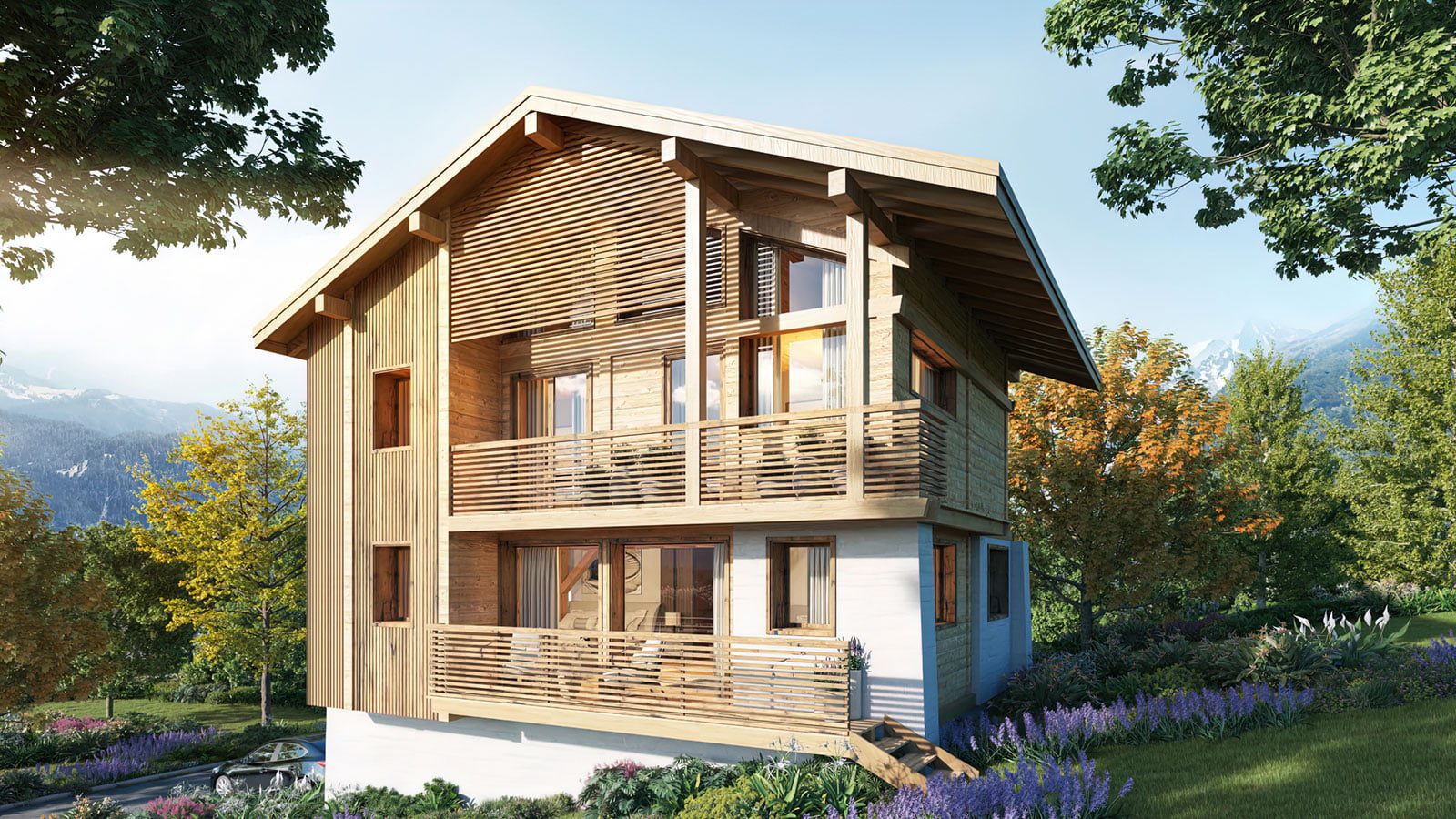
The French Alps ski property market between late 2023 and early 2026 has been one of the most interesting cycles in a generation. In 2023 we wrote that the unsustainable post-pandemic pace of price growth was about to bifurcate — the ultra-prime segment would keep rising, the mid-market would plateau, and the lower tier would see the first meaningful value reappear since 2019. Three years on, that prediction has broadly played out, with some important refinements. This retrospective sets out what the market actually did, why, and what it means for buyers entering in 2026 rather than trying to time the cycle in hindsight.
The single most important macro variable across this period has been the ECB policy rate. The European Central Bank raised rates aggressively from 0% in mid-2022 to a peak of 4.00% deposit rate in September 2023, then held and gradually cut through 2024 and 2025 to the current 2.50% (as of early 2026). Non-resident French mortgage pricing tracks the ECB cycle with a premium, and the movement from peak offers of ~5% in late 2023 down to 3.4–4.3% currently has materially changed the affordability picture. The mortgage cycle is the single most-cited reason buyers who hesitated in 2024 are entering the market now.
The other structural factor has been the Paris 2024 Olympics and the French Alps Olympic bid for 2030, which the IOC awarded to the French Alps in July 2024. The 2030 bid has anchored long-term confidence in the Haute-Savoie and Savoie markets — the Olympics delivers visible infrastructure investment, brand exposure and ticket-office demand, and the 2030 announcement was immediately followed by a rebound in interest in resorts like Val d’Isère, Tignes and Courchevel that will feature heavily in the event programme. This retrospective also covers where that Olympic effect has and hasn’t shown up in transaction data.
The 2023 Starting Point
Where the Market Stood at the End of 2023
At the end of 2023, the French Alps ski property market was emerging from an extraordinary 18-month run that had pushed prime prices up 20–35% from their 2021 levels. Courchevel 1850, Val d’Isère centre and Megève had all broken through €30,000/m² for the best addresses for the first time in history. Second-tier resorts — Les Gets, Morzine, Samoëns, Chamonix — were trading at 15–25% above their 2021 levels. The transaction volume had held up well through 2023 despite rising rates, but the market was visibly plateauing by the autumn and asking prices on older, mid-market resale apartments were softening.
Mortgage pricing in late 2023 was the main constraint. Non-resident 20-year fixed offers peaked around 4.8–5.2% in October 2023, roughly double the rates available in 2021. This doubled the typical monthly payment on a standard €500,000 mortgage and forced many British and European buyers to either wait for rates to come down or buy smaller than planned. The buyers who did transact in late 2023 were predominantly cash-rich profiles upgrading their existing French property or entering at the ultra-prime end where leverage is less relevant to the deal structure.
The macro context in late 2023 was also genuinely uncertain: the Bank of England paused its hiking cycle in August 2023, the ECB paused in September 2023, and the Federal Reserve paused at 5.25–5.50% from mid-2023 onwards. The question every Alps buyer was asking was whether rates would start cutting quickly, hold for longer, or swing back into another hiking cycle. The honest answer in late 2023 was that no one knew, and market participants priced accordingly — activity slowed, negotiations extended, and several major developers delayed launches into 2024 to await more favourable mortgage pricing.
2.50%
Current ECB deposit rate (early 2026) after the 150bp cutting cycle from the September 2023 peak of 4.00%
3.4–4.3%
Current 2026 non-resident 20-year fixed mortgage offers versus 4.8–5.2% at the late 2023 peak
+12–18%
Ultra-prime resort price appreciation from late 2023 to early 2026 (Courchevel, Val d’Isère, Megève)
€100,000
Effective VAT reclaim on a €600,000 VEFA new-build apartment in a classified rental programme
The 2024 Inflection
The Olympic Award and the Return of Confidence
The decisive moment of the cycle was the IOC’s award of the 2030 Winter Olympics to the French Alps in July 2024. The announcement had an almost immediate effect on buyer psychology in the resorts most likely to host events — Val d’Isère, Tignes and Courchevel featured prominently in the bid book as host venues for alpine skiing, and transaction interest in those resorts lifted noticeably in the second half of 2024. The ECB had begun cutting rates in June 2024 from 4.00% to 3.75%, and the combination of falling mortgage costs and the Olympic announcement drove a meaningful uptick in buyer enquiries through the autumn.
The prime segment (€2M+ chalets and apartments in top-tier addresses) never really stopped rising across 2024 — the buyer base for this tier is cash-rich and less rate-sensitive, and the Olympic confidence effect layered on top of that produced steady 5–8% appreciation in Courchevel 1850, Val d’Isère centre and Megève. The mid-market (€500,000–€1.5M) remained largely flat through mid-2024, with transaction volumes recovering but headline prices holding roughly level. The lower tier (€250,000–€500,000) actually softened in several resorts as older resale stock competed for a narrower pool of cash buyers.
By late 2024 the picture had become clearer: the market was splitting into ‘Olympic / prime’ and ‘everything else’ tracks. Buyers who bought prime in 2024 broadly captured meaningful appreciation through 2025; buyers who bought mid-market broadly held value but didn’t see the same uplift. This bifurcation has continued into 2026, and it is the single most important lens for understanding where value currently sits. The French mortgage calculator models the rate-cycle impact on specific mortgage scenarios across the period.
French Alps Price Appreciation Since 2023 by Tier
Ultra-prime
Upper-mid
Mid-market
Value tier
Olympic-halo resorts
Haute-Tarentaise
The 2025 Normalisation
Rate Cuts, VEFA Recovery and New-Build Momentum
Through 2025 the ECB continued cutting rates — 3.50% in January, 3.25% in March, 3.00% in June, 2.75% in September and 2.50% in December — and non-resident mortgage offers tracked the cuts with roughly a 2-month lag. By mid-2025, 20-year non-resident fixed offers had returned to 3.6–4.2%, within 50bp of their 2022 averages. This mortgage normalisation was the single largest driver of the broader transaction recovery we saw through the second half of 2025, particularly in the mid-market €500,000–€1.2M segment where affordability had been the main constraint.
The new-build (VEFA) market recovered faster than the resale market across 2025, driven by three factors: better pricing discipline from developers who wanted to clear 2024 inventory, the 20% VAT reclaim advantage that became more attractive as buyers focused harder on effective yields, and a wave of new launches in the second half of 2025 positioned at realistic price points rather than 2022-peak aspiration. The new-build ski apartments page saw significantly higher enquiry volumes through autumn 2025 compared to the same period in 2024.
Geographically, the 2025 recovery was unevenly distributed. The resorts closest to Geneva (Les Gets, Morzine, Samoëns, Combloux) saw the strongest enquiry volumes because they combine airport proximity with the Olympic adjacency halo. The deeper Alps resorts (La Plagne, Les Arcs, Tignes, Val Thorens) recovered too but more slowly, as buyers weighed longer transfer times against the altitude advantage. The Haute-Tarentaise — meaning Val d’Isère, Tignes and Sainte-Foy — saw a particularly strong 2025 on the back of Olympic positioning.
“Buyers who tried to time the 2023–26 cycle bottom mostly missed it — while buyers who transacted on genuine value at any point across the period broadly did fine, because structural drivers beat short-run rate cycles.”
The 2026 Picture
Where the Market Stands in Early 2026
As of early 2026, the French Alps ski property market is in a steadier state than it has been at any point since 2021. The ECB deposit rate has held at 2.50% since December 2025 and is expected to remain in the 2.00–2.50% range through most of 2026 unless eurozone inflation unexpectedly accelerates. Non-resident 20-year fixed mortgage offers are currently in the 3.4–4.3% range, the best effective pricing since early 2023. Transaction volumes are running roughly in line with 2022 averages, and new-build launches are clearing at healthier paces than in 2024.
The price differential between tiers remains the defining feature of the market. Ultra-prime (Courchevel 1850, Val d’Isère centre, Megève prime, Chamonix Cour Maurice) trades at €25,000–€45,000/m² and is up 12–18% on 2023. Upper-mid (Les Gets, Morzine, Les Arcs 1950, Samoëns centre) trades at €7,000–€11,000/m² and is up 4–9% on 2023. Mid-market (Saint-Gervais, Samoëns outer, Les Carroz, Montgenèvre) trades at €5,500–€8,000/m² and is broadly flat versus 2023. Lower-tier value resorts (Thollon, Praz-sur-Arly, Saint-François-Longchamp) trade at €2,400–€6,000/m² and have seen selective catch-up appreciation of 3–8% as international buyers discover them.
The single most important practical point for a 2026 buyer is that the rate environment, the VAT reclaim advantage and the Olympic positioning combine to make this a meaningfully better entry than any point in 2023 or 2024. The buyer who hesitated in 2023 because of high mortgage rates is now looking at broadly the same asking prices plus 3.4–4.3% financing instead of 5%+. That is a materially better transaction on the same property. Our the Domosno team has seen enquiry volumes in early 2026 at their highest level since 2022.
| Market Tier | 2026 €/m² Range | Cycle Change | Best Entry Strategy |
|---|---|---|---|
| Ultra-prime (Courchevel 1850, VdI) | €25,000–€45,000 | +12–18% | Adjacent prime value plays |
| Upper-mid (Les Gets, Morzine) | €7,000–€11,000 | +4–9% | VEFA new-build + VAT reclaim |
| Mid-market (Saint-Gervais, Samoëns) | €5,500–€8,000 | Flat to +3% | Selective VEFA launches |
| Lower-tier (Thollon, Praz-sur-Arly) | €2,400–€6,000 | +3–8% | Resale with renovation |
| Haute-Tarentaise (Val d’Isère, Tignes) | €9,000–€22,000 | +10–15% | Olympic positioning play |
| Haute-Savoie prime (Megève) | €14,000–€22,000 | +8–12% | Long-term lifestyle |
Structural Drivers
The Long-Run Fundamentals Nobody Talks About
Beyond the cycle, the French Alps ski property market benefits from a handful of structural drivers that don’t move with the ECB rate. The first is the classified furnished rental regime (LMNP / BIC) that allows French tax on rental income to be reduced to near zero for 15–20 years through depreciation of property, furniture and acquisition costs. This is one of the most favourable investment structures for property anywhere in Europe and is a major reason net yields on French Alps property consistently outperform headline tax rates would suggest.
The second is the 20% VAT reclaim on new-build in classified rental, which effectively reduces the purchase price of VEFA investment property by one-fifth. On a €600,000 apartment that is €100,000 recovered — a figure that transforms the investment maths and has no direct parallel in most other European ski-property markets. The policy has been stable since its introduction and shows no sign of withdrawal.
The third is the domestic buyer pool. Unlike Switzerland or Austria, French ski property is substantially purchased by French residents — Parisian and Lyon-based families, Swiss residents crossing the border, and a growing contingent of Geneva commuters. This broad domestic buyer base provides a floor under prices in downturns and means the market is not entirely dependent on foreign inflows, which is why the French Alps market has historically been more stable through cycles than comparable markets elsewhere in Europe.
Sep 2023
ECB peak rate
ECB deposit rate peaks at 4.00%. Non-resident mortgage offers reach 4.8–5.2% and the French Alps market visibly slows as affordability tightens.
Jun 2024
First ECB cut
ECB begins cutting rates from 4.00% to 3.75%, starting the affordability recovery cycle. Buyer enquiries begin lifting by late summer.
Jul 2024
2030 Olympics awarded
IOC confirms the French Alps as host of the 2030 Winter Olympics. Transaction interest in Val d’Isère, Tignes and Courchevel lifts immediately.
2025
Rate normalisation
ECB cuts rates steadily from 3.75% to 2.50% through 2025. Mid-market transaction volumes recover to 2022 averages by mid-year.
Dec 2025
ECB holds at 2.50%
Cutting cycle pauses at 2.50%. Non-resident mortgage offers stabilise at 3.4–4.3%, the best effective pricing since early 2023.
Q1 2026
Market normalisation
Buyer enquiry volumes reach their highest level since 2022. VEFA launches clear at healthy paces and value-tier resorts see selective catch-up appreciation.
Buyer Strategy
What to Do If You’re Buying in 2026
The practical advice for a 2026 buyer depends heavily on budget and time horizon. For ultra-prime buyers (€2M+ budget), the Olympic-halo resorts — Val d’Isère, Tignes, Courchevel — have run hard through 2024–25 and current pricing reflects that. Value in this tier is increasingly found in the ‘adjacent prime’ category: Sainte-Foy, La Tania, Megève outside the golden triangle, and Les Carroz if the buyer is willing to compromise on absolute prestige for 15–25% better pricing.
For mid-market buyers (€500,000–€1.5M), the best 2026 entries are in the upper-mid resorts that recovered less aggressively through 2025 — Samoëns, Les Carroz, Combloux, Saint-Gervais — where VEFA new-build launches are attractively priced and the 20% VAT reclaim meaningfully improves effective yields. The mortgage rate environment means monthly payments on these purchases are close to their 2022 averages, and the buyer profile today is noticeably less stretched than in 2023.
For yield-focused and entry-level buyers (under €500,000), the genuine value resorts — Thollon-les-Mémises, Praz-sur-Arly, the smaller Val d’Arly villages — offer the most interesting risk-adjusted returns currently available in the French Alps. Net yields of 4–5% on these resorts are meaningfully above the 2.5–3.5% typical of premium resorts, and the catch-up appreciation potential remains in place as international buyers continue to discover them. The buying process guide walks through the VEFA and resale transaction mechanics for each profile.
The Verdict
What the Cycle Tells Us About the Next Three Years
Looking forward from early 2026, the most likely path for the French Alps property market is a moderate but steady continuation of the current recovery, with the Olympic positioning driving continued outperformance in the Haute-Tarentaise through 2029–30, the VEFA market clearing at healthy paces driven by the VAT reclaim and mortgage normalisation, and the value tier continuing its slow catch-up as international buyers discover it. The single biggest downside risk is an unexpected ECB hiking cycle triggered by eurozone inflation, which would reverse the affordability improvements and slow the recovery — but this risk is visibly lower than it was in 2023.
The single most important lesson of the 2023–26 cycle is that buyers who tried to time the cycle bottom mostly missed it, while buyers who transacted on genuine value at any point through 2023–25 broadly did fine. The French Alps property market is driven more by long-run structural factors (VAT reclaim, LMNP regime, domestic demand, Olympic positioning, supply constraints at altitude) than by short-run rate cycles, and the buyers who treat it as a 5-10 year lifestyle investment rather than a trading opportunity have consistently been the winners across this period and earlier cycles. The the Domosno team has been selling French Alps property since 2005 and the data across two decades supports this conclusion consistently.
Common Questions
Frequently Asked Questions
Are French Alps property prices going to keep rising in 2026?
Our base case is moderate, steady appreciation across most tiers through 2026 — driven by stabilising mortgage rates, Olympic positioning in the Haute-Tarentaise, and the VAT reclaim advantage continuing to attract investor buyers to VEFA new-build. The biggest downside risk is an unexpected ECB hiking cycle triggered by eurozone inflation, but that risk is visibly lower than at any point since 2022. Ultra-prime and Olympic-halo resorts will likely continue outperforming the broader market.
Was it better to buy in 2023 or wait until 2026?
For cash buyers, 2023 was broadly fine and those purchases have largely held value or appreciated modestly. For mortgage-dependent buyers, 2026 is meaningfully better because mortgage rates are 100–150bp cheaper than at the 2023 peak and asking prices in most mid-market resorts are broadly flat versus 2023. The monthly-payment difference on a standard €500,000 mortgage is around €350/month lower at current rates — a material improvement in affordability.
Which French Alps resorts performed best in the 2023–26 cycle?
The clear winners were the ultra-prime resorts (Courchevel 1850, Val d’Isère centre, Megève prime) and the Haute-Tarentaise broadly (Val d’Isère, Tignes, Sainte-Foy) driven by the 2030 Olympic award. Upper-mid Haute-Savoie resorts near Geneva (Les Gets, Morzine, Samoëns) performed steadily. The value tier (Thollon, Praz-sur-Arly) has begun selective catch-up appreciation as international buyers discover it.
How much did the ECB rate cycle affect non-resident mortgages?
Very significantly. Non-resident 20-year fixed offers moved from ~2.0% in early 2022 to a peak of 4.8–5.2% in late 2023, then back down to 3.4–4.3% through 2025 as the ECB cut rates from 4.00% to 2.50%. On a €500,000 mortgage this represents a movement of roughly €850/month in gross monthly payment between the peak and current levels — materially changing what buyers can afford on the same property.
Is the 20% VAT reclaim on new-build still available?
Yes — the French VEFA VAT reclaim on classified managed rental programmes has been stable across the entire period and shows no sign of withdrawal. On a €600,000 new-build investment this represents approximately €100,000 recovered post-completion, reducing the effective purchase price to €500,000 and materially improving the effective yield. The commitment is typically 9 years of classified rental through an approved management company.
Did the 2030 Olympic award actually move property prices?
Yes, measurably, in the resorts most likely to host events. Val d’Isère, Tignes and Courchevel saw visible enquiry and price appreciation through the second half of 2024 following the July announcement, and this has continued through 2025. The effect is concentrated in the immediate Olympic-venue resorts — other French Alps resorts have benefited from a more general ‘confidence halo’ but not the direct price lift of the host venues.
What’s the best entry strategy for a 2026 buyer with a €500k budget?
For €500k in 2026 the strongest value is typically a VEFA new-build two-bed apartment in an upper-mid resort with the 20% VAT reclaim taking the net cost to around €400k, combined with 75–80% non-resident mortgage at 3.4–4.3% fixed. Resorts worth prioritising at this budget: Samoëns, Les Carroz, Saint-Gervais, Combloux, Praz-sur-Arly. The VAT reclaim plus mortgage rate improvement make the total cost materially lower than the equivalent 2023 transaction.
What’s the biggest risk to the French Alps market in 2026?
The single biggest risk is an unexpected reacceleration of eurozone inflation that forces the ECB back into a hiking cycle. This would reverse the affordability improvements of 2024–25 and likely slow the current recovery. A secondary risk is climate-driven snow reliability concerns at lower-altitude resorts — a theme that has grown across the cycle and is likely to drive continued valuation divergence between high-altitude and low-altitude resorts.
Featured Properties
Popular Ski Resorts
Morzine
Megève
Chamonix
Les Gets
Alpe d’Huez
Les Deux Alpes
Les Arcs
La Plagne
Courchevel
Méribel
Saint-Martin-de-Belleville
Val Thorens
Val d’Isère
Tignes
Thollon-les-Mémises
Quick Links
All New-Build Ski Properties
All Ski Apartments
All Ski Chalets
New-Build Ski Apartments
New-Build Ski Chalets
Resale Ski Apartments
Resale Ski Chalets