Market Insight
French Alps Property Market 2026: The Cold-Bed Problem, Foreign Buyer Dynamics and What’s Really Driving Prices
A 2026 overview of the forces shaping the French Alps property market — from the Montagne II cold-bed renovation programme to foreign buyer flows and the next decade’s supply constraints.
24 Feb 2023
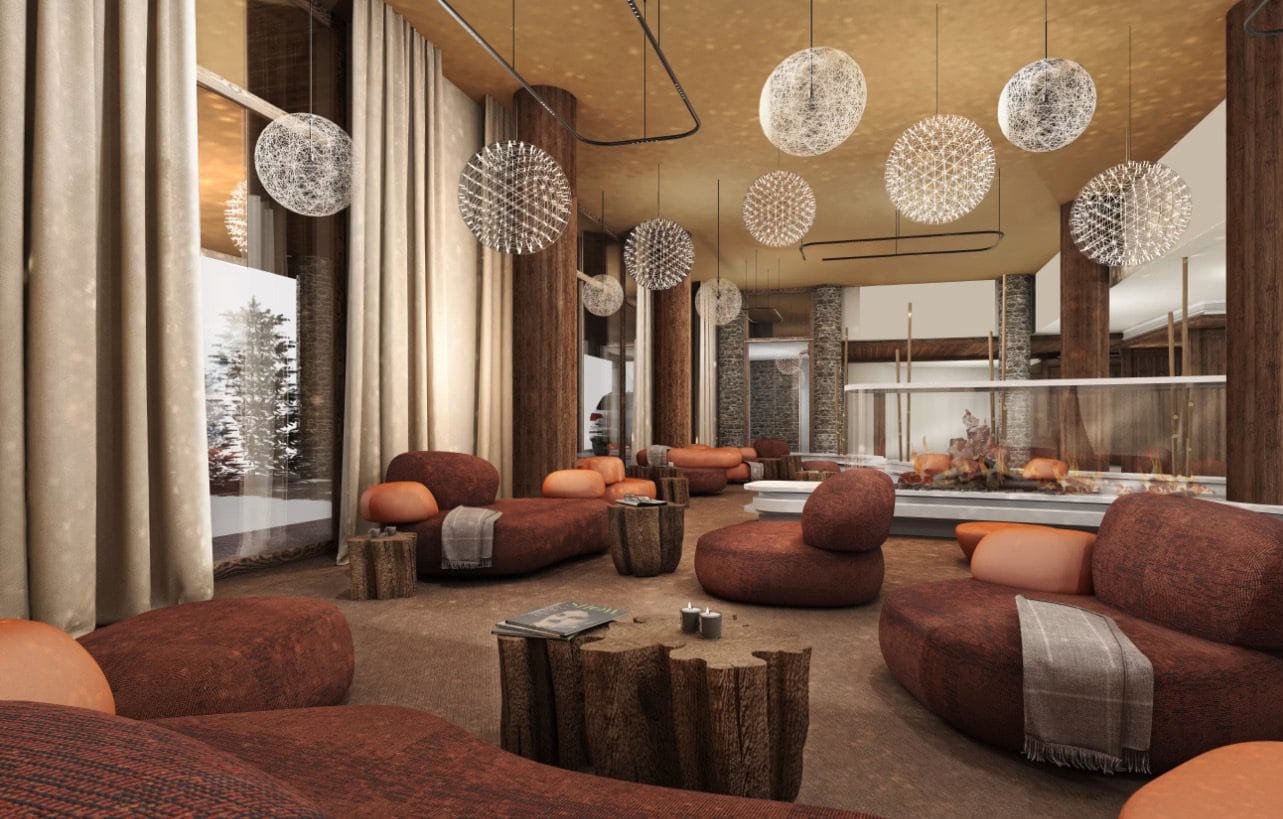
The French Alps property market is simultaneously one of the most discussed and one of the most misunderstood real estate sectors in Europe. Headlines typically focus on the eye-catching luxury end — the €20M Courchevel chalets, the £10k/m² Val d’Isère apartments — while missing the more important structural forces shaping the market as a whole: the progressive elimination of ‘cold beds’ through the Montagne II renovation programme, the supply constraints created by the Loi Montagne planning restrictions, the foreign buyer demand that has anchored the premium segments since the 1980s, and the post-2022 regulatory adjustments that have changed the buyer calculus across the board.
This overview walks through the forces that are actually driving the French Alps property market in 2026. We’ll cover the cold-bed renovation story (which is quietly reshaping the resale inventory in every resort), the foreign buyer dynamics that support the premium tier, the new-build supply constraints created by planning restrictions, the 2030 Olympics effect concentrated in specific host resorts, and the practical implications for buyers who want to commit capital over the next 12 months. Read alongside our the buying process guide for the transactional side of these forces.
The short version: the French Alps property market in 2026 is structurally supply-constrained, demand-resilient, and going through a measured revaluation that has favoured buyers committing early in the cycle rather than waiting for further price discovery. The resorts where these dynamics are most pronounced include Les Arcs property, La Plagne property, Alpe d’Huez property and the Portes du Soleil villages around Morzine property and Les Gets property.
Cold Beds
The Montagne II Cold-Bed Programme: What It Actually Does
The French Alps, like many mature Alpine destinations, have accumulated a long tail of aging tourist accommodation — apartments built in the 1960s and 1970s under the ‘plan neige’ development programme that are now underused, outdated and non-compliant with modern rental and energy standards. These are the ‘cold beds’ (lits froids): units that exist on paper as tourist accommodation but generate minimal rental nights because they are too old, too small, or too badly equipped to compete with modern inventory.
The 2017 Montagne II Law was introduced explicitly to address this problem. It created financial and regulatory incentives for owners to renovate cold-bed properties back into active rental use, combined with planning constraints that prevent the creation of new cold-bed inventory. The policy mechanism is a mixture of carrots (tax incentives, accelerated depreciation, VAT reclaim eligibility on major renovations) and sticks (energy-performance regulations, minimum-standard requirements for rental listing, restrictions on new development that does not commit to active rental).
The practical effect for the property market has been a quiet but significant structural shift. Cold-bed properties that were trading at distressed prices in 2018–2020 have become renovation targets for buyers willing to take on the project-management work. A well-executed renovation of a €4,500/m² cold-bed apartment can realistically reach €7,500/m² in value after €50,000–€100,000 of works — a meaningful margin for the buyer who approaches it as a value-add project rather than a turnkey purchase.
For buyers who prefer turnkey properties, the cold-bed story still matters because it is removing low-quality competition from the rental market. A new-build or recently-renovated apartment benefits from the progressive elimination of sub-standard competitors in the same resort, which tightens rental demand and supports yields. The Montagne II programme is therefore a tailwind for modern inventory even for buyers who have no intention of renovating anything themselves.
60–70%
French Alps new-build completion volume in 2026 as a share of the 2018–19 baseline — structurally supply-constrained
4–6%
Typical annual price appreciation in prime French Alps new-build over the past 5 years
15–25%
Historical Olympic host-cycle property appreciation above trend in the 3–4 years before the games
2017
Year the Montagne II Law introduced the cold-bed renovation framework still shaping the market today
Supply Constraints
Loi Montagne and the Structural Supply Scarcity
The French Alps have one of the most restrictive planning environments in European real estate. The Loi Montagne (Mountain Law) framework restricts new construction above certain altitudes, preserves agricultural and forest zones, and requires rigorous environmental impact assessments for any development. Combined with the more recent Loi Climat et Résilience (2021), which further tightens the energy and biodiversity requirements, the net effect is that adding new supply in established ski resorts is materially harder in 2026 than it was even five years ago.
The practical consequence is a supply-constrained new-build pipeline in every major resort. Developers who secure planning permissions for VEFA projects face multi-year timelines, rising construction costs, and buyers are increasingly competing for a thin pipeline of the best units. The new-build market in the French Alps in 2026 is running at approximately 60–70% of its 2018–19 completion volume, and the pipeline for 2027–2029 suggests continued tightness.
This matters to buyers because supply scarcity plus resilient demand equals price support. The annual price appreciation in prime French Alps ski properties has averaged 4–6% over the past five years, meaningfully ahead of general European real estate, and the drivers of that appreciation are structural rather than cyclical. Unlike urban property markets where developer pipeline can shift supply significantly within a 2–3 year window, the Alps supply side is essentially fixed on medium-term horizons.
The second dimension is resale constraint. The Loi Montagne does not directly restrict resale activity, but the aging of the 1960s–1970s stock combined with the energy performance regulations (DPE — Diagnostic de Performance Énergétique) is progressively removing the lowest-rated apartments from the legal rental market. Properties rated F or G on the DPE scale will be banned from rental listing under rules phasing in through 2028, tightening the effective rental supply further.
French Alps Resort Appreciation Year-on-Year (2025–26)
Alpe d’Huez
Morzine / Les Gets
Les Arcs / La Plagne
Chamonix
Courchevel / Val d’Isère
Value-tier resorts
Foreign Demand
Foreign Buyer Flows: Who’s Actually Buying and Why
Foreign buyers have been the foundation of the French Alps premium property market since the 1980s, and the composition of that foreign buyer pool has evolved meaningfully in the last decade. Historically dominated by British buyers (who still represent the largest single foreign cohort in most Portes du Soleil resorts), the market has diversified to include significant Benelux, German, Scandinavian, Israeli, American and emerging Asian presence at the top of the market.
British buyers remain the single largest foreign cohort in most mid-market ski resorts. Post-Brexit access arrangements have not materially affected British buyer appetite — the property market has no visa or residency implications for short-term owner-use, and British buyers continue to dominate resale and entry-tier new-build transactions in Morzine, Les Gets, Chamonix and Méribel. The 2022–23 sterling weakness briefly slowed activity, but the 2024–26 sterling recovery has restored flows.
Benelux and Scandinavian buyers are particularly strong in the Paradiski and Portes du Soleil resorts, with direct flight connectivity from Brussels, Amsterdam and the Scandinavian capitals supporting sustained demand. These buyers tend to prioritise ski reliability and family-friendly infrastructure, and they are materially less price-sensitive than British buyers at the €400k–€1.5M tier.
American, Israeli and Asian buyers are concentrated at the ultra-prime end — Courchevel 1850, Val d’Isère, Megève and the top of Chamonix. These cohorts are typically less exposed to mortgage conditions (most are cash buyers) and are driven by lifestyle and trophy-asset considerations rather than yield. They support the upper-tier price level but have limited impact on the €400k–€1.5M mid-market that dominates Domosno’s client base.
“The French Alps property market in 2026 is supply-constrained, demand-resilient, and measured in its price discovery. The fundamentals reward disciplined buyers with clear criteria — and penalise those who wait for better pricing that rarely arrives.”
2030 Olympics
The 2030 Winter Olympics and Its Concentrated Market Effect
The French Alps were selected as host for the 2030 Winter Olympics, with events spread across multiple resorts in the Isère, Savoie and Hautes-Alpes departments. The headline venues include Alpe d’Huez property, Val d’Isère property, Méribel and Courchevel, with additional event infrastructure in supporting resorts across the region. This creates a specific and measurable tailwind for these resorts that is not available to Alpine properties in general.
Historical Olympic host-cycle data suggests that property values in host resorts appreciate 15–25% above trend in the 3–4 years leading up to the games, concentrated in the 18 months immediately before the opening ceremony. For the 2030 Paris-Alps games, that pressure window runs roughly 2028 through early 2030. Buyers committing in 2026 to host-venue properties are therefore positioned to capture both the 2026 baseline and the expected appreciation through the Olympic window.
The infrastructure investment associated with Olympic hosting is the second dimension. Roads, lift upgrades, sustainability retrofits, hospitality capacity and transport links all receive accelerated public investment in the run-up to the games, and this investment typically continues to benefit the resort for 10+ years after the event. For a long-term property holder in a host resort, the 2030 Olympics is effectively an infrastructure subsidy paid into their asset value.
The final dimension is brand visibility. Olympic hosting puts a resort on the global map for a period of intense international media attention, typically translating into sustained post-Olympic booking increases from previously-unfamiliar buyer segments. The 2010 Vancouver Olympics delivered measurable long-term rental demand increases to Whistler; the 2006 Torino Olympics did the same for the Italian resorts. The 2030 effect on Alpe d’Huez, Val d’Isère and Méribel is expected to follow the same pattern.
| Resort Segment | Typical 2026 New-Build Price/m² | Net Rental Yield | Primary Growth Driver |
|---|---|---|---|
| Ultra-prime (Courchevel 1850, Megève) | €15,000–€30,000+ | 1.5–3% | Global luxury demand |
| High-altitude premium (Val Thorens, Val d’Isère, Tignes) | €11,000–€18,000 | 2.5–3.5% | Snow reliability + prestige |
| Olympic host venues (Alpe d’Huez, Méribel) | €6,600–€12,000 | 3–4% | Olympic appreciation tailwind |
| Paradiski (Les Arcs, La Plagne) | €7,000–€9,500 | 3–4% | Scale + family appeal |
| Portes du Soleil (Morzine, Les Gets) | €7,000–€11,000 | 3–5% | Summer MTB + yield |
| Value tier (Thollon, Samoëns) | €3,600–€5,600 | 2.5–3.5% | Capital efficiency + yield |
Regulatory Context
The 2026 Regulatory Picture: What Has Changed Since 2023
Since our 2023 market update, the French regulatory environment for ski-property ownership has evolved in several material ways. The Lemoine Law (2022) enabled insurance switching on existing mortgages without penalty, saving typical borrowers €5,000–€15,000 over the life of a 20-year loan. The Taux d’Usure mechanism moved from quarterly to monthly updates in late 2023, restoring mortgage market functioning after the 2022 rate compression.
The 2024 Finance Bill tightened the LMNP amortisation rules modestly but did not change the underlying 20% VAT reclaim mechanism, which remains the most powerful tax advantage in the French ski property market. The 2026 Finance Bill raised social contributions on LMNP capital income from 17.2% to 18.6% — a modest headwind for French residents and largely immaterial for non-residents covered by EU/post-Brexit social security arrangements who pay only the 7.5% solidarity levy.
The Loi Climat et Résilience continues to phase in its DPE (energy performance) restrictions through 2028, progressively banning the lowest-rated apartments from legal rental listing. For buyers of modern new-build or well-renovated resale properties, this is a positive regulatory tailwind — removing low-quality competition from the rental market. For buyers considering distressed cold-bed renovations, it is a constraint that must be factored into the renovation business case from day one.
Finally, short-term rental regulation has tightened in some French cities (notably Paris) but has remained largely unchanged in ski resorts, where classified tourist residence structures are the dominant rental mode and are explicitly supported by Montagne II policy. This is a meaningful differentiator from the broader French urban rental market where Airbnb-style letting has become politically contentious — Alpine resorts remain a regulatory safe haven for rental property.
1960s
Plan Neige launches
The French government initiates the ‘plan neige’ mountain tourism programme, creating the purpose-built resorts that define much of the French Alps today.
1985
Loi Montagne framework
The original Mountain Law framework is codified, establishing the planning restrictions and environmental protections that constrain new-build supply.
2017
Montagne II enacted
The second-generation Mountain Law introduces the cold-bed renovation programme, tax incentives and regulatory tools that still shape the resale market in 2026.
2021
Loi Climat et Résilience
French climate legislation introduces progressive DPE (energy performance) restrictions phasing in through 2028, removing low-rated apartments from the legal rental market.
2023
Mortgage market normalises
Taux d’Usure moves to monthly updates, non-resident mortgage lending recovers, and the ECB easing cycle begins — restoring the financing environment for foreign buyers.
2030
French Alps Winter Olympics
The 2030 Winter Games are hosted across multiple French Alps resorts, concentrating infrastructure investment and price appreciation in the host venues through the late 2020s.
Resort Stratification
Where Prices Are Really Moving: Resort-by-Resort in 2026
Not all French Alps resorts are trading the same cycle in 2026. The top performers year-over-year have been the Olympic venue resorts (Alpe d’Huez, Val d’Isère, Méribel) where Olympic-linked appreciation is already visible. Alpe d’Huez has posted a 5.7% year-on-year price increase on new-build and a 24% five-year appreciation — notable because the resort is still trading below €10,000/m² for most new-build product, offering both value and growth tailwinds.
The Paradiski resorts (Les Arcs, La Plagne) have posted steady 3–4% year-on-year increases on new-build, reflecting continued British and Benelux demand and a tightening VEFA pipeline. The main purpose-built villages in both resorts now trade consistently at €7,000–€9,500/m² for new-build, with premium ski-in/ski-out positions reaching €10,000–€12,000/m². These are the workhorse mid-market resorts where most investor-buyer activity is concentrated.
The Portes du Soleil resorts (Morzine, Les Gets, Avoriaz) have been the strongest on summer-rental-driven yield and have posted appreciation rates of 4–6% year-on-year in the prime villages. The combination of easy Geneva access (1–1.5 hour transfers), summer MTB economy and strong British community have produced the most balanced yield-plus-growth propositions in 2026. These are the resorts where investor-users (buyers who both use and rent) get the most efficient combination of return drivers.
The ultra-prime tier (Courchevel 1850, Val d’Isère, Megève, Chamonix centre) has continued appreciating in line with global luxury real estate — 3–8% year-on-year depending on specific address — but at price levels (€15,000–€30,000/m²+) that put these resorts outside the scope of most Domosno clients. The value tier (Thollon, smaller Haute-Savoie villages, Champagny) continues to offer entry-level pricing below €5,000/m² for buyers prioritising capital efficiency over brand-name positioning.
Buyer Takeaways
What This Means for a 2026 Buyer
The headline takeaway for a buyer considering committing capital in 2026 is that the fundamentals favour action rather than waiting. Supply is constrained, demand is resilient, the mortgage environment has improved materially since 2023, and the specific tailwinds in Olympic venue resorts and Portes du Soleil hubs are visible and measurable. The market is not ‘cheap’ by historical standards, but it is trading in a measured way that rewards disciplined buyers with clear criteria.
For an investor-focused buyer, the combination of 20% VAT reclaim on new-build, a normalised mortgage environment, and resort-level yield supports makes the Paradiski and Portes du Soleil resorts particularly attractive. Net yield expectations of 3–4% combined with 4–6% annual appreciation in prime positions produce blended total returns that compare favourably with diversified European real estate portfolios. The 2030 Olympics is an additional tailwind in specific host venues.
For a lifestyle-focused buyer who prioritises personal use over yield, the decision framework is different but the direction is the same. Supply scarcity means that the best addresses sell quickly and price-discover upwards over time. Waiting for ‘better pricing’ has historically cost buyers more than it saved them in most Alpine markets. The practical advice is to set a clear budget, commit to a specific resort shortlist, and transact decisively on the right property when it appears.
For all buyers, the resort selection decision is more important than the timing decision. A well-chosen property in the right resort, bought at market pricing, will outperform a poorly-chosen property in a hot resort bought at a discount. Our the Domosno team spends most of its time helping clients get the resort selection right before worrying about specific properties. This is the single highest-leverage step in the buying process, and it is where most buyers benefit most from professional input.
Common Questions
Frequently Asked Questions
Are French Alps property prices still going up in 2026?
Yes, at a measured pace. Prime new-build has posted 3–6% annual appreciation across most major resorts over the past five years, with Olympic host venues running at the upper end. Supply constraints via the Loi Montagne framework and resilient foreign buyer demand have supported continued price discovery. The pace is steady rather than speculative, which historically has been the strongest long-term pattern.
What is the cold-bed problem and why does it matter to buyers?
Cold beds are aging tourist apartments (typically 1960s-1970s) that exist on paper but generate minimal rental nights because they no longer meet modern standards. The 2017 Montagne II Law incentivises renovation and progressively removes sub-standard competition from the rental market. For buyers, this means modern new-build and renovated properties benefit from declining low-quality competition, supporting yields.
Which French Alps resorts are best positioned for 2026–2030?
The Olympic host venues (Alpe d’Huez, Val d’Isère, Méribel) have a specific appreciation tailwind from the 2030 games. The Portes du Soleil hubs (Morzine, Les Gets) have the strongest yield-plus-growth balance from summer MTB and British buyer flows. Paradiski (Les Arcs, La Plagne) offers steady mid-market appreciation. Ultra-prime resorts (Courchevel, Megève) continue their global-luxury trajectory.
How does French Alps property compare to other European real estate for investment?
On 5-year total returns, prime French Alps ski property has outperformed most broad European real estate indices, driven by the combination of 3–5% annual appreciation plus 3–4% net rental yield plus the 20% VAT reclaim on new-build. The catch is illiquidity and transaction cost — Alpine property is a long-term hold asset, not a short-term trading position.
Is the 20% VAT reclaim still available in 2026?
Yes, unchanged. The 20% VAT reclaim on new-build VEFA ski apartments operated as classified tourist residences remains the most powerful tax advantage in the French ski property market. All qualifying conditions, the 20-year activity commitment, and the practical reclaim process are unchanged from 2023. The 2026 Finance Bill did not touch this mechanism.
What are the main supply constraints in the French Alps market?
The Loi Montagne framework restricts new construction above certain altitudes, requires environmental impact assessments and limits expansion of built areas. Combined with the Loi Climat et Résilience energy requirements, new-build completion volumes are running at 60–70% of 2018–19 levels. This is a structural (not cyclical) constraint that is unlikely to ease materially in the next decade.
How are foreign buyers treated differently in French ski property?
They aren’t, in any material way. French law does not restrict foreign ownership of real estate, there is no residency requirement, and non-residents have full access to the LMNP regime, the 20% VAT reclaim and French mortgage lending. The main practical differences are mortgage LTV caps (70–80% typical for non-residents vs 85%+ for residents) and the need for fiscal representation for certain tax filings.
Should I wait for prices to drop before buying?
Historically, waiting for better pricing in the French Alps has cost buyers more than it has saved them. Supply constraints and foreign buyer demand have supported steady price discovery even through periods of broader European real estate weakness. The bigger risk for most buyers is missing the right property in the right resort while holding out for a price discount that the structural fundamentals do not support.
Featured Properties
Popular Ski Resorts
Morzine
Megève
Chamonix
Les Gets
Alpe d’Huez
Les Deux Alpes
Les Arcs
La Plagne
Courchevel
Méribel
Saint-Martin-de-Belleville
Val Thorens
Val d’Isère
Tignes
Thollon-les-Mémises
Quick Links
All New-Build Ski Properties
All Ski Apartments
All Ski Chalets
New-Build Ski Apartments
New-Build Ski Chalets
Resale Ski Apartments
Resale Ski Chalets