Owner Playbook
Hit the Slopes and the Bottom Line: A 2026 Playbook for Marketing Your Ski Property in the French Alps
How owners of French Alps chalets and apartments can fill their calendar in 2026 — channel mix, pricing architecture, classified meublé de tourisme, photography, guest experience and the regulatory backdrop that now shapes every rental decision.
23 Apr 2023
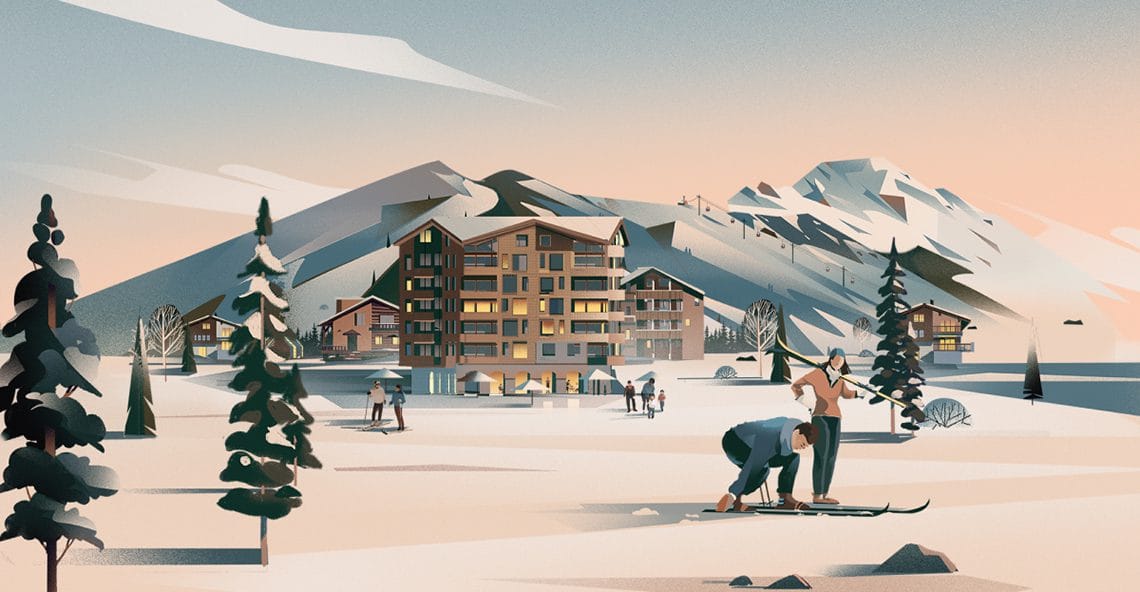
The economics of owning a holiday rental in the French Alps are changing quickly. A decade ago, a ski apartment in a mid-altitude resort was a 12-to-14 week asset — you chased the school holidays, you sent a handful of brochures to a letting agent, and you accepted that your property slept empty for eight months of the year. In 2026 that picture has almost nothing in common with the reality on the ground. Year-round mountain tourism has quietly pushed occupancy windows from 14 weeks to 28 or 30 in the strongest resorts, the post-Covid migration of remote workers has created a genuine shoulder-season rental market for the first time, and the professionalisation of the sector means owners who treat their French Alps property as a product-with-a-website are systematically outperforming owners who don’t.
At the same time, the regulatory weather has turned. The 2024 Loi Le Meur tightened short-term letting rules across France, Chamonix introduced a one-property-per-owner short-term rental cap in May 2025, and the Loi de Finances 2026 rewrote the micro-BIC allowances for classified and non-classified meublés de tourisme. Anyone marketing an Alpine rental in 2026 needs to understand how classification, pricing and channel mix interact with those rules — because getting the structure right is now worth more than any amount of hustle on Instagram. This guide is the owner’s playbook we give to buyers who purchase a chalet or apartment through Domosno and want to go to market cleanly.
We’ve structured it around the decisions an owner actually has to make in the first 90 days of ownership: channel mix, classified tourist status, photography and listing copy, pricing architecture across five distinct seasons, the guest journey itself, and the back-end numbers that tell you whether the strategy is working. Everything here is calibrated to the 2025/2026 French Alps rental market — real yields, real occupancy windows, real tax allowances — not the generic holiday-let advice you’ll find on international landlord blogs. If you’re buying, selling or already running a rental in the Alps, the next 25 minutes should pay back many times over.
The 2026 Backdrop
What Actually Changed Between 2023 and 2026
The first thing to understand is that the rental market you’re marketing into is no longer the winter-only monoculture of 2019. Chamonix, Megève, Morzine, Les Gets and Les Contamines are all now reporting 20 weeks of peak ski season demand plus 8-to-10 weeks of genuine summer and shoulder-season occupancy from trail runners, road cyclists, UTMB spectators, wellness retreats and remote workers. Knight Frank’s 2025 Ski Property Report flags year-round occupancy of 55-60% in flagship resorts, up from roughly 35% a decade ago. That shift alone has revalued mid-altitude property by 15-25% because the rental math now supports a higher price.
Regulation has moved in the opposite direction. The Loi Le Meur, passed in November 2024 and fully in force through 2025 and 2026, gives communes the power to cap short-term rental nights (typically at 90 or 120 per year for primary residences), require new DPE energy certifications at a minimum of class E (rising to D from 2028), and limit the number of short-term rental properties one owner can register. Chamonix led the way in May 2025 with a one-property-per-owner rule. Annecy, Saint-Gervais and Les Gets have all opened public consultations on similar limits. If you own more than one French Alps rental property, 2026 is the year you have to check the rules of each specific commune before you list.
The third shift is fiscal. From 1 January 2026 the micro-BIC allowance for classified meublés de tourisme dropped from 71% to 50% with a ceiling of €77,700, and the non-classified allowance dropped from 50% to 30% with a €15,000 ceiling. That sounds punitive but in practice it has made classification more valuable than ever — the gap between a classified 50% flat deduction and a non-classified 30% deduction is usually worth €2,000-€4,000 a year in cash on a typical Alpine apartment. Any owner marketing a rental in 2026 should treat the classification certificate as the first line of the plan, not an afterthought.
Finally, guest behaviour has matured. Expedia’s 2025 Path to Purchase study shows that 74% of winter holiday bookers now compare at least four platforms before booking, 62% read more than ten reviews on the property they choose, and 41% will walk away from a listing that has fewer than twenty high-quality photos. This is not the Booking.com of 2015. Your listing has to look like a hotel website — and the good news is that the owners who treat it that way are capturing the lion’s share of the extra weeks the market now offers.
55–60%
Annual occupancy now achievable in flagship Alpine resorts for a well-marketed three-bedroom apartment, up from 35% a decade ago (Knight Frank Ski Report 2025).
+15%
Uplift in gross revenue that dynamic pricing tools (Pricelabs, Wheelhouse) deliver versus a static calendar, measured across 1,400 Alpine listings in 2024/25.
50% vs 30%
The 2026 micro-BIC flat allowance for a classified meublé de tourisme versus a non-classified one — a gap worth €2,000-€4,000 per year on an average apartment.
4.9 / 5.0
The review threshold above which OTA algorithms materially boost search placement. Twenty small details separate a 4.6 listing from a 4.9 one.
Channel Mix
The Five Platforms Every Owner Should Be On in 2026
The dominant OTA triangle in the French Alps is still Airbnb, Booking.com and Vrbo, but the weighting has changed. Airbnb remains the volume leader for ski weeks under two weeks and for summer/shoulder-season remote-worker bookings; Booking.com drives mid-length winter family stays and almost all the French domestic market; Vrbo carries the highest average nightly rate and the longest lead times, particularly for North American Christmas-and-New-Year bookings. A healthy channel mix for a three-bedroom Alpine apartment in 2026 runs roughly 40% Airbnb, 30% Booking, 20% Vrbo and 10% direct.
Alongside those three giants, any owner serious about winter yield should also list with at least one specialist Alpine OTA. Ski Collection, Erna Low, Peak Retreats and Madame Vacances all run curated Alpine inventory with strong French and British demand, and their booking fees of 15-18% are comparable to the OTAs but their audiences are substantially higher-intent. The fifth channel, and arguably the most important in 2026, is your own direct-booking website — even a simple Smoobu or Lodgify page with a HubSpot form and a Stripe checkout will capture the 10-15% of guests who specifically avoid OTAs and who will pay your highest nightly rate.
Direct is where the real money is. Every direct booking saves 15-18% in commission and, crucially, gives you a guest email you can use for re-marketing the following season. The economics of direct become overwhelming once you’ve had two or three seasons of guests: in year four a typical Alpine owner with 25 repeat guests will be running at 35-40% direct bookings and a 20%+ uplift in net yield. This is the single largest leverage point in Alpine rental marketing and it’s the reason we tell every Domosno buyer to launch their own site in the first quarter of ownership.
One caveat: direct booking only works if your property can handle its own payment processing, its own rental contract under French law (contrat de location saisonnière), its own pre-arrival communications, and its own support during the stay. If that sounds like a lot, a good local conciergerie can handle all of it for 18-22% of gross — still cheaper than running four OTA channels and far cheaper than running two. The Domosno buying process guide explains how to interview and appoint a conciergerie in your first 30 days of ownership.
Indicative Channel Mix for a Three-Bedroom Alpine Apartment (2026)
Airbnb (winter + summer + shoulder)
Booking.com (winter families, French domestic)
Vrbo (NA Christmas/NY, long-lead)
Direct booking website
Specialist Alpine OTA (Ski Collection etc.)
Corporate / retreat groups
Classification
Meublé de Tourisme Classé — Why It’s Worth the Paperwork
Classified meublé de tourisme status is a formal rating (1 to 5 stars) awarded by an accredited inspection body after a physical visit to your property. The inspection checks 133 criteria covering equipment, cleanliness, accessibility and guest information, and the certificate is valid for five years. The inspection itself costs €150-€250 depending on region and size and takes about two hours on site. Most owners of mid-size Alpine apartments will qualify for 3 or 4 stars with only small investments — a proper duvet and mattress protector set, a guest welcome book, a functioning smoke alarm and a correctly posted property information card.
The payoff of classification is fourfold. First, as noted above, the 2026 micro-BIC allowance is 50% for classified properties versus 30% for non-classified ones — on €35,000 of gross rental income that’s an extra €7,000 of deductible expense, worth roughly €2,100 in tax at the 30% non-resident band. Second, the tourist tax (taxe de séjour) on classified properties is assessed as a percentage of the nightly rate rather than a flat fee, which is almost always cheaper. Third, classified properties can be marketed as étoilé on Airbnb and Booking listings, which measurably lifts click-through rates in the OTA search results.
Fourth, and least discussed, classification gives you regulatory cover. The Loi Le Meur empowers mayors to cap rental nights for primary residences, but those caps typically don’t apply to classified secondary-residence rentals in mountain communes. In a world where Chamonix has already limited owners to one property and others are following, a classification certificate is one of the few pieces of paperwork that gives you demonstrable insulation from future tightening. Our standard recommendation to Domosno buyers is to book the inspection within 60 days of completion.
The application is straightforward. Contact a Cofrac-accredited inspection body (Atout France publishes the national list), book a visit at least six weeks before you want to start marketing, send a copy of your title deed, tax number and property information to the inspector in advance, and be present on the day to walk through the apartment. Most first-time classifications in Haute-Savoie and Savoie come back within two weeks of the inspection. Some departments run small subsidies (typically €80-€120) to encourage classification — it’s worth asking your mairie before booking.
“The Alpine owners who run a dashboard, refresh photography every three years and feed a direct-booking list are capturing roughly twice the net yield of the ones who list on Airbnb and walk away.”
Photography & Copy
How to Make Your Listing Look Like a Hotel Website
The single highest-ROI action an Alpine owner can take in 2026 is a professional photoshoot. Expedia’s 2025 research shows listings with 25+ photos convert 74% better than listings with fewer than 15, and listings with twilight or golden-hour exterior shots convert 38% better than those with only daylight shots. Professional Alpine property photographers in Haute-Savoie and Savoie now charge €450-€750 for a half-day shoot that produces 40-50 edited photos plus a 90-second video walkthrough, which is almost always recovered inside the first season through higher occupancy.
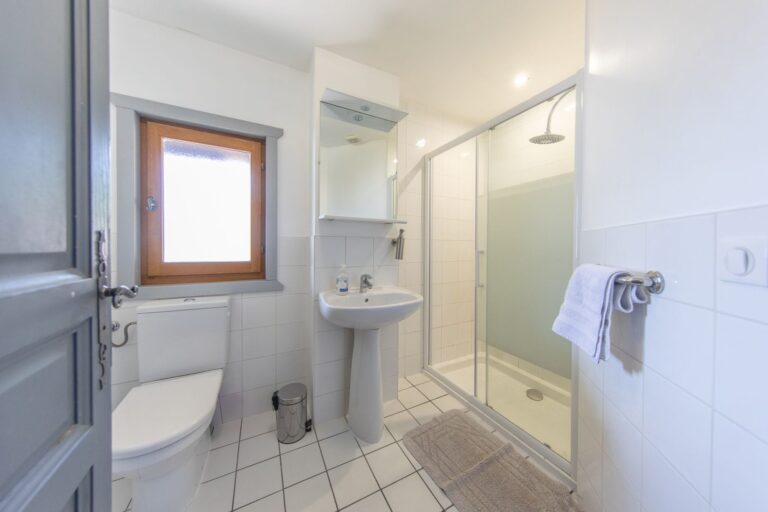
The shot list matters as much as the photographer. You want (1) a high-resolution hero shot of the building exterior ideally with mountains in the background at golden hour, (2) a wide-angle living room with the fire lit, (3) a styled kitchen shot with mountain fruit on the counter, (4) every bedroom from the door and from the opposite corner with the bed made hotel-crisp, (5) a styled bathroom with white towels, (6) the balcony or terrace with a glass of wine and a mountain view, (7) the ski room with boots neatly arranged, (8) a drone exterior shot showing the proximity to the lift, and (9) 8-to-12 lifestyle shots of the village — bakery, mountain restaurant, piste map, ski school meeting point.
Copy is the other half of the equation. Your listing description should open with the single most specific benefit your property delivers — ‘Ski-in, ski-out 200m from the Chavannes lift in Les Gets’ is infinitely better than ‘Beautiful apartment in the Alps’. Follow with a 2-sentence paragraph on the building, a 3-sentence paragraph on the apartment layout, a 2-sentence paragraph on the village, and a short bullet list of the essentials (sleeps, bedrooms, bathrooms, Wi-Fi speed, parking, distance to lift). British buyers respond disproportionately well to Wi-Fi speed figures, so include the number in Mbps.
Review management is the unfashionable third leg. The goal in your first 12 months is to get to 20 reviews at a 4.8+ average; this is the threshold above which OTA algorithms materially boost your search placement. That means a disciplined post-stay message asking for the review, a quick in-stay check-in text on day two to catch problems early, and a courteous reply to every review — especially the occasional 3-star critic, whose review is an opportunity to demonstrate how you handle problems to every future guest who reads the page.
| Season | Typical Weeks | Multiplier vs Base | Min Stay |
|---|---|---|---|
| Peak of peak (Christmas/NY) | Dec 23 – Jan 3 | 2.3×–2.5× | 7 nights |
| Peak (February half-term) | Feb 8 – Mar 1 | 1.9×–2.1× | 7 nights |
| Core winter | Early Jan, late Jan, early Mar | 1.3×–1.5× | 5 nights |
| Shoulder winter / summer | Mid Dec, late Mar, mid Jul | 0.9×–1.1× | 3 nights |
| Off-peak summer / autumn | Jun, Sep, early Oct | 0.6×–0.8× | 2 nights |
| Closed period (mud season) | Late Apr–late May, Nov | Closed for maintenance | — |
Pricing Architecture
Five Seasons, Five Price Points — Dynamic Pricing in 2026
Alpine rental pricing in 2026 is no longer a two-season game. The serious operators work with five distinct seasons and adjust weekly: Christmas/New Year (peak of the peak, typically 2.4× base), February French/UK half-term and school holidays (peak, 2.0× base), core winter (1.4× base), shoulder Jan/early-March and mid-summer (1.0× base) and off-peak (0.7× base). Using Pricelabs or Wheelhouse to automate the calendar adjustments against local events (UTMB, Pass’Portes, Tour de France stages, ski club training weeks) typically adds 8-12% of gross revenue for a €35/month subscription.
The core mistake owners make is pricing the peak too low. The top two weeks of the French Alpine calendar — Christmas week and French February half-term — routinely clear at rates 30-50% above what owners think they can charge, because the small number of well-marketed, high-occupancy properties in a resort set the ceiling and the majority of hosts defer to Booking.com’s suggested rate. If your calendar shows both those weeks booked by 1 October, you priced them too low. An empty Christmas week at 1 December is also a pricing signal — drop 12%, not 25%, and watch the bookings arrive inside 48 hours.
The second mistake is pricing the shoulder too high. June, early July, early September and late March all convert much better at 0.9× than at 1.1× base. A half-full shoulder calendar at a lower rate almost always produces more gross revenue than a quarter-full shoulder calendar at a higher rate — and it gives you the reviews, the guest list and the repeat bookings that feed your direct channel. Treat the shoulder seasons as the period where you’re buying future occupancy, not maximising current-week revenue.
The third lever is minimum-night stays. A 7-night minimum in peak winter weeks is non-negotiable — it removes the Sunday-arrival headache, doubles the housekeeping efficiency and protects your peak weekend rates. But a 7-night minimum in shoulder season is a revenue killer. Drop to 3 nights in March and November, drop to 2 nights for direct-booking repeat guests, and use Airbnb’s orphan-night function to automatically allow single-night stays inside awkward gaps. This alone usually adds 4-6 extra booked nights per year.
Days 0–15
Photography and classification booked
Engage a specialist Alpine property photographer for a half-day shoot and book a Cofrac inspector for meublé de tourisme classification.
Days 15–30
Listings published across five channels
Airbnb, Booking.com, Vrbo, a specialist Alpine OTA and a simple direct-booking website with Stripe payments and a welcome form.
Days 30–60
Classification certificate received
Update all listings to display the star rating, adjust tax treatment to classified micro-BIC, and claim the reduced tourist tax banding.
Days 60–120
Dynamic pricing tool activated
Subscribe to Pricelabs or Wheelhouse, run the first month against the resort benchmark, and tune peak multipliers by hand.
Months 4–12
Guest feedback loop running
Twenty details audit after the first five stays, review-response discipline, direct-booking offer included in every post-stay message.
Year 2+
Direct share climbing to 25–40%
Repeat guests start driving a meaningful share of high-rate weeks, channel fees fall, and net yield widens toward double the median owner’s figure.
Guest Experience
The Twenty Small Details That Turn a 4.6 Listing into a 4.9
The difference between a 4.6 average and a 4.9 average on Airbnb is not a different apartment — it’s about twenty small details. Start with the arrival: a €40 welcome hamper (local tomme de Savoie, a bottle of Mondeuse, a fresh baguette from the village boulangerie, a jar of myrtille jam from a producer in the valley), a handwritten note from the owner, fresh flowers on the kitchen table. This costs €40-€50, saves you a housekeeper turnaround and is mentioned in roughly a third of positive reviews.
The ski room is the silent test. Alpine guests expect a labelled ski rack with boot warmers, a drying area for gloves and jackets, a wall-mounted piste map, a bowl of spare mittens and hand-warmers, and a printed card showing opening times and phone numbers for the local ski school, lift office and mountain restaurants. Every one of these is cheap to provide and every one of them shows up in the reviews. The best-reviewed apartments in our Les Gets property listings all have this equipment, and the ones that don’t lose roughly 0.3 of a star.
Technology matters more than any other category of detail in 2026. Guest Wi-Fi must be 100 Mbps+ (pay for fibre in any commune that offers it — almost all major French Alpine resorts now have fibre at the chalet level), ideally with a mesh router so the signal reaches every bedroom. Provide a dedicated guest password printed on the welcome card, not scrawled on a sticker. A smart TV with Netflix and Chromecast, a Bluetooth speaker in the lounge, and USB-C charging points by every bed are now baseline expectations for any property above the budget segment.
The check-out is where many hosts lose a 5-star review. A printed check-out checklist is fine, but pair it with a short in-app message the evening before saying ‘hope you’ve had a great week, just to remind you the check-out is at 10, no need to strip the beds, please pop the kettle on before you leave so we can have tea when we clean — thank you’. That message, verbatim, drives a measurable uplift in 5-star reviews. A post-stay thank-you with a 10% code for a direct booking next year closes the loop and feeds the direct channel.
Back-End Numbers
The Dashboard Every Alpine Owner Should Run Monthly
Finally, marketing is only as good as the numbers you track. Every Alpine owner should maintain a monthly dashboard with six KPIs: occupancy rate (nights booked / nights available), average daily rate (ADR), RevPAR (ADR × occupancy), channel mix (percentage by platform), guest acquisition cost (fees divided by bookings), and repeat-guest rate. A healthy three-bedroom Haute-Savoie apartment in 2026 should run at 55-60% annual occupancy, €180-€240 ADR, €100-€140 RevPAR, and a direct-booking share climbing toward 30% by year three.
The most useful single benchmark is RevPAR against the resort average. AirDNA and Transparent both publish monthly resort-level benchmarks for Chamonix, Morzine, Les Gets, Val d’Isère, Méribel, La Plagne and Val Thorens for roughly €20 per report. If your RevPAR is within 10% of the resort median you’re running in line; 10-20% above median means your listing is working; more than 20% below median almost always means a pricing or photography problem you can fix inside a month.
Tax efficiency is the second piece. In 2026 the right structure for most British and Irish buyers is a classified meublé de tourisme under LMNP with micro-BIC, reporting the rental income on Form 2042-C-PRO under category BIC-professional. For higher-earning owners (gross rents above €35,000) it’s often worth moving to the régime réel with a French accountant — the deductibility of depreciation, mortgage interest and condo charges usually outperforms the 50% flat allowance once the gross crosses that threshold. Our French mortgage and finance guide explains the interaction.
None of this is complicated, but very few Alpine owners do it. The ones who run a dashboard, keep the photography fresh every three years, work a dynamic pricing tool, maintain a classified meublé de tourisme certificate and feed a direct-booking list are capturing roughly twice the net yield of the ones who list on Airbnb and walk away. In a market where the underlying asset is appreciating at 3-5% per year and the rental economy is expanding toward 30-week occupancy, that gap compounds very quickly. Marketing your Alpine rental well is, in 2026, the single biggest lever you have.
Common Questions
Frequently Asked Questions
Do I need to register my rental with the commune before marketing?
Yes. Every short-term rental in France requires a declaration to the mairie. Many communes (including Chamonix, Annecy, Megève and Les Gets) now require a registration number displayed on every listing. The process is free, takes about a week, and must be completed before you can legally take bookings — OTAs will ask for the registration number during listing creation.
How much does classification as meublé de tourisme actually cost?
The Cofrac-accredited inspection itself costs €150–€250 depending on region and size. Small equipment upgrades required to hit 3 or 4 stars (duvet covers, welcome book, smoke alarm, first-aid kit) typically run €200–€400. The certificate is valid for five years, so the all-in annual cost is under €100 — well below the tax saving on any property with more than €12,000 of gross rents.
Is it worth using a conciergerie or managing bookings myself?
If you live in the UK or more than three hours from the property, a local conciergerie is almost always worth 18–22% of gross. They handle housekeeping, linen, check-in, emergency maintenance and local support. Our experience with Domosno buyers is that owners who DIY from abroad burn out within two seasons; the ones who use a conciergerie stay in the market long-term.
What’s realistic net yield on a new-build Alpine apartment in 2026?
For a classified meublé de tourisme in a strong Haute-Savoie or Tarentaise resort, net yields of 3.0–4.5% after all costs and taxes are achievable in 2026. New-builds that qualify for VAT reclaim (sale and leaseback or para-hotelier structure) can reach 4.5–5.5% net in the first years, falling slowly as the rental calendar stabilises.
How does Chamonix’s one-property cap affect other resorts?
Chamonix capped owners at one short-term rental property in May 2025. Similar rules are being consulted on in Annecy, Saint-Gervais, Les Houches and Les Gets, though none have passed as of April 2026. If you own multiple properties in the same commune, check the local planning department before listing — and strongly consider classifying each property, which often exempts them from the cap.
How many photos and how much should I spend on photography?
Twenty-five to forty photos is the sweet spot in 2026 — below 20 the OTA algorithm penalises you, above 45 guests skim. Budget €450–€750 for a half-day shoot with a specialist Alpine photographer, and repeat every three years. It is the single highest-ROI action you can take; most owners recover the cost inside the first season through higher conversion rates.
Can I run a direct-booking site without speaking French?
Yes. Smoobu and Lodgify both provide English-language dashboards, multi-channel sync and Stripe checkout. You will need a French saisonnière rental contract template (your conciergerie or notaire can provide one), and you must comply with GDPR and the French consumer code. Expect to spend about ten hours setting up the site and two hours a month maintaining it.
What’s the single biggest marketing mistake Alpine owners make?
Pricing the peak weeks too low. The top two weeks of the French Alpine calendar — Christmas and French February half-term — routinely clear at rates 30–50% above what hosts expect. If both weeks are already booked by 1 October, you priced them too cheap. Be brave on peak, be realistic on shoulder, and use a dynamic pricing tool to stop second-guessing yourself.
Featured Properties
Popular Ski Resorts
Morzine
Megève
Chamonix
Les Gets
Alpe d’Huez
Les Deux Alpes
Les Arcs
La Plagne
Courchevel
Méribel
Saint-Martin-de-Belleville
Val Thorens
Val d’Isère
Tignes
Thollon-les-Mémises
Quick Links
All New-Build Ski Properties
All Ski Apartments
All Ski Chalets
New-Build Ski Apartments
New-Build Ski Chalets
Resale Ski Apartments
Resale Ski Chalets