Post-Purchase Practical
How to Set Up the Electricity in France Right After Getting the Keys
The complete step-by-step guide for British and international buyers of French Alpine property — contract setup, Enedis meter activation, tariff selection, linky smart meters, and what goes wrong if you don’t plan ahead.
13 Oct 2025
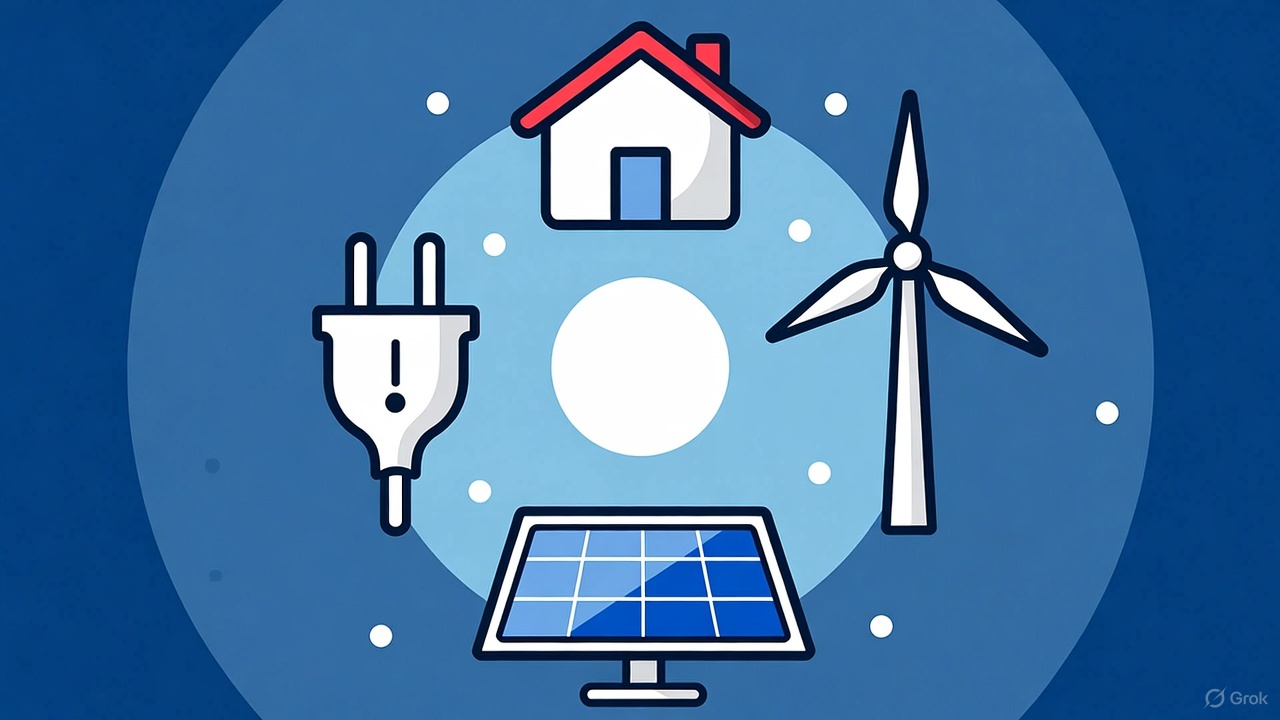
You’ve signed at the notary, collected the keys, and found the corkscrew. Now you need electricity in your name so the lights — and the hot water, and the heating, and the fridge you just filled with essentials from the nearest Casino — work when you arrive for your first weekend. This is the no-nonsense guide to setting up the electricity supply on a French property immediately after completion, written specifically for British and international buyers of Alpine ski apartments and chalets who may be doing this for the first time and want to avoid the predictable frustrations that trip up nearly every new owner.
The good news is that the French electricity market is well structured, competitive, and generally efficient. The bad news is that the process has several moving parts — the supplier (who bills you), the distributor (Enedis, who operates the physical network), and the meter (which may be a legacy mechanical meter or a modern Linky smart meter) — and a new owner who does not understand how they relate will spend more time and effort than necessary getting the lights on. This guide walks through the sequence step by step, including what you should do before completion, what you should do within 48 hours of getting the keys, what you should avoid, and what to plan for the first heating bill when you actually start using the property in winter.
A quick framing note: this article assumes a typical French Alpine apartment or chalet with existing connection to the Enedis grid (i.e., an established property, not a new-build in a new development, where the construction-phase electricity connection is a separate process usually handled by the developer before handover). For VEFA new-build completions, your developer or rental management company typically handles the initial activation as part of the handover, and your role is limited to transferring the supply into your name. For resale properties, the more common case, you are responsible for the full process. Our buying process guide covers resale completions in detail.
Before Completion
What to Arrange Before You Get the Keys
The ideal preparation starts two to three weeks before completion. At that stage you should know your future property’s full address and — crucially — its Point de Livraison (PDL) number or Point de Référence Mesure (PRM) number. These are the unique identifiers for the property’s connection to the Enedis electricity network, and every French property has one. The PDL is a 14-digit number that your notaire can obtain from the current vendor or from Enedis directly, and having it ready makes the supplier contract setup roughly five times faster than if you are trying to identify the property by address alone.
With the PDL in hand, you have the option to pre-arrange an electricity contract that becomes effective on the day of completion. This is the cleanest path: you set up the contract with your chosen supplier (we’ll come to suppliers in a moment), specify the start date as the day of signing, and walk into the property with the supply already in your name. The alternative — waiting until you have the keys before contacting a supplier — typically introduces a 24 to 72 hour gap during which the previous owner’s contract has ended and yours has not yet begun, and while the supply usually continues anyway because Enedis does not physically disconnect between owners, any metering or technical issue during that gap creates administrative headaches that are easily avoided.
Your notaire will usually provide the meter reading (relevé) as of the day of completion as part of the standard closing documents. That reading is what establishes the baseline for your new contract and is what the previous owner’s final bill is calculated against. Request it explicitly if your notaire does not provide it automatically — this is a standard French conveyancing detail but it can be missed in international transactions where the notaire may not assume you understand the convention.
Finally, if the property has a Linky smart meter (which most French properties now do, following the nationwide rollout completed in 2021), the handover is almost entirely digital and the new contract can be activated remotely without a physical visit. If the property still has a legacy mechanical meter, you may need to arrange a meter reading or, in some cases, a technician visit to transfer the supply properly — worth asking the vendor or their notaire in advance whether the meter is a Linky.
14 digits
Length of the French Point de Livraison (PDL) number that identifies your property’s grid connection
~35 million
Linky smart meters installed across France by 2024 following the 2015–2021 national rollout
€600–€1,800
Typical annual electricity cost for a French Alpine apartment used 6–12 weeks per year by the owner (2026)
24–48 hours
Typical time to activate an electricity contract on a Linky-equipped French property
Choose Your Supplier
EDF, TotalEnergies, Engie, Alterna and the Competitive Market
France’s electricity market has been fully liberalised since 2007, and while EDF (Électricité de France) remains the dominant incumbent with a 65% market share and the default regulated tariff (the famous Tarif Bleu), you are free to choose any of several dozen licensed suppliers. For a new French property owner, the realistic shortlist is EDF itself (simple, reliable, English-language customer service for larger contracts), TotalEnergies, Engie, Alterna, Mint Énergie, Ekwateur (notable for green energy positioning) and a handful of smaller operators.
The price differences between suppliers are real but modest — typically 5–15% on the annual bill, with significant variation depending on the specific tariff type and your consumption profile. For a ski apartment that is used intermittently with heating and hot water demand concentrated in ski weeks, the choice between suppliers matters less than it does for a primary residence with year-round heating demand. Most Domosno clients default to EDF for simplicity, particularly because EDF’s English-language service for international customers (EDF Service Client International) is meaningfully better than the English-language options at the smaller competitors.
The simplest path for a new owner is to set up a contract directly on the EDF website (edf.fr) using your PDL number, the property address, and your bank details (you will need a French bank account or, increasingly, you can use an IBAN from any EU bank). The process takes 15–20 minutes and the contract is typically activated within 24–48 hours, sometimes immediately if a Linky smart meter is installed. You will receive an email confirmation and your first bill roughly 6–8 weeks later covering the initial period of supply. Bilingual service is available by phone for questions, and the EDF International Customer team speaks fluent English.
If you prefer to shop around before committing, sites like selectra.info and lesfurets.com provide comparison tools for the French electricity market. Be aware that the ‘cheapest’ supplier at brochure pricing is often cheapest for a reason — sometimes the quoted rate is an introductory offer that reverts to a higher rate after 12 months, and sometimes the customer service is minimal. For a second-home owner who will not be dealing with the supplier daily, paying 5% more for a reputable supplier with English-language support and reliable billing is usually the right trade-off. Our Domosno buying team flags this in the post-completion consultation for clients who have bought through us.
Contracted Power Guide for French Alpine Properties (2026)
Studio / 1-bed no elec heating
1-bed with elec heating
2-bed with elec heating
3-bed apartment / small chalet
Chalet with elec heating + hot tub
Tariff Choices
Tarif Bleu, Heures Creuses, and Getting Your Tariff Right
Once you’ve chosen a supplier, you need to choose a tariff and a contracted power level. EDF’s basic Tarif Bleu is a regulated tariff set by the French energy regulator (CRE) and serves as the baseline against which alternative suppliers typically compete. Tarif Bleu comes in two main flavours: Base (single flat rate per kWh all day) and Heures Creuses / Heures Pleines (lower rate during off-peak hours, typically 8 hours overnight, and a higher rate during peak hours). For a ski apartment with electric heating, the Heures Creuses option is usually the better choice because electric space heating and hot water can be scheduled (or runs naturally) during off-peak hours, delivering meaningful savings over the annual bill.
The contracted power (puissance souscrite) is the maximum simultaneous load your supply can handle, measured in kVA. Typical ski apartments run 6, 9 or 12 kVA. A small studio may work on 6 kVA; a 2-bedroom apartment with electric heating typically needs 9 kVA; a 3-bedroom apartment or chalet with electric heating and a hot tub probably needs 12 kVA. Choosing the right level matters because your monthly standing charge (abonnement) is proportional to contracted power — pay too much for too high a rating and you overpay year-round, too low and you trip the main breaker whenever you run too many appliances simultaneously.
The practical recommendation is to start with whatever rating the previous owner had (your notaire or the Enedis portal will tell you), and adjust within the first few months based on actual experience. If the main breaker never trips even when you are running heating, electric oven, washing machine and hot tub simultaneously, you are probably over-rated and can drop one level to save on the standing charge. If you do trip the breaker under normal multi-appliance use, move up one level. The change request takes 48–72 hours and is handled by Enedis, typically without a physical visit if the installation supports the new rating.
“Setting up French electricity properly takes twenty minutes of preparation and about a week of attention — skipping the preparation is how owners end up with billing disputes, tripped breakers and administrative headaches on their first trip to the new property.”
Enedis & Meters
Understanding Enedis, the Linky Smart Meter and What Happens Physically
A common source of confusion for British buyers is the separation between the supplier and the distributor. Your supplier (EDF, TotalEnergies, etc.) bills you and sells you the electricity. Enedis operates the physical distribution network — the wires, the substations, and the meters — and is a regulated monopoly distributor owned by EDF. Regardless of which supplier you buy from, Enedis physically delivers the electricity. This structure is similar to the UK’s separation between energy suppliers and the DNOs (distribution network operators), and it has the same practical implication: if you have a physical issue with your connection, you contact Enedis (or your supplier contacts Enedis on your behalf), not the supplier directly.
The Linky smart meter rollout began in 2015 and was substantially complete by late 2021, with approximately 35 million Linky meters installed across France by 2024. Linky meters transmit consumption data automatically to Enedis and, via Enedis, to your supplier — which means bills are based on actual consumption rather than estimated readings, and many administrative changes (moving in, moving out, changing supplier, changing tariff, adjusting contracted power) can be executed remotely without a physical technician visit. For a new owner taking possession of a Linky-equipped property, the activation process is essentially instantaneous once your supplier contract is in place.
If the property still has a legacy mechanical meter (increasingly rare in 2026, but still present in some older chalets and remote hamlets), the administrative process is more manual. A technician visit may be required to read and transfer the meter, the tariff change options may be more limited, and you may need to submit monthly readings via the supplier’s website or phone system. Ask the vendor or notaire whether the property has a Linky before completion so you know which process applies. Most Haute-Savoie and Savoie ski resort properties built or renovated in the last decade have Linky meters as standard.
| Step | Timing | Who Does It | Typical Duration |
|---|---|---|---|
| Obtain PDL number | Week -2 to -3 | You / your notaire | Immediate |
| Set up supplier contract | Week -1 | You (online) | 15–20 minutes |
| Completion / key handover | Day 0 | Notaire / vendor | Appointment |
| Contract activation (Linky) | Day 0–2 | Supplier / Enedis | Automatic |
| Main breaker / circuit test | Day 0–1 | You | 30 minutes |
| First bill received | Week 6–8 | Supplier | Review carefully |
Costs & Bills
What to Expect on Your First Bill and Ongoing Costs
For a typical French Alpine apartment used 6–12 weeks per year by the owner and let for another 10–20 weeks, annual electricity costs in 2026 typically run €600–€1,800 depending on property size, heating system, contracted power and usage pattern. Small studio apartments on Tarif Bleu Heures Creuses run closer to the low end; larger 3-bedroom apartments with electric heating and hot water tank demand run toward the upper end. Chalets with electric heating and hot tubs can exceed €2,500 annually. These figures assume a property that is heated only during occupied weeks with the heating set to a low ‘frost protection’ mode during empty periods.
The standing charge (abonnement) is the fixed monthly cost regardless of consumption and runs €12–€22 per month for a 6–12 kVA contract. On top of the standing charge, the per-kWh consumption cost varies by tariff and supplier but runs approximately €0.22–€0.27 per kWh for peak-rate consumption on Tarif Bleu in 2026. Heures Creuses rates sit at roughly €0.18–€0.22 per kWh for off-peak consumption. Various taxes and contributions (TCFE, CTA, CSPE, VAT at 20%) are included in the quoted prices and typically add up to around 30–40% of the pre-tax unit rate.
Bills are typically issued bi-monthly (every two months) and are paid by direct debit from a French or EU bank account. The first bill a new owner receives usually covers 6–10 weeks of supply and is the easiest place to identify whether the contracted power and tariff are correctly set — if the standing charge looks wrong, contact the supplier within the first month. Our buying process guide covers the post-completion administrative checklist in more detail, and the Domosno team regularly helps new clients interpret their first French electricity bill.
2007
Market liberalisation
French electricity market fully opens to competition; EDF’s monopoly on domestic supply ends but Enedis remains the regulated distributor.
2015
Linky rollout begins
Enedis begins the national rollout of the Linky smart meter, replacing legacy mechanical meters across France over a six-year programme.
2021
Linky rollout substantially complete
By end of 2021, roughly 32 million Linky meters are installed; the majority of French properties now have remote administrative capability.
2022
Tarif Bleu price shield
French government introduces the Bouclier Tarifaire to limit electricity price increases during the 2022–2023 energy crisis.
2024
Linky effectively universal
Approximately 35 million Linky meters installed; legacy meters remain only in remote or recently-renovated properties; tariff changes are now almost entirely remote.
2026
Stable 2026 market
Tariff Bleu remains the regulated reference; competitive suppliers actively compete on service; English-language options are well developed for international owners.
Common Problems
What Usually Goes Wrong and How to Avoid It
Predictable problems for new owners fall into a few common categories. First, the gap problem — where the previous owner’s contract ends on completion day but the new owner’s contract takes 48 hours to activate. During this gap the supply usually continues but any metering anomaly creates billing disputes between the two owners’ final and initial bills. Avoidance: pre-arrange the contract to activate on the signing day with the PDL, and get a written meter reading from the notaire at completion.
Second, contracted power mismatch — where the new owner sets up a contract at the supplier’s recommended default (often 6 or 9 kVA) but the property actually needs more, leading to tripped breakers when heating and other appliances run simultaneously. Avoidance: ask the previous owner or check the Enedis portal for the existing contracted power before completion, and match or slightly exceed it initially.
Third, paper bills and French-language correspondence. Default communication from all French suppliers is in French, and buyers who set up contracts without flagging international correspondence preferences can end up receiving paper bills in French to the French property address, which are then essentially invisible to an absent owner. Avoidance: explicitly opt into email billing and English-language communication (where available — EDF International supports this; smaller suppliers often do not), set a French or international contact address for post, and check the online supplier portal monthly during the first six months.
Fourth, off-season frost damage if the heating is switched off entirely during empty periods and a cold snap exceeds the property’s passive thermal mass. This is a common cause of burst pipes in unoccupied ski apartments. Avoidance: set electric heating to a low ‘frost protection’ temperature (typically 7–10°C) during empty periods and budget for the resulting base-load electricity consumption. A smart thermostat connected to a home automation system adds useful remote monitoring for absent owners.
Fifth, and specific to international buyers, payment failures due to bank account issues. French suppliers prefer SEPA direct debit from a French IBAN; payment from non-EU IBANs can be rejected by some billing systems. The cleanest solution is a French bank account opened at the time of purchase, which most of our Domosno clients now do as part of the standard post-completion process. Alternatively, a SEPA-compatible account at an EU digital bank (N26, Revolut, Wise) works for most suppliers but is worth testing with a small initial payment to confirm.
Practical Checklist
A Day-by-Day Checklist for Your First 72 Hours of Ownership
Day minus 10 (before completion): obtain your PDL number from the vendor via your notaire. Start the contract with your chosen supplier (EDF Tarif Bleu Heures Creuses is the default safe choice), specifying the start date as the day of completion. Confirm your French bank account SEPA direct debit is set up. Ask whether the property has a Linky meter and, if not, arrange a technician visit for the day of completion or shortly after.
Day 0 (completion day): meet the notaire, sign the Acte de Vente, collect the keys. Request a signed copy of the meter reading (relevé au jour de la vente) from the notaire. Walk through the property with the vendor if possible and identify the location of the meter, the main breaker panel, and any isolation valves for water and gas. Take photos of the meter reading, the main breaker and any model numbers or serial plates — these make future supplier queries vastly easier.
Days 1–3: confirm with the supplier by phone or via the online portal that the contract is active. Log into the Enedis customer portal (enedis.fr) using the PDL and check that the meter is correctly associated with your contract. If the property has a Linky, you can view consumption data within 24–48 hours of activation — confirm it is reading sensibly. Test the main circuits (lights, sockets, heating) and identify any issues while you are still on site.
Week 1–2: set up email communication preferences with the supplier, configure heating for frost protection mode during your absence, and set a calendar reminder for the first bill (expected 6–8 weeks out). If you have delegated property management to a local agent or rental management company, share the supplier login and the Enedis portal details with them. The Domosno team provides a post-completion checklist and practical support for clients who have bought through us.
Common Questions
Frequently Asked Questions
Can I set up a French electricity contract before I have the keys?
Yes — and you should. With the property’s Point de Livraison (PDL) number, obtainable via your notaire from the vendor, you can pre-arrange a contract with your chosen supplier (EDF Tarif Bleu Heures Creuses is the default safe choice) to take effect on the day of completion. This eliminates the 24–72 hour gap that otherwise occurs between the vendor’s contract ending and yours starting.
Should I stay with EDF or switch to a cheaper supplier?
For a second-home owner, EDF is usually the right choice because its English-language international customer service is meaningfully better than the smaller competitors and the price differential is modest (typically 5–15%). For a primary-residence owner with year-round heating demand, shopping around can save more meaningfully. Sites like selectra.info and lesfurets.com provide comparison tools.
What’s Heures Creuses and should I choose it?
Heures Creuses is an off-peak tariff offering lower kWh rates during a daily 8-hour window (typically overnight). For a property with electric space heating and/or an electric hot water tank, the option is usually worthwhile because heating and hot water consumption can be scheduled or naturally concentrated during off-peak hours. For a property with gas heating and minimal electric use, the flat Base tariff is often simpler.
How much does French electricity actually cost per kWh?
Approximately €0.22–€0.27 per kWh peak-rate on Tarif Bleu in 2026, with Heures Creuses off-peak rates around €0.18–€0.22 per kWh. These figures include all taxes (TCFE, CTA, CSPE, VAT at 20%). The monthly standing charge (abonnement) runs €12–€22 for typical 6–12 kVA contracts. Actual bills vary with tariff, consumption profile and supplier markup.
Do I need a French bank account to pay electricity bills?
Technically no — SEPA direct debit from any EU IBAN works for most suppliers, and digital banks like Revolut, N26 and Wise are accepted. In practice, a French bank account simplifies payment processing and is recommended for second-home owners. Most Domosno clients open a French bank account as part of the standard post-completion process.
What happens if I don’t set up electricity before I arrive?
The supply usually continues during the gap between the vendor’s contract ending and yours starting, because Enedis does not physically disconnect for most handovers. But any issue during that gap creates administrative complications, and in some cases (particularly with legacy meters) the supply may be formally cut. The cleanest approach is to pre-arrange the contract so the lights work when you walk in.
How does the Linky smart meter affect me as a new owner?
Positively — a Linky-equipped property allows remote activation of your contract, remote tariff changes, remote contracted-power adjustments, and automatic monthly billing based on actual consumption. You can also access detailed consumption data via the Enedis customer portal, which is useful for optimising tariffs and monitoring usage in empty periods.
What should I set the heating to when the property is empty?
Frost protection mode, typically 7–10°C, to prevent burst pipes during cold snaps while keeping electricity consumption to a minimum. Completely switching off the heating risks frost damage that can cost multiples of the saved electricity in repair bills. Smart thermostats connected to a home automation system provide useful remote monitoring and override control for absent owners.
Featured Properties

Popular Ski Resorts
Morzine
Megève
Chamonix
Les Gets
Alpe d’Huez
Les Deux Alpes
Les Arcs
La Plagne
Courchevel
Méribel
Saint-Martin-de-Belleville
Val Thorens
Val d’Isère
Tignes
Thollon-les-Mémises
Quick Links
All New-Build Ski Properties
All Ski Apartments
All Ski Chalets
New-Build Ski Apartments
New-Build Ski Chalets
Resale Ski Apartments
Resale Ski Chalets