Resort Spotlight
La Plagne Property Guide 2026: The Eleven Villages, Paradiski and What British Buyers Should Know
La Plagne’s eleven villages across 225km of pistes make it one of the most varied and accessible investment propositions in the Alps — here’s the 2026 buyer walkthrough.
8 Mar 2023
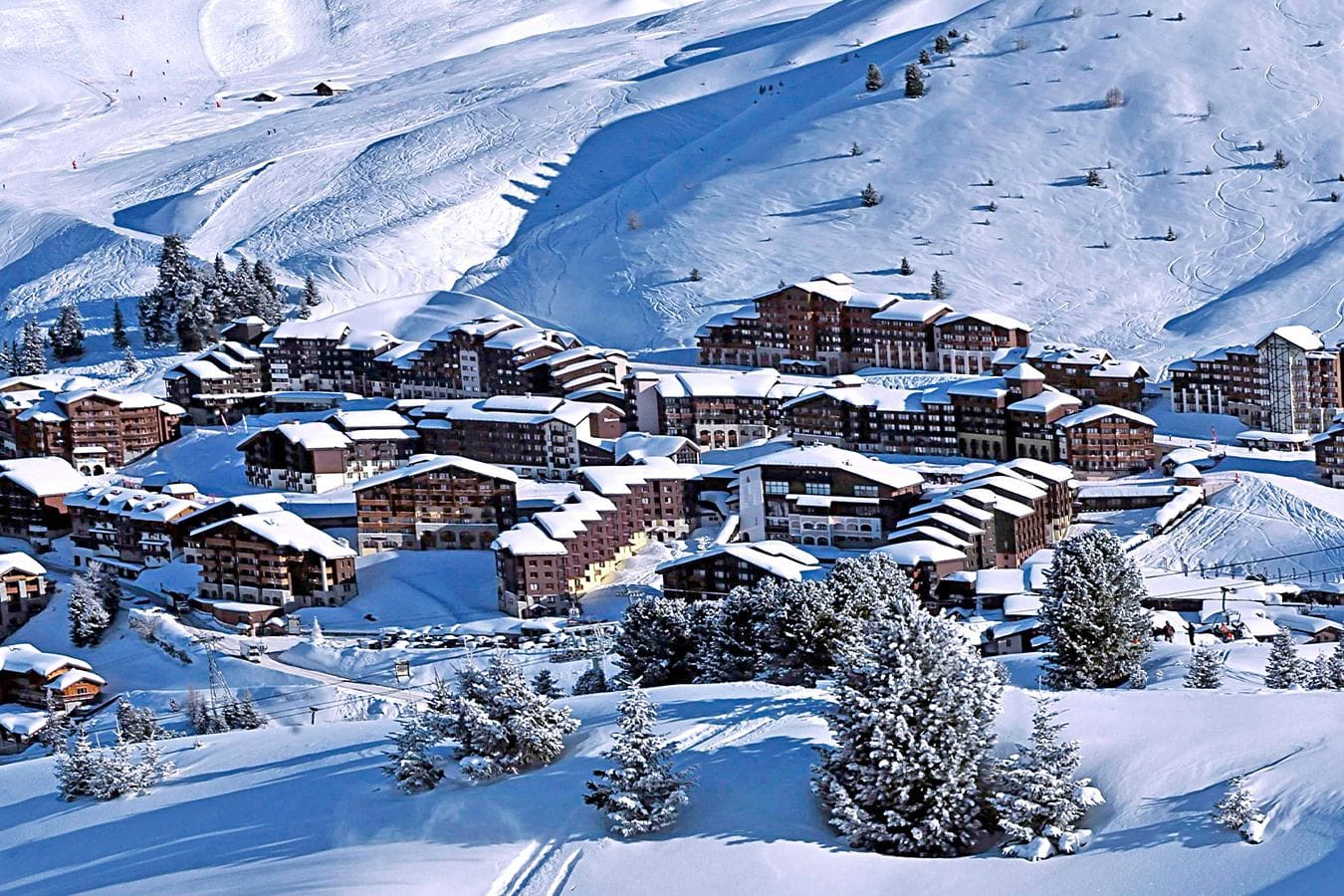
La Plagne is often described as the most family-friendly resort in the French Alps, and that reputation is genuinely deserved — but it is also incomplete. What the family-friendly headline tends to obscure is that La Plagne is really eleven distinct villages spread across a vast 225km ski domain, connected via the Paradiski cable car to Les Arcs to form the 425km second-largest linked area in France. The decision to ‘buy in La Plagne’ is actually a decision between eleven different addresses with eleven different price levels, rental profiles and lifestyle propositions. Understanding those differences is the key to making the right purchase.
This guide is the 2026 Domosno walkthrough of La Plagne for buyers. We cover the eleven villages, the current price-per-m² data from both resale and new-build markets, the specific rental yield expectations for well-positioned apartments, the Paradiski context that matters hugely to on-slope enjoyment and off-slope liquidity, and the practical logistics of getting British buyers from Geneva or Lyon to a signed completion. We’ll also cover the 2025-26 lift and piste upgrades that continue to consolidate La Plagne’s position at the top of the mid-market Alpine portfolio.
If you’re actively shopping, our La Plagne property page shows current live listings across all eleven villages, and our new-build ski apartments catalogue highlights the newest VEFA projects eligible for the 20% VAT reclaim. The rest of this guide walks you through the decision framework that Domosno uses with every La Plagne buyer — whether they’re looking at a €350,000 one-bed studio in the lower villages or a €2 million ski-in chalet at Belle Plagne.
Overview
La Plagne at a Glance: Eleven Villages, 225km and Paradiski
La Plagne’s ski domain spans from 1,250m at the lowest village to 3,250m at the Bellecôte glacier, covering 225km of its own marked pistes across 132 runs. Linked via the Vanoise Express double-deck cable car to Les Arcs, the combined Paradiski area totals 425km of pistes — making it the second-largest linked ski area in France after the 3 Vallées. For buyers weighing scale of skiing, this matters: a La Plagne address buys access to one of the biggest ski propositions on the continent, with genuinely different terrain across the glacier, high-altitude bowls, and treeline forest runs.
The resort was originally built in the late 1960s as part of France’s ‘plan neige’ mountain tourism programme, but it has continued to reinvent itself consistently. The lower villages — Montalbert, Plagne Montchavin, Plagne Les Coches, Champagny-en-Vanoise — retain traditional Savoyard character, while the higher purpose-built villages — Plagne Centre, Plagne Bellecôte, Belle Plagne, Plagne Villages, Plagne 1800, Plagne Aime 2000 — offer altitude, snow reliability and ski-in/ski-out convenience at the cost of more modernist architecture.
For family buyers specifically, La Plagne offers a combination that’s hard to beat elsewhere in the Alps: extensive beginner and intermediate terrain, excellent ski school infrastructure in multiple languages, the dedicated non-skiing activities (bobsleigh track, snowshoe trails, sleigh rides), and the scale to keep advanced members of the family interested via the glacier and the Aiguille Rouge terrain accessed through Paradiski. It’s this combination that has built the resort’s year-after-year dominance in the family-friendly Alps conversation.
The transport logistics are also meaningfully better than many Alpine peers. La Plagne is 2h15 from Geneva Airport, 2h from Chambéry, 2h30 from Lyon, and (critically) the Eurostar ski train runs direct from London St Pancras to Bourg-Saint-Maurice in winter weekends — giving British buyers a rail option that competes favourably with flying for shorter trips. Aime-la-Plagne TGV station is 10 minutes from the resort by road.
425km
Total Paradiski linked pistes, second-largest ski area in France after the 3 Vallées
€7,000–8,500
Typical new-build price per m² in La Plagne’s main purpose-built villages in 2026
3–4%
Realistic net rental yield for well-positioned La Plagne new-build apartments under professional management
2h15
Typical transfer time from Geneva Airport to La Plagne by road
The Villages
The Eleven La Plagne Villages: Which to Buy and Why
Plagne Centre (1,970m) is the original purpose-built village, the commercial hub of the entire resort, and home to the greatest concentration of shops, restaurants, ski schools and rental bases. It is not architecturally the most charming part of La Plagne — the 1960s block aesthetic is very much on display — but it is practical, affordable, and the most liquid address in the resort for both sales and rentals. Two-bed new-build apartments run €450,000–€650,000. Belle Plagne and Plagne Bellecôte are the other high-altitude purpose-built villages at similar price points, with Belle Plagne generally the most aesthetically appealing of the three.
Plagne Villages and Plagne 1800 sit slightly below the main purpose-built cluster and offer a more chalet-style look with wood-clad construction. These are the premium choices for buyers who want altitude and ski-in/ski-out access but prefer a more traditional aesthetic than Plagne Centre’s concrete. Pricing typically runs 10–20% above the equivalent Plagne Centre specification. Plagne Aime 2000 is the highest village at 2,100m, notable for its distinctive cruise-liner-style central building and unbeatable snow reliability.
Champagny-en-Vanoise (1,250m) is a genuine traditional village on the southern side of the resort, with its own connection into the La Plagne ski area via gondola. Champagny feels like a real Savoyard village — stone houses, working bakery, primary school — and is the strong choice for buyers who want the La Plagne ski access but prefer an authentic village experience. Altitude means snow reliability is lower at village level, but the bubble lift takes you straight into the main ski area. Expect apartments from €4,500–€6,500/m².
Plagne Montchavin, Plagne Les Coches and Montalbert are the other traditional-feeling lower villages, each with its own character. Montchavin and Les Coches sit together on the Paradiski side and offer excellent linked access to Les Arcs via the Vanoise Express. Montalbert is a quieter forest village with a gentle family atmosphere. All three trade at the more affordable end of La Plagne’s price spectrum (€3,800–€5,800/m² for resale apartments), and they are the natural choice for buyers prioritising value and village character over ski-in convenience.
La Plagne Village Comparison: Position vs Price
Belle Plagne
Plagne Villages / 1800
Plagne Centre
Champagny-en-Vanoise
Montchavin / Les Coches
Montalbert
2026 Prices
Current Price Per m²: New-Build vs Resale Across La Plagne
As of early 2026, new-build apartment prices in La Plagne’s main purpose-built villages run €7,000–€8,500/m², with premium ski-in/ski-out positions at Belle Plagne and Plagne Villages reaching towards €9,500/m². This represents a material step up from the €6,500–€7,500/m² levels of 2023, reflecting the broader 2024–25 rally in Alpine new-build pricing and the limited pipeline of new VEFA developments reaching the market in La Plagne specifically. Entry-level new-build one-beds now start from around €375,000 in the purpose-built cluster.
Resale apartment prices run significantly lower — €4,500–€6,500/m² for the average resale property across the main villages. This reflects the mix of older 1960s and 1970s stock in Plagne Centre and Bellecôte that still dominates the resale market. A well-presented 2-bed resale apartment in a central village typically trades at €250,000–€450,000 depending on location, renovation state and altitude. Renovated, well-positioned resale units can match new-build pricing at the premium end.
The new-build vs resale decision in La Plagne is a meaningful one. New-build wins on the 20% VAT reclaim (€70,000–€150,000 back on a typical purchase), lower notaire fees (2–4% vs 7–9%), a 10-year construction guarantee, and access to the newest energy-efficient building stock. Resale wins on immediate availability (no 18–30 month VEFA wait), more negotiable pricing, and occasional character or view premiums that new-build simply cannot replicate.
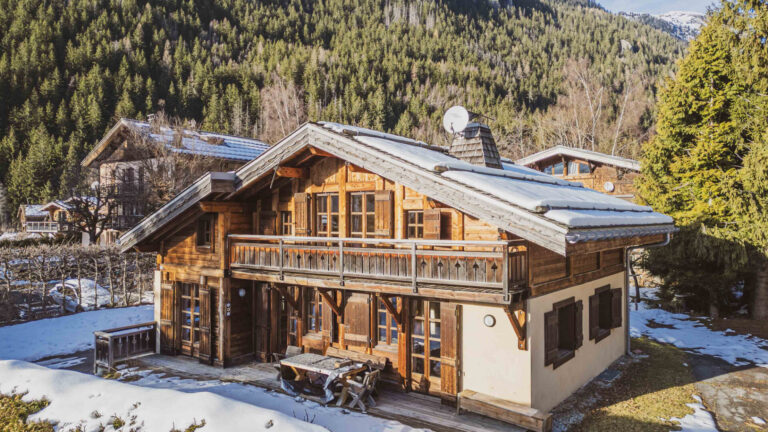
For chalet-seeking buyers, the picture is sparser. La Plagne has relatively few standalone chalets compared to neighbours like Méribel or Les Gets — the resort’s purpose-built origins mean apartment stock dominates. Where chalets do come to market (typically in Champagny, Montchavin or on the outskirts of the lower villages), pricing runs €2,500–€8,000 per m² for older stock and €8,000–€13,000/m² for premium new-build or fully renovated properties. A 4-bed new-build chalet in the €1.5M–€2.5M range is the typical upper-tier target.
“La Plagne is eleven distinct villages, not one resort. Buy the right village for your specific brief and the resort delivers; buy without walking the village map and you’ll regret it.”
Rental Yields
Realistic Rental Yields and the Paradiski Liquidity Premium
Realistic rental yield expectations in La Plagne run 3–4% net for well-positioned new-build apartments under professional management, or 2–2.5% net if the owner reserves 1–2 prime weeks for personal use. Ski-in/ski-out central apartments in Belle Plagne and Plagne Villages reach the top of this range; traditional village apartments in Champagny or Montchavin typically sit at the lower end. These figures are deliberately conservative — we would rather a buyer plans on 3% and is pleasantly surprised than stretches to 5% on a spreadsheet and is disappointed in practice.
The Paradiski connection matters for rental demand because it broadens the appeal of any La Plagne address. Guests booking a La Plagne apartment know they have access to 425km of linked skiing — enough to keep even experienced skiers exploring for two weeks without repeating runs. This is a measurable factor in booking conversion and in the ability to command premium rental rates, especially in February school holidays and Christmas week when demand peaks.
Summer rental activity in La Plagne is materially weaker than in the mountain-biking hubs of Morzine, Les Gets or Chamonix. The resort is a beautiful hiking and cycling destination, but it does not host UCI-level MTB events and the summer demand is dominated by French families rather than international bookings. Budget 0–1 summer rental weeks rather than the 6–8 weeks achievable in the Portes du Soleil hubs. For investor-buyers prioritising yield, this is a meaningful factor in resort selection.
Management operator choice makes a large difference to both realised yield and owner usability. La Plagne’s market includes large hotel-group operators (Pierre & Vacances, Maeva, Club Med) and independent boutique operators. The larger operators generally maximise rental nights at the cost of owner flexibility; independents typically allow more generous owner-use allocations but may deliver 0.3–0.5% lower net yields. Domosno walks every new-build client through the operator trade-offs before commercial lease signing.
| Village | Altitude | Typical 2026 Price/m² | Best For | Rental Yield |
|---|---|---|---|---|
| Belle Plagne | 2,050m | €8,000–9,500 | Ski-in convenience | 3.5–4% net |
| Plagne Centre | 1,970m | €6,500–8,000 | Liquid central | 3–3.5% net |
| Plagne Villages | 1,970m | €7,500–9,000 | Chalet feel | 3–3.5% net |
| Plagne Aime 2000 | 2,100m | €6,500–8,000 | Highest snow reliability | 3–3.5% net |
| Champagny-en-Vanoise | 1,250m | €4,500–6,500 | Traditional village | 2.5–3% net |
| Montchavin / Les Coches | 1,250m | €3,800–5,800 | Value + Paradiski | 2.5–3% net |
Infrastructure
2025-26 Lift Upgrades and What’s Changing in Paradiski
La Plagne has been investing consistently in its lift infrastructure, and the 2025-26 season is no exception. The new-generation detachable chairlifts and gondolas that have progressively replaced older slow-lift infrastructure in the Plagne Centre and Bellecôte sectors have meaningfully improved peak-hour uplift capacity, reducing queuing on the main access points during school holiday weeks. This matters because lift capacity modernisation correlates directly with rental demand and pricing power over the medium term.
The Vanoise Express cable car linking La Plagne to Les Arcs — the technological showpiece that created the Paradiski area in 2003 — has been steadily upgraded with new cabins and control systems, and the combined Paradiski lift pass remains one of the best-value big-mountain passes in France. For a buyer considering La Plagne specifically for the Paradiski access, the ongoing investment on both sides of the Vanoise Express is an important positive signal.
Beyond lifts, La Plagne has upgraded its snowmaking capacity across the lower villages significantly in recent seasons. This was becoming a visible issue for the lower-altitude villages (Champagny, Montchavin) during warmer early-season weeks, and the expanded snowmaking now covers a materially larger share of the lower domain. For a buyer weighing value-priced lower village apartments against premium higher-altitude addresses, the snowmaking investment narrows (though does not eliminate) the snow-reliability gap.
Looking to 2026-27 and beyond, La Plagne’s infrastructure plan includes further chair replacement on the Roche de Mio sector and ongoing investment in the bobsleigh track experience that’s become a non-skiing signature for the resort. This is a resort continuing to invest in its product rather than coasting on legacy — which matters to anyone buying with a 10+ year horizon in mind.
1961
Plagne Centre opens
The original La Plagne resort opens as part of France’s ‘plan neige’ mountain tourism programme.
1970s
Lower villages developed
Montchavin, Les Coches, Montalbert and Champagny join the La Plagne ski domain, expanding the resort to its eleven-village footprint.
1992
Albertville Olympics bobsleigh
La Plagne hosts the 1992 Winter Olympic bobsleigh, luge and skeleton events — the track remains a resort signature today.
2003
Vanoise Express links Paradiski
The double-deck cable car connecting La Plagne to Les Arcs creates the 425km Paradiski area, the second-largest linked ski area in France.
2020s
Lift modernisation programme
Consistent replacement of older slow-lift infrastructure with new-generation detachable chairs improves peak-hour uplift capacity across the resort.
2025-26
Snowmaking expansion
Significant upgrades to snowmaking in the lower villages narrow the snow-reliability gap with higher-altitude purpose-built addresses.
Buyer Logistics
Mortgages, VEFA Timeline and Getting Here From the UK
For British and Irish buyers, French non-resident mortgages remain accessible in 2026 — and meaningfully cheaper than at any point since 2023. Non-residents can typically borrow 70–80% LTV, with 85% possible for the strongest profiles on prime properties. Fixed rates for non-residents in April 2026 run 3.4–4.25%, depending on LTV, term and underwriter. Our French mortgage calculator models realistic scenarios with fees and insurance included.
The typical VEFA timeline from reservation to completion runs 18–30 months depending on the developer and the complexity of the project. Payments are staged against construction milestones (5% on reservation, 30% at foundation, further tranches at roof-out and enclosure, final balance at handover). This phasing is actually advantageous for buyers — you’re not paying the full price up front, and for most of the construction period your exposure is limited to 35–60% of the total.
Getting to La Plagne from the UK is one of the easier logistics in the Alps. Geneva Airport via Lyon-St-Exupéry or Chambéry-Aix-les-Bains are the fastest flight+drive options (2h15–2h30 transfer). The Eurostar Ski Train from London St Pancras to Bourg-Saint-Maurice runs direct in winter weekends, with onward bus or taxi to La Plagne — this is the preferred option for families wanting to bring more luggage without the aviation hassle. Aime-la-Plagne TGV station is a 10-minute transfer and connects to the high-speed rail network.
Finally, the practical support infrastructure in La Plagne is mature and English-speaking. Notaires, mortgage brokers, rental operators and property managers all routinely handle non-resident transactions and will work in English throughout. Domosno has been selling into La Plagne and the broader Paradiski area since 2005, and we maintain relationships with the full chain of specialists needed to close a purchase cleanly. Start with a conversation with the Domosno team — we’ll walk you through the specific villages that match your brief before you commit any time to property visits.
The Verdict
Who La Plagne Is Right For — and Who Should Look Elsewhere
La Plagne is an outstanding fit for family-oriented buyers who want maximum ski scale (Paradiski), excellent family-friendly infrastructure, and a resort with the operational depth to handle a 10-year ownership without drama. It is particularly strong for buyers who value ski reliability (most villages sit above 1,900m), extensive beginner and intermediate terrain, and the variety that only an eleven-village resort can provide. The British buyer community in La Plagne is established and large, making the practical side of ownership straightforward.
It is less clearly the right fit for ultra-prime luxury buyers — Courchevel 1850, Megève, Val d’Isère and the top of Chamonix all offer a more exclusive positioning and deeper prime-end market liquidity. It is also less ideal for buyers prioritising summer rental yields (Morzine, Les Gets and Chamonix are materially stronger on summer bookings) or for buyers seeking traditional village character as the primary criterion (Megève, Samoëns and Les Gets all feel more authentic at village level).
For the large middle of the buyer market — families, investor-users, buyers with a €400k–€1.5M budget who want real scale and reliable family skiing — La Plagne is one of the strongest propositions in the entire French Alps. That’s why it has sustained its position as one of Domosno’s most consistently active resorts for two decades, and why we continue to recommend it to the specific buyer profiles it suits best.
If you’re at the shortlist stage, our La Plagne property page is the right starting point for live inventory, and the Domosno team can walk you through the village-specific trade-offs in a 30-minute call. The resort rewards buyers who do their homework on the eleven-village distinction — and penalises those who assume all La Plagne addresses are equivalent.
Common Questions
Frequently Asked Questions
What’s the difference between La Plagne and Paradiski?
La Plagne is the resort itself with 225km of its own pistes. Paradiski is the combined ski area formed when La Plagne connects via the Vanoise Express cable car to Les Arcs (201km). Together they total 425km of linked pistes — the second-largest ski area in France. Your La Plagne lift pass can be upgraded to the full Paradiski pass for ~€10 per day extra.
Which La Plagne village is best for first-time buyers?
Plagne Centre is usually the most practical starting point: it has the widest range of available apartments, the strongest rental demand, the best on-site commercial infrastructure, and the most liquid resale market if you ever need to sell. For buyers prioritising aesthetics, Belle Plagne and Plagne Villages are the more charming higher-altitude alternatives at a 10–15% price premium.
Is La Plagne good for non-skiing activities?
Exceptionally so. La Plagne hosts the only Olympic bobsleigh track in France (open to the public), extensive snowshoe trails, ice climbing, dog-sledging, a tubing park, and a large indoor aquatic centre at Plagne Centre. For families with mixed-interest members, the non-ski programme is one of the strongest in the Alps — a meaningful factor in rental demand and family satisfaction.
Can non-residents buy in La Plagne without a French mortgage?
Yes — cash purchases are common and have no additional friction. Non-residents can also access French mortgages at 70–80% LTV with rates of 3.4–4.25% in April 2026. Whether to finance is a question of cost of capital versus diversification and depends on your broader portfolio. Many Domosno clients finance even when they could pay cash, to preserve liquidity elsewhere.
How does La Plagne compare to Les Arcs?
They’re linked via the Vanoise Express (both are part of Paradiski) but the resorts have different personalities. Les Arcs is four distinct villages at sharper altitude steps, with stronger premium inventory at Arc 1950 and 2000. La Plagne is eleven villages with more variety at the value end and stronger family-activity infrastructure. Price-wise they’re broadly similar, with Les Arcs 1950 commanding a small premium.
Do I qualify for the 20% VAT reclaim in La Plagne?
Yes — new-build VEFA properties in La Plagne qualify for the 20% VAT reclaim on the same terms as any other French resort. The property must be operated as a classified tourist residence with at least three para-hotel services, through a management company, for at least 20 years. Most Domosno new-build clients in La Plagne use this mechanism to recover €60,000–€150,000 on completion.
Is the snow reliable in La Plagne’s lower villages?
The lower villages (Champagny, Montchavin, Montalbert) sit at 1,250m and do face snow-reliability pressure during warmer early and late season weeks. Recent snowmaking investments have materially narrowed the gap with higher villages, but for buyers for whom snow certainty at village level is critical, the higher purpose-built villages (1,970m+) remain the more reliable choice.
What’s the typical new-build VEFA completion timeline in La Plagne?
Most La Plagne new-build projects complete 18–30 months after reservation, with payments staged against construction milestones. For a buyer signing a reservation in early 2026, you would typically target completion in mid-2027 to late 2027. Domosno’s live {{link:new-build ski apartments}} page shows current VEFA projects with their expected completion dates.
Featured Properties
Popular Ski Resorts
Morzine
Megève
Chamonix
Les Gets
Alpe d’Huez
Les Deux Alpes
Les Arcs
La Plagne
Courchevel
Méribel
Saint-Martin-de-Belleville
Val Thorens
Val d’Isère
Tignes
Thollon-les-Mémises
Quick Links
All New-Build Ski Properties
All Ski Apartments
All Ski Chalets
New-Build Ski Apartments
New-Build Ski Chalets
Resale Ski Apartments
Resale Ski Chalets