Buyer Insight
Authentic Mountain Getaways: Lesser-Known French Alpine Destinations for 2026 Buyers
Beyond the famous resort names — how the Chartreuse, Vanoise, Beaufortain and Belledonne deliver contemplative Alpine character at a fraction of 3 Vallées prices.
18 Dec 2023
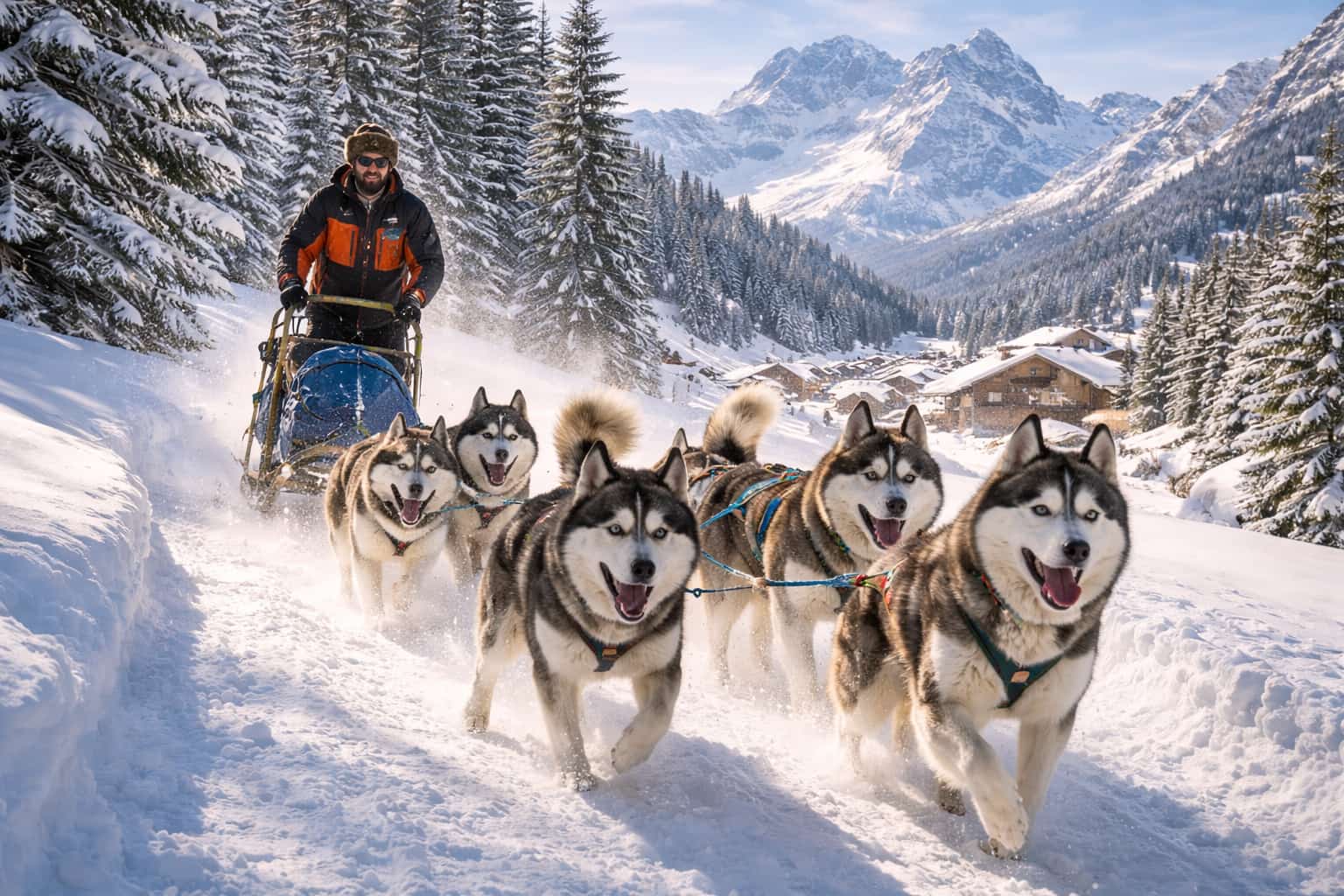
Over the past two decades a handful of French Alpine resort names have come to dominate the foreign buyer conversation — Courchevel, Megève, Val d’Isère, Chamonix. But the Alps are very large, and some of the best value and most authentic Alpine experiences lie well outside this narrow circle. This guide looks at the lesser-known corners of the French Alps that serious buyers should know about in 2026 — the Chartreuse, the Beaufortain, the Belledonne, the Vanoise valleys beyond the big-name resorts, and the Haute-Savoie valleys that British buyers have mostly overlooked.
The shift towards quieter mountain destinations isn’t just a niche preference any more. Post-pandemic buyer behaviour has been clearly measurable: more buyers now explicitly rank authenticity, year-round use and outdoor lifestyle above lift-pass maximisation. That has created real demand for properties in working villages, hamlet settings and low-density valleys — places where the economy is not built entirely on two months of winter tourism and where you can genuinely hike, bike, cross-country ski, snowshoe and simply walk in the forest without ever queueing for a six-seat gondola.
This guide walks through the most interesting lesser-known destinations, what property costs in 2026, what the ski access actually looks like, and the realistic yield and lifestyle maths. We’ll also cover why these areas typically offer a better price-to-usability ratio than the headline resorts, and the buyer profiles that fit each valley. If after reading you’d like live inventory, our blog of Alpine property and the resort pages linked throughout cover specific listings.
The Trend
Why 2026 Is the Year of the Quiet Alpine Village
Three forces are reshaping French Alpine buyer demand simultaneously. First, a post-pandemic reassessment of what an Alpine property is for — with more buyers using their second home as a genuine year-round base rather than a pure winter holiday rental. Second, a renewed focus on authentic village character, sustainability and slower tourism, which is steering demand away from high-density resort developments towards working villages with real communities. Third, the simple arithmetic of a stretched budget: in 2026, a budget that would buy a small apartment in Courchevel can buy a full detached chalet with garden in the Beaufortain or the Chartreuse.
These trends feed each other. The more that buyers seek authentic Alpine character, the more valuable the quieter destinations become, and the more attention they get in specialist buyer conversations. The number of British buyers looking specifically at the Chartreuse Natural Park, the Belledonne range above Grenoble, and the Beaufortain valleys has doubled over the past three years in our own pipeline data, even as the big-name resort enquiries have grown much more slowly.
At the same time, the French state has been investing heavily in year-round Alpine infrastructure — cross-country trails, mountain biking networks, via ferrata routes, sustainable mobility projects — in a deliberate strategy to rebalance the economy away from a single two-month ski peak. For buyers that policy shift is a structural tailwind: the valleys that are receiving this investment will become more usable and more valuable over the coming decade, regardless of whether the specific resort they contain is famous or not.
40–60%
Typical price discount in Belledonne and Chartreuse versus equivalent-spec properties in headline resort areas
77,000 ha
Area of the Parc Naturel Régional de Chartreuse, one of the most under-discovered French Alpine destinations
2–3.5% net
Realistic rental yield range for lesser-known destinations — meaningful, but below famous-resort benchmarks
€350k–€750k
Typical entry range for a character stone house with land in the Chartreuse or Beaufortain
Chartreuse
The Chartreuse: Contemplative Isère at a Fraction of the Price
The Parc Naturel Régional de Chartreuse sits between Grenoble and Chambéry, and is one of the most under-discovered Alpine destinations in the entire French mountain system. The park covers 77,000 hectares, rises to over 2,000m, and contains the still-working Grande Chartreuse monastery that gives the area its name and its famous green liqueur. The feel is deeply contemplative — deep forest, limestone cliffs, long cross-country trails and small working villages rather than purpose-built resorts.
Ski-wise, the Chartreuse contains the small resort of Le Sappey-en-Chartreuse, the Col de Porte cross-country area, and a handful of family slopes at Saint-Pierre-de-Chartreuse. This is not the 3 Vallées and it’s not trying to be — it’s low-altitude, family-scale skiing with a strong emphasis on Nordic, snowshoeing and winter walking. For a buyer seeking contemplative slow mountain life within 30 minutes of a major TGV city (Grenoble), the Chartreuse is one of the strongest value propositions in the French Alps.
Property prices reflect the modest profile. Village houses in the Chartreuse typically trade at €2,500–4,500 per square metre — a fraction of resort-area pricing. A full renovated stone house with land can be found in the €350,000–750,000 range, and the occasional authentic traditional chalet at €500,000–900,000. For buyers working to a moderate budget, the Chartreuse delivers more genuine Alpine character per euro than any resort we cover. Our ski resort articles category includes deeper dives into specific villages.
Price per m² Comparison: Famous vs Lesser-Known Destinations (2026)
Courchevel 1850
Val d’Isère Centre
Peisey-Vallandry
Sainte-Foy-Tarentaise
Belledonne (Chamrousse)
Chartreuse villages
Beaufortain
The Beaufortain: Cheese, Cols and Chalets in the Shadow of Mont Blanc
The Beaufortain is a mountain region in the Savoie department, known internationally for the Beaufort cheese (a firm Alpine cheese and AOC-protected speciality) and for the cycling cols that regularly feature in the Tour de France. It includes the villages of Beaufort, Arêches, Hauteluce and the small family ski resort of Arêches-Beaufort — a genuinely low-traffic, low-key family ski area with a loyal local following and a specific reputation for being one of the most authentic ski experiences in the Tarentaise.
The Beaufortain sits directly adjacent to the Tarentaise giants (Les Arcs, La Plagne, Val d’Isère) and the Espace Killy, but retains a radically different character — working farms, stone-and-wood chalets, long valleys rather than concrete lift stations. For a buyer the proposition is clear: an authentic chalet in a valley with an active year-round farming economy, an hour from the 3 Vallées by road, at roughly a third of Tarentaise resort pricing. Chalet plots with views start around €200,000 and complete renovated traditional chalets typically run €450,000 to €1.2M.
The ski access is the trade-off. You are not ski-in/ski-out to the 3 Vallées — you drive 30–60 minutes to the nearest major resort (Les Arcs, La Plagne) when you want a big mountain day. But most Beaufortain buyers are not primarily skiing-focused; they are building a year-round mountain base, and the valley itself provides skiing, cross-country, cycling, hiking and cheese-route tourism more than sufficient for most weeks of use. Our Les Arcs property page and La Plagne page cover the neighbouring resort-side inventory for buyers who want ski-in/ski-out instead.
“The future of French Alpine property doesn’t belong only to the famous resort names — it belongs to the quiet valleys that deliver genuine year-round mountain life at a fraction of the headline price.”
Belledonne
Belledonne: Grenoble’s Mountain Playground
The Chaîne de Belledonne runs along the eastern side of Grenoble, a 60km ridge rising above 2,900m and containing a string of small and medium ski resorts — Chamrousse (site of the 1968 Winter Olympics men’s downhill), Les 7 Laux, and the smaller Prapoutel. These are working resorts with a predominantly French and Grenoblois domestic market, meaning value pricing, short queues, and a ski culture that feels very different from the international resort circuit.
For buyers, Belledonne delivers two specific advantages. First, the proximity to Grenoble — a major TGV city with direct rail from Paris — turns the area into a genuine day-commute mountain option, not just a holiday destination. Second, the relative obscurity means property prices typically sit 40–60% below equivalent specs in the headline resort areas. Village and hamlet houses in the 1,000–1,400m elevation band run €2,500–4,500/m², and resort-side apartments (in Chamrousse or Les 7 Laux) trade in the €3,500–5,500/m² band.
The skiing is not going to compare with the 3 Vallées network, but it is serious enough to matter: Chamrousse has over 90km of pistes rising to 2,250m with reliable snow cover through to the end of March, and Les 7 Laux delivers 120km of pistes and a surprisingly wide-open intermediate terrain. For a mixed-use buyer who wants a credible Alpine base within a day’s drive of London via the Channel Tunnel and the French motorway network, Belledonne is a structurally undervalued option.
| Destination | Character | 2026 Price Range | Best For |
|---|---|---|---|
| Chartreuse | Contemplative forest, Nordic | €2,500–4,500/m² | Lifestyle, slow tourism |
| Beaufortain | Working farms, cycling | €450k–€1.2M chalets | Authentic chalet buyers |
| Belledonne / Chamrousse | Grenoble-adjacent ski area | €3,500–5,500/m² | Year-round mountain base |
| Sainte-Foy-Tarentaise | Small resort, off-piste cult | €700k–€3M chalets | Quiet skiers, family |
| Peisey-Vallandry | Traditional, Paradiski lift | €7,000–9,500/m² | Paradiski investor-users |
| Champagny-en-Vanoise | National Park village | €6,000–8,500/m² | Nature-focused buyers |
Vanoise Valleys
The Vanoise Beyond the Big Names
Everyone knows Tignes, Val d’Isère and the Espace Killy. Fewer know the quieter Vanoise valleys — Champagny-en-Vanoise, Peisey-Vallandry, Sainte-Foy-Tarentaise, and the upper Doron valleys that sit quietly adjacent to the famous names. These villages share the Vanoise National Park’s extraordinary natural beauty and, in several cases, direct lift access to the major resort networks (Champagny to Paradiski, Peisey-Vallandry to Les Arcs, Sainte-Foy to Val d’Isère via road) without the resort-centre density or price tags.
Sainte-Foy-Tarentaise is perhaps the most interesting of the group for a buyer. It has a small and deliberately under-developed ski area with a cult reputation for off-piste and family atmosphere, and its property prices sit well below those of Val d’Isère (20 minutes up the valley). Chalets in Sainte-Foy trade in the €700,000–3M range depending on position and spec, with genuine traditional character and the kind of stone-and-wood architecture that the purpose-built resorts can’t replicate.
Peisey-Vallandry is the other stand-out. Directly connected to Les Arcs via the Vanoise Express cable car (itself one of the most spectacular engineering achievements in the Alps), Peisey has the authenticity of a traditional village and the skiing of the full Paradiski network (425km). New-build apartments trade in the €7,000–9,500/m² band, noticeably below the €11,000–13,500/m² of Les Arcs 1800. For buyers who want Paradiski access without the resort-centre feel, it is one of the strongest propositions in the Tarentaise.
1963
Vanoise National Park created
France’s first national park protects the high-altitude Vanoise and puts sustainable, low-impact mountain tourism at the heart of regional policy.
1968
Grenoble Winter Olympics
Chamrousse and the Belledonne range host the Games, but the area never industrialises on the scale of the Tarentaise giants — keeping its scale and character.
1995
Chartreuse Natural Park
The Parc Naturel Régional de Chartreuse is formally established, protecting 77,000 hectares of contemplative limestone mountain country.
2003
Vanoise Express built
The two-stage cable car linking Les Arcs and La Plagne opens, creating the Paradiski area and giving Peisey-Vallandry direct 425km access.
2020s
Post-pandemic reassessment
Buyer demand shifts measurably towards authentic, year-round mountain destinations rather than pure winter resort rental plays.
2026
Quiet-valley investment continues
French state and regional investment in year-round infrastructure (Nordic, MTB, via ferrata) builds structural value in lesser-known destinations.
Trade-Offs
The Honest Trade-Offs of Going Off the Beaten Track
Let’s be honest about the costs of buying in a lesser-known destination. First, rental demand is softer — the international rental market flows almost entirely towards famous resort names, so your booking platform visibility, average nightly rate and occupancy will typically be lower than an equivalent-spec property in Morzine or Méribel. Realistic net yields in the Chartreuse, Beaufortain or Belledonne run 2–3.5% net — meaningful, but below the 3–4% achievable in the better-known Haute-Savoie and Tarentaise villages.
Second, resale liquidity is lower. Big-name resort properties trade frequently and quickly; a Chartreuse stone house might take 9–18 months to sell rather than 2–4. That doesn’t matter if you’re buying for 20 years of lifestyle use, but it matters a lot if you might need to exit in a three-year window. Third, infrastructure services (professional rental managers, English-speaking tradespeople, 24/7 maintenance) are thinner on the ground — you will need to work harder to build the local team that supports long-distance ownership.
The payoff for accepting these trade-offs is genuine: meaningfully lower purchase prices, authentic Alpine character, year-round usability, and a property that is more likely to appreciate because of rather than despite its quiet setting. For a buyer whose primary motivation is lifestyle rather than yield, and whose usage case is genuine year-round rather than pure winter rental, the lesser-known destinations consistently deliver more mountain per euro than the famous names.
The Verdict
Which Quiet Valley Is Right for Which Buyer
The Chartreuse suits buyers who want deep contemplative forest, proximity to Grenoble and Chambéry, and modest budgets (€350k–€750k typical range for a character stone house with land). The Beaufortain suits buyers who want an authentic Savoyard chalet with the 3 Vallées and Espace Killy within 45–90 minutes by road, and who value cheese-country culture and cycling. The Belledonne suits buyers who want a Grenoble-adjacent mountain base with credible local skiing and strong year-round accessibility.
The quieter Vanoise valleys (Peisey, Sainte-Foy, Champagny) suit buyers who specifically want access to a major resort network (Paradiski, Espace Killy) without paying resort-centre prices or accepting resort-centre density. And for buyers who want Portes du Soleil access in a traditional village without the Morzine intensity, the adjacent hamlets and villages covered elsewhere on our site (Montriond, Saint-Jean-d’Aulps, Thollon-les-Mémises) fit the same broad brief. Our all new-build ski properties page and the individual resort pages linked throughout will give you the full live inventory picture.
Common Questions
Frequently Asked Questions
Are lesser-known destinations a good investment for rental yield?
Meaningful, but lower than famous resort benchmarks. Realistic net yields in the Chartreuse, Beaufortain or Belledonne run 2–3.5%, compared to 3–4%+ in better-known Haute-Savoie villages. The trade-off is a materially lower purchase price and a property that’s more about lifestyle than pure investment maths.
Can I get ski-in/ski-out property in these areas?
In some — Peisey-Vallandry, Chamrousse and Sainte-Foy all offer ski-in/ski-out stock at prices well below the famous resorts. In others (Chartreuse, Beaufortain) you typically drive 10–60 minutes to the nearest resort, since these areas are more lifestyle than pure ski. Pick the destination that matches how you actually want to ski.
What’s the resale liquidity like in quieter valleys?
Noticeably lower than in famous resort areas — a character stone house in the Chartreuse might take 9–18 months to sell versus 2–4 months for equivalent big-name resort stock. That doesn’t matter if you’re buying for long-term lifestyle use, but it matters if you might need to exit in a short time frame.
Do these properties qualify for the 20% VEFA VAT reclaim?
Yes, where they are classified new-build VEFA properties entered into a managed rental programme. The rules are exactly the same nationwide — 20% VAT recovery on the gross purchase price, minimum 9-year commitment with an approved operator. This is typically more relevant for Peisey-Vallandry and Chamrousse than for the resale-focused Chartreuse or Beaufortain markets.
Which area is best for British buyers with a €500,000 budget?
The Chartreuse, Beaufortain or Belledonne are your strongest options — all deliver a character stone house or renovated traditional chalet in that budget. Sainte-Foy and Peisey-Vallandry are typically above that budget for serious stock, and the famous Tarentaise resorts are entirely out of reach at that price point.
Can non-residents get a mortgage for these areas?
Yes — French non-resident mortgages work exactly the same regardless of resort. 70–80% LTV for prime profiles, 3.3–4.4% fixed rates in 2026, with approvals based on income and debt ratios rather than the specific location. Some lenders slightly prefer famous-resort stock because of perceived resale liquidity, but this rarely blocks a quality application.
How does the rental market differ from famous resorts?
It’s primarily a domestic French market rather than an international one. Bookings come through French portals (Gîtes de France, Clévacances) rather than the big international platforms, average nightly rates are lower, but occupancy can be strong for year-round properties. A professional local manager who knows the French-speaking market is typically more valuable than an international-branded operator.
Is this a passing trend or a structural shift?
Structural, in our view. The underlying drivers — post-pandemic lifestyle reassessment, climate concerns about low-altitude resort skiing, demand for authenticity, stretched budgets — are all structural rather than cyclical. French state policy is also actively investing in year-round infrastructure in quieter valleys. We expect this market segment to continue outperforming over the next decade.
Featured Properties
Popular Ski Resorts
Morzine
Megève
Chamonix
Les Gets
Alpe d’Huez
Les Deux Alpes
Les Arcs
La Plagne
Courchevel
Méribel
Saint-Martin-de-Belleville
Val Thorens
Val d’Isère
Tignes
Thollon-les-Mémises
Quick Links
All New-Build Ski Properties
All Ski Apartments
All Ski Chalets
New-Build Ski Apartments
New-Build Ski Chalets
Resale Ski Apartments
Resale Ski Chalets