Tax Strategy
The 20% VAT Refund on New-Build French Ski Properties — The Complete 2026 Guide
Everything buyers need to know about the VAT recovery scheme on new-build French Alpine ski properties — eligibility criteria, operational requirements, payment process and how to structure a purchase to qualify.
16 Jun 2023
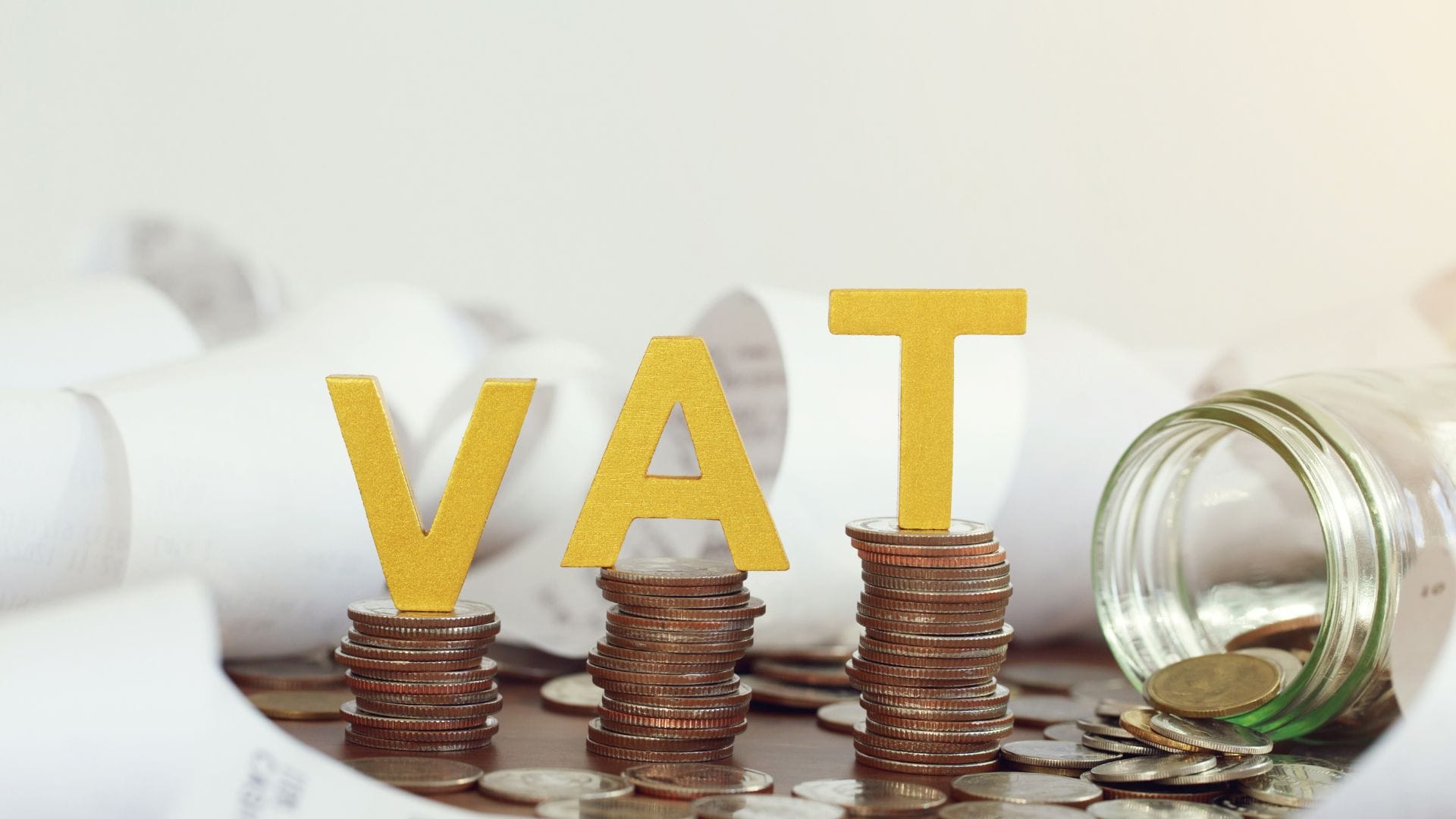
The 20% VAT recovery scheme on eligible new-build French Alpine ski properties is one of the most significant tax-efficiency advantages available in European second-home property ownership, and it is the single most important reason sophisticated new-build ski property buyers overwhelmingly favour the VEFA route over resale purchases. The scheme allows buyers who commit to running a professional rental operation under the French para-hôtelier regime to reclaim the 20% VAT included in the headline purchase price, effectively reducing the cost of a €1m new-build by approximately €167,000. For a buyer with rental intent, the economics are decisive — but the qualifying conditions are specific and need to be understood before committing.
This guide walks through every aspect of the VAT recovery scheme in 2026 — the legal framework, the eligibility criteria for both the property and the ownership structure, the four para-hôtelier services and how they are delivered in practice, the payment and claim process with the French tax authorities, the 20-year holding commitment and the clawback rules if that commitment is not met, and the practical operational considerations for running a managed rental operation that qualifies for the scheme. It is the single most important tax topic for French Alpine new-build buyers and Domosno walks every relevant client through it in detail.
The practical framing is that the VAT recovery scheme turns what looks like a €1m purchase into an effective €833,000 net cost — a 17% saving relative to a resale property in the same building, before accounting for the further savings on notaire fees that the new-build route also delivers. Combined, the total cost advantage of a new-build VAT-recovery purchase over a comparable resale purchase can be 20-22% of the headline price, which is material enough to change the economics of the entire French Alpine ownership decision for rental-focused buyers.
Legal Framework
How the French VAT Recovery Scheme Works
The French VAT recovery scheme on new-build property is rooted in the general European VAT directive and the specific French implementation of that directive through the Code général des impôts. The core principle is that VAT is recoverable by any business that incurs VAT on goods and services used in the course of a VAT-taxable activity. Professional short-term rental of furnished property with hotel-equivalent services is classified as a VAT-taxable activity in France, and this creates the framework within which new-build property VAT can be reclaimed by qualifying buyers.
The practical implementation has been refined over decades and is now a well-established route that the French Alpine new-build market is specifically designed to support. Developers typically market VEFA units explicitly as VAT-recoverable properties, specialist tax accountants handle the VAT reclaim process routinely, and the French tax authorities have clear published guidance on the qualifying conditions. The scheme is neither obscure nor experimental — it is a standard element of the French new-build ski property market and has been for over twenty years.
The eligible property types are new-build purchases made directly from the developer under the VEFA framework or within a short window after completion (typically up to five years, though this varies). The property must be residential property used for rental — pure commercial property has different rules. Resale properties are generally not eligible because the VAT was already recovered or absorbed during the original transaction. This is the fundamental reason the VAT recovery scheme creates such a strong economic preference for new-build over resale for rental-focused buyers.
The recovery process itself is straightforward in principle but requires specialist handling in practice. The buyer’s SARL de famille or equivalent VAT-registered rental structure submits VAT returns to the French tax authorities, offsetting the VAT incurred on the property purchase against the VAT charged on rental income. The net VAT position typically results in a refund claim that is paid out by the French treasury over the months following completion. Specialist accountants handle this process and the operational overhead is manageable.
€167,000
Approximate VAT refund on a €1m new-build French Alpine property under the para-hôtelier VAT recovery scheme
20 years
Holding period commitment required to retain the full VAT refund without clawback
3 of 4
Minimum para-hôtelier services (reception, cleaning, linen, breakfast) required to qualify for VAT recovery
3-6 months
Typical time from VEFA completion to first VAT refund instalment payment from the French tax authority
Para-Hôtelier Requirements
The Four Services and What They Mean
The qualifying condition for VAT recovery is that the property must be run as a para-hôtelier activity — literally ‘beside-hotel’ or ‘hotel-equivalent’ activity. This is the French tax authority’s term for a furnished rental operation that delivers hotel-style services rather than simply providing unfurnished or bare-furnished accommodation. The requirement is that the operator must provide at least three of four specific services: reception and check-in, regular cleaning during guest stays, provision and laundering of linens, and a daily breakfast service.
The reception and check-in service does not mean a 24-hour reception desk — it means that a professional representative meets the guest on arrival, hands over keys, explains the property and is available for guest questions during the stay. In practice this is delivered by the rental management operator, not by the owner, and it is a routine element of every professionally managed French Alpine rental. This is typically the easiest of the four services to deliver and is almost always included in a professional managed rental setup.
Regular cleaning during guest stays is the second service and means that the property is cleaned at least weekly during stays longer than one week, or that cleaning service is available on request during shorter stays. Professional rental operators typically deliver this as part of their standard service, and it is both a qualifying condition for VAT recovery and a standard element of a high-quality guest experience that supports booking ratings and rental performance.
Linen provision and laundering is the third service and means that bed linen and towels are provided by the operator and laundered between guests (and during longer stays). Again, this is standard in professionally managed French Alpine rentals and is rarely an operational obstacle. The fourth service, breakfast, is the one some operators choose not to deliver, which is why the requirement is ‘three of four’ rather than ‘all four’ — the para-hôtelier framework deliberately allows some flexibility in exactly which combination of services is provided.
Total Cost Advantage: New-Build VAT Recovery vs Resale (€1m Property)
Resale purchase price
Resale notaire fees
New-build price (gross)
New-build notaire fees
VAT refund
Net new-build cost
Ownership Structure
SARL de Famille and Why It Matters
The standard ownership structure for a VAT-recovery French Alpine new-build purchase is the SARL de famille (Société à Responsabilité Limitée de famille) — a French family limited liability company specifically designed to hold rental property and operate professional rental activity. The SARL de famille is VAT-registered, which is the legal basis for the VAT reclaim, and it is family-held, which simplifies succession and avoids some of the complications of a full commercial structure.
Setup of an SARL de famille typically costs €2,500-€4,500 including legal and accounting fees, and annual administration runs €1,500-€3,000 including the statutory French accounting requirements and VAT return filings. These costs are modest relative to the VAT recovery benefit (€167,000 on a €1m property) and are justified by the tax-efficiency advantages the structure enables. For single-property buyers with straightforward family structures, the SARL de famille is typically the optimal route.
Alternative structures include direct personal ownership with professional operator delegation, and the SCI (which is a civil rather than commercial vehicle and does not support the same VAT recovery route). For most rental-focused buyers the SARL de famille is the right answer, but specialist advice should be taken to confirm the specific situation. The Domosno team works with specialist French accountants who structure these transactions routinely and can advise on the right route for each buyer profile.
Succession planning within the SARL de famille is typically straightforward because the structure allows for partial ownership transfers to children over time, enabling a phased transmission of the property to the next generation that is both tax-efficient and practically manageable. Buyers with longer succession horizons often find that the SARL de famille delivers not only VAT recovery benefits but also meaningful succession planning advantages, and the combined package justifies the modest administrative overhead.
“On a €1m new-build French Alpine apartment, the combined savings from VAT recovery and lower notaire fees can reach €220,000 — a margin that reshapes the investment math for any rental-focused buyer.”
The 20-Year Commitment
Holding Period Rules and the Clawback
The main commitment attached to the VAT recovery scheme is a 20-year holding period during which the property must be maintained in professional rental operation. If the property is sold or withdrawn from rental use before the 20 years are up, a pro-rata clawback of the reclaimed VAT applies. The clawback is calculated as the reclaimed amount multiplied by the fraction of the 20 years that remain unused — so for example selling after 10 years would trigger a 50% clawback (half of the original reclaimed VAT returned to the French tax authority).
In practice, the clawback is less restrictive than it first appears because of the widely-used operational workaround of selling the property to another rental-operator buyer who takes on the remaining commitment. If the buyer of the property agrees to continue the rental operation for the remainder of the 20-year window, no clawback applies on sale. This creates a secondary market in partially-used-commitment properties and means that most owners who need to exit before the full 20 years can do so without triggering the clawback.
The 20-year commitment does not mean the original owner must personally operate the rental for 20 years. Professional rental management operators deliver the day-to-day operation, and the original owner simply needs to ensure that the property remains in continuous rental operation over the period. Brief gaps for major refurbishment work are permissible provided the underlying commitment to rental operation is clear, and the French tax authorities apply the rules reasonably in practice.
Buyers who are uncertain about their ability to commit to the full 20-year holding period should think carefully before using the VAT recovery route. For buyers with a firm long-term plan — typically lifestyle buyers who expect to hold the property for family succession or rental-focused buyers with long-term investment horizons — the 20-year commitment is rarely a practical obstacle. For buyers uncertain about their holding intentions, the personal-name resale route may be a better fit even though it forgoes the VAT recovery benefit.
| Requirement | Detail | Practical Delivery | Warning |
|---|---|---|---|
| Property type | New-build VEFA | Direct from developer | Resale usually excluded |
| Ownership structure | SARL de famille | Setup via specialist accountant | SCI does not qualify |
| Para-hôtelier services | 3 of 4 services | Professional operator | DIY operation risky |
| Holding period | 20 years | Professional rental throughout | Pro-rata clawback on early exit |
| Furnishing | Hotel-equivalent standard | €18,000-€45,000 budget | Low-cost furnishing jeopardises claim |
| VAT returns | Quarterly filings | Specialist accountant | €1,500-€3,000 per year cost |
The Claim Process
How the VAT Refund Actually Gets Paid
The VAT refund is not paid as a single lump sum at completion. Instead, the SARL de famille submits VAT returns (typically quarterly) that show the VAT incurred on the property purchase as recoverable input VAT, offset against any VAT charged on rental income during the period. In the first quarter after completion the recoverable input VAT will typically be much larger than the output VAT on rental income, and the French tax authority will refund the difference into the SARL’s bank account.
The process is coordinated by the specialist French accountant handling the SARL’s bookkeeping, VAT returns and annual statutory accounts. The accountant registers the SARL with the French VAT system, prepares and submits the quarterly VAT returns, and manages the correspondence with the French tax authorities to ensure the refund is paid on schedule. This is routine work for specialist accountants who handle French Alpine new-build VAT recoveries, and fees for the service typically run €1,500-€3,000 per year.
Payment of the refund typically takes three to six months from completion for the first instalment, with the full refund usually complete within 12-18 months of completion. The timing depends on the specific commune, the volume of VAT refund claims being processed at the time and the completeness of the supporting documentation. The process is well-established and usually runs without significant delays when handled by experienced accountants.
The key documentation requirements are the original VEFA contract with the developer, the final handover document confirming completion, the notaire’s completion statement, evidence of the SARL’s VAT registration, and evidence of the rental operation commencement (management agreement, booking platform listings, guest bookings). The specialist accountant coordinates all of these documents as part of the refund process and buyers typically provide the necessary items promptly on request.
Pre-purchase
Structure setup
Advisor consultation, SARL de famille setup through specialist accountant, rental operator selection and briefing.
Reservation
VEFA signing
VEFA reservation contract signed, initial deposit paid (typically 5%), VAT recovery intention confirmed with developer.
Construction
Progress payments
Staged payments during construction per VEFA schedule (typically 20-25% at foundation, 70% at watertight, final 5% at completion).
Completion
Handover
Final handover from developer, notaire completion, VAT invoice provided, furnishing and rental operation commencement.
First quarter
Initial VAT claim
First VAT return filed by accountant showing recoverable input VAT from purchase, offset against initial rental output VAT.
Month 3-18
Full refund
VAT refund paid in instalments by French tax authority into SARL bank account; full refund typically complete within 12-18 months.
Economic Impact
What the VAT Recovery Actually Saves
On a typical €1m new-build central French Alpine apartment, the 20% VAT included in the purchase price is approximately €167,000 (calculated as 20/120 of the inclusive purchase price, since the advertised price includes VAT). Recovering this amount through the para-hôtelier scheme reduces the effective purchase cost to €833,000, which is a 16.7% saving on the headline price and a significant component of the overall economic case for new-build VEFA purchases over resale.
Combined with the lower notaire fees on new-build (approximately 2.5% versus 7.5% on resale), the total transaction cost advantage of a VAT-recovery new-build over a comparable resale purchase is roughly 20-22% of the headline price. On a €1m purchase this translates to a €200,000-€220,000 saving, which is substantial enough to change the underlying investment math for rental-focused buyers and explains why the French Alpine new-build market is so heavily geared toward this buyer profile.
The yield and capital appreciation implications are also worth considering. Rental yields on well-specified new-build apartments typically run 5-6.5% gross on the net-of-VAT effective cost, which is a meaningful improvement over the yield calculation against the gross purchase price. A €48,000 gross rental income on an €833,000 effective cost is a 5.8% gross yield; the same income on the €1m gross price would be 4.8%. The yield differential compounds significantly over a 20-year hold.
Capital appreciation operates on the gross purchase price rather than the net-of-VAT effective cost, which is to the owner’s advantage — if the property appreciates 4% per year, the gain is calculated on €1m rather than €833,000, amplifying the return on the buyer’s invested capital. Over a 20-year hold period the combined yield and capital appreciation advantage of the VAT recovery route is substantial and typically delivers an annualised IRR that is 1.5-2.5 percentage points higher than the equivalent resale purchase.
Who Should Use It
Is VAT Recovery the Right Route for You?
The VAT recovery route is the right choice for buyers who are committed to a professional rental operation, have a long-term holding horizon (typically 15+ years), and are comfortable with the modest administrative overhead of operating through an SARL de famille. For these buyers the economic case is decisive and the operational complications are manageable. The substantial majority of new-build French Alpine purchases made by sophisticated international buyers use this route.
The route is less obviously attractive for buyers who want pure personal-use holiday homes without any rental activity, for buyers with holding horizons shorter than ten years, or for buyers who are uncomfortable with the administrative requirements of operating a commercial structure. For these profiles, direct personal ownership of a resale property can be a simpler and more appropriate choice even though it forgoes the VAT recovery benefit. The Domosno team walks through these trade-offs as part of every serious buying conversation.
Mixed-use purchases — where the owner wants some personal use of the property alongside rental operation — are possible under the para-hôtelier regime but require careful structuring. The owner can personally use the property for a portion of the year without disqualifying the VAT recovery, provided the underlying rental operation remains genuine and is run at arms-length through a professional operator. Typical personal use of 4-6 weeks per year is compatible with the scheme and is the standard usage pattern for most VAT-recovery buyers.
For buyers who decide the VAT recovery route is appropriate, the Domosno team coordinates the full structuring process — SARL de famille setup, specialist accountant appointment, rental management operator selection, VEFA contract review, and ongoing operational guidance. This end-to-end support ensures that the tax-efficiency benefits are actually captured in practice rather than lost to administrative errors or operational gaps. The buying process page on the Domosno website has further detail on the full process.
Common Questions
Frequently Asked Questions
Is the VAT recovery scheme going to be closed or restricted?
We see no current indication of that. The scheme is a longstanding element of the French property market, is widely used by both French and international buyers, and supports the French Alpine new-build construction sector. Occasional adjustments to the detailed rules have been made over the years but the core scheme has been stable for decades and there is no public indication of material change for 2026-2028.
Can I personally use the property and still claim VAT recovery?
Yes, within limits. Personal use of 4-6 weeks per year is typical and compatible with the scheme, provided the underlying rental operation is genuine and is run professionally through an operator or SARL-managed arrangement. Personal use of the property for the majority of the year would undermine the rental operation classification and jeopardise the VAT claim.
Can I use Airbnb for the rental operation or do I need a professional operator?
The para-hôtelier requirement is that hotel-equivalent services are delivered (three of four: reception, cleaning, linen, breakfast). A pure self-managed Airbnb operation does not automatically meet this standard. In practice most qualifying setups use a professional rental operator for the core services, with Airbnb and similar platforms as booking channels only. Self-managed operations can qualify but are operationally harder and typically less successful.
What happens if I want to sell before the 20 years are up?
If you sell to a buyer who takes on the remaining rental commitment, no clawback applies. If you sell to a buyer who does not continue the rental operation, a pro-rata clawback of the reclaimed VAT is triggered. The secondary market for partially-used-commitment properties is active and most owners who need to exit early can do so without triggering the clawback by choosing the right buyer.
Is the VAT recovery worth the operational complexity?
For most new-build French Alpine buyers, yes. The €167,000 refund on a typical €1m purchase is substantial, the ongoing administrative overhead is modest (€1,500-€3,000 per year for accounting), and the 20-year commitment is a reasonable fit with typical holding horizons. The Domosno team finds that over 80% of sophisticated new-build buyers use this route.
Which developers support the VAT recovery route?
All reputable French Alpine new-build developers structure their VEFA sales to support VAT recovery — it is a standard market expectation. The support required from the developer is limited to providing appropriate VAT invoicing and completion documentation. Any developer reluctant to support this should be treated with caution.
Do I need to live in France to use this scheme?
No. The scheme is available to non-resident buyers including British, Dutch, Belgian, German and other European buyers without French residency. The SARL de famille is a French structure but it can be managed by non-residents, and the accountant handles the French tax administration on behalf of the owners. The VAT refund is paid into the SARL’s French bank account, not the individual owner’s account.
How do I find a specialist accountant to handle the process?
The Domosno team works with several specialist French accountants who handle VAT recovery structures routinely and can make an appropriate introduction based on the buyer’s specific profile. Fees are typically €2,500-€4,500 for initial setup and €1,500-€3,000 per year for ongoing administration, which is modest relative to the VAT recovery benefit and is built into standard budgeting.
Featured Properties
Popular Ski Resorts
Morzine
Megève
Chamonix
Les Gets
Alpe d’Huez
Les Deux Alpes
Les Arcs
La Plagne
Courchevel
Méribel
Saint-Martin-de-Belleville
Val Thorens
Val d’Isère
Tignes
Thollon-les-Mémises
Quick Links
All New-Build Ski Properties
All Ski Apartments
All Ski Chalets
New-Build Ski Apartments
New-Build Ski Chalets
Resale Ski Apartments
Resale Ski Chalets