New Development
New Build Luxury Developments in Alpe d’Huez: 2025–2026 Projects & Investment Outlook
Alpe d’Huez’ newest high-altitude residential projects, modern amenities, and why ultra-prime buyers are increasingly focusing on this once-overlooked gem.
19 Dec 2022
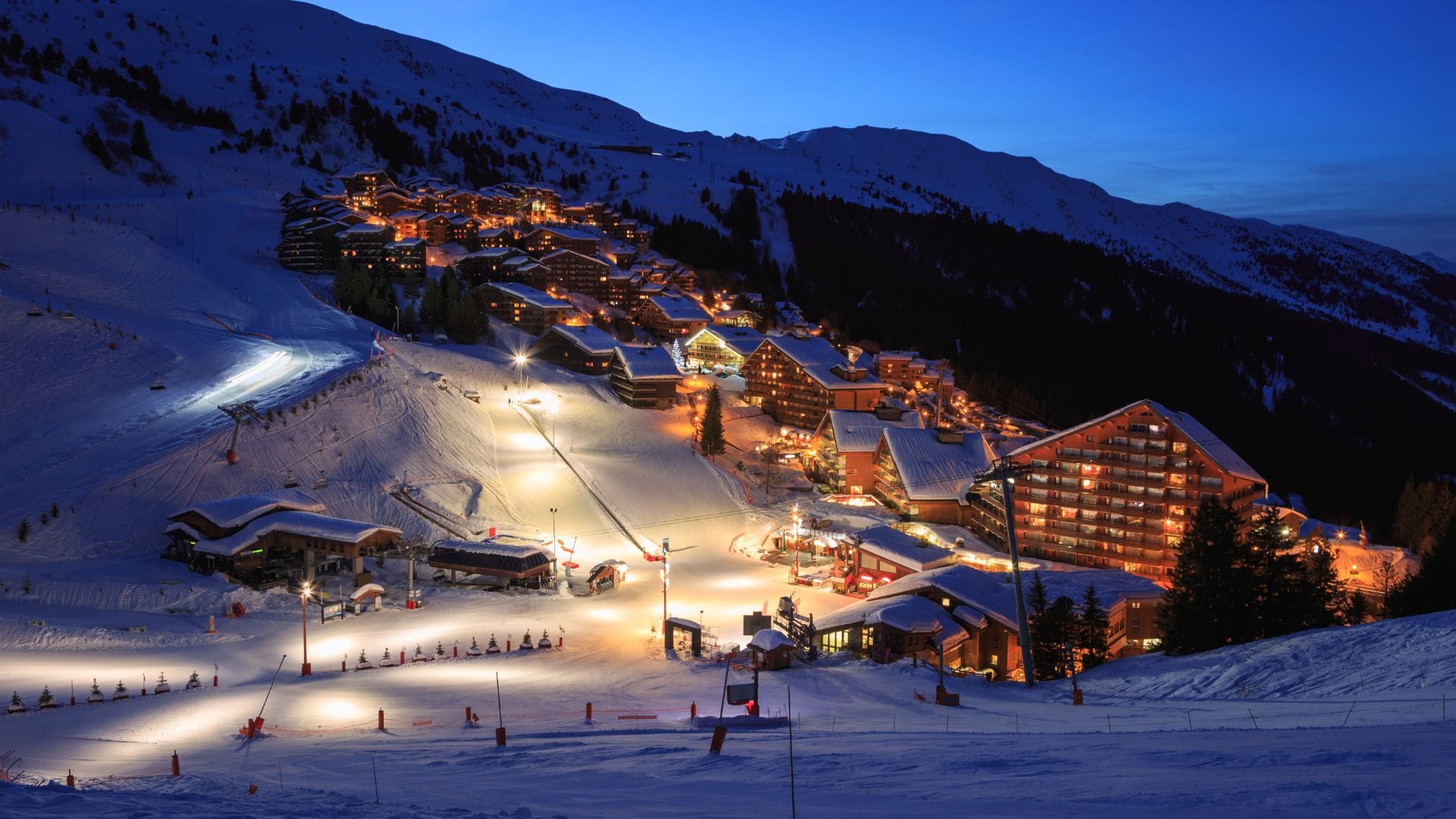
Alpe d’Huez, sitting at 1,860m in the Southern French Alps, has long played second fiddle to the mega-resorts of the 3 Vallées and Espace Killy. But that dynamic is changing rapidly. A wave of new residential development, driven by sophisticated developer-investors and deep-pocketed European wealth managers, is transforming the resort into a genuine prime investment destination. The key catalyst: Alpe d’Huez is a certified ‘station de montagne’ (mountain resort) with reliable snow-making, a well-maintained lift network, and increasingly professional rental management infrastructure — exactly the combination that British and Northern European buyers are seeking as they look for alternatives to the mega-crowded Chamonix and Morzine markets.
This report examines the major new-build projects underway in Alpe d’Huez for 2025–2026, the price points and yields they’re achieving, and how they compare to established luxury-apartment developments in Chamonix, Megève, and Courchevel. We’ll also look at the infrastructure improvements coming to the resort, the summer appeal opportunities being built in, and the financial mechanics of buying off-plan in a resort that’s still building out its luxury-investor reputation. If you’re evaluating Alpe d’Huez as an alternative to the saturated Portes du Soleil market, this analysis gives you the roadmap.
The headline: new-build apartments in Alpe d’Huez are pricing at €6,000–8,500/m² for prime locations, materially cheaper than equivalent Chamonix (€8,000–9,500/m²) or Megève (€7,500–9,000/m²) properties. For buy-to-rent investors, that 15–25% price discount combined with emerging summer appeal (hiking, trail-running, mountain-biking events) suggests 5–7 years of appreciation potential before the resort reaches full ‘prime’ valuation parity with its northern neighbours.
Project Overview
The Major New-Build Projects: What’s Launching & When
Alpe d’Huez is currently home to 3–4 significant new-build residential projects either under construction or in pre-sales phase for 2025–2026 delivery. The largest by unit count is ‘Résidence Prestige’, a 120-unit mixed-use development in the central resort area (0.8km from the Pic Blanc gondola) featuring studio-to-4-bedroom apartments, a shared spa, and dedicated rental-management office. Pricing is €6,500–8,200/m² depending on aspect and size. Second: ‘Alpina Chalets’, a 24-unit luxury chalet cluster on a south-facing slope overlooking the village, priced €7,500–9,500/m² and positioned primarily at ultra-high-net-worth individuals and family groups. Third: smaller developer-led projects (8–12 unit buildings) dotted around the village, typically €6,000–7,500/m² for entry-level product.
The VAT recovery opportunity is material. All three projects qualify for the 20% VAT reclaim regime (meublé de tourisme) provided the buyer commits to a 9-year rental programme. On an average €500,000 Résidence Prestige apartment, that’s €83,000 in VAT recovery post-completion — a genuine economic advantage that makes the slightly-higher base price (relative to resale apartments) mathematically compelling for investor buyers. Completion timelines are typically 24–32 months from off-plan sale, meaning purchases made in H1 2025 would typically deliver in Q3 2026–Q1 2027.
A key question: how differentiated are these developments from one another? Résidence Prestige is the most ‘mainstream’ offering — reliable, modern, professionally managed rental option. Alpina Chalets is positioned at the ultra-luxury segment and appeals primarily to wealth-management advisors buying for UHNW clients. The smaller projects are typically purchased by owner-occupiers or small-scale rental operators willing to self-manage. For investment buyers focused on rental yield and capital appreciation, Résidence Prestige is the obvious anchor play — it has scale, professional management, and the most liquid resale market among new developments.
€6,000–8,500/m²
New-build apartment pricing in Alpe d’Huez 2025 (15–25% discount to Chamonix)
€83,000
20% VAT recovery on €500,000 new-build purchase with 9-year rental commitment
3–3.5%
Realistic net rental yield for professional managed Alpe d’Huez apartments
5–7%
Potential annual appreciation if Alpe d’Huez valuation converges toward Chamonix levels
Pricing & Economics
2025 Valuation: How Alpe d’Huez New-Build Stacks Up Against Competitors
The price differential between Alpe d’Huez and established luxury-resort competitors is the core investment case. New-build apartments in Alpe d’Huez are pricing at €6,000–8,500/m² in prime locations (Résidence Prestige central village sits at €6,800/m² average). Equivalent new-build in Chamonix trades at €8,000–9,500/m², and Megève properties at €7,500–9,000/m². Saint-Gervais, the emerging third-tier option, sits at €5,000–6,500/m². From an investor’s perspective, the Alpe d’Huez discount is compelling: you get a certified mountain resort with reliable snowmaking, decent summer infrastructure, and professional rental management — all at 15–25% cheaper per square metre than Chamonix.
The price-appreciation equation is straightforward: if Alpe d’Huez’s ‘fair valuation’ converges toward Chamonix levels over 5–7 years, new-build purchasers would see 2–3% annual appreciation (from €6,800/m² to €8,000–8,500/m²) independent of rental yield. Rental yield on a well-managed Résidence Prestige apartment is realistic 3–3.5% net, with professional management generating sufficient volume to support year-round bookings. On a €500,000 apartment: €15,000–17,500 annual net rental income plus 2–3% annual appreciation = 5–6.5% total return annually. That compares favourably to French mortgage rates of 3.4–4.5%, making the levered investment case compelling for disciplined buyers.
The notary and transaction cost advantage is meaningful. New-build purchases via VEFA incur notary fees of 2–4% (vs. 7–9% on resale), and the 20% VAT reclaim effectively covers much of that cost differential. For a €500,000 purchase, notary costs are roughly €10,000–20,000 new-build vs. €35,000–45,000 on resale — a €15,000–25,000 cash-flow advantage before VAT reclaim is considered. This is exactly why institutional investor groups are increasingly gravitating toward new-build VEFA rather than resale.
Alpine New-Build Pricing Tiers: Alpe d’Huez as Emerging Value Play
Alpe d’Huez (value play)
Saint-Gervais (emerging)
Chamonix (prime)
Megève (ultra-prime)
Courchevel 1850 (luxury)
Portes du Soleil average
Infrastructure & Summer Appeal
Lift Upgrades, Summer Events & Year-Round Rental Opportunity
Alpe d’Huez has committed to significant infrastructure investment over 2025–2027. A new high-capacity gondola is planned for the main resort access (replacing older chairlift infrastructure), and additional summer-season facilities are being built including dedicated mountain-biking pump tracks, trail-running event infrastructure, and expanded climbing/alpinism services. These are not speculative projects — they’re funded via resort operating budgets and regional development grants. For property buyers, this is genuinely important: infrastructure improvements drive visitor growth, which drives rental demand, which drives property values.
Summer appeal is the emerging opportunity. Alpe d’Huez hosts the annual UCI Tour de France mountain stage finish (typically July 21st or thereabouts) and has built a reputation as a serious cycling destination. Mountain biking, trail running, and alpinism events are increasingly using the resort as a hub. A property rented at premium rates during Tour de France week (€1,500–2,500/night for a decent apartment) plus regular summer bookings during July–August can realistically generate €20,000–25,000 in summer season revenue — materially boosting total annual yield. Winter-only resorts struggle to achieve comparable summer economics.
The key question for buyers: will the €15,000–20,000 in summer incremental rental income be sufficient to drive the 5–7% appreciation premium implied by the current valuation discount? We believe yes, particularly as the resort’s marketing around summer events and the new gondola infrastructure reaches Western European wealth audiences. Conservative buyers should model on 3–3.5% net annual yield and treat any summer appreciation upside as a bonus.
“Alpe d’Huez offers a compelling 15–25% price discount to Chamonix with comparable infrastructure and growing summer appeal — making it the best emerging value play in the €500k–800k new-build segment.”
Comparative Analysis
Alpe d’Huez vs. Chamonix vs. Megève: Which Tier Should You Choose?
For a property buyer evaluating the €500,000–800,000 new-build segment, the choice between Alpe d’Huez, Chamonix, and Megève comes down to four variables: (1) appreciation potential, (2) rental yield, (3) personal-use appeal, and (4) market liquidity. On appreciation: Alpe d’Huez has the highest potential (5–7% annually if valuation converges toward Chamonix), but it carries execution risk — the infrastructure projects need to land, and the resort needs to build its luxury-investor reputation. Chamonix and Megève have slower appreciation (3–4% annually) but lower risk because the market is already mature and proven.
On rental yield: Alpe d’Huez and Chamonix are roughly equivalent (3–3.5% net), with Megève slightly higher due to stronger winter-season occupancy driven by its proximity to Geneva and its status as France’s most expensive ski resort. On personal-use appeal: Chamonix is unmatched for iconic status and diversity of skiing/climbing terrain. Megève has the most developed après-ski and fine-dining scene. Alpe d’Huez is best for serious cyclists and alpinists but less compelling for purely leisure-focused skiers. On liquidity: Chamonix and Megève have deep resale markets with many agents and buyer pools. Alpe d’Huez is newer to the luxury-buyer consciousness, meaning resale liquidity is thinner — you may need to hold longer or accept modest discounts to exit quickly.
The decision framework: if you’re buying primarily for personal use and want the strongest après-ski and dining scene, choose Megève. If you want iconic status and diverse skiing, choose Chamonix. If you’re buying primarily as an investment and are comfortable with 5–7 year holding periods and modest execution risk, Alpe d’Huez is arguably the most compelling option financially. None of these is ‘wrong’ — they’re simply different risk/return profiles.
| Resort Comparison | New-Build Price/m² | Expected Appreciation | Rental Yield | Risk Profile |
|---|---|---|---|---|
| Alpe d’Huez | €6,000–8,500 | 5–7% (if converges) | 3–3.5% | Medium–High |
| Chamonix | €8,000–9,500 | 3–4% | 3–3.5% | Medium–Low |
| Megève | €7,500–9,000 | 3–4% | 3.5–4% | Low |
| Saint-Gervais | €5,000–6,500 | 5–6% | 3–4% | Medium |
| Portes du Soleil | €6,500–8,000 | 4–5% | 3–3.5% | Low–Medium |
| Courchevel 1850 | €15,000–25,000 | 2–3% | 2–3% | Low |
Buyer Mechanics
How to Buy Off-Plan in Alpe d’Huez: VEFA Process, Timeline & Financing
Purchasing an off-plan apartment in a Résidence Prestige or similar new-build development follows the standard French VEFA (Vente en l’État Futur d’Achèvement) process. The timeline is typically: (1) sign letter of intent and pay €50,000–100,000 reservation deposit (10–15% of price); (2) engage a notary for legal review and obtain French mortgage pre-approval (8–12 weeks); (3) sign final binding contract and arrange first mortgage draw-down (typically 30–40% of purchase price at this stage); (4) make quarterly progress payments aligned with construction stages (usually 5–7 draws over 2–3 years); (5) final completion and registration of title with remaining mortgage draw and notary fees paid.
For non-resident British buyers, the process is essentially identical except that mortgage lenders require slightly stronger documentation (proof of employment, credit file, often a larger down payment). Non-residents can access 70–80% LTV with 2025 mortgage rates of 3.4–4.5%, which is genuinely favourable. The key advantage of off-plan purchasing is that you’re in control of the construction timeline — you see progress, you have contractual protections, and you can (within limits) negotiate finishes and specifications. For investors, off-plan also unlocks the 20% VAT reclaim and the lower notary fees (2–4% vs. 7–9% on resale).
A practical note on financing: non-resident buyers should be aware that some lenders are now stricter about ‘French-domiciled’ borrowers than they were in 2023. If you’re UK-based and plan to hold the property as an investment (not claiming a French tax residence), you may face marginally higher mortgage costs (0.2–0.5% premium) or slightly tighter LTV caps (70% rather than 80%). It’s worth checking with a specialist broker early in your process — the difference between 70% and 80% LTV is material (€150,000 on a €750,000 property).
2015–2019
Resort modernisation begins
Alpe d’Huez begins investing in gondola infrastructure and summer-season amenities, shedding its ‘old-school’ image.
2020–2021
COVID influx
European wealth clients discover Alpe d’Huez as alternative to saturated Chamonix and Megève. Demand for new-build inventory increases.
2022–2023
Developer activity
Résidence Prestige, Alpina Chalets, and smaller projects greenlit. Off-plan VEFA sales accelerate.
H1 2025
Major projects launch
Résidence Prestige enters heavy pre-sales phase. Construction begins on multiple projects. Notary VEFA contracts signed by 150+ investors.
H2 2025–2026
Infrastructure completion
New gondola project announced for completion by 2027. Tour de France cycling week continues to drive summer demand.
2026–2027
Deliveries & value convergence
First major new-build projects complete. Rental programmes launch. Valuation comparison to Chamonix begins tightening.
Risk & Mitigation
The Downside Scenarios: Construction Delays, Market Softness & Illiquidity
Off-plan property investment carries real risks that need to be acknowledged. The primary risk is construction delay — if Résidence Prestige experiences structural issues, labour shortages, or supply-chain disruptions, completion could slip from Q3 2026 to Q1 2027 or beyond. That delays the start of your rental income and your capital appreciation trajectory. The contractual remedy is that developers usually pay penalty interest (0.5–1% per month) on delayed completion, but this is only meaningful if the delay extends beyond 12 months. The practical mitigation: ensure your VEFA contract specifies clear completion dates with penalty language, and engage a notary who will enforce these contractually.
Secondary risk: the rental market softens, and your 3.5% net yield expectation doesn’t materialise. This could happen if: (a) a new mega-development floods the market with inventory; (b) summer events like the Tour de France don’t drive the anticipated traffic; (c) competing resorts (Chamonix, Megève) undergo dramatic price drops that undercut your positioning. The mitigation is disciplined buying: don’t stretch to maximum LTV on yield assumptions; model on conservative 2.5–3% net yield; ensure the property is in a master-planned development with professional management (not a small owner-operator building); and focus on Résidence Prestige rather than speculative smaller projects.
Tertiary risk: illiquidity. If you need to exit your Alpe d’Huez property quickly, you may face a thin resale market compared to Chamonix or Megève. Properties that took 2–3 years to complete might take 12–18 months to sell if the market is cool. The mitigation is straightforward: don’t invest money you’ll need within 5–7 years. Off-plan is a medium- to long-term strategy.
Common Questions
Frequently Asked Questions
Is Alpe d’Huez a good alternative to Chamonix for serious buyers?
Yes, if your primary motivation is investment return. Alpe d’Huez offers 15–25% cheaper pricing, comparable rental yield (3–3.5% net), and higher appreciation potential (5–7% annually) as the resort builds its luxury-investor reputation. For personal-use preference, Chamonix remains superior due to iconic status and skiing diversity. For pure ROI, Alpe d’Huez is more compelling.
What’s the risk that Alpe d’Huez new-build projects encounter delays?
Moderate. French construction projects typically experience 6–12 month delays due to labour availability or supply-chain issues. Contractual protections in VEFA agreements typically include penalty interest (0.5–1% per month) for delays beyond the contractual completion date. Ensure your notary reviews penalty language carefully.
Can I really achieve 3–3.5% net rental yield on a €500,000 apartment?
Yes, with professional management and realistic expectations. A well-positioned Résidence Prestige apartment should generate €18,000–20,000 gross annual rental income (3.6–4% gross), minus 25–30% for management, taxes, maintenance and insurance = €13,000–15,000 net (2.6–3% net). Conservative buyers should model on the 2.5–3% range.
How does the 20% VAT reclaim actually work on off-plan purchases?
When you buy an off-plan VEFA property designated for furnished holiday rental, you pay the purchase price including 20% VAT. Post-completion, you file a VAT reclaim form with the French tax authority, and they refund the full 20% VAT amount (subject to your commitment to rent the property for 9 years via an approved management company). On a €500,000 property, that’s roughly €83,000 recovered.
Is Alpe d’Huez summer appeal real enough to justify the price premium?
It’s improving materially. The resort hosts the annual Tour de France finish, has invested in mountain-biking pump tracks and trail-running infrastructure, and is benefiting from Europe-wide growth in summer Alpine tourism. Expect €15,000–20,000 additional annual revenue from summer bookings by 2026–2027. That’s not trivial, but execution risk remains moderate.
What’s the resale liquidity risk if I need to exit early?
Alpe d’Huez is less liquid than Chamonix or Megève — you may face a longer selling timeline (12–18 months vs. 6–9 months) and potentially need to discount 3–5% relative to Chamonix comparables. This argues for 5–7 year hold periods minimum and clear personal conviction in the appreciation thesis.
Can I get French mortgage financing as a non-resident on an off-plan purchase?
Yes. Non-residents access 70–80% LTV with 2025 rates of 3.4–4.5%. Some lenders now charge a 0.2–0.5% premium for non-domiciled borrowers, so check multiple lenders early. Having notary pre-approval before signing VEFA is essential.
Should I buy Résidence Prestige (the large professional building) or a smaller project?
For investor buyers focused on rental yield and liquidity, Résidence Prestige is the clear choice — it has scale, professional management, and the deepest resale market. Smaller projects (8–12 unit buildings) are better for owner-occupiers or self-managing landlords. Alpina Chalets is positioned at UHNW buyers and has higher prices (€7,500–9,500/m²).
Featured Properties
Popular Ski Resorts
Morzine
Megève
Chamonix
Les Gets
Alpe d’Huez
Les Deux Alpes
Les Arcs
La Plagne
Courchevel
Méribel
Saint-Martin-de-Belleville
Val Thorens
Val d’Isère
Tignes
Thollon-les-Mémises
Quick Links
All New-Build Ski Properties
All Ski Apartments
All Ski Chalets
New-Build Ski Apartments
New-Build Ski Chalets
Resale Ski Apartments
Resale Ski Chalets