New-Build Spotlight
So Pure Residences, Méribel-Mottaret: New Alpine Living in the 3 Vallées
A luxury new-build development above Méribel village — 3 chalets and 28 apartments in the Laitelet area, at 1750m altitude with direct slope access and full 3 Vallées terrain. VEFA purchase, furnished rental yields 3.5–4.5%, VAT reclaim eligible.
6 Feb 2024
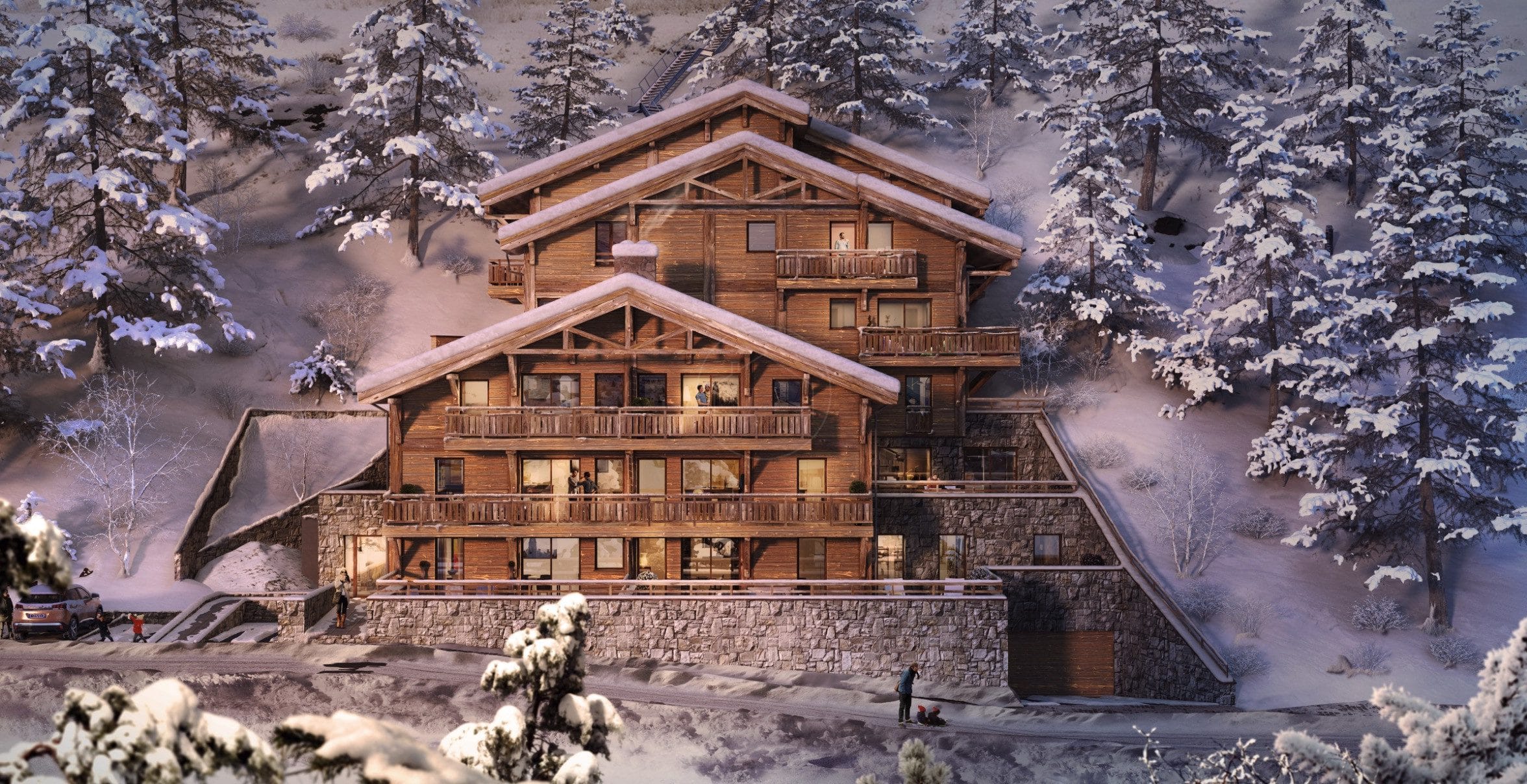
Méribel-Mottaret sits at 1750m in the upper Méribel valley, 300m above the bustling centre of Méribel village and 200m above the middle Altiport zone. The altitude advantage delivers better snow reliability than the main resort, with consistent white conditions throughout the season when lower elevations thin out. So Pure Residences is the first new development in Mottaret since 1997, a rarity in this tightly zoned village where preservation of landscape character takes priority over sprawling expansion. The project comprises three standalone chalets and 28 collective apartments positioned in the Laitelet area, which enjoys exposure toward the Vanoise National Park and direct lift access to the full 3 Vallées network. For buyers seeking new-build certainty, the combination of altitude advantage, unspoilt surroundings and immediate slope access creates a compelling entry point to the Three Valleys.
The Mottaret micromarket trades at approximately €14,500–€16,700 per square metre for new luxury residential construction, meaningfully lower than the €16,500–€19,500 bracket in Méribel centre and similar to Val d’Isère at equivalent altitude. Supply is chronically constrained — new development licences are rarely granted and completed projects sell within 18–24 months of opening. So Pure’s positioning at the lower end of the Mottaret price spectrum reflects both the collective housing component and the slightly elevated build costs associated with construction above 1700m. For furnished tourism rentals through an established management company, realistic gross yields run to 3.5–4.5% annually, with operational netbacks of 2.2–3.2% after staff, maintenance and operational overhead. These figures assume professional management, consistent occupancy and careful cost control; informal landlord operation typically yields less.
Purchase is structured as a VEFA contract (Vente en État Futur d’Achèvement), the standard French off-plan mechanism where the buyer commits to acquisition stages as construction progresses. For furnished tourism operators, a critical tax advantage applies: the 20% French VAT on purchase can be recovered by the future operator, reducing net acquisition cost by approximately €40,000–€80,000 depending on property type and purchase price. This reclaim requires clear documentation of commercial intent before completion, and recovery is subject to professional registration and ongoing rental activity. Many international buyers overlook the VAT reclaim opportunity entirely, which is a material oversight given the scale of the tax saving available.
Méribel-Mottaret Context
Why Mottaret Matters: Altitude, Character and Micro-Market Positioning
Méribel stretches vertically across 600 metres of elevation, from Méribel 1400 at the base to the Hameau zone above 2000m. Mottaret occupies the upper third of the village at 1750m, positioned as a quieter, more functional alternative to the busier main village centre. Where central Méribel projects shops, restaurants and apres-ski energy, Mottaret presents a more subdued, landscape-focused character with modest architecture that defers to the surrounding peaks and forest. The resident population is older on average, heavier with families using their properties privately through the winter season, and less oriented toward the international rental market that dominates lower Méribel. This demographic composition makes Mottaret attractive to buyers seeking lifestyle authenticity rather than resort convenience.
Snow certainty is the tangible payoff for the extra altitude. Mottaret sits above the 1600m threshold where reliable season snow-cover is virtually assured across the entire winter calendar. Méribel centre regularly experiences slushy conditions in early season and marginal base depths during warm February spells. The 300m elevation difference between Mottaret and the village centre translates into approximately 1.8 degrees Celsius of cooler average temperatures — not decisive alone, but compounded with December and April marginal conditions it makes a material difference to season snow-cover reliability. For buyers who value private residence use across the full calendar, the Mottaret altitude advantage is real. For rental operators, better terrain conditions drive higher occupancy and closer-to-market pricing during shoulder seasons.
Lift infrastructure from Mottaret provides access to the entire 3 Vallées network and directly onto the Vanoise-facing terrain. The Pas du Lac gondola and Mont Vallon chairlift depart from close to the Laitelet area where So Pure is situated. These lifts connect to the Plattières sector and upper-mountain corridors that distribute skiers across to Courchevel and Val Thorens. A skier starting from So Pure can reach central Courchevel in 35–40 minutes of continuous lift-riding without returning to valley level, which is superior to the lower-Méribel-to-Courchevel journey time and avoids the midday congestion on the Tougnète-Saulire corridor from the main village. For serious skiers, this direct access to high-altitude touring terrain and the Vanoise National Park exposure is a genuine advantage over lower-village properties.
The Laitelet immediate neighbourhood is characterised by sparse contemporary building, significant forest cover, and westward views toward the Vanoise. Properties are generously separated and landscaping is constrained by altitude and exposure, creating a spacious feeling despite the small resident population. This contrasts with both central Méribel (denser, more commercial) and the Hameau zone above (ultra-exclusive but often foggier and more extreme wind exposure). Laitelet represents the sweet spot between accessibility, landscape preservation and community scale. For international buyers who value the experience of authentic mountain living over resort infrastructure, Mottaret’s positioning is genuinely appealing.
1750m
Altitude of Mottaret, 300m above Méribel centre — delivers snow-certain conditions throughout the season.
€14,500–€16,700/sqm
New-build pricing in Mottaret for luxury residential, 8–12% discount versus Méribel centre equivalent altitude.
3.5–4.5%
Gross rental yield for furnished tourism lettings under professional management, with net operational return of 2.5–3.5%.
30–36 months
Typical timeline from VEFA signature to final completion, staged across four construction milestones.
The Development
So Pure: Architecture, Layout and Interior Specification
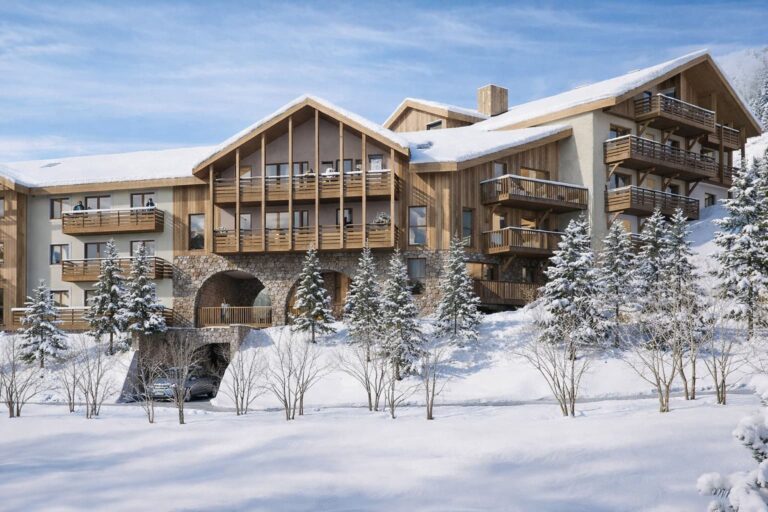
So Pure comprises three standalone chalets ranging from 171 to 220 square metres and 28 apartments distributed across five building blocks, with apartment sizes running from 89 square metres (two-bedroom) through 107 square metres (three-bedroom) to 170 square metres (five-room). The chalets occupy prominent slope-facing positions with individual terraces and south-southeast exposure that captures afternoon sun. The apartment blocks are staggered to minimise sightlines overlap and respect the existing landscape contours, with active elevation changes meaning no single building dominates the site. Architectural language throughout is contemporary alpine — pitched roofs, extensive timber cladding, natural stone bases and dark slates that reference traditional Savoyard vernacular without replicating it. The material palette is deliberately restrained: wood, stone, slate and minimal glazing are combined to achieve visual harmony rather than modernist drama.
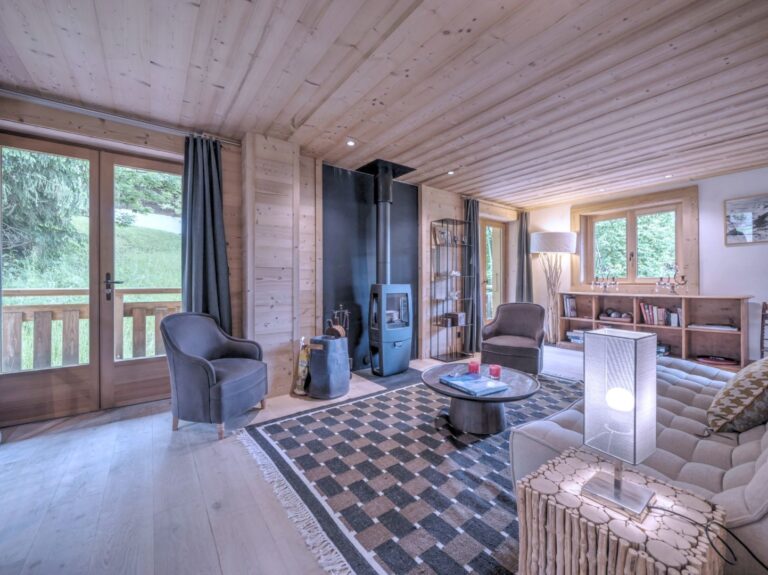
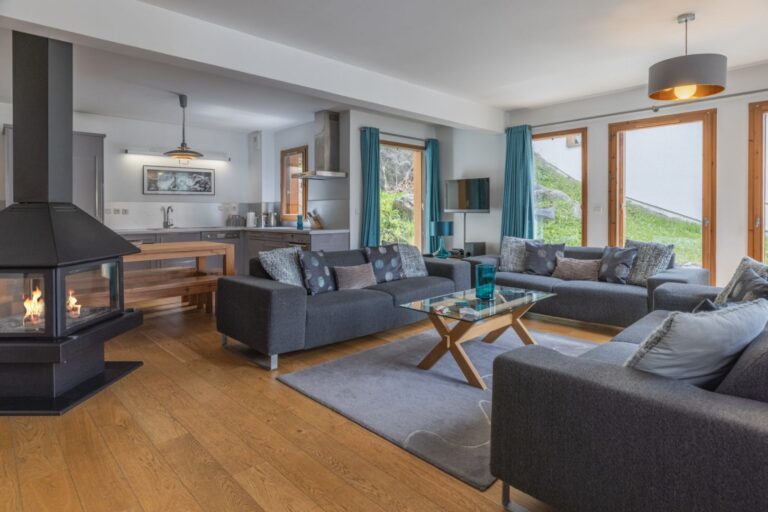
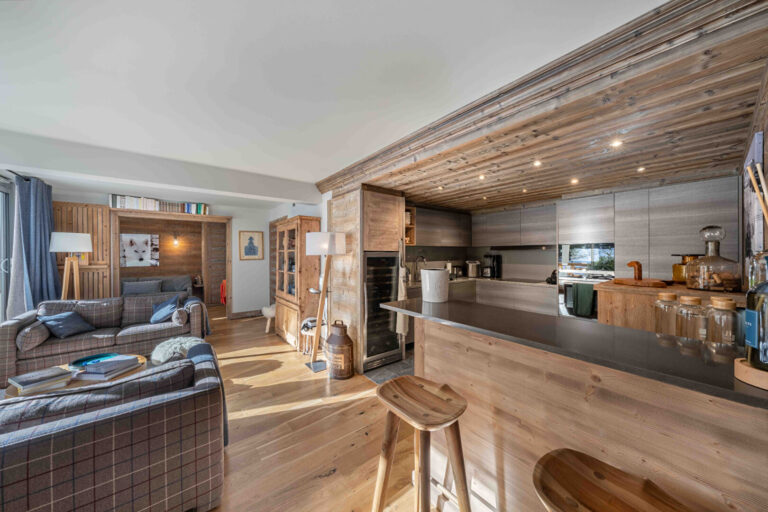
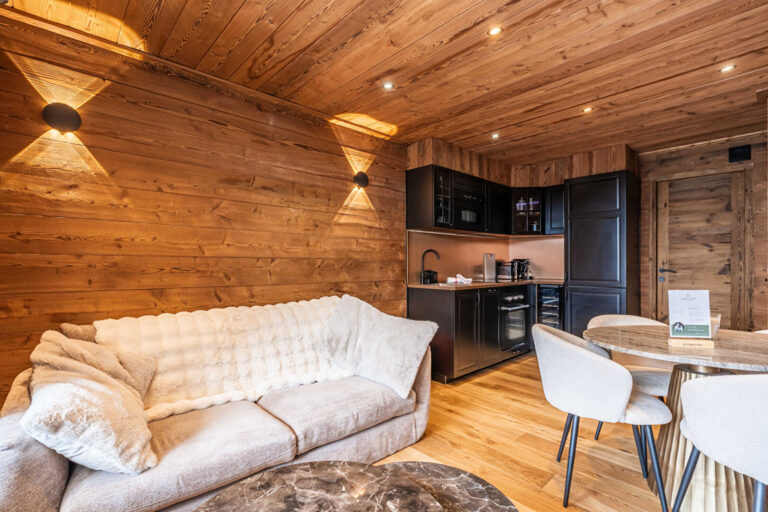
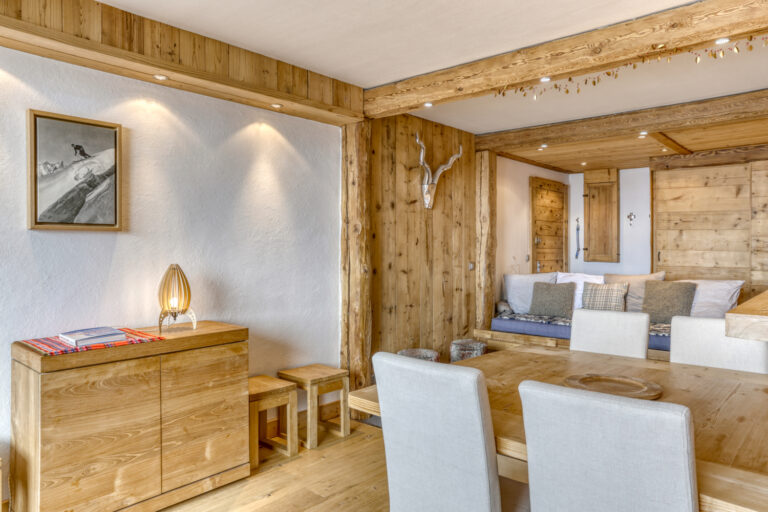
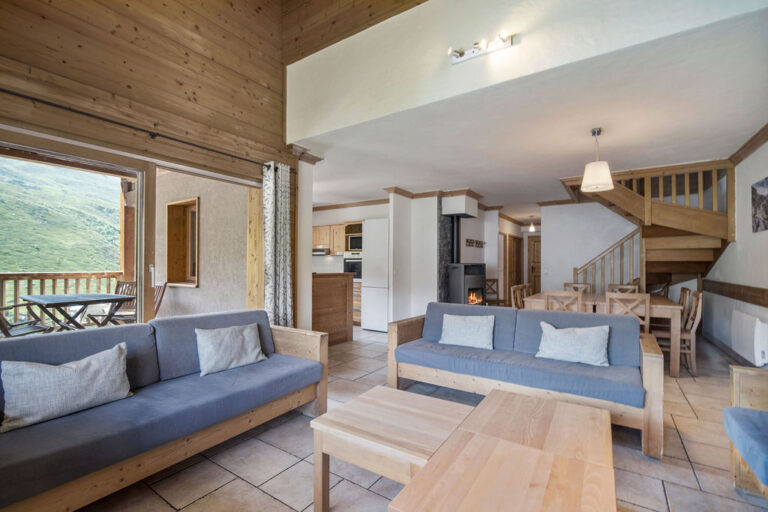
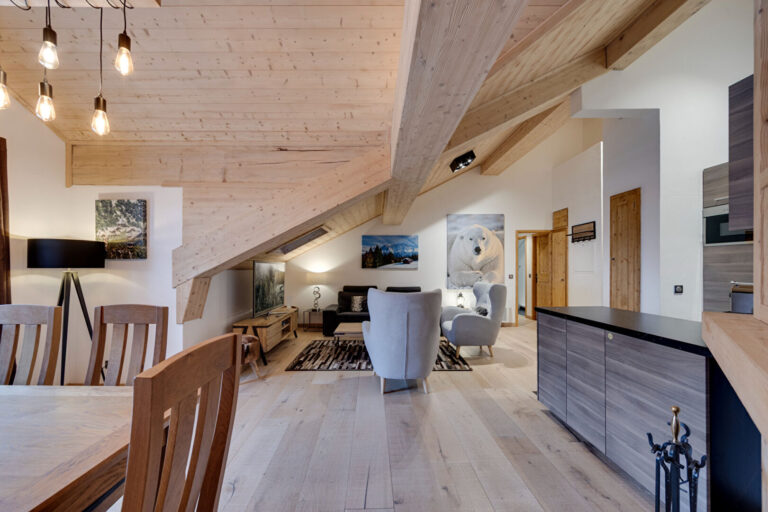
Interior specification across the apartments emphasises functional luxury rather than excessive ornamentation. The builder’s standard includes engineered timber flooring throughout living areas, wall-mounted timber cabinetry in kitchens, oversized windows opening onto wood-clad terraces or balconies, underfloor heating as standard, and high-quality radiators in secondary spaces. Kitchens are fitted with professional-grade appliances and substantial storage, acknowledging the reality that mountain properties experience heavy seasonal use and require reliable equipment. Bathrooms are generous for European new-build standards, with heated towel rails, fully tiled wet rooms, and quality sanitaryware that reflects the overall price point. The three chalets include fireplaces as standard, a feature that drives significant rental premium in the French mountains and enhances residential satisfaction during low-occupancy weeks.
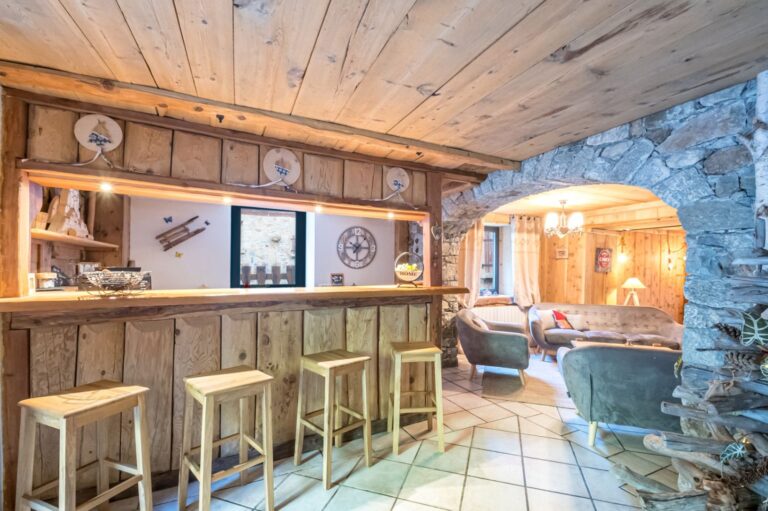
A building-wide amenities suite occupies a shared lodge facility near the main entrance. The programme includes a 150 square metre reception space with a small bar counter (for owner-run informal gatherings rather than formal hospitality), a 200 square metre spa area with a 12-metre salt-water pool, jacuzzi, sauna and relaxation lounge, and a separate treatment room available for massage and wellness services. These amenities are positioned to serve owner-use primarily, with optional integration into the rental package for properties operating under professional management. The interior design of the amenities block is handled by the same architectural team as the residential units, maintaining material and aesthetic consistency across the site.
Energy performance is certified to the NF Habitat HQE standard, which requires performance in excess of French building regulations across thermal insulation, air tightness, thermal bridging, mechanical ventilation, and acoustic insulation. In practice this means double-glazed windows with low-emissivity coatings, substantial external insulation behind the timber cladding, triple-sealed mechanical ventilation with heat-recovery, and internal sound-dampening in party walls that exceeds typical standards. The HQE certification adds approximately 3–5% to construction costs but delivers tangible benefits for long-term occupancy comfort and operational resilience during extreme weather. Owners should expect utility costs (heating oil equivalent) to run approximately 20–25% lower than comparably-sized properties built to minimum regulatory standards.
Indicative gross annual rental receipts by property type and utilization — professional management
2-bed (89 sqm)
3-bed (107 sqm)
5-room chalet (171 sqm)
Typical net yield (2.5–3.5%)
After mgmt, maintenance, utilities
VAT recovery benefit (furnished op)
Location & Ski Access
Laitelet Positioning and Direct Slope Connections Across Three Valleys
The Laitelet area occupies a transitional zone between Mottaret and the upper Vanoise-facing terrain. The So Pure site itself sits at approximately 1760m altitude, oriented northwest toward the Pas du Lac and Mont Vallon lift infrastructure. This positioning is critical: rather than sitting on the valley floor requiring a trip down and then up again, the site is already positioned on the incoming slope network. Properties sit within a three-minute walk of the Pas du Lac gondola base station and within five minutes of the Mont Vallon chairlift, which means residents can access skis and begin a run within ten minutes of leaving their apartment door. This convenience factor is underestimated by first-time mountain property buyers, but it materially affects the likelihood of a property being used regularly rather than sitting vacant.
From the Pas du Lac top station, the slope network distributes across multiple sectors and gradients. The immediate neighbourhood offers intermediate and easy runs back toward the Laitelet base across mellow terrain suitable for all ability levels. More adventurous skiers can access the steeper Vanoise-side descents, which include the Saulire sector, the Mont Vallon couloirs and the Pas du Lac steep section. These represent some of the most engaging terrain in the 3 Vallées for intermediate-to-advanced skiers, with genuinely interesting snow conditions and lower crowding than the heavily-managed Tougnète and Plattières corridors used by skiers from lower Méribel. The Vanoise Park exposure also means the Laitelet neighbourhood skis slightly earlier in the season (more consistent snow at north-aspect elevations) and maintains better end-of-season conditions than sun-aspect lower terrain.
Access to the broader 3 Vallées network is fluid and uncompromising. From Pas du Lac, skiers can traverse toward the Plattières upper station and the Courchevel-facing terrain within 20 minutes of continuous skiing. The Tougnète system provides an alternative access corridor to Courchevel. Val d’Isère is accessible within 45 minutes of continuous skiing plus one chairlift. Saint-Martin-de-Belleville and the southern terrain expansions (Orelle, Vallons de la Sass) are within 90 minutes of connected skiing. By comparison, skiers starting from central Méribel at 1450m face longer times on the lower-elevation Tougnète approach and often battle midday congestion during peak weeks. The Laitelet starting elevation is meaningfully advantageous for serious skiers who want to maximize daily terrain variety.
Summer accessibility is often overlooked in pre-purchase analysis. The Pas du Lac gondola operates through summer, and the surrounding high pasture terrain is well-integrated into the regional mountain-biking network and walking trail system. A resident of Laitelet can access sustained-elevation terrain (2000m+ summer hiking, alpine meadow routes, watershed ridge trails) within five minutes on foot, which is valuable for the growing cohort of owners who use mountain properties equally for winter and extended summer seasons. The proximity to genuine alpine terrain (rather than resort village streets) is another Mottaret advantage over lower Méribel.
“Mottaret sits at the sweet spot between accessibility and landscape preservation. Better snow than the main village, direct slope access, and a genuine community of long-term residents.”
Interior Spec
Finishes, Materials and Modern Living Standards Throughout
The standard specification package reflects the €14,500–€16,700 per square metre positioning. Flooring throughout the main living areas is engineered timber with a matt finish that masks footprints and wear patterns, installed to a high standard with no discernible movement or creaking in a well-built new property. Kitchen cabinetry is custom timber (larch and white lacquer combination), set against granite or reconstituted stone worktops with a practical undermount stainless-steel sink and quality tap fittings. Appliances are Miele or Bosch — reliable European mid-tier brands positioned above supermarket own-label but below ultra-premium positioning. Refrigerators, hobs, ovens and dishwashers are integrated or concealed within the cabinetry, which creates a streamlined aesthetic that photographs well but does require diligent use of concealment systems to maintain appearance during heavy seasonal occupation.
Heating is entirely via individual room thermostats connected to an oil-fired or gas central boiler — no district heating systems are used. This means residents have granular control over temperature across different zones (setting bedrooms to 16 degrees Celsius during the day while maintaining 21 degrees Celsius in living spaces) which reduces operational costs compared to fixed-temperature systems. The underfloor heating in main living areas is zoned, so residents can disable heating in rooms not currently in use. This combination of controls is particularly valuable during shoulder seasons (May and October) when external temperatures fluctuate across the freezing point, and fine control prevents either unnecessary heating costs or uncomfortable cold drafts.
Bathrooms are generously appointed. The two-bedroom apartments have a main bathroom (1.8m x 2.2m) plus a separate toilet, with a full tub-and-shower combination. Three-bedroom and larger units have an ensuite bathroom in the master bedroom plus a full family bathroom plus a secondary toilet. Sanityware is Villeroy and Boch or Duravit — reliable mid-tier European brands. Heated towel rails are fitted as standard (a detail that matters in mountain living during prolonged cold snaps), and all bathrooms feature exhaust ventilation with humidity sensors to prevent condensation issues during the extended heating season. The wet room in the main bathroom is fully tiled in a neutral ceramic with good slip resistance, important both for safety and for easy seasonal cleaning.
Bedrooms emphasize practical comfort. All bedrooms (including the master bedroom in all unit types) are sized to accommodate generous European bed dimensions (160cm minimum width) with adequate space for dressing and basic seating. Window placement is designed to provide natural light and views toward the landscape rather than onto adjacent buildings. Bedroom radiators are user-controlled and all include thermostatic valves, allowing residents to reduce heating in unoccupied spaces. Storage is addressed via built-in wardrobes with full-depth hanging rails and shelf systems rather than relying on free-standing furniture, which reflects the climate-control reality that spaces with too many thermal-mass furniture items experience condensation issues during seasonal transitions.
| Property type | Size (sqm) | Typical price | Price per sqm | Gross rental yield potential |
|---|---|---|---|---|
| 2-bedroom apartment | 89 | €1,300,000 | €14,606 | 3.8–4.5% |
| 3-bedroom apartment | 107 | €1,590,000 | €14,860 | 3.9–4.6% |
| 5-room chalet | 171 | €2,850,000 | €16,667 | 3.0–3.8% |
| Méribel centre new-build equivalent | — | — | €16,500–€19,500 | 2.5–3.5% |
| Val d’Isère new-build equivalent | — | — | €17,000–€19,500 | 2.0–3.0% |
| Net yield (after all opex) | — | — | — | 2.5–3.5% |
Investment Case
Pricing, Yields, VAT Recovery and Financial Structure
Pricing across the So Pure portfolio ranges from €1,300,000 for a compact two-bedroom apartment (89 sqm, €14,606/sqm) through €1,590,000 for a three-bedroom (107 sqm, €14,860/sqm) to €2,850,000 for a five-room chalet (171 sqm, €16,667/sqm). These figures represent a discount of approximately 8–12% versus comparable new-build in Méribel centre (€16,500–€19,500/sqm), reflecting the supply scarcity at Mottaret altitude and the preference segment of the market for central-location amenity access over altitude snow-certainty. By comparison, similar new-build inventory in Val d’Isère (also at 1850m altitude) prices at €17,000–€19,500/sqm, suggesting that Mottaret command a modest discount to equivalent-altitude positions in smaller, more exclusive resorts. The price differential versus lower-Méribel more than compensates for the marginal travel time penalty of the extra 300 metres elevation.
For furnished tourism rentals, realistic gross rental yields depend on property type, management structure and client mix. A two-bedroom apartment in premium positioning and high-season orientation can generate €1,400–€1,800 per week at mid-season rates (January, February, July-August) and €800–€1,100 during shoulder periods. Annual utilization across a professional operation averages 28–32 weeks of let weeks, implying gross rental receipts of approximately €50,000–€65,000 per annum. Deducting management fees (typically 25–35% of gross receipts), maintenance and seasonal repairs (€3,000–€4,500 per annum), utilities (€2,000–€3,000 per annum), and depreciation provisions (€2,000–€3,000 per annum), realistic net operational cash yield is approximately 2.5–3.5%. The upper end of this range requires active owner involvement or an exceptionally well-positioned property; the lower end is more typical for passive investment structures where the management company has pricing power and the owner accepts lower operational returns in exchange for convenience.
The VEFA purchase structure divides the financial commitment across four stages. Stage 1 (signature) typically requires 10–15% of purchase price. Stage 2 (foundations/structural work, typically 12–18 months later) requires an additional 15–20%. Stage 3 (roof/envelope completion, typically 6–12 months later) requires 25–30%. Stage 4 (practical completion and registration) requires the final 30–40%. Buyers should budget for each stage separately and account for the fact that mortgage lenders release funds in tranches tied to construction progress, which creates cash-timing complexity for buyers without liquid capital reserves. Currency-hedged buyers should lock in currency exposure at Stage 1 and maintain that locked basis through to completion, rather than attempting to speculate on EUR movements across the construction timeline.
For furnished rental operators, the VAT recovery mechanism is critical. France’s VAT rate is 20% on property purchases. Buyers who operate properties as rented furnished accommodation (rather than owner-occupied or long-let residential) can recover the input VAT through their business tax return, provided they are registered as a professional operator and the business is structured appropriately. Recovery requires completion-stage documentation showing intent to operate commercially, and recovery is processed through French tax authorities across the return period following completion (not immediately at closing). The practical impact is a reduction in net purchase cost of approximately €40,000 for a two-bedroom unit and up to €85,000 for larger properties — a material sum that many international buyers fail to claim because they are not aware of the mechanism or because their tax advisors are unfamiliar with French-domiciled rental business structures.
Month 0
VEFA contract signature
Buyer and developer sign binding VEFA agreement. 14-day statutory reflection period runs. Stage 1 deposit (10–15%) paid via notaire escrow.
Month 4–6
Mortgage application
After Stage 1 completion, buyer applies for French mortgage financing. Documentation submitted to chosen lender, property valuation ordered.
Month 12–18
Stage 2 milestone
Foundations and structural work completed. Second-stage payment (15–20%) released. Developer submits completion timeline confirmation for Stage 3.
Month 18–24
Stage 3 completion
Roof and envelope finished, final fitout begins. Third-stage payment (25–30%) released. Mortgage lender confirms final commitment to release funds.
Month 28–32
Practical completion
Final inspections, utilities connected, safety certificates issued. Notaire coordinates final deed preparation and buyer ownership registration.
Month 30–36
Stage 4 and deed signature
Final stage funds released. Notaire completes deed of sale and registration. Keys released. Ownership officially transferred to buyer.
Buying Process
VEFA Structure, Notaire Roles and Transaction Timeline
The VEFA contract (Vente en État Futur d’Achèvement) is a legally-binding agreement between buyer and developer to purchase a property in its final completed state, with the purchase commitment staged across construction milestones rather than a single closing transaction. The initial VEFA contract typically runs 15–25 pages and specifies the four completion milestones, the cost allocation across stages, the legal obligations of the developer, insurance and defect remedies, and the buyer’s cancellation and walk-away rights. Buyers should expect their French legal advisors to review the VEFA template provided by the developer and to negotiate specific points (warranty periods, defect remedies, insurance coverage and cost allocation if the developer fails to deliver on schedule). The VEFA contract is complex and departures from developer-prepared templates are routine — this is not an area where cost-saving on legal advice is advisable.
Each VEFA stage triggers a notaire instruction. The notaire is a French legal professional who serves as neutral transaction facilitator, holding funds in escrow, verifying the developer’s compliance with the contractual requirements, and registering legal interests in the French land registry. Stage 1 (signature) involves notaire fees of approximately €1,200–€1,800 covering document preparation, anti-money-laundering verification, and escrow account setup. Subsequent stages involve lighter notaire fees (€600–€900 per stage) as the substantive work is already documented from Stage 1. At final completion (Stage 4), the notaire verifies practical completion, coordinates utility connections and registrations, processes the deed of sale, registers the buyer’s ownership in the French land registry, and coordinates the release of final stage funds to the developer and the discharge of any construction liens. Final stage notaire fees run €2,500–€4,500 depending on the property price and complexity of the deed structure.
The timeline from contract signature to final completion typically spans 30–36 months. This long timeline reflects French construction timelines (12–18 months from completion of foundations to handover) plus the staged commercial structure of VEFA sales. Buyers should not expect any meaningful acceleration of timelines and should plan their personal and financial situation around a 36-month commitment horizon. Mortgage lenders typically provide an irrevocable commitment for 18 months from the date of application, which means buyers who apply for financing too early face the risk that the mortgage commitment expires before final completion. The industry standard approach is to apply for mortgage financing after Stage 1 completion (4–6 months into the transaction), which positions the 18-month commitment window to cover the final delivery period.
Cancellation rights exist at several points but are constrained. French law provides a 14-day statutory reflection period after VEFA signature, during which the buyer can cancel with no penalty. After the 14-day period expires, cancellation is permitted only if the buyer can demonstrate a material change in financial circumstances (documented loss of employment, divorce, death of a co-purchaser) and even then the developer is entitled to hold the deposit (typically 10–15% of purchase price) and, in some cases, to claim additional damages. Once Stage 2 funds have been released to the developer (typically 12–18 months into the transaction), the developer has completed foundational and structural work and the buyer’s legal position deteriorates further — cancellation at this stage risks loss of the Stage 1 and Stage 2 funds. Buyers should commit to VEFA purchases only when confident in their financing, their intended use, and their long-term ownership horizon.
Life in Mottaret
Dining, Services, Community and Seasonal Living Patterns
Mottaret village centre is modest compared to the main Méribel resort. The focal point is the Crêperie de la Légère and the Refuge de la Vallée, two unpretentious restaurants offering casual dining and après-ski drinks. The Crêperie is open daily during the winter season with a consistent offering of savoury and sweet crêpes, local beers and basic wine list; it is deliberately rustic rather than fine-dining oriented. The Refuge is positioned as a working mountain refuge and restaurant, with hearty plat du jour menus and a serious wine selection aimed at local residents rather than tourists. Additional dining options exist via the Pas du Lac lodge (open seasonally, accessed via the gondola) and the restaurants in the Altiport zone (15-minute drive downhill), but for regular winter residents, most dining is informal home-cooking or occasional outings to the Crêperie. This reflects Mottaret’s demographic reality: it is not a restaurant destination in the Courchevel sense, but rather a lived village where residents cook and entertain rather than relying on commercial dining.
Services and retail are similarly constrained. The Mottaret village includes a small supermarché (Carrefour Express or equivalent), a pharmacy, a ski school office, and a handful of small shops offering ski hire and essential supplies. Serious grocery shopping and non-emergency retail typically occurs either on the drive down to Méribel centre or on the weekly trip to the supermarkets in the lower valley. This is emphatically not a destination for international visitors seeking retail choice and commercial amenity density, which is precisely why it appeals to the demographic seeking privacy and landscape authenticity. Residents should come to Mottaret prepared for self-catering or casual dining rather than expecting the restaurant and shopping infrastructure of Courchevel or central Méribel.
The resident community in Mottaret is characterised by higher average ownership stability than lower-Méribel. Many residents purchase properties with a ten-plus-year holding horizon and use them seasonally for 8–12 weeks annually rather than operating them in the commercial rental market. This demographic tends to be older (55+), established in their careers, and seeking authentic mountain experience rather than luxury resort validation. The result is a community with a genuine permanent social core — neighbours know each other, seasonal routines develop, and there is genuine community feeling during the Christmas-New Year and February peak weeks when many properties are occupied simultaneously. This contrasts with lower Méribel, where properties cycle rapidly through ownership and rental market dynamics mean residents are often transient or absent entirely. For buyers valuing community and social continuity, Mottaret’s character is notably stronger.
Summer usage patterns in Mottaret are increasing as mountain amenity value extends beyond winter skiing. The proximity to high-altitude hiking terrain, the gondola summer operations, the family-friendly pasture landscape and the more moderate summer temperatures (compared to lower Méribel or the lower valleys) create genuine six-week to three-month summer appeal for many owners. Mountain-biking has developed as a secondary summer activity across the 3 Vallées, with a network of marked trails accessible from Mottaret. The extended-season use pattern means properties can generate secondary rental income beyond the core winter season — a three-bedroom property might achieve 8–10 weeks of bookings across June-September at €500–€800 per week rates — and residential owners can extend their seasonal usage to five months annually rather than concentrating use into the winter peak. This year-round pattern is one of the genuine strategic differentiators for Mottaret positioning versus lower-Méribel, where winter dominance is nearly absolute.
Common Questions
Frequently Asked Questions
What is VEFA and why do French developers use it?
VEFA (Vente en État Futur d’Achèvement, sale in future completed state) is a legal mechanism allowing developers to stage the financial commitment across construction milestones rather than collecting the entire purchase price upfront. It protects both the developer (against buyer withdrawal) and the buyer (against developer insolvency by holding funds in notaire escrow). Buyers need sound financial planning across the 30–36 month timeline, with mortgage financing timed to cover later stages when the developer has spent capital on construction.
Can I recover VAT if I buy So Pure for rental income?
Yes. Furnished rental operators can recover the 20% French VAT on purchase through their business tax return, reducing net acquisition cost by €40,000–€85,000 depending on property type. Recovery requires completion-stage documentation of commercial intent and ongoing operation as a professional furnished rental business. International buyers unfamiliar with French tax treatment often miss this opportunity entirely — engaging a French tax advisor early in the process is essential.
Is Mottaret as crowded as central Méribel?
No. Mottaret is significantly quieter and more resident-focused than central Méribel. The community skews toward long-term owners who use properties privately rather than operating them for rental income. Retail, dining and nightlife are limited by design — the character appeal is precisely the absence of commercial resort hustle. First-time buyers seeking authenticity appreciate this; buyers seeking luxury amenity density should prioritize central Méribel or Courchevel instead.
What are the realistic net yields for furnished rentals?
Gross yields are typically 3.5–4.5%, but after deducting management fees (25–35%), maintenance (€3,000–€4,500 annually), utilities (€2,000–€3,000), and depreciation provisions, realistic net operational returns are 2.5–3.5%. This assumes professional management and consistent 28–32 weeks annual occupancy. Owner-managed properties typically yield less. VAT recovery (if eligible) should be treated as a separate one-off benefit reducing acquisition cost rather than as part of the operating yield calculation.
How long is the VEFA timeline and how should I plan financing?
VEFA timelines run 30–36 months from signature to final completion, staged across four construction milestones. Apply for mortgage financing after Stage 1 completion (4–6 months in) rather than at signature, to ensure your 18-month lender commitment window covers the critical final delivery period. Understand the cash-timing requirements at each stage and ensure your deposit funding is clear before committing to the VEFA contract.
Is Mottaret a good base for serious skiers?
Excellent. The Pas du Lac and Mont Vallon lifts provide direct access to high-altitude Vanoise-facing terrain and seamless connectivity to the broader 3 Vallées network. Skiers starting from Mottaret reach Courchevel terrain within 20 minutes of continuous skiing and Val d’Isère within 45 minutes. The altitude advantage (1750m) also means better end-of-season snow conditions than lower Méribel. For serious skiers, Mottaret’s position is superior to the main village.
What is NF Habitat HQE and does it matter?
NF Habitat HQE is a French building certification requiring energy efficiency, acoustic insulation, thermal bridging control, mechanical ventilation with heat recovery, and air-tightness standards above legal minimums. The certification adds 3–5% to construction costs but delivers approximately 20–25% lower utility bills than minimum-standard buildings. For long-term owners and rental operators, the certification is worth the marginal premium and should influence property selection positively.
What should I expect from a Mottaret property in summer?
Summer is increasingly valuable. The gondola operates summer-long, high-altitude hiking terrain is immediately accessible, and mountain-biking has developed as a secondary summer activity. Properties can generate €500–€800 per week summer rental income from June–September, and residential owners extend seasonal usage to five months annually. The summer appeal differentiates Mottaret versus lower-Méribel, which is winter-dominated almost entirely.
Featured Properties
Popular Ski Resorts
Morzine
Megève
Chamonix
Les Gets
Alpe d’Huez
Les Deux Alpes
Les Arcs
La Plagne
Courchevel
Méribel
Saint-Martin-de-Belleville
Val Thorens
Val d’Isère
Tignes
Thollon-les-Mémises
Quick Links
All New-Build Ski Properties
All Ski Apartments
All Ski Chalets
New-Build Ski Apartments
New-Build Ski Chalets
Resale Ski Apartments
Resale Ski Chalets