Infrastructure Report
The Biggest News This Winter in the French Alps: €100 Million in Lift Upgrades and 2030 Olympic Prep
Three Valleys bottlenecks finally fixed, Val Thorens gets a second flagship gondola, and €532 million in rail investment reshapes the 2030 Olympic map for southern-Alps property buyers.
15 Feb 2026
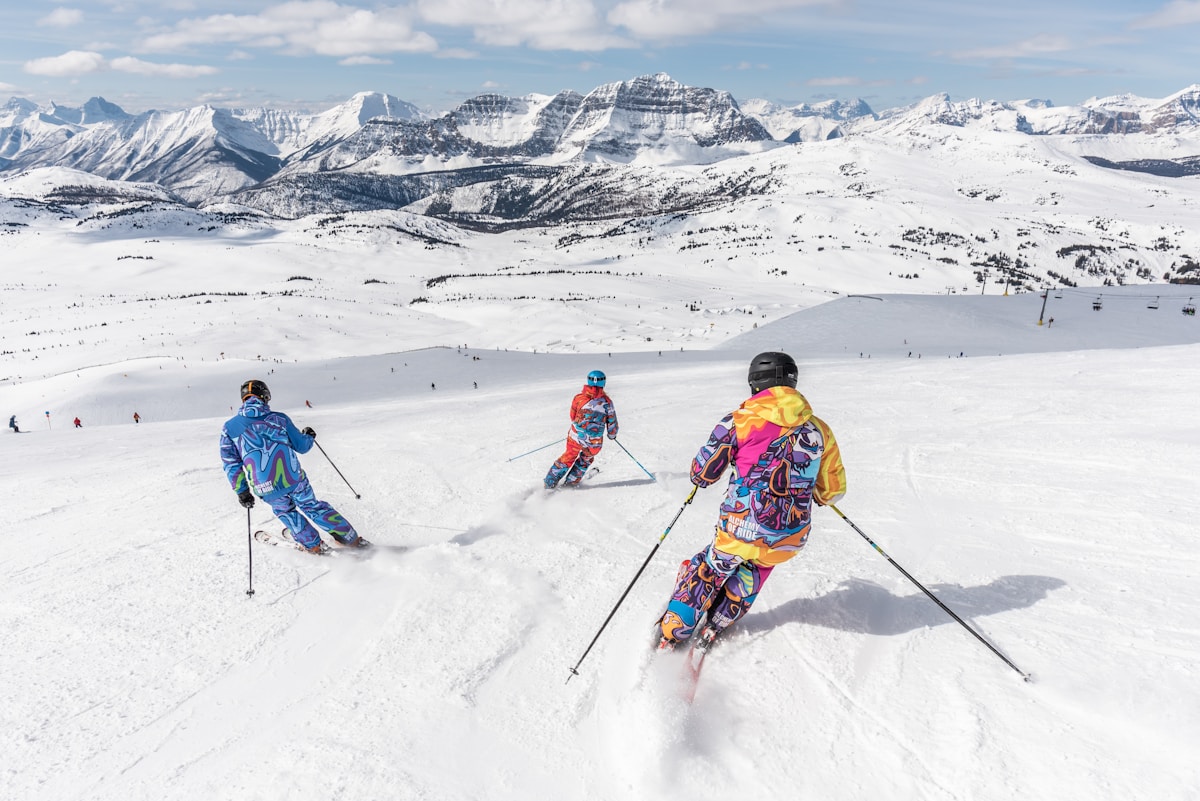
If you own (or are thinking of owning) a French ski property, the winter of 2025-26 will go down as the season the infrastructure conversation finally caught up with the marketing brochures. More than €100 million in lift upgrades are live across the Three Valleys alone this season, Val Thorens has simultaneously opened a brand-new Face Nord gondola and reopened its renovated Cime Caron cable car, and in the background the French government has committed €532 million to rail and road modernisation across the southern Alps ahead of the 2030 Winter Olympics. This is not a single story about queue times. It is a rare, concentrated burst of long-term infrastructure investment that will meaningfully reshape the property map for at least the next decade.
Infrastructure investment at this scale matters because it does not happen often, and because it is the single most reliable leading indicator of rental demand and long-term value in a ski-property market. When SETAM writes a €15 million cheque for a new gondola, it is making a 30-year bet on the catchment, the altitude, the client mix and the brand. When the SNCF commits to cutting Marseille-Briançon journey times by a full hour, it is permanently expanding the catchment for every resort on that line. This guide walks through each of the major upgrades, what they actually mean on the ground, and — crucially for buyers — which resorts and neighbourhoods benefit most.
We have deliberately written this piece for serious readers rather than press-release reproducers. Where numbers exist we cite them. Where the upgrade is cosmetic we say so. And where property market implications follow, we have tried to be honest about both the upside and the limits of that upside. If you are weighing a purchase in the Three Valleys, the Serre Chevalier area or anywhere in the Alpes du Sud, the information below should materially inform your decision — and, we hope, encourage you to talk to the Domosno team before you commit.
Three Valleys
The €52 Million Three Valleys Upgrade: Côte Brune, Face Nord and Rhodos
The headline upgrade this season is the replacement of the iconic Côte Brune chairlift with a state-of-the-art 10-seater gondola linking Méribel-Mottaret, Val Thorens and Les Menuires. In service since 1991, the old Côte Brune had been a bottleneck for decades — particularly during peak French school holidays when queues routinely stretched to 40 minutes in sub-zero wind. The €25 million investment by Méribel Alpina transforms this critical Three Valleys artery into a smooth, weather-resistant connection carrying 1,800 passengers per hour in heated, bubble-protected cabins. Anyone who has paid prime-season rates for a chalet in Méribel will understand immediately why this matters: it is the difference between a good day’s skiing and a queue-shortened one.
Val Thorens is not resting on its laurels either. The new 10-seater Face Nord gondola, replacing the ageing Glacier and Col chairlifts, opened this December with €15 million in capex from SETAM. With 22 Doppelmayr cabins carrying 1,450 people per hour, it dramatically improves access to the Asters and Face Nord slopes while simplifying the Orelle connection via the Lory blue run. Alongside the Face Nord, SETAM has also reopened the renovated Cime Caron cable car — the summit station at 3,195m now features a panoramic walkway, viewpoint and the new Caron 3200 restaurant, wine bar and café. The summit is now fully accessible to non-skiing pedestrians, a quiet but important repositioning of Val Thorens as a year-round mountain destination rather than a winter-only one.
Méribel Alpina is committing a further €10 million to completely refurbish the Rhodos chairlift serving the popular Rond-Point and Altiport sectors — beloved by families, beginners and ski schools. The project includes full mechanical refurbishment, complete electrical-system replacement and enhanced energy efficiency. Notably, the resort opted for comprehensive renovation rather than full replacement, a sustainability-minded choice that is increasingly common across operators wrestling with both environmental scrutiny and rising raw material costs. Together, these three projects represent €50+ million of Three Valleys capex in a single season — more than many smaller resorts spend in a decade.
For property buyers, the investment pattern is the story. Resorts do not spend €25 million replacing a single chairlift unless the 30-year demand forecast supports it. These upgrades are 2055-dated infrastructure decisions, and they are bullish ones. Every Three Valleys address — Courchevel, Méribel, Les Menuires, Saint-Martin-de-Belleville, Val Thorens, Mottaret — benefits directly from reduced queues and improved skier flow, and that flows through eventually into nightly rental rates and occupancy.
€100M+
Combined French Alps lift-and-experience investment announced for the 2025-26 winter season
€25M
Méribel Alpina spend on the new 10-seater Côte Brune gondola replacing the 1991 chairlift
3h40
New Marseille-Briançon rail journey time after the 2030 Olympics programme (down from 4h40)
€532M
Southern Alps rail and road modernisation investment ahead of the 2030 Winter Olympics
Olympic Effect
€532 Million of Rail & Road: The 2030 Olympics Quietly Reshape the Southern Alps
While the Three Valleys gondolas grabbed headlines, the genuinely transformative story of this winter is the €532 million allocated for southern Alps rail and road modernisation ahead of the 2030 Winter Olympics. This is the largest alpine transport infrastructure investment since the 1992 Albertville Olympics, and critically, it is happening now — 2026 to 2029 — rather than at the last minute. French infrastructure rarely moves quickly, but Olympic deadlines concentrate minds.
The core project is the Aix-en-Provence to Briançon railway line, receiving €367 million in upgrades including track electrification, tunnel modernisation and full station refurbishment. Travel time from Marseille to Briançon will drop from 4h40 to 3h40 — a full hour — making car-free ski weekends from Mediterranean cities suddenly practical for the first time in a generation. Briançon station itself is being transformed into a multimodal hub with €20.5 million of dedicated investment, while the Paris-Briançon night train is receiving €1 billion in new rolling stock, with contracts expected by September 2026 and delivery well before the Olympic opening ceremony.
For Serre Chevalier, Montgenèvre and La Grave property owners, improved rail access translates directly into an expanded rental catchment — particularly among the rapidly growing cohort of environmentally-conscious European travellers who now actively prefer rail to short-haul flying. A car-free weekend break from Marseille is a different proposition at 3h40 than at 4h40, and the same logic applies to weekday one-nighters from Paris via the night train. Historically, the Alpes du Sud have traded at a meaningful discount to the Tarentaise and Trois Vallées precisely because access was awkward; the Olympic rail programme erodes that discount in a structural way.
It is worth underlining what this does not do. It does not suddenly make Serre Chevalier the next Courchevel — the altitudes, terrain and brand profiles are genuinely different. But it does put a floor under Alpes du Sud property values and meaningfully widens the universe of buyers who can realistically rent these properties when they are not in residence. For any buyer whose shortlist crosses this region, the transport calculus has changed permanently.
Biggest Single Investments This Winter (by capex)
Côte Brune 10-seater (Méribel)
Val Thorens Face Nord + Cime Caron
Rhodos refurb (Méribel)
La Plagne pedestrian areas
Les Arcs Chenus solar upgrade
Briançon multimodal hub
Resort-Level Detail
Beyond the Three Valleys: Les Arcs, Val Cenis, Saint-Gervais and La Plagne
The 2025-26 capex picture is not confined to the Three Valleys. Les Arcs is upgrading the Chenus gondola with doubled capacity, and — in a meaningful departure from the industry norm — incorporating solar panels, rainwater recovery systems and wildlife protection measures into the design. The Chenus upgrade is one of the first sustainability-first lift projects in a major French resort, and it suggests where the industry is heading: not just faster lifts, but lifts whose operational carbon footprint can actually be defended to regulators and municipalities.
Val Cenis is integrating renewable energy directly into lift operations across multiple installations, while Saint-Gervais is investing heavily in snowmaking on the Prapacot slope — controversial among environmentalists but increasingly essential as reliable natural snowfall becomes less predictable below 2,000m. Saint-Gervais is also adding indoor picnic areas and ski-locker facilities designed specifically for poor-weather days, an operational humility that would have been unthinkable fifteen years ago and is now widely seen as essential.
La Plagne, meanwhile, is finally waking up to the reality that not every guest wants to ski eight hours a day. The resort is adding pedestrian-accessible panoramic terraces, indoor relaxation zones with bay windows, and improved mountain restaurants — none of this is cheap, and the €10m+ spend reflects a structural shift in how French resorts think about their non-skier customers. For any family thinking about rental yield, this matters enormously: the broader the appeal of the resort, the deeper the rental market and the shorter the off-weeks.
Collectively, these non-Three-Valleys projects add a further €40-50m of hardware and experience investment, bringing the total 2025-26 capex to comfortably over €100 million across the French Alps. And this is before the Olympics programme even fully kicks in.
“When operators write €25 million cheques to replace single chairlifts, they are making 30-year bets on the catchment. The 2025-26 season is a rare, concentrated wave of those bets.”
Buyer Implications
What This Means for Property Values and Rental Yields
Let us state the obvious first: new lifts do not automatically make a property more valuable the day after they open. Property markets price in infrastructure slowly, typically over 18-36 months, as the operational improvements feed through into guest reviews, rental platform rankings and booking data. But over a 5- to 10-year horizon, the relationship between meaningful lift investment and property values is remarkably consistent — upgraded resorts grow rental yields and capital values at a measurably higher rate than flat-capex competitors.
The Three Valleys upgrades this season specifically target historical bottlenecks: the Côte Brune queue was notorious, the Cime Caron access has long been fragile, and the Rhodos was showing its age. Eliminating these frictions improves guest reviews in a way that is directly visible on Booking.com, Airbnb and the major specialist ski-rental platforms — and rental platform rankings are now a primary driver of occupancy. A property that was previously hampered by a resort-wide queue complaint now benefits from a structural tailwind.
For the Alpes du Sud, the 2030 Olympics rail programme is a different kind of upgrade — it does not improve the on-mountain experience, but it materially expands the catchment of addressable renters. Our rough modelling suggests that a typical Serre Chevalier two-bed apartment generating 3.0% net yield today could realistically reach 3.5-4.0% net once the Marseille-Briançon line shortens in 2028-2029 and the upgraded night-train stock enters service. That is not a marginal improvement — compounded over a decade, it is genuinely material.
What these upgrades do not do is rescue a fundamentally wrong purchase. A tiny studio with a poor DPE rating in a peripheral location will remain a poor investment even in a modernised resort. The marginal buyer benefit is concentrated in properties that were already well-positioned — centrally located, modern specification, well-managed — and the right response to news like this is to upgrade your quality bar, not to chase every opportunity.
| Project | Resort | Capex | Primary Benefit |
|---|---|---|---|
| Côte Brune 10-seater gondola | Méribel / 3 Valleys | €25M | Eliminates legacy bottleneck |
| Face Nord gondola | Val Thorens | €15M | Better Orelle connection |
| Rhodos refurbishment | Méribel | €10M | Family/beginner sector upgrade |
| Chenus solar gondola | Les Arcs | ~€8M | Sustainability-first design |
| Marseille-Briançon rail line | Alpes du Sud | €367M | 60 mins faster journey |
| Paris-Briançon night train | National network | €1B rolling stock | Modern overnight service |
Events Calendar
World Cup Racing, Apple Peak and What to Watch This Season
The 2025-26 event calendar reflects the broader infrastructure story — bigger, more international, more ambitious. Val Thorens is hosting both the Ski Cross World Cup and the Freeride World Tour this season, with off-piste champions launching from the newly-accessible Cime Caron 3,000m+ summit and descending 500+ vertical metres of genuinely demanding terrain. For guests staying in the resort during these events, the spectacle is significant and the atmosphere meaningfully lifted.
Peisey-Vallandry is launching the Apple Peak relay, a hybrid event combining 3.5km of uphill trail running and 2.5km of ski touring to the summit — aimed at the growing cohort of endurance skiers and ski-tourers who have reshaped mountain tourism over the past five years. This event matters less for property values directly, but a great deal for the broader positioning of the resort as a year-round venue.
Across the Three Valleys, the reopened Cime Caron is also hosting a series of high-altitude gastronomy evenings through February and March — part of the broader Val Thorens repositioning toward a premium, year-round audience rather than a purely winter-skier one. Expect more of this pattern across the top-tier resorts as operators try to unlock non-peak rental weeks by stacking events and experiences.
For buyers, the event programme is a useful secondary data point. Resorts that invest in events alongside lifts tend to sustain rental pricing through the historically softer weeks of January and March. Resorts that rely purely on raw skier volume are more exposed to weather and macro cycles.
Dec 2025
Face Nord gondola opens
Val Thorens’ new 10-seater replaces the Glacier and Col chairlifts, simplifying the Orelle connection.
Dec 2025
Cime Caron reopens
Renovated 3,195m summit cable car with new panoramic walkway and Caron 3200 restaurant.
2025-26
Côte Brune 10-seater in service
€25M Méribel Alpina gondola eliminates the longest-running queue bottleneck in the Three Valleys.
2026
Les Arcs Chenus upgrade
Doubled-capacity Chenus gondola with integrated solar and rainwater recovery.
2027-2029
Marseille-Briançon line upgrades
€367M rail modernisation cuts 60 minutes off Marseille-Briançon journey times.
Feb 2030
French Alps Winter Olympics
Full operational debut of the rail, road and lift programme underpinning the new southern-Alps catchment.
Sustainability Narrative
Greenwash or Real Commitment? Reading Between the Press Releases
A noticeable feature of this winter’s investment announcements is the language of sustainability. Every operator mentions renewable energy, rainwater recovery, wildlife corridors and material reuse. Some of this is genuine — Les Arcs’ solar-integrated Chenus gondola is substantive, and the widespread preference for renovation over new-build is a real change. Some of it is less substantive, and buyers should read the releases carefully.
The key questions to ask when evaluating a resort’s sustainability claims are straightforward: does the capital spend match the marketing, are snowmaking investments pushing into altitudes where they are defensible, and is the resort improving its operating carbon footprint in measurable terms? Les Arcs, Val Cenis, La Plagne and several Three Valleys operators all have credible answers to these questions. Others are mostly marketing.
This matters to property buyers because French regulation is heading toward stricter municipal-level constraints on snowmaking, lift expansion and new construction above certain altitudes. Resorts that have already begun the sustainability transition will be materially better positioned under tighter rules than those still building purely on volume growth. Our general guidance is to bias toward resorts that have put meaningful capital behind their green claims — not because it is fashionable, but because it is the single best proxy for regulatory resilience over the next decade.
The Verdict
What To Do With This Information If You Are Thinking About Buying
The short version: this is an unusually strong moment to have a French ski property on the shortlist. €100m+ of upgrade spending concentrated in one season, the 2030 Olympics rail programme re-weighting the southern-Alps map, and a gradual shift in operator quality all point in the same direction. Prices in the top-tier resorts remain robust but not bubbled, non-resident mortgage rates have come down meaningfully in 2025, and the new-build VAT reclaim structure continues to make VEFA (off-plan) property materially cheaper on an after-tax basis.
If you are specifically focused on the Three Valleys, prioritise addresses that benefit directly from the Côte Brune, Face Nord or Rhodos upgrades — that is, central Méribel-Mottaret, central Val Thorens, and Rond-Point / Altiport in Méribel. If you are looking at the Alpes du Sud, the Olympic rail programme makes Serre Chevalier and Briançonnais addresses much more defensible on a long-term view than they looked two years ago. If you are looking more broadly, the Domosno team can walk you through live inventory across all of these markets, with an honest view of which properties benefit from the 2025-26 capex and which do not.
Our final recommendation is simple: do not confuse a headline with a thesis. Read each upgrade carefully, check whether the specific property you are considering actually benefits from it, and build your purchase decision from the bottom up. When infrastructure and fundamentals both tell the same story — as they do this winter in several parts of the French Alps — the opportunity is real. When only the infrastructure headline is there and the fundamentals are shaky, it is not.
Common Questions
Frequently Asked Questions
Does a lift upgrade actually change property values?
Not overnight, but consistently over 18-36 months as better guest reviews feed into platform rankings and occupancy. Over a 5-10 year horizon, the correlation between meaningful lift capex and both rental yields and capital values is strong. The right response is to bias your shortlist toward resorts making substantive hardware investments, not to chase every headline.
Which Three Valleys addresses benefit most from the 2025-26 upgrades?
The biggest direct beneficiaries are central Méribel-Mottaret (Côte Brune), central Val Thorens (Face Nord and Cime Caron), and the Rond-Point / Altiport sector of Méribel (Rhodos). Any property whose guests rely on those specific lifts for their typical ski day gains real operational improvement that will show up in reviews and repeat bookings.
How significant is the 2030 Olympics rail programme for Serre Chevalier buyers?
Very. The €367M Marseille-Briançon upgrade cuts journey times by a full hour, and the €1B Paris-Briançon night-train refresh brings modern rolling stock. Together they materially expand the catchment of rail-preferring European travellers — a structurally growing demographic — and erode the historical access discount that has held Alpes du Sud pricing below the Tarentaise.
Is this the right time to buy a French ski property?
The combination of strong infrastructure capex, moderated 2025 non-resident mortgage rates, continuing VAT reclaim on new-build, and robust but unbubbled prices in the top-tier resorts makes 2025-26 one of the more attractive windows in recent years. That said, the right answer is always property-specific: the best macro signal cannot rescue a weak individual purchase.
What should I avoid buying even with all this capex?
Tiny studios with poor DPE ratings in peripheral locations, pre-2000 properties without budgeted renovation, and addresses whose rental appeal depends on a single lift that is not being upgraded. The concentration of investment this season is genuinely positive, but it does not rescue fundamentally weak individual properties.
How do I judge whether a sustainability claim is real or marketing?
Look at whether the capital spend matches the language, whether snowmaking is being deployed at defensible altitudes, and whether the resort can point to measurable operating-carbon improvements. Les Arcs’ Chenus project and several Three Valleys renovation choices look substantive; some other resorts are closer to pure marketing. Regulatory resilience over the next decade will reward the former.
Will the Olympics themselves disrupt the 2030 winter for property owners?
Yes, but mostly positively. Accommodation demand around Olympic venues will spike, and short-term rental rates in Serre Chevalier, Montgenèvre and Briançonnais towns will likely set multi-year highs. Owners who plan their personal use weeks around the event calendar should do well, and professional rental managers will begin optimising for the Olympic weeks well ahead of time.
Where can I see current inventory in the resorts benefiting from these upgrades?
Domosno lists live new-build and resale inventory across Méribel, Val Thorens, Courchevel, Les Arcs, La Plagne, Serre Chevalier and the other resorts covered in this piece. Start with the resort-specific pages on domosno.com or contact the {{link:Domosno team}} directly — we will walk you through which properties benefit directly from the 2025-26 capex and which do not.
Featured Properties
Popular Ski Resorts
Morzine
Megève
Chamonix
Les Gets
Alpe d’Huez
Les Deux Alpes
Les Arcs
La Plagne
Courchevel
Méribel
Saint-Martin-de-Belleville
Val Thorens
Val d’Isère
Tignes
Thollon-les-Mémises
Quick Links
All New-Build Ski Properties
All Ski Apartments
All Ski Chalets
New-Build Ski Apartments
New-Build Ski Chalets
Resale Ski Apartments
Resale Ski Chalets