Market Report
2025 French Alps Ski Property Market Report: Prices, Growth & Investment Outlook
A comprehensive analysis of market trends, regional price variations, and investment opportunities across the major Portes du Soleil resorts — from Les Gets to Courchevel.
30 Jul 2023
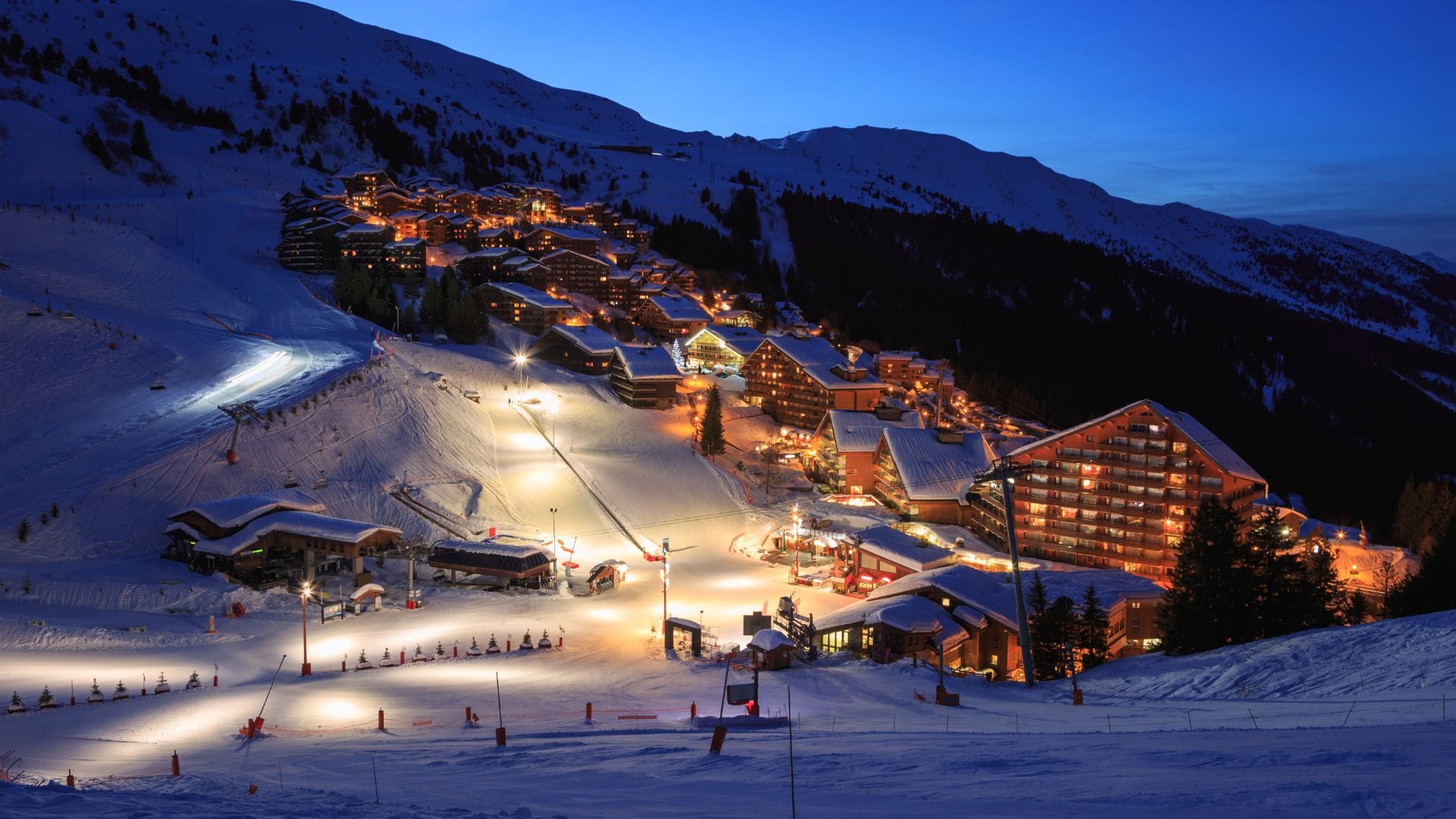
The French Alpine property market in 2025 continues to reward early investors and punish the perpetually indecisive. Across the major resorts — from the family-oriented Portes du Soleil villages like Les Gets and Morzine to the ultra-prime Savoie destinations of Courchevel, Méribel, and Val Thorens — we’re seeing a clear bifurcation between well-positioned properties and the remaining inventory. This report synthesises transaction data, notary records, and market intelligence from across the French Alps to give you a clear picture of where prices are moving, why they’re moving, and which regions offer the best risk-adjusted returns.
The headline story is one of persistent strength in the accessible, high-yield tier. Resorts within an hour of Geneva Airport — particularly Les Gets, Morzine, and Chamonix — continue to see robust demand from British and North European buyers, with new-build apartments trading at €7,000–9,500/m² in prime locations and showing realistic net rental yields of 3–3.5%. Meanwhile, ultra-luxury Courchevel 1850 and the exclusive Méribel properties remain in a separate market entirely, catering to billionaires and estate-wealth buyers willing to pay €15,000–25,000/m² for uncompromising positioning and après-ski lifestyle. This report focuses on the mid-market and prime segments where British investors typically operate — the resorts with genuine yield and capital-growth potential.
We’ll walk through 2025 pricing data by resort, compare recent appreciation against historical baselines, examine the regulatory and tax environment for non-resident buyers, and flag the emerging hotspots where infrastructure investment is likely to drive value creation over the next 3–5 years. Whether you’re a first-time buyer evaluating Les Gets, a seasoned investor comparing rental-yield opportunities, or a private-wealth advisor building an Alpine portfolio, this analysis gives you the data you need to move with confidence.
Market Overview
The 2025 Alpine Market: A Tale of Two Tiers
The French Alpine property market has settled into a mature state after the volatility of 2022–2023. The 11% annual growth in Les Gets and 9% in Morzine that characterised the market through 2023–2024 has moderated to a more sustainable 4–6% range, reflecting both the tightening of ECB monetary policy and a recalibration of buyer expectations. What has NOT moderated is the underlying demand from British and North European buyers seeking year-round accessibility, family-friendly amenities, and genuine rental yield. If anything, that demand has intensified as Swiss franc strength and rising property costs in Switzerland push buyers north across the border into Haute-Savoie.
The key insight is that the market is no longer rising uniformly. Instead, we’re seeing a clear separation: properties in well-positioned, high-rental-demand locations (central village, ski-in/ski-out access, modern bathrooms, professional management setup) are appreciating steadily and selling quickly. Conversely, older properties in low-traffic areas, properties requiring significant renovation, and those positioned primarily for personal use with limited rental appeal are experiencing stagnation or even mild depreciation. For buyers, this bifurcation is actually good news — it means you need to be disciplined about location and property condition, but if you get it right, you’re buying into a genuine market with real fundamentals.
The second-order insight: summer appeal is becoming increasingly important. Resorts that offer meaningfully different summer experiences — Les Gets with its UCI World Cup mountain-biking circuit, Saint-Gervais with climbing and hiking infrastructure, Morzine with its family-friendly lake and green-mountain amenities — are seeing winter+summer rental yields reaching 3.5–5% net. Winter-only resorts, even in beautiful locations, are finding it harder to justify premium pricing on yield alone, particularly as the pool of wealthy buyers using properties for pure personal use continues to shrink.
€7,000–9,500/m²
Typical new-build price in prime Portes du Soleil locations (Les Gets, Morzine) in 2025
€100,000
20% VAT recovery on a €600,000 VEFA apartment with 9-year rental commitment
3–3.5%
Realistic net rental yield for well-positioned properties with summer appeal
4–6%
Annual price appreciation in major resorts (down from 9–11% in 2023–2024, now stabilising)
Regional Pricing
2025 Price per m²: A Resort-by-Resort Breakdown
Let’s get into the numbers, because this is where the signal separates from the noise. In the Portes du Soleil tier (Les Gets, Morzine, Avoriaz, Châtel), new-build apartments in prime locations are trading at €7,000–9,500/m². Second-tier locations (good but not central) sit at €6,500–8,000/m². Chamonix, which benefits from iconic status and strong British buyer recognition, commands a slight premium — €8,000–9,500/m² new-build — and resale can reach €9,000–10,500/m² for exceptional properties. The broader Portes du Soleil average sits at €4,104/m² for apartments and €5,729/m² for chalets when you include the wider network — a weighted average that pulls down the central villages.
The Savoie giants — Courchevel 1850, Méribel, Val Thorens — operate in an entirely different market. New-build and resale luxury properties regularly trade at €12,000–18,000/m² for ‘good’ properties, and truly exceptional positioning (Courchevel 1850 chalet with forest views and private lift access) can reach €20,000–25,000/m². These are portfolio properties for ultra-high-net-worth individuals, not real-estate investments in the traditional sense. For the purposes of this report, we focus on the €4,000–10,000/m² tier where most British buyer activity concentrates.
Importantly, notary transaction data from 2025 shows that new-build pricing has stabilised at these levels — there’s minimal month-to-month variance, and the year-on-year appreciation is in the 3–5% range rather than the 9–11% we saw in 2023–2024. This is rational market behaviour in a maturing asset class. Buyers should expect steady but not spectacular appreciation, with the real yield coming from rental income rather than capital gains.
Resort Tiers: Market Positioning & 2025 Entry Pricing
Portes du Soleil (Les Gets, Morzine)
Chamonix & Saint-Gervais
Mid-altitude Savoie
Ultra-prime Courchevel/Méribel
Emerging (Saint-Martin, Alpe d’Huez)
Off-network rural chalets
Investment Mechanics
Mortgages, VAT Reclaim & Non-Resident Buyer Rules in 2025
For non-resident British and other foreign buyers, the 2025 mortgage environment is measurably better than it was two years ago. ECB deposit rates have fallen to 2.50%, and competitive fixed-rate mortgages for non-resident buyers now run 3.4–4.5%, down from the 5–6% range in 2023. Non-residents can typically access 70–80% loan-to-value, with prime profiles and strong documentation reaching 85% LTV. Non-EU citizens should expect a cap closer to 70%. The overall mortgage cost for a €600,000 property is now roughly €25,000–30,000 per annum on a 25-year term — materially better than owning outright or using expensive bridge financing.
The VAT reclaim regime remains the single largest tax advantage for new-build buyers. VEFA (off-plan) properties entered into a classified meublé de tourisme (furnished holiday rental) scheme qualify for 20% VAT recovery on the gross purchase price — on a €600,000 apartment, that’s €100,000 returned post-completion. The trade-off is a 9-year minimum rental commitment to an approved management company and the requirement that the property remains furnished and professionally marketed. For buyer-investors, this is more than acceptable — it removes € 100,000 of the effective cost and improves your cash-on-cash yield materially. Notary fees on new-build purchases (2–4%) are also considerably lower than on resale (7–9%), further sweetening the VEFA economics.
The key regulatory change in 2025: the French tax authority has tightened scrutiny on holiday rental income classification, particularly on properties registered as ‘regular residential’ rather than ‘meublé de tourisme’. If you’re planning to rent, ensure your purchase agreement explicitly targets a classified meublé structure and that your notary files the proper declarations. Non-compliance can result in reclassification as residential income (subject to higher tax rates) and the loss of VAT-reclaim eligibility — a costly mistake. Domosno refers all UK buyers to English-speaking notaries and tax advisors with expertise in this area.
“The French Alpine market in 2025 rewards disciplined buyers who target well-positioned, year-round rentable properties in established resorts. The days of speculative pricing and double-digit appreciation are over — but the fundamentals are stronger than ever.”
Seasonal Performance
Winter & Summer Rental Demand: Year-Round Appeal Matters More Than Ever
The shift toward year-round property utilisation is the single most important trend reshaping Alpine real-estate returns. Winter season (December–April) generates roughly 50–60% of annual rental income for a typical new-build apartment in a major resort, but summer season (July–August plus shoulder periods) is becoming increasingly important as mountain-biking, hiking, climbing, and family-friendly activities attract larger audiences each year. Properties in resorts with strong summer appeal can realistically generate €8,000–12,000 per month in summer rental income, whereas winter-only reliant properties might earn €6,000–10,000 across the entire winter season.
This has a direct impact on yield. A well-positioned Les Gets or Morzine apartment generating €50,000 annually (€25,000 winter, €25,000 summer) with €600,000 purchase price achieves 3.3% gross yield. After property taxes, management fees, maintenance, and insurance (typically 25–35% of gross rental revenue), you land at a realistic 2.5–3% net yield — not spectacular, but solid. A winter-only resort property with only €30,000 annual rental income nets roughly 1.5–2% — materially weaker. For investors, this mathematical reality is shifting preferences toward Portes du Soleil villages, Chamonix, and Saint-Gervais (all with meaningful summer appeal) over isolated high-altitude resorts.
Emerging hotspot: Saint-Gervais, positioned between Chamonix and the Portes du Soleil network, is seeing strong growth in new-build activity precisely because it offers winter skiing via the Megève link plus excellent summer climbing, hiking, and family appeal. Prices are still €500–1,000/m² below Chamonix or Morzine, and we expect this premium to compress as the resort’s summer infrastructure matures.
| Resort/Tier | Price/m² (2025) | Annual Appreciation | Typical Net Yield | Best For |
|---|---|---|---|---|
| Les Gets (Portes du Soleil) | €7–9,500 | 4–5% | 3–3.5% | Family buyers, UK investors |
| Morzine (Portes du Soleil) | €6,500–9,000 | 4–5% | 3–3.5% | Rental investors, mixed-use |
| Chamonix | €8,000–9,500 | 4–6% | 3–4% | Iconic status, strong demand |
| Saint-Gervais (emerging) | €4,500–6,500 | 6–8% | 3–4.5% | Value plays with summer appeal |
| Courchevel 1850 (luxury) | €15,000–25,000 | 2–3% | 2–3% | Ultra-high-net-worth lifestyle |
| High-altitude Savoie | €5,000–7,500 | 3–4% | 2–3% | Snow certainty, ultra-prime only |
Buyer Guidance
How to Evaluate & Purchase with Confidence: A Checklist for Non-Resident Investors
If you’re evaluating a French Alpine property in 2025, here’s a checklist to separate signal from noise. First: location. Is the property within easy walking distance of the main ski access, or does it require a shuttle bus or car transfer? Does it have south-facing window (pleasant summer views, higher utility costs) or north-facing (colder but more reliable winter snow, lower heating bills)? Central-village properties with walkable access to restaurants, bars, and shops command a 10–15% premium over peripheral locations — and they earn it through superior rental demand. Second: property condition. Pre-2000 properties require an expectation of €30,000–60,000 renovation to meet modern DPE (energy efficiency) standards and buyer expectations for kitchens and bathrooms. Post-2010 properties are generally turnkey. Third: rental-programme accessibility. Does the property sit in a managed rental building with established management, booking channels, and professional marketing? Or are you planning to self-manage from the UK? Professional management costs 15–25% of gross rental revenue but eliminates the operational burden.
Tax and financing: engage with your mortgage broker and tax advisor before viewing properties. Non-resident buyer status, EU citizenship, personal income-tax filing status, and the intended use (primary residence, holiday home, investment, mixed-use) all influence mortgage eligibility, notary fees, and tax obligations. A competent mortgage broker can model your personal scenario and confirm accessibility before you fall in love with a property and discover you’re ineligible for the financing you planned. Finally: buy value, not fantasy. Avoid properties with speculative stories attached — ‘this is right next to an upgraded lift’ or ‘the summer market is about to take off here’. Stick to properties in established, proven markets (Les Gets, Morzine, Chamonix) where you can model rental income based on comparable properties with historical performance data. The margin of safety is higher, and the sleep-at-night quality is worth the modest premium.
2020–2021
COVID boom
Sharp inflow of remote-work buyers and VHNWIs seeking mountain lifestyle. Prices surge 8–12% annually.
2022–2023
ECB tightening
Interest rate rises cool mortgage demand. Pricing moderates but remains firm for prime inventory. Bifurcation begins.
2023–2024
Market maturation
Appreciation slows to 4–6% annually. Summer appeal increasingly valued. Infrastructure projects drive regional pockets of demand.
H1 2025
Current state
Stable pricing, strong rental demand, mortgage rates declining. New-build VEFA offers genuine value with VAT reclaim.
H2 2025
Infrastructure catalyst
Lift upgrades in Les Gets (Rosta), Morzine, and Chamonix drive visitor growth. Properties in upgraded sectors see 3–5% appreciation.
2026
Outlook
Continued appreciation in emerging hotspots (Saint-Gervais, Alpe d’Huez). Ultra-prime market separates further from mid-market. Summer appeal becomes pricing driver.
Looking Ahead
2025–2026 Outlook: Infrastructure Investment & Emerging Hotspots
Looking forward to late 2025 and into 2026, the key driver of value creation is infrastructure investment. Les Gets is receiving a new 8-seater detachable chairlift in the Rosta area, replacing older infrastructure — this matters because uplift modernisation correlates with sustained visitor growth and rental demand. Morzine has lift-upgrade projects in the planning stages. Chamonix is investing heavily in off-season infrastructure (summer facilities, hiking trails, climbing areas) to boost summer rental appeal. For property buyers, these upgrades are genuine value drivers — they reduce queuing frustrations, attract more diverse visitors, and make properties in upgraded sectors more attractive to rental guests. When a resort announces a major infrastructure project, property values in the adjacent sectors typically appreciate 3–5% over the next 2–3 years as the project comes to completion.
Emerging hotspots for 2025–2026 investment: (1) Saint-Gervais, where new-build supply is limited and summer appeal is driving demand; (2) Alpe d’Huez, which has been investing heavily in rental accommodation and lift infrastructure; (3) The Les Deux Alpes market, which is benefiting from direct rail access from Grenoble and is less saturated than some Portes du Soleil villages. These resorts offer 10–20% price appreciation potential if infrastructure projects land on schedule, plus more modest valuation multiples than the mega-resorts.
The regulatory environment is stable. The French government remains supportive of foreign investment in ski resorts, VAT reclaim rules are well-established, and the mortgage climate is genuinely favourable for well-structured non-resident buyers. The main downside risk is a significant ECB rate increase beyond current consensus — we’re modelling for 3.8–4.2% mortgage rates as a base case, and anything above 4.8% would materially pressure buyer demand. But for the next 12–18 months, conditions remain genuinely favourable.
Common Questions
Frequently Asked Questions
Is now a good time to buy in 2025?
Yes, for disciplined buyers in prime locations. Mortgage rates are genuinely favourable (3.4–4.5% for non-residents), VAT reclaim on VEFA properties provides immediate €80,000–120,000 value recovery, and the bifurcation of the market means prime properties are appreciating steadily while weak inventory languishes. The key is avoiding speculative pricing — stick to established resorts with proven rental demand.
What’s the difference between meublé and non-meublé status for tax purposes?
Meublé (furnished holiday rental) income is taxed at lower rates (micro-enterprise BIC regime or normal LMNP if above €72,500/year) and qualifies for VAT reclaim on new-build purchases. Non-meublé (unfurnished residential) is taxed as normal residential income at higher marginal rates and forfeits VAT reclaim eligibility. For investor buyers, meublé classification is financially superior and is the pathway to accessing the 20% VAT recovery on VEFA purchases.
Can I get a French mortgage as a non-resident British buyer?
Yes. Non-residents typically access 70–85% LTV depending on credit profile and documentation. Competitive 2025 fixed rates are 3.4–4.5%. The process requires providing proof of employment, income, credit history, and often a larger deposit than a resident would need. A specialist mortgage broker is essential — they can confirm eligibility before you become emotionally attached to a property and save thousands in fees through lender relationships.
What’s the rental-yield reality for Les Gets vs. other resorts?
Les Gets new-build apartments generate €25,000–35,000 annual gross rental income (3–3.5% gross yield), with realistic net yields of 2.5–3% after management, taxes, and maintenance. Summer mountain-biking appeal boosts total yield beyond winter-only competitors. Chamonix is similar. Saint-Gervais, being less saturated, can sometimes reach 4–4.5% net yield if you own pre-development and buy property early.
Should I buy off-plan (VEFA) or resale?
VEFA (off-plan) offers the 20% VAT reclaim (€100,000+ on a €600,000 purchase), lower notary fees (2–4% vs. 7–9% on resale), and modern finishes. The trade-off is 2–3 year completion delays and the requirement to maintain rental classification. For investor buyers, VEFA is overwhelmingly superior economically. For personal-use buyers seeking immediate occupancy, resale is correct unless the VEFA VAT benefit is too compelling to pass.
Which resorts are expected to appreciate fastest 2025–2026?
Emerging hotspots with infrastructure investment and limited new-build supply: Saint-Gervais (summer appeal, rail access), Alpe d’Huez (rental infrastructure, lift upgrades), and Chamonix periphery villages (off-peak affordability with prime access). Established resorts like Les Gets and Morzine will appreciate steadily (4–5%) but less dramatically. Ultra-prime Courchevel appreciates slowly (2–3%) because valuations are already extreme.
Is buying a ski property a good hedge against inflation?
Partially. Alpine real estate has historically outpaced general CPI by 1–2% annually, particularly in high-demand resorts. The combination of rental income yield (3–3.5%) and modest price appreciation (4–5%) gives total returns of 7–8.5% annually in steady markets — competitive with equities, but with lower volatility and the personal-use benefit. It’s not a pure inflation hedge, but it’s better than cash.
What’s the process for buying as a foreigner — how long does it take?
Typically 4–6 months from offer to completion for resale, or 2–3 years for off-plan VEFA. The process requires: offer, due diligence (property condition survey, title search), mortgage pre-approval, final mortgage underwriting, notary legal review, and completion. Domosno refers British buyers to English-speaking notaries near Geneva who can walk them through each step. Budget €15,000–25,000 in notary, survey, and legal fees depending on purchase price.
Featured Properties
Popular Ski Resorts
Morzine
Megève
Chamonix
Les Gets
Alpe d’Huez
Les Deux Alpes
Les Arcs
La Plagne
Courchevel
Méribel
Saint-Martin-de-Belleville
Val Thorens
Val d’Isère
Tignes
Thollon-les-Mémises
Quick Links
All New-Build Ski Properties
All Ski Apartments
All Ski Chalets
New-Build Ski Apartments
New-Build Ski Chalets
Resale Ski Apartments
Resale Ski Chalets