Five winters ago the French Alps were still largely a January-to-March story. Chalets filled for school holidays, lifts closed in April, and the valleys emptied until the next season. That pattern has fractured. What started as a Covid-era scramble for mountain air and space has matured into a structural lifestyle shift — one that has pulled average summer occupancy in the major Haute-Savoie resorts from roughly 42% in 2019 to around 61% by summer 2025, and has quietly made the French Alps the most in-demand mountain real estate market in Europe for the second year running. The Domosno desk now fields as many enquiries for June, July and September as it does for peak ski weeks.
The people driving this shift are not the traditional 'fifth-week-of-the-year' ski second-home buyers. They are hybrid-working families splitting time between London, Geneva, Paris and the mountains. They are early retirees who have sold a London or home counties house and want a mortgage-free chalet with genuine year-round utility. They are mid-career professionals using their French Alpine property as a productivity base during shoulder seasons, with fibre broadband, heated floors and real kitchens rather than rented Airbnbs. And they are increasingly sophisticated about the economics — they want rental yield, they understand French tax, and they run spreadsheets before they fall in love with a view.
This guide sets out what the new French Alpine lifestyle actually looks like in 2026 — the resorts that have adapted fastest, the property types that have outperformed, the price-per-square-metre benchmarks that matter, the regulatory context British buyers need to understand after Brexit, and the practical framework for deciding whether a mountain lifestyle purchase makes sense for a specific family. It is the conversation Domosno now has with every prospective buyer, and it is very different from the conversation we were having five years ago.
The Lifestyle Shift
From Ski Week to Year-Round Mountain Living
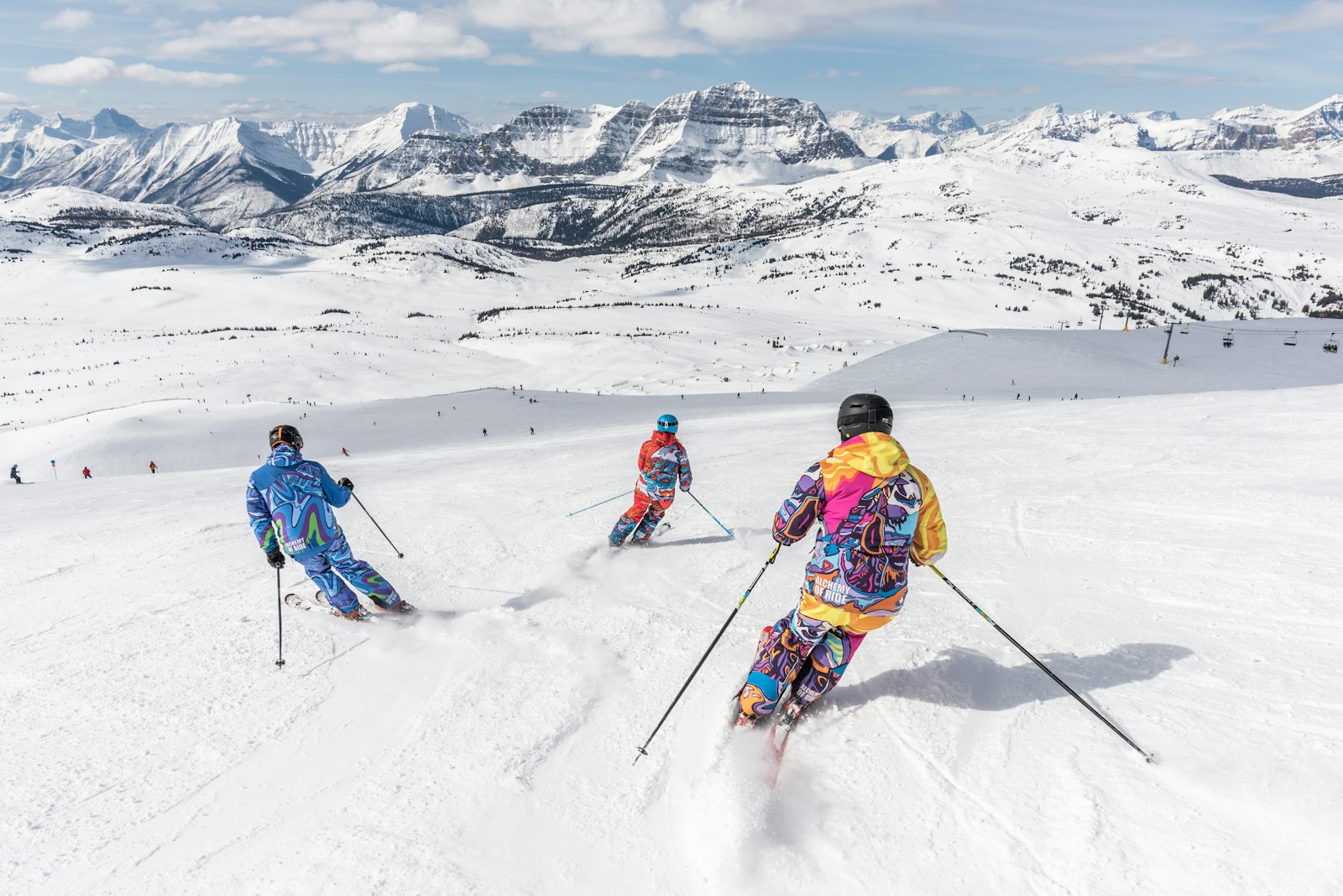
The first and most fundamental change is temporal. Five years ago, the operating assumption for nearly every French Alpine buyer was that the property existed to serve a winter holiday. Buyers asked about lift-access, about snow reliability, about the ski-in ski-out premium. They rarely asked what the chalet was like in June. In 2026 the conversation is almost inverted — our typical buyer now wants to understand the complete annual cycle, because they plan to use the property across multiple seasons and they need rental income to justify the investment during the weeks they are not there.
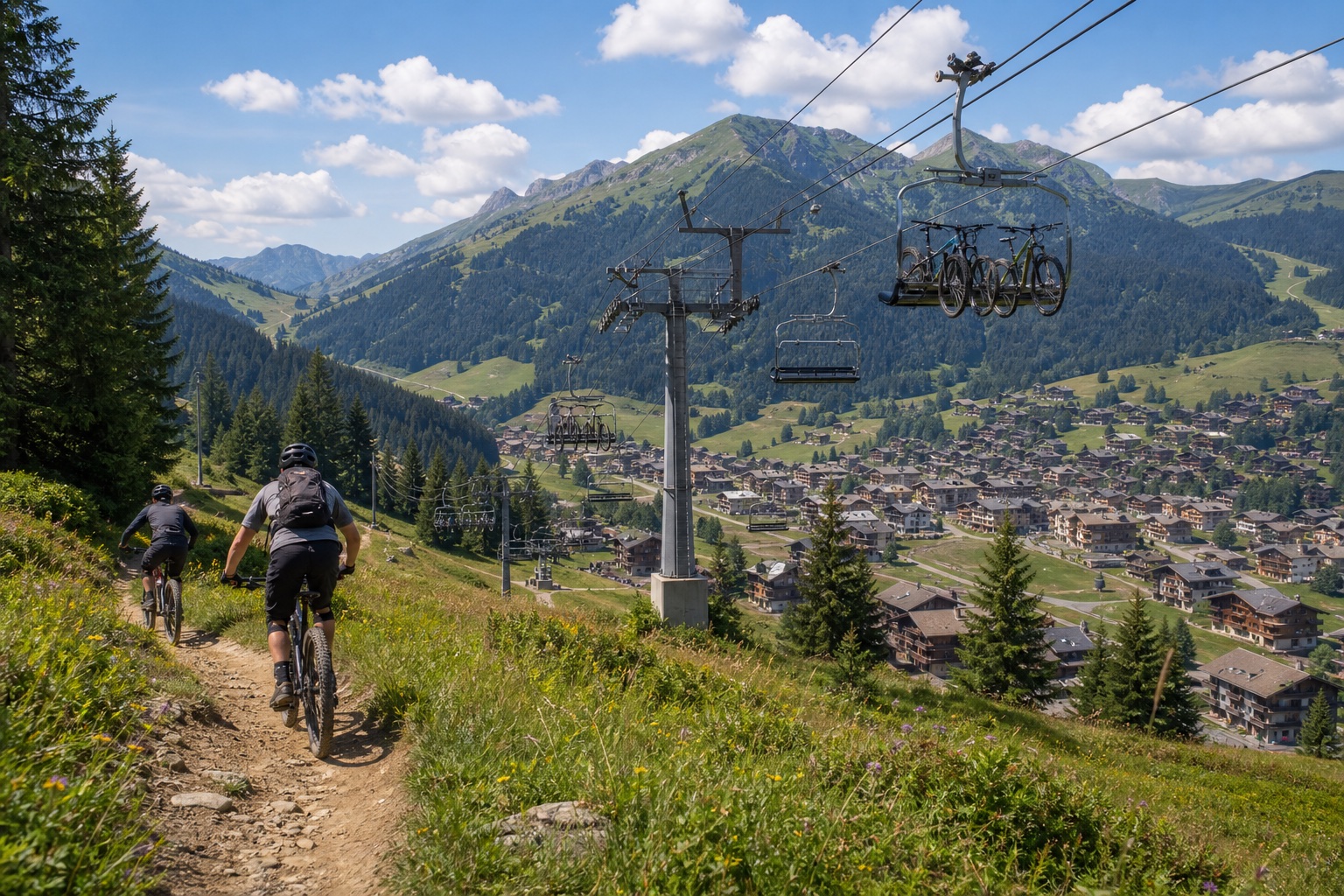
Summer has been the dramatic mover. Resorts like Morzine, Les Gets, Chamonix, Les Houches and Samoëns have built out hiking, mountain-bike and trail-running infrastructure at genuine scale over the last three summers. The Portes du Soleil bike park alone covered roughly 850km of marked MTB trails by summer 2025, up from around 650km in 2019, and the Chamonix valley has seen a 34% increase in summer lift-pass sales over the same period. What was once a six-week holiday window is now a four-month operating season, and rental yields that used to come almost entirely from Christmas-February are now spread across a genuinely year-round calendar.
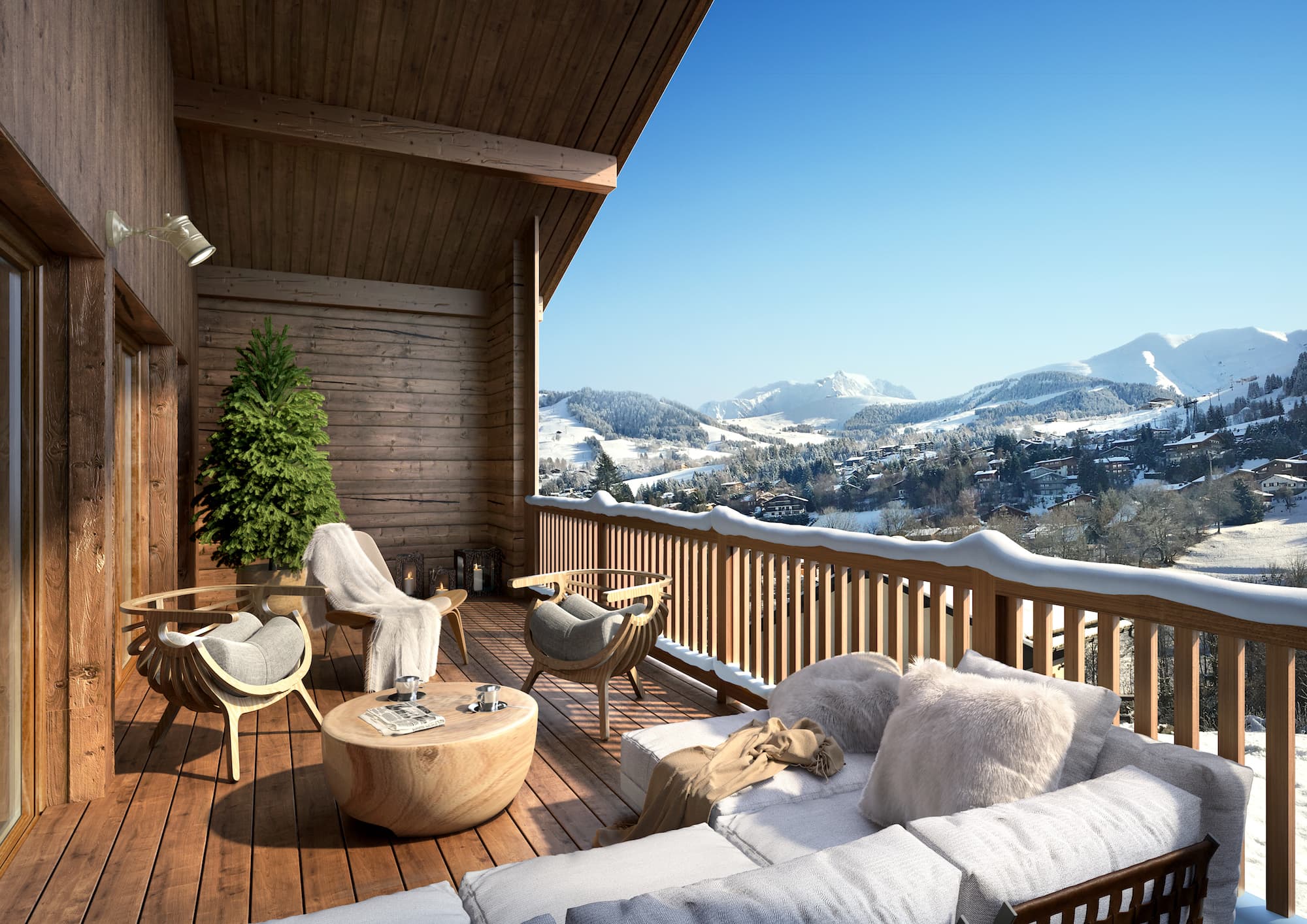
Shoulder seasons matter too. April, May, September and October used to be dead weeks for most chalet owners. They are now high-value weeks for hybrid-working families and early retirees who can travel outside school holidays. Rental demand in these months has roughly doubled in the last three years across the major Haute-Savoie resorts, and the best-performing properties are now the ones designed to be lived in — not just slept in — during those shoulder weeks. That means proper kitchens, home-office space, reliable broadband and genuinely well-heated living areas, not just a bootroom and a fondue set.
The result is that the property specification has shifted. Buyers who would have been satisfied with a compact ski-locker apartment in 2018 now want a living space they can actually work from for two months at a time. The premium for apartments with a dedicated home office or a convertible second bedroom has grown from roughly €250 per m² in 2019 to over €900 per m² in 2025 in the Morzine-Les Gets area — a price signal that tells you exactly what today's buyer is prioritising.
61%
Average summer occupancy in major Haute-Savoie resorts by summer 2025, up from roughly 42% in 2019
€10,850/m²
Average price per square metre for well-located central apartments in Morzine at end of 2025
5-7%
Typical gross rental yield range on well-specified two-bedroom apartments in core Haute-Savoie resorts
70-75%
Standard non-resident mortgage loan-to-value available to British buyers from French banks in early 2026
Hybrid Work
The New Commuter Belt Runs Through Geneva
The second structural driver is the normalisation of hybrid work. Geneva is now within 70 minutes' drive of Morzine, Les Gets, Samoëns, Flaine and Megève. With direct-to-Geneva flights from London City, Heathrow, Edinburgh, Dublin and a dozen other European capitals running six or more times a day, a British hybrid worker can realistically spend two to three weeks a month in the French Alps during shoulder seasons without disrupting their office cadence. For employees on two-office-day contracts, the calculation is compelling — and it has been the single most common profile of new French Alpine buyers on the Domosno books through 2024 and 2025.
The commuter-belt thesis has been strongest in the Portes du Soleil resorts because they are closest to Geneva airport and have the most developed year-round infrastructure. Morzine in particular has seen average price per m² rise from around €7,200 in mid-2020 to around €10,850 by the end of 2025 — a ~51% uplift that is well ahead of the broader French property market and is directly attributable to the shift in buyer profile. Les Gets has tracked a similar trajectory, with price-per-m² on well-located central apartments reaching €11,400 in premium new builds by late 2025.
The practical implications matter. Hybrid buyers want fibre broadband (which is now standard in central Morzine, Les Gets, Samoëns, Chamonix and most premium new developments across the region), stable 4G/5G coverage on the balconies where they will take calls, and a parking space they can actually reach in January without wading through unploughed snow. These are not optional for the new buyer profile — and properties that lack them are being discounted by 10-15% relative to comparable units with the full spec.
The knock-on effect for rental yield is also positive. A property that works for hybrid work also works beautifully for premium summer rentals, shoulder-season family stays and peak-winter ski weeks. The versatility is captured in rental numbers — well-specified two-bedroom apartments in central Morzine are now generating gross rental incomes of €42,000-€55,000 per year against a typical purchase price of €750,000-€900,000, producing gross yields of around 5.5-6.5% before costs.
Average Price per m² — Haute-Savoie Resorts, Late 2025
Megève (centre)
Les Gets (centre)
Morzine (centre)
Chamonix (centre)
Samoëns
Saint-Gervais
Price Snapshot
Where the 2026 Alpine Market Actually Sits
Pricing has continued to firm through 2025, though the trajectory has become more selective. The headline averages disguise big differences between resorts, between new-build and resale, and between ski-in ski-out product and 'car-required' product on the edge of town. The broad picture: €8,000-€12,000 per m² is the current range for well-located resale apartments in the Haute-Savoie major resorts, with premium new-build crossing €14,000 per m² in Morzine centre, Les Gets centre and select Megève addresses.
Isère and the Tarentaise valley (Alpe d'Huez, Les Deux Alpes, Les Arcs, La Plagne, Val Thorens) generally sit €1,500-€2,500 per m² below the Portes du Soleil benchmark for comparable product, reflecting the greater distance from Geneva and the historically lower rental yield profile — though the gap has narrowed as buyers have chased better value and as the Tarentaise operators have invested in summer infrastructure. Val Thorens in particular has outperformed through 2025, with price-per-m² on central apartments up roughly 14% year-on-year driven by its ultra-high-altitude snow reliability story.
The very premium end — Megève centre, Courchevel 1850, Val d'Isère old village — operates in a different price zone and is effectively a separate market segment. Turnkey chalet prices in these addresses now routinely clear €25,000 per m² and individual trophy properties have traded above €35,000 per m² through 2024 and 2025. Buyer profiles in this segment are typically international wealth (French, Swiss, British, American, Middle Eastern) and the market dynamics are less sensitive to the hybrid-work thesis than the mid-market resorts.
New-build supply is constrained almost everywhere in Haute-Savoie because of tightening planning policies on new construction in protected mountain zones, and this supply constraint is one reason the price trajectory has been firmer than broader French property. The PLU (Plan Local d'Urbanisme) restrictions in the major resorts have reduced the pipeline of new VEFA apartments by an estimated 35-40% compared to the pre-2020 baseline, and the properties that do come to market are typically sold out off-plan within a few weeks of launch.
“The French Alps in 2026 are no longer a January-to-March story. They are a year-round lifestyle market — and the buyer who understands that is playing a completely different game from the one we played five years ago.”
The Brexit Picture
What British Buyers Need to Know in 2026
Six years into the post-Brexit reality, the French Alpine buying process for British buyers is well-understood and entirely manageable. British buyers remain very welcome in the French property market — they are not subject to any restriction on property purchase — and Brexit primarily affects residency and length-of-stay rules rather than the property transaction itself. The 90-days-in-180 Schengen rule applies to British visitors, so owners who want to spend more than three months at a time at their French property need to plan around it (or apply for a long-stay visa for extended stays).
Non-resident mortgages remain available to British buyers through several French banks and specialist lenders. Typical loan-to-value for non-resident British buyers is 70-75% on premium properties, with 20-25 year terms and interest rates that through early 2026 are sitting around 3.6-4.1% depending on lender, profile and loan size. Affordability assessment is done on French debt-to-income criteria (typically 33-35% of gross income including the new mortgage and all existing debt), and the French paperwork process takes 8-12 weeks from mortgage application to approval.
The tax picture is broadly favourable for long-term British owners. The UK-France double tax treaty eliminates most double-tax risk on rental income, and the French progressive capital gains relief schedule (full income tax exemption after 22 years, full social contributions exemption after 30 years) provides strong incentives for long-term hold. For buyers planning to let the property professionally, the French SARL de Famille + para-hôtelier structure remains available and delivers 20% VAT recovery on eligible new-build purchases — a meaningful advantage that the UK holiday-let regime simply does not offer.
Day-to-day ownership logistics are also well-established. Notaire fees on the purchase (around 7-8% on resale, 2-3% on new-build), annual taxe foncière and taxe d'habitation, French property management companies handling maintenance and lettings, French bank accounts for utilities and service charges — all of this is routine, and the Domosno team works with trusted French partners on every transaction. Brexit has added paperwork in a few areas but has not fundamentally changed the economics of French Alpine ownership for British buyers.
| Resort | Avg €/m² (late 2025) | Typical Gross Yield | Geneva Drive |
|---|---|---|---|
| Morzine | €10,850 | 5.5-6.5% | 70 min |
| Les Gets | €11,400 | 5.0-6.0% | 75 min |
| Samoëns | €8,400 | 5.5-7.0% | 60 min |
| Chamonix | €10,200 | 4.5-5.5% | 75 min |
| Megève | €16,400 | 3.5-4.5% | 75 min |
| Saint-Gervais | €7,600 | 5.0-6.5% | 75 min |
Rental Yield
What the Numbers Actually Look Like
Rental yield is the key metric for the new buyer profile, and it has genuinely improved over the last five years as year-round demand has risen. On well-located, well-specified two-bedroom apartments in the core Haute-Savoie resorts, gross rental yields of 5-7% are now routine. On premium three-bedroom apartments and chalets, yields typically sit in the 4-5.5% range, reflecting the higher capital value and longer void periods on luxury stock. On budget studios and compact apartments on the fringes of resorts, yields can push above 8% but the operational overhead is higher and the capital appreciation has typically lagged.
The route to these yields is almost always through professional rental management rather than self-managed Airbnb operation. Operators like Emerald Stay, Alpine Escape, Ski Amis, Chalets1066 and the resort-specific specialists take 20-30% of gross rental revenue and in return handle the full operating cycle — marketing, bookings, guest check-in, cleaning between guests, maintenance, winter snow clearing, owner-week coordination. For non-resident owners this professional management is essential both practically and from a tax-efficiency perspective.
Net yield after management fees, operating costs, taxes and insurance is typically 60-70% of gross. So a property grossing 6% might net around 4% before mortgage interest and capital appreciation. With mortgage leverage at 4% interest on 75% LTV, the owner's equity IRR is amplified significantly — and with typical French Alpine capital appreciation running at 3-6% per year in well-chosen resorts, the total return picture is compelling. This is the spreadsheet discussion we have with every serious buyer at Domosno.
The key variables that determine where a specific property lands on the yield spectrum are: location within resort (central walk-to-lift beats 'short bus ride from lift' by 25-30% on occupancy), property specification (fibre broadband, ski locker, covered parking, balcony orientation), management quality (the top operators genuinely outperform the middle of the pack), and the owner's willingness to make the property available during peak weeks. Owners who block out Christmas, February half-term and Easter for personal use will see lower gross yields than owners who release those weeks to the rental market.
2019
Pre-pandemic baseline
Summer occupancy around 42%, ski-week focus dominates, fibre broadband rare, hybrid work still a niche concept for most alpine buyers.
2020-2021
Pandemic inflexion
Covid drives first wave of buyers seeking space and mountain air; Morzine, Les Gets and Samoëns see first surge in year-round enquiries.
2022
Hybrid work normalised
Return-to-office plateaus at 2-3 days per week for most knowledge workers; Geneva-adjacent resorts become genuine commuter-belt destinations.
2023
Summer infrastructure wave
Portes du Soleil bike park, Chamonix summer lift network and Les Gets trail investment drive summer occupancy above 55% in core resorts.
2024
Price firming
Morzine, Les Gets and Samoëns price-per-m² firms significantly; new-build supply remains constrained and transactions complete at or above asking.
2026
New equilibrium
Year-round operating model mature, hybrid buyer profile dominant, 5-7% gross yields routine on well-chosen stock, mortgage market normalised.
Resort Selection
Where Today's Buyers Are Putting Their Money
Portes du Soleil — particularly Morzine, Les Gets, Châtel and Avoriaz — remains the single most active segment of the Domosno books for hybrid-work lifestyle buyers because of the Geneva proximity, year-round infrastructure and rental yield profile. Morzine and Les Gets between them account for roughly 38% of our 2025 transaction volume by value, and the trend for 2026 is if anything accelerating. Buyers here want well-specified central apartments in the €600,000-€1.2m range, or well-positioned chalets in the €1.5-3m range.
Samoëns, Flaine and the wider Grand Massif area offer strong value for buyers who want similar Geneva proximity with 15-25% lower entry prices than Morzine. Samoëns in particular has benefited from significant investment in summer infrastructure and from the relatively recent improvements to the road from Geneva, and price-per-m² has risen from around €5,800 in 2020 to around €8,400 by late 2025. This is a resort where well-chosen buys are still delivering strong capital appreciation alongside genuine lifestyle utility.
Chamonix, Megève and Saint-Gervais sit at the premium end of Haute-Savoie and are dominated by slightly different buyer profiles — Chamonix attracts the year-round alpinist lifestyle buyer (genuine mountaineering culture, world-class summer climbing and trail running), Megève attracts the traditional luxury chalet buyer profile, and Saint-Gervais is benefiting from the recent valley-lift infrastructure investment that has materially improved its transport profile.
In Isère and the Tarentaise, Alpe d'Huez, Les Deux Alpes, Les Arcs 1800 and 1950, La Rosière and Val Thorens are all seeing activity from value-focused buyers who are prioritising snow reliability and lower entry prices over the Geneva commuter-belt thesis. Les Deux Alpes in particular is delivering interesting buy opportunities ahead of the new Jandri 3S lift opening in 2026, which is expected to materially improve resort access and rental profile. These resorts typically trade at a 15-25% discount to the Portes du Soleil benchmark for comparable spec.
Next Steps
How to Start a Serious French Alpine Property Search
The single most productive first step for any serious buyer is a conversation with an advisor who genuinely knows the Alpine market — not just a generalist French property agent but a team that operates in specific resorts, understands the local planning and rental context, and can connect you to the notaires, mortgage brokers, rental operators and managing agents you will need to complete a purchase and then run the property successfully afterwards. Domosno has been doing exactly this for over 20 years and our full team has operated inside the French Alps throughout that period.
The second step is an honest assessment of your own lifestyle and usage pattern. Buyers who try to optimise purely for rental yield often end up with properties they do not actually enjoy using; buyers who optimise purely for personal use often end up paying too much and under-performing on yield. The sweet spot is typically a property that works for both — a central, well-specified apartment in a year-round resort, with enough personal use to justify the purchase on lifestyle grounds and enough rental availability to cover operating costs and ideally generate a modest positive return.
The third step is property shortlisting against a specific budget and brief. The Domosno properties for sale page shows current live stock across all the major resorts, and we typically supplement this with off-market and pre-launch opportunities that are not publicly listed. For most buyers the right sequence is to identify 5-8 candidate properties across 2-3 resorts, visit the shortlist over a long weekend, then engage seriously with the 1-2 that stand out. The full journey from first conversation to notaire completion typically runs 12-20 weeks for resale properties and 12-18 months for off-plan VEFA purchases.
The French Alps in 2026 are a genuinely different market from the French Alps of five years ago. The lifestyle shift is real, the pricing is firmer, the rental yields are better, and the buyer profile is more sophisticated. For the right buyer this is the best French Alpine property market we have seen in a decade. For the wrong buyer — someone who has not thought carefully about usage pattern, rental intent and long-term hold discipline — it can still be an expensive mistake. The difference between those two outcomes is almost always about the quality of the pre-purchase conversation.
FAQs
Frequently Asked Questions
Is the French Alpine lifestyle shift a genuine structural change or a post-pandemic blip?
It is genuinely structural. Summer occupancy has risen for four consecutive years and plateaued at roughly 50% higher than the 2019 baseline, hybrid-work rates across Europe have settled at 2-3 office days per week, and resort investment in year-round infrastructure has locked in the new operating model. This is not a temporary bump — it is a permanent rebalancing.
What is the minimum realistic budget for a hybrid-work-friendly property in the core Haute-Savoie resorts?
A well-specified one-bedroom apartment in central Samoëns, Saint-Gervais or the Portes du Soleil satellite villages starts around €380,000-€450,000. Central Morzine or Les Gets apartments start around €520,000. Genuine two-bedroom properties with home-office space in core Morzine or Les Gets typically start around €680,000. Below these levels the specification usually compromises either location or home-office functionality.
How reliable is fibre broadband in French Alpine resorts?
Reliable in most major resort centres. Morzine, Les Gets, Samoëns, Chamonix, Megève, Saint-Gervais and Alpe d'Huez all have fibre throughout the central village and in most new developments. Some older resale properties on the edges of resorts are still on ADSL or 4G — always verify the specific property's connection before committing. Reliable fibre is now a baseline requirement for hybrid-work buyers.
Can I actually work from a French Alpine property under the 90/180 Schengen rules?
Yes, within the 90 days in any 180-day rolling window. Many British hybrid workers structure their year as 2-3 weeks in the Alps followed by 2-3 weeks back in the UK, which fits comfortably within Schengen limits. For longer stays, a French long-stay visitor visa (VLS-TS) is available and is a manageable application process, though it does not convey work rights for French employment.
What rental management company should I use?
It depends on resort and property type. In Morzine and Les Gets, operators like Emerald Stay, Alpine Escape and Ski Amis are consistently strong. In Chamonix, Chamonix All Year and Collineige cover different price segments well. In Megève and Courchevel, premium operators like Kaluma, Ultimate Luxury Chalets and Bramble Ski dominate. Domosno works with trusted operators in each resort and can recommend the right fit for a specific property and owner profile.
How much does the annual operating cost of a French Alpine property typically come to?
For a typical two-bedroom apartment in the €750,000-€900,000 range: annual service charges €2,500-€4,500, taxe foncière €1,200-€2,200, taxe d'habitation (if applicable) €800-€1,500, insurance €400-€800, utilities €1,800-€3,500, maintenance reserve €1,500-€3,000. Total annual operating costs are typically €8,000-€15,000 before management fees — covered comfortably by typical rental income.
Are property prices still rising in 2026?
Selective firming rather than uniform rising. The best-located, best-specified properties in the core resorts are still firming 3-6% per year on a like-for-like basis, but peripheral stock and poorly specified legacy apartments have been flat or slightly down. The market has become discriminating — good properties continue to appreciate, weaker properties do not. Buyer selection quality matters more now than in the broader 2020-2023 uplift period.
How do I get started with Domosno?
The best first step is a no-obligation consultation with our team to discuss your budget, usage pattern, rental intent and target resorts. From there we build a shortlist of candidate properties and organise a visit weekend. The full journey from first call to completed purchase typically runs 12-20 weeks for resale properties and 12-18 months for off-plan VEFA. Get in touch via the Domosno website contact form to start the conversation.