Introducing children to skiing is one of the most rewarding parenting experiences in the French Alps — and one of the most logistically complex to plan well. A family ski trip with children aged 5–12 combines ski school enrolment, equipment hire, childcare during non-ski hours, accommodation close to learning slopes, age-appropriate off-mountain activities, and realistic cost budgeting into a single week of holiday planning that needs to work for every member of the family simultaneously. When it goes well, these weeks become the foundational memories of childhood; when they go wrong, they become expensive warnings about not booking the wrong resort or the wrong ski school. This 2026 guide sets out how to get it right.
The French Alps offer an exceptional family ski infrastructure compared to most alternatives. The Famille Plus Montagne classification — endorsed by the French Deputy Ministry of Tourism — identifies resorts that meet specific standards for family-friendly facilities, children's services, and age-appropriate activities. The label is not just marketing; resorts that hold the classification genuinely offer dedicated children's areas, qualified childcare, family-priced lift passes, adapted ski school programs, and the broader infrastructure (swimming pools, ice rinks, restaurants catering to children) that make a family week actually work. The current Famille Plus resort list is the single best starting point for any family ski booking.
This guide walks through the best French Alps resorts specifically for families with children aged 5–12, the ski school options (ESF versus international schools), equipment and lesson costs, childcare during non-ski hours, off-mountain activities that keep the week balanced, and the practical planning sequence that turns a chaotic holiday into an enjoyable one. For parents weighing their first family ski week, or experienced skiing parents looking to optimise their next trip, the specific advice that follows is built around the real-world experience of Domosno clients across two decades of French Alps family ownership and holiday planning.
Resort Choice
The Best French Alps Resorts for Children Aged 5–12
The key principle for family resort selection is that proximity of learning slopes to accommodation matters more than almost anything else. Children of ski-school age typically ski for 2.5–3 hours in the morning, lunch with family, and may or may not ski a second session in the afternoon depending on energy and weather. The practical reality is that walking 10 minutes from the apartment to the beginner zone is infinitely easier than driving 15 minutes and finding parking with a 5-year-old in ski boots. The resorts that work best for families are those where you can walk out of the door and reach the beginner slopes directly.
Based on this criterion, the strongest French Alps family resorts in 2026 are Les Gets, La Plagne, La Rosière, Avoriaz, Valmorel and Les Menuires. Each combines genuine beginner terrain directly accessible from central accommodation, Famille Plus Montagne classification, dedicated children's ski schools with English-speaking instructors, and the wider supporting infrastructure (childcare, swimming pools, ice rinks, family restaurants) that makes the off-piste part of the week actually work. Resorts like La Tania, Montgenèvre and Les Contamines are honorable mentions with specific family strengths.
The resorts to approach with more caution for young children are those where the beginner zones require significant travel from accommodation — Courchevel 1850 (accommodation often far from learning slopes), Val d'Isère (spread-out village), and Chamonix (technically demanding ski area and mostly inaccessible to complete beginners). These are excellent resorts for other buyer profiles but typically not optimal for families with children at the 5–10 age range who are learning to ski. The family ski resort guide provides the full ranking with specific accommodation and lift layout details for each option.
€3,500–€7,500
All-in cost of a February half-term family ski week for two adults and two children (aged 5–12) in the French Alps
2.5 hrs
Typical daily ski-school lesson duration for children aged 5–12 (one morning session, optional afternoon)
5 days
Optimal number of ski-school days in a Saturday-to-Saturday week — leaving reset and rest days built into the rhythm
€600–€1,400
Typical weekly ski-school cost per child depending on ESF vs international school and group vs private tuition
Ski Schools
ESF vs International: Picking the Right Ski School
The École du Ski Français (ESF) is the dominant ski school network in France and operates in every meaningful resort. ESF group lessons are the standard entry point for French-speaking children and for English-speaking children in resorts where the ESF has adapted English-speaking classes. ESF group classes typically run 2–2.5 hours per session, twice daily (morning and afternoon), with dedicated instructors per age group and skill level. The ESF instructor badge — the distinctive red salopette — is one of the most familiar images of French skiing and the quality is generally reliable across the network.
International ski schools (New Generation, Oxygène, Evolution 2, Ski Academy and others) operate in many of the British-favourite resorts and typically offer smaller group sizes (6–8 children vs 10–12 at ESF), all-English instruction with British qualified instructors, and more structured progression programs. The trade-off is higher cost — international school group lessons typically run 30–50% more than ESF equivalent pricing. For English-speaking children at the early learning stage, the smaller group size and all-English instruction of the international schools typically produces faster progress and is often worth the premium.
The practical booking advice is to reserve ski school 4–6 weeks ahead of the holiday for February half-term week (the most competitive booking window), and to request specific English-speaking instructors where the option exists. Private lessons are more expensive per hour but can be genuinely transformative for a nervous or slow-to-progress child — a single 2-hour private lesson often accomplishes what three group lessons cannot. Combining 2–3 days of group lessons with 1–2 days of private tuition is a common approach for families whose children are at the lower confidence range.
Best French Alps Family Resorts: Walking Distance to Beginner Zone
Les Gets village
La Plagne Centre
La Rosière
Avoriaz (car-free)
Valmorel
Courchevel 1850
Equipment
Kit, Clothing and the Practical Logistics of Ski-Ready Children
Children's ski equipment rental is significantly cheaper than adult equipment and typically straightforward to arrange on arrival. Most French Alps ski shops offer packages covering skis, boots, helmet and poles for €60–€90 per child per week, with the major online booking aggregators offering 15–25% discounts on pre-booked equipment versus on-arrival rental. For families skiing multiple years, buying a second-hand complete package in the UK before the trip often makes sense from year 2 onwards — children grow out of equipment every 18 months but second-hand kit holds its value reasonably well.
Clothing is where parents consistently underspend and regret it. Quality thermal base layers, waterproof mid-layers, a properly insulated ski jacket and salopettes, waterproof ski gloves with wrist leashes, and proper ski socks are the non-negotiable kit list. Cold, wet children become unhappy and tired children very quickly, and the entire family week deteriorates from that point. Decathlon's Wed'ze range offers genuinely capable children's ski clothing at sensible prices, and the specialist ski retailers (Ellis Brigham, Snow+Rock) offer premium alternatives if your budget allows.
Beyond the ski kit itself, the practical logistics matter: helmets should be properly fitted (never loan-fitted from a friend), boots should be correctly sized (loose boots are the single most common cause of cold feet and unhappy children), mittens work better than fingered gloves for the under-8s, and high-quality goggles with appropriate lens category for the conditions are essential. Sunscreen in high-altitude sunshine is critical even in cloudy conditions, and lip balm with UV protection is the most-forgotten item on almost every family's packing list.
“A great family ski week is not about how much distance your children cover — it's about how fun they had, how tired they aren't, and whether they ask to come back next year. Optimise for memory, not metrics.”
Daily Rhythm
The Practical Daily Rhythm of a Family Ski Holiday
A typical family ski day with children aged 5–12 runs something like this: breakfast in the apartment from 7:30–8:30, dress and prepare equipment from 8:30–9:00, walk or navette to ski school drop-off by 9:15, children in lessons from 9:30–11:45, collect from ski school and lunch together, nap or afternoon activity from 13:00–15:00, optional second ski session from 15:00–17:00, shower and change by 17:30, early family dinner 18:00–19:30, bedtime 20:00–21:00. The afternoon downtime is the single most important part of the day — children who don't get a genuine afternoon rest become exhausted by day 3 and the second half of the week suffers.
The weekly rhythm also matters. For a standard Saturday-to-Saturday ski week, plan for children to have genuine ski learning from Monday-Friday (5 days), with arrival Saturday and departure Saturday framing the week. Day 1 (Monday) is typically the 'reset' day — everyone is tired from travel and the learning curve is shallow. Day 2-3 is where progress accelerates. Day 4 is peak energy and best skiing. Day 5 is often a fatigue day where a rest morning makes sense. Planning ski school for 4 or 5 days rather than all 6 days available is typically the smarter choice.
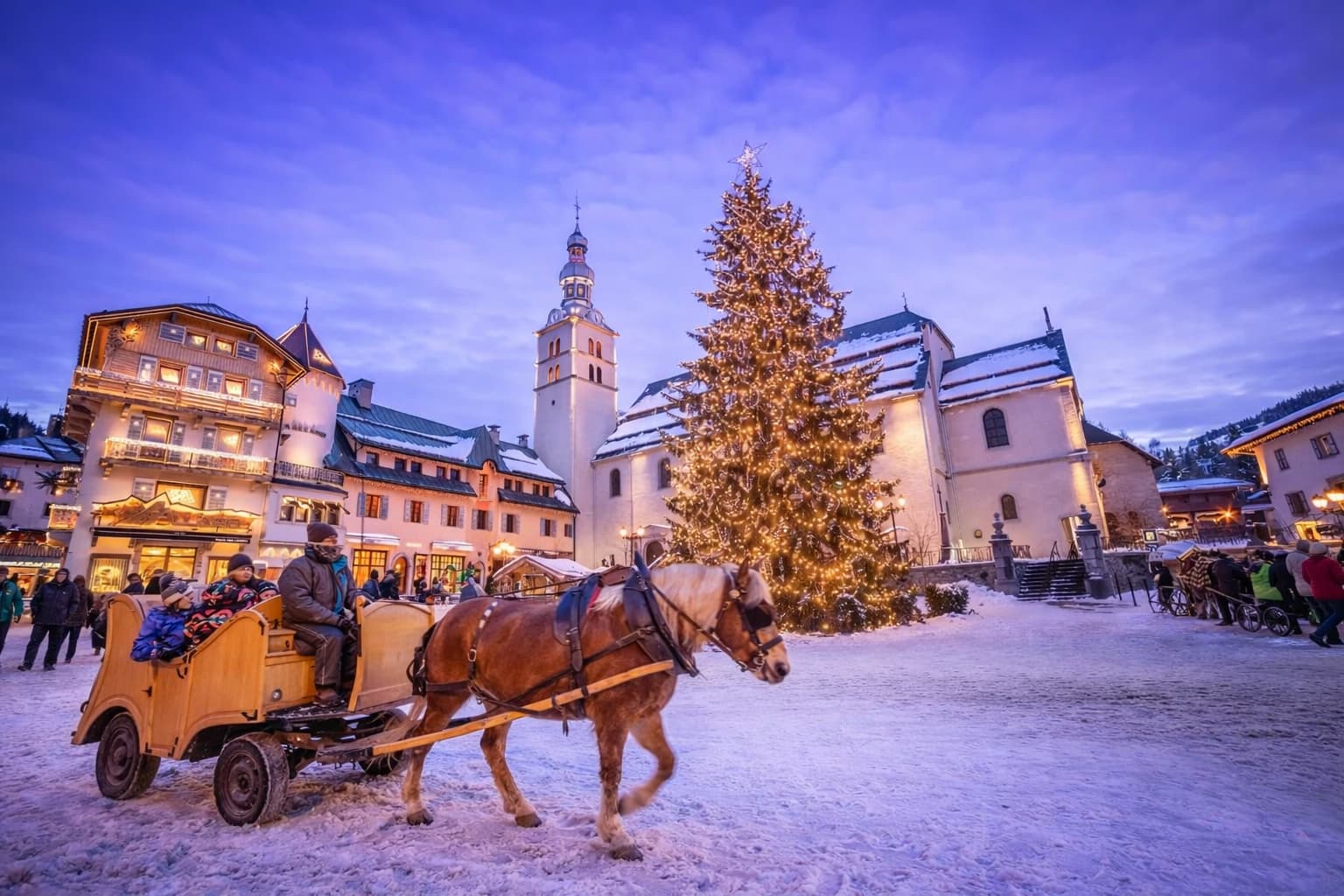
The off-mountain activities that work best for children aged 5–12 include swimming pools with slides and wave pools (most major resorts have them — La Plagne's swimming centre is particularly well-known), ice skating rinks, tobogganing slopes, snow shoe walking with a guide, horse-drawn sleigh rides, and the occasional visit to a mountain wildlife centre or husky sledging experience. Balancing the week with 2-3 non-skiing activities keeps energy levels sustainable and adds variety to what would otherwise become a repetitive week.
| Resort | Family Profile | Ski School | Accommodation Proximity |
|---|---|---|---|
| Les Gets | Traditional village, all ages | ESF + international | Excellent walk to slopes |
| La Plagne (Centre/Villages) | Purpose-built, high altitude | ESF + international | Excellent from centre |
| La Rosière | High altitude, sunny, linked | ESF + international | Excellent village-based |
| Avoriaz | Car-free, family purpose-built | ESF + international | Excellent throughout |
| Valmorel | Traditional, Famille Plus | ESF + international | Very good village-based |
| Les Menuires | Value, 3 Vallées access | ESF + international | Good from central units |
Budget
Realistic Costs for a Family Ski Week in 2026
A family ski week in the French Alps for two adults and two children (aged 5–12) realistically costs €3,500–€7,500 all-in for a standard February half-term week, depending on resort choice, accommodation quality and ski school specification. The major line items are: accommodation (€1,200–€3,500 for a 2-bed apartment or family chalet), lift passes (€800–€1,200 for the family), ski school (€600–€1,400 depending on ESF vs international and group vs private), equipment rental (€200–€400), food and drink (€400–€800), travel (€400–€1,000 for flights and transfers from the UK).
The single largest cost variable is typically accommodation, and the single best way to reduce total holiday cost is to rent directly from a local owner or through the well-established specialist operators rather than through mainstream booking aggregators. Private owner-managed family apartments typically run 15–25% below the aggregator equivalent for identical inventory. For families with property ownership aspirations, this cost differential is one of the arguments for buying your own apartment in your preferred resort — the total ownership cost over 10 years of family ski weeks typically falls below the equivalent rental spend.
The hidden costs that first-time family ski buyers often underestimate are: airport parking or transfer costs (€150–€350), resort bus or taxi fares (€30–€80 per week), on-mountain lunch for four (€60–€100 per day, often €400+ across the week), evening family restaurant meals (€60–€100 per meal for four), and the miscellaneous extras (hot chocolates, crepes, small ski shop purchases, souvenirs). Budgeting €800–€1,200 in cash/card spending on top of the pre-booked items is realistic for a family of four across a standard week.
6 months
Book flights & accommodation
February half-term is the most competitive family week. Lock in flights and accommodation 4-6 months ahead to secure the best locations and prices.
6 weeks
Book ski school
Reserve ski school for your children's specific ages and skill levels. Request English-speaking instructors where available and consider 4-5 days rather than the full week.
4 weeks
Pre-book equipment
Online equipment rental aggregators offer 15-25% savings versus on-arrival rental. Book children's ski equipment including helmets and properly fitted boots.
Arrival day
Reset and settle
Use day 1 for travel recovery, apartment familiarisation, and non-ski activities. Don't attempt full-day skiing on arrival day with tired children.
Days 2–5
Peak ski week
Children are best placed to make learning progress in days 2-4 of the week. Combine morning ski school with afternoon variety to sustain energy.
Day 6+
Consolidation & memories
Late-week skiing consolidates progress made earlier. One rest morning at day 5 or 6 is often the right call to finish the week on high energy.
Buying In
The Case for Owning a Family Ski Property
For families who find themselves booking 2-3 family ski weeks per year for several years running, the arithmetic of owning rather than renting starts to look favourable. A family renting a 2-bed apartment in a mid-tier resort for 3 weeks per year is typically paying €3,000–€6,000 in annual rental costs, and those costs are rising with general inflation. Owning the equivalent apartment means a single upfront purchase (financed with a 3.4–4.3% non-resident mortgage), running costs of 1.5–2.5% of purchase price annually, and the ability to rent the property out during the weeks you don't use it to cover most or all of the running costs.
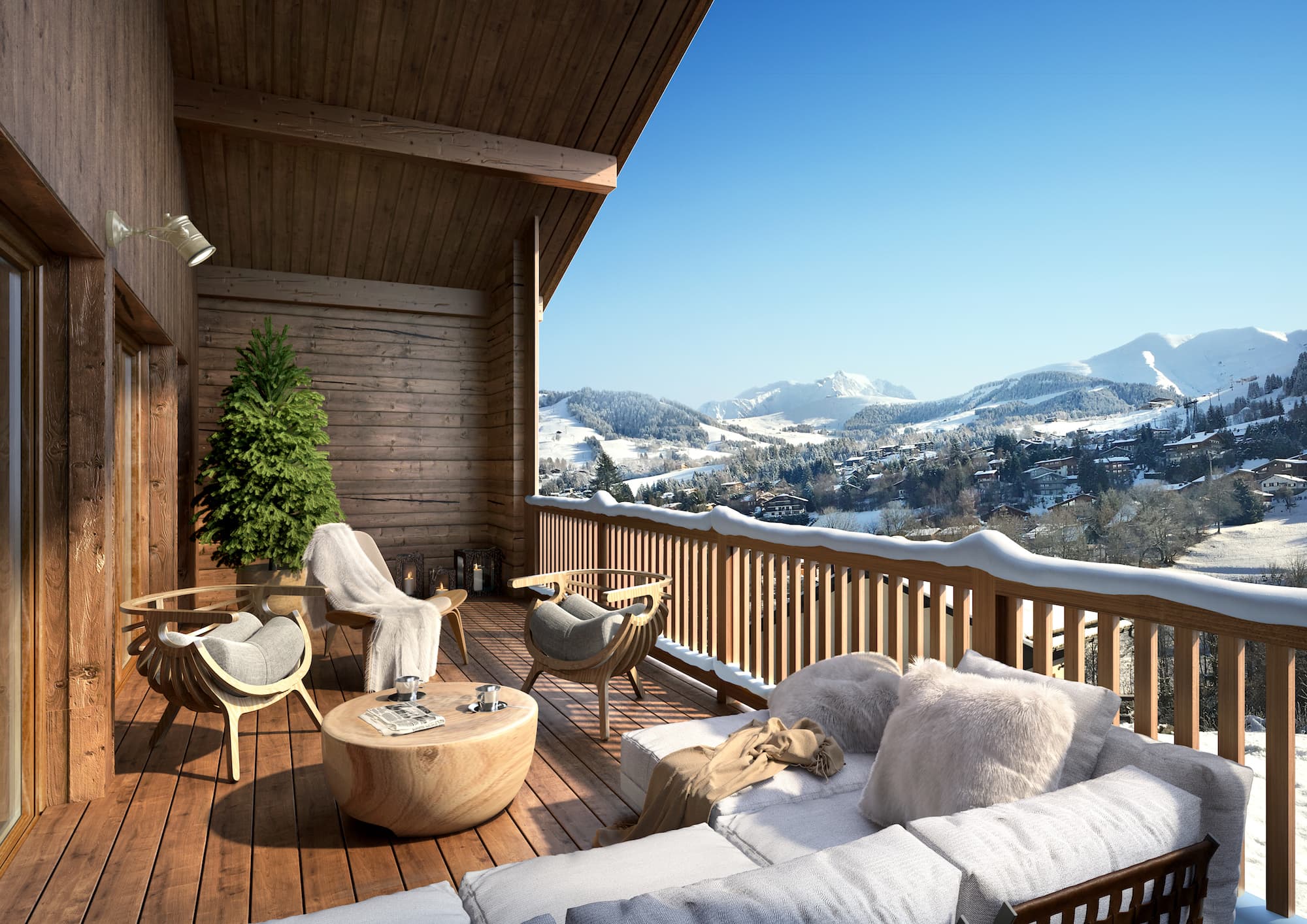
The specific advantage of ownership for families is the practical consistency of the holiday experience. Your own apartment stores your own children's ski equipment year-to-year, your own family-appropriate kitchen equipment, your own games and books for the evenings, your own preferred linens and towels — none of which the rental market can match. The 'arriving home' feeling matters enormously for the youngest children and for parents managing the logistical load of a family ski week. The new-build ski apartments page shows current family-friendly VEFA inventory, and the buying process guide walks through the mechanics.
The 20% VAT reclaim on VEFA new-build in classified rental is particularly well-suited to the family ownership case. Families typically use their property for 3-4 weeks per year (Christmas/New Year, February half-term, March week, a summer week), which leaves 48 weeks per year of potential rental income under the classified programme. The mathematical case for owning versus renting becomes genuinely attractive at this usage level — the 20% VAT reclaim, LMNP/BIC tax efficiency, and rental income all combine to deliver ownership at an effective cost often below the pure-rental alternative over a 10-year horizon.
The Verdict
How to Actually Plan a Great Family Ski Week
The practical planning sequence for a great family ski week is: book flights and accommodation 4-6 months ahead for February half-term (or 2-3 months ahead for other weeks), book ski school 4-6 weeks ahead, pre-book equipment rental for 15-25% savings, pack clothing with emphasis on warmth and waterproofing, plan arrival-day activities that don't require ski-readiness (so you can sleep off travel), plan day 1 as a reset day rather than expecting full-speed skiing, build in 2-3 off-mountain activities across the week, plan afternoons for rest rather than forcing double ski sessions, and allow buffer time for everything because everything takes longer with children.
The most important psychological preparation for parents is this: the first family ski week will be tiring, logistically complex, and probably imperfect — and that's fine. The goal is not to produce elite skiers in one week; the goal is to create a positive first experience that makes children want to come back next year. Children who had fun will ask to return; children who were pushed too hard will resist the second trip. Optimising for fun and memory rather than ski progression is the correct principle for the 5-12 age range, and it leads to the better long-run outcome on both the learning curve and the family memory bank. The Domosno team has supported two decades of family buyers through this exact planning process and can help with specific resort and accommodation recommendations for your own family profile.
FAQs
Frequently Asked Questions
What's the best age to introduce children to skiing?
Most children are ready for their first ski lessons around age 4-5, though some resort ski schools accept children from age 3 in dedicated mini-ski programs (typically non-lift-served and focused on play rather than structured learning). Ages 5-8 are the peak learning years where children typically progress very quickly and develop proper technique that stays with them for life. Older children aged 9-12 can still learn effectively but may be more self-conscious and progress slightly slower.
How much should I budget for a family ski week?
A realistic budget for a family of four (two adults, two children aged 5-12) for a standard February half-term week in a mid-tier French Alps resort is €3,500–€7,500 all-in. Main line items: accommodation €1,200–€3,500, lift passes €800–€1,200, ski school €600–€1,400, equipment rental €200–€400, food and drink €400–€800, travel from UK €400–€1,000. Ultra-budget is possible at around €3,000 by choosing value resorts, and premium weeks can climb past €10,000.
ESF or international ski school — which is better for my child?
For English-speaking children at the early learning stage, international schools (New Generation, Oxygène, Evolution 2) typically offer smaller group sizes (6-8 vs 10-12 at ESF), all-English instruction, and faster progression — though at 30-50% higher cost than ESF. For more confident children or those with some prior experience, ESF group lessons at lower cost typically work fine. Mixing 2-3 days of group with 1-2 days of private tuition is another common approach.
Which French Alps resorts are best for families with young children?
The strongest family resorts for children aged 5-12 are Les Gets, La Plagne (Centre and Villages sectors), La Rosière, Avoriaz (car-free purpose-built), Valmorel and Les Menuires. The key criterion is that the beginner zones should be walkable from central accommodation — driving 15 minutes to ski school with tired children in ski boots is the fastest way to undermine a family week. Famille Plus Montagne classification is a reliable quality indicator.
What clothing and equipment do children really need?
The non-negotiable kit list: thermal base layers (top and bottom), waterproof mid-layer, properly insulated ski jacket and salopettes, waterproof ski gloves (mittens for under-8s), ski socks (not regular socks), sunscreen, lip balm with UV, goggles rated for the conditions, and a properly fitted helmet. Cold, wet children become unhappy children very quickly — do not economise on warmth and waterproofing. Decathlon's Wed'ze range offers good value; Ellis Brigham carries premium alternatives.
How many days of ski school should I book?
For a standard Saturday-to-Saturday week, 4-5 days of ski school rather than the full 6 is typically the optimal choice. Day 1 is usually a travel recovery day with limited skiing. Days 2-5 are peak learning days. Day 6 often benefits from rest or consolidation. Booking all 6 days available typically means fatigued children by day 4 and diminishing returns on the remaining lessons. Resort ski schools will usually allow you to skip specific days with advance notice.
What should we do on rest days or in the afternoons?
Typical non-skiing family activities in French Alps resorts include swimming pools with slides (La Plagne's is famous), ice skating rinks, tobogganing slopes, snowshoe walks with guides, horse-drawn sleigh rides, husky sledging experiences, and mountain wildlife or ecology centres. Balancing the week with 2-3 non-skiing activities genuinely improves the total experience versus forcing full-day skiing every day, particularly for children aged 5-8 whose energy reserves are limited.
When should we book a family ski week?
For February half-term (the most competitive UK family ski week), book flights and accommodation 4-6 months ahead. For January or March weeks, 2-3 months ahead is typically sufficient. Ski school should be reserved 4-6 weeks ahead of the holiday, particularly if requesting English-speaking instructors or specific group preferences. Equipment rental pre-booking 4 weeks ahead delivers 15-25% savings versus on-arrival rental rates.