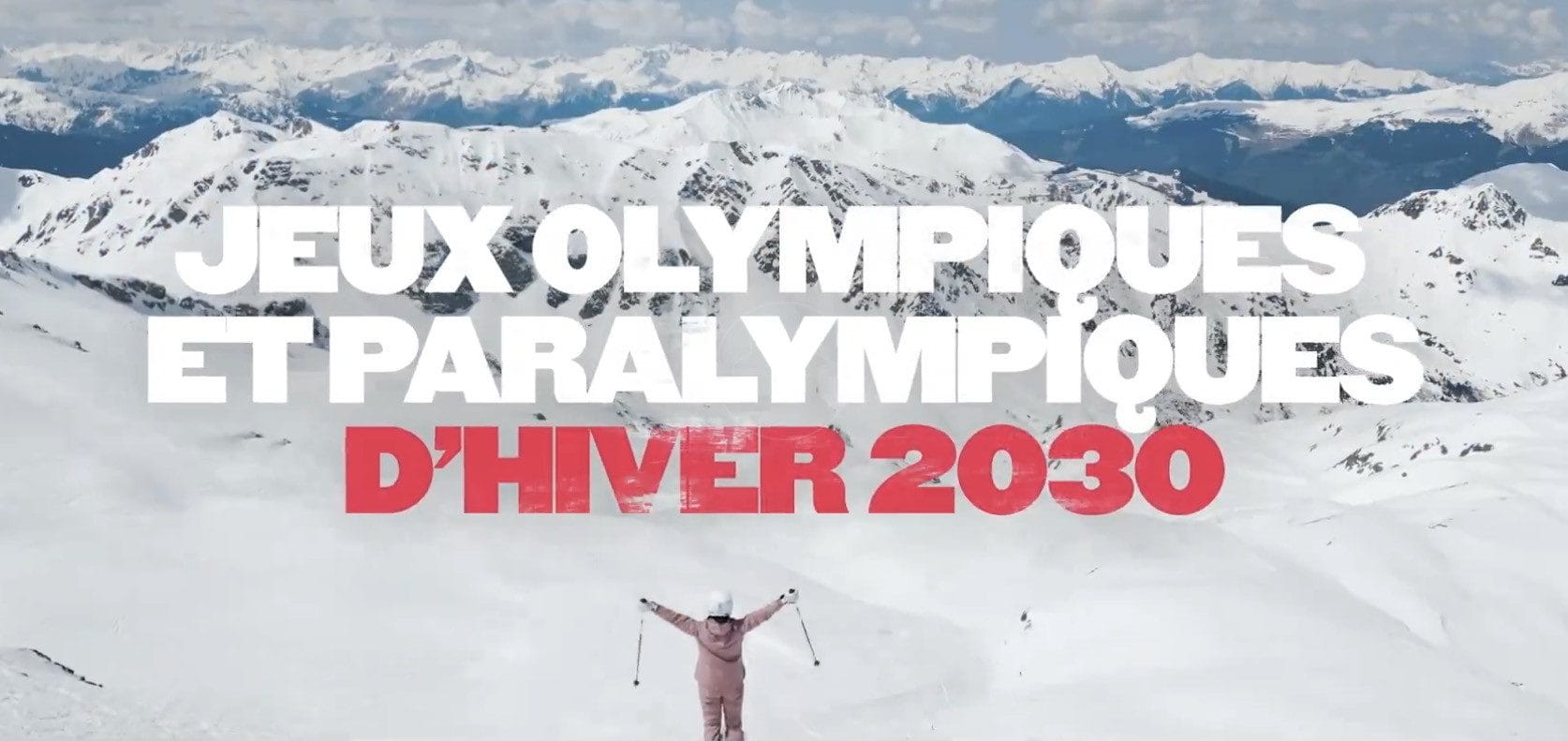
The French Alps will host the 2030 Olympic Winter Games from 1 to 17 February 2030, marking the fourth time France has staged the Winter Olympics after Chamonix (1924), Grenoble (1968) and Albertville (1992). The IOC awarded the Games to France at the 2024 session in Paris, and the Organising Committee has spent the first two years building out a venue plan that leans deliberately on existing infrastructure rather than new construction — 95% of the competition venues are already built, and the only brand-new facility required is an ice arena in Nice. For property buyers, this changes the calculus of French Alpine ownership in two important ways: it locks in a half-decade of accelerated infrastructure spending across Savoie, Haute-Savoie and the Hautes-Alpes, and it puts the international spotlight on specific resorts in a way that has historically translated into meaningful long-term price appreciation.
The venue plan splits the Games across four clusters — Haute-Savoie, Savoie, Briançon (Hautes-Alpes) and Nice — with a supporting speed skating venue in Turin. Five Olympic Villages will be constructed or renovated in Saint-Jean-de-Sixt (for La Clusaz and Le Grand-Bornand), Bozel (for Courchevel and Méribel alpine events), La Plagne (for sliding sports), Briançon (for freestyle and snowboard) and Nice (for ice sports and the closing ceremony). Each of these is a working Alpine town with an existing property market, and each will experience meaningful infrastructure investment over the next four years. For buyers considering a purchase in any of the directly-affected resorts, the 2030 Games calendar creates a specific, time-bound window in which to position.
This guide explains what we know now, which resorts are most directly affected, how the Games historically have influenced ski property values, and — crucially — how to think about buying now versus waiting. We'll draw on the 2026 market data we've gathered across Savoie ski properties and Haute-Savoie ski properties, and we'll flag the specific investments confirmed by the Organising Committee rather than speculative projects. The Olympic Games are neither a guaranteed windfall for local property owners nor a marketing gimmick: they are a concrete, funded programme of works that will quietly reshape the Alps over the remainder of this decade.
The Venue Plan
Four Alpine Clusters Plus Nice: How the Games Are Distributed
The 2030 Winter Olympics venue plan is unusual by modern standards in its reliance on existing facilities. The competition footprint is spread across four Alpine clusters and Nice, with each cluster hosting a distinct family of sports. In Haute-Savoie, La Clusaz will host cross-country skiing at the Confins Nordic stadium — itself upgraded from the 2023 World Cup installation — while Le Grand-Bornand stages biathlon at the Sylvie Becaert stadium that already hosts an annual IBU World Cup round. Both resorts are within 45km of Annecy and already absorb major international events without structural disruption.
The Savoie cluster is the largest and most visible to global audiences. Courchevel will host alpine skiing on its L'Éclipse and Éclipse piste layouts, Méribel will stage women's alpine events, La Plagne will host all the sliding sports on its existing 1992 Olympic bobsleigh track (renovated for the Games), and Val d'Isère features in discussions for some speed events. Ski jumping returns to Courchevel's historic K-125 hill — the original 1992 Albertville jump — reviving one of the best-engineered ski jumping complexes in Europe. For property buyers, the Savoie cluster concentrates the most prestigious addresses and the most established international markets in the French Alps.
The Briançon cluster — based around the Hautes-Alpes town of Briançon and the Serre Chevalier ski area — brings freestyle and snowboard events into the southern Alps for the first time. This is the least familiar cluster for international buyers, but the property values here sit at meaningful discounts to the Savoie resorts (roughly 40-55% lower per m² at equivalent specification), and the Games are likely to attract first-time international attention to Serre Chevalier and the Écrins National Park beyond. Finally, Nice anchors the ice sports (short track, figure skating, hockey, curling) and will host the closing ceremony on the Promenade des Anglais — a deliberate choice to connect the Alpine Games to France's Mediterranean coast.
95%
Share of 2030 Winter Olympics venues using existing facilities, per IOC Agenda 2020+5 sustainability requirements
5
Olympic Villages distributed across Saint-Jean-de-Sixt, Bozel, La Plagne, Briançon and Nice
~€2bn
Estimated public infrastructure budget for the French Alps 2030 Games, excluding private venue investment
Feb 1-17
Competition dates for the 2030 Winter Olympics, with opening at a Savoie venue and closing on the Promenade des Anglais in Nice
Olympic Villages
The Five Olympic Villages: Saint-Jean-de-Sixt, Bozel, La Plagne, Briançon, Nice
Five Olympic Villages will house the ~2,900 athletes and accompanying team personnel. Unusually, these are distributed across the clusters rather than centralised, reducing transport times for competitors. Saint-Jean-de-Sixt in Haute-Savoie will serve the La Clusaz and Le Grand-Bornand athletes; Bozel (the valley town below Courchevel and Méribel) will house the alpine skiing and ski jumping athletes; La Plagne will host the sliding-sport athletes in a village built adjacent to the bobsleigh track; Briançon will handle the freestyle and snowboard contingent; and Nice will accommodate the ice-sports athletes close to the competition venues.
The property-market implication of the Olympic Village locations is significant. Bozel in particular is worth watching carefully: it is the valley town below Courchevel 1850, currently priced at a substantial discount to the higher-altitude resort addresses, and the Olympic Village investment will leave behind materially upgraded infrastructure and transport links. Historically, valley Olympic Village locations have seen meaningful post-Games price appreciation as the new housing stock is converted to permanent residential use and the transport legacy benefits the broader area. Courchevel and Méribel themselves may see less direct impact — they are already established top-tier markets — but Bozel's trajectory through 2030 is worth tracking for value-oriented buyers.
The La Plagne village is a more conventional high-altitude build, and the post-Games conversion will add housing stock to an already large resort. The Briançon and Saint-Jean-de-Sixt villages similarly leave behind substantial residential legacies. In each case, the immediate effect on local rental markets will be strongly positive through 2030 — demand for athlete-staff accommodation, media centres and support services creates a temporary boom — but the longer-term impact depends on how the Village housing is absorbed into the private market after the Games. For buyers, the opportunity is to position now in the directly-affected resorts before pricing catches up to the confirmed investment programme.
Central Village Property Prices (2025-26 €/m²) — Directly-Affected Olympic Resorts
Briançon
Bozel (Courchevel valley)
Serre Chevalier
La Plagne central
La Clusaz / Grand-Bornand
Courchevel 1850
Market Impact
How Olympic Hosting Has Historically Moved Ski Property Values
The historical record on Olympic hosting and property prices is not a simple upward arrow — the dynamics are nuanced and depend heavily on pre-Games market conditions. Vancouver 2010 saw Whistler prices appreciate roughly 15-25% in the three years surrounding the Games, followed by a normalisation period. PyeongChang 2018's effect was muted by the resort's remoteness and the limited international buyer base. Albertville 1992 — the most directly relevant precedent for the 2030 Games — drove a sustained re-rating of Les Trois Vallées resorts through the 1990s, though the effect was entangled with broader French Alpine growth during the period.
Where Olympic hosting has consistently moved markets is in the years immediately leading up to the Games. Infrastructure spending front-loads into the 2027-2029 window, road and rail upgrades improve year-round accessibility, and international buyer awareness typically peaks around 12-18 months before the opening ceremony. For the French Alps 2030 programme, this suggests the 2026-2028 window is the practical entry point for buyers wanting to position ahead of the peak attention cycle. By mid-2029, prices in the directly-affected resorts are likely to be significantly higher than 2026 levels.
It's worth noting that the 'Olympic effect' is concentrated in the resorts that actually host competition venues and Olympic Villages. The broader French Alps benefit from indirect attention and general infrastructure improvements (notably the Lyon-Turin rail freight corridor, which runs parallel to the main Alpine rail routes), but the measurable price impact historically has been tightly focused on the specific host towns. Buyers considering a purchase in, say, Tignes or Val Thorens for 2030 attention are likely to see modest benefit; buyers targeting La Plagne, Courchevel, Méribel, La Clusaz, Le Grand-Bornand, Bozel or the Serre Chevalier area are positioning in the directly-affected markets.
“The 2030 Games don't guarantee price appreciation everywhere in the Alps — but in the seven resorts with confirmed venues or Olympic Villages, the next four years look structurally different from the last ten.”
Infrastructure
The €2bn+ Programme: Roads, Rail, Lifts and Ice Arenas
The Games infrastructure budget runs to approximately €2 billion across venue preparation, transport upgrades and Olympic Village construction, with private investment expected to add a meaningful additional layer. The specific work programmes with confirmed funding as of early 2026 include: the Bozel valley road upgrade (addressing the Courchevel access bottleneck), the Lyon-Turin rail corridor connection improvements, the La Plagne bobsleigh track renovation, the Courchevel K-125 ski jump modernisation, the Méribel and Val d'Isère run-preparation works for the alpine events, and the Nice ice arena — the only entirely new venue in the Games plan.
Transport upgrades are the element most likely to benefit broader property markets in the decade after the Games. The Bozel road improvements will permanently improve Courchevel/Méribel access for non-Games users, the Lyon-Turin corridor work has knock-on effects for the entire Tarentaise and Maurienne valleys, and the upgraded air access to Chambéry and Grenoble (both confirmed to handle additional Games traffic) will raise year-round transfer convenience. For buyers, improved transport economics translate directly into improved rental economics: any factor that shortens journeys from London or Geneva raises the yield floor on properties in the affected zones.
Lift upgrades are not directly part of the Games budget but are increasingly concentrated in the host resorts as operators seek to showcase their facilities for 2030. La Plagne has confirmed several lift modernisation projects for delivery before the Games; Courchevel is continuing its programme of lift replacements; and La Clusaz has accelerated the renewal of its Confins-area infrastructure. Serre Chevalier's network — historically under-invested relative to its size and terrain — is seeing meaningful upgrade announcements, driven partly by the Games attention and partly by the wider shift towards high-capacity, wind-resistant lift technology seen in the Jandri 3S at Les Deux Alpes and similar recent projects.
| Cluster | Main Events | Olympic Village | Property Price Range (€/m²) |
|---|---|---|---|
| Savoie — Courchevel/Méribel | Alpine skiing, ski jumping | Bozel | €14,000-25,000 (resort) / €4,500-7,000 (Bozel) |
| Savoie — La Plagne | Bobsleigh, luge, skeleton | La Plagne | €5,500-9,000 |
| Haute-Savoie — La Clusaz | Cross-country skiing | Saint-Jean-de-Sixt | €6,000-9,500 |
| Haute-Savoie — Le Grand-Bornand | Biathlon | Saint-Jean-de-Sixt | €6,000-9,500 |
| Briançon / Serre Chevalier | Freestyle, snowboard | Briançon | €3,500-7,500 |
| Nice (coastal) | Ice sports, closing ceremony | Nice | €5,500-12,000 |
Buyer Strategy
Where to Buy: Seven Resorts Directly Affected by the Games
Seven resorts and locations have direct competition venues or Olympic Villages and therefore represent the focused opportunity set for buyers wanting to align with the 2030 narrative: Courchevel, Méribel, La Plagne, La Clusaz, Le Grand-Bornand, Briançon/Serre Chevalier, and Bozel. Of these, Courchevel and Méribel are already expensive — central Courchevel 1850 trades at €15,000-25,000+/m² and central Méribel at €14,000-20,000/m² — and are unlikely to offer the best risk-adjusted Olympic positioning. The established ultra-prime resorts already price in most international attention; the marginal buyer looking for Olympic-driven value should focus further down the price scale.
Bozel, La Plagne, La Clusaz and Le Grand-Bornand are more interesting. Bozel apartments trade in the €4,500-7,000/m² range — a dramatic discount to Courchevel — and the combination of direct Olympic Village investment, road upgrades and the post-Games housing legacy could drive meaningful appreciation. La Plagne has a large existing market at €5,500-9,000/m² depending on sector, and the sliding-sport venue plus village construction puts the resort directly in the Games spotlight. La Clusaz and Le Grand-Bornand both trade at €6,000-9,500/m² in central village positions and benefit from their status as the Haute-Savoie Nordic hub with existing international recognition.
Briançon and Serre Chevalier remain the most speculative Olympic play and arguably the highest-upside option for buyers willing to commit to a less-familiar area. Central Briançon trades at €3,500-5,500/m², Serre Chevalier at €4,500-7,500/m² — a fraction of Savoie prices for equivalent skiing. The Games attention, combined with Serre Chevalier's genuinely large ski area (250km) and year-round appeal, creates the clearest asymmetric opportunity in the 2030 set. It will not become Courchevel, but even modest re-rating from these levels would produce substantial percentage returns. Our buying process guide covers the mechanics of committing in any of these markets.
2024
IOC awards Games to France
The IOC session in Paris confirms French Alps 2030 as the host, initiating the official Organising Committee work programme.
2025
Venue plan finalised
The Organising Committee confirms the four-cluster venue plan with Nice as the ice-sports and closing-ceremony anchor.
2026-2027
Olympic Village construction begins
Works break ground on the Saint-Jean-de-Sixt, Bozel, La Plagne, Briançon and Nice Olympic Villages alongside core transport upgrades.
2028
Lift and venue modernisations
Major lift replacements, piste preparation works and the Nice ice arena delivery programme accelerate in the lead-up to the Games.
Feb 2030
Games held
The 2030 Winter Olympic and Paralympic Games run 1-17 February, covering alpine, Nordic, sliding, freestyle, snowboard and ice sports.
Post-2030
Village conversion
Olympic Village housing enters the private market in each host location, with the post-Games normalisation typically reshaping local price gradients for 3-5 years.
Timing
When to Buy: The 2026-2028 Window and Post-Games Normalisation
The practical buyer question is not whether the 2030 Games will affect Alpine property values — they almost certainly will — but when to act. Historical data from previous Winter Games suggests that the bulk of the price adjustment happens in the three years leading up to the opening ceremony, with diminishing returns for later entrants. For the French Alps 2030, this points to the 2026-2028 window as the best balance of pre-Games price levels and visibility into confirmed infrastructure delivery. By 2028-2029, the international buyer interest peaks and pricing typically catches up to the confirmed programme of works.
Within the 2026-2028 window, the clearest signal to buyers is confirmation of specific investment milestones: Olympic Village construction starts, major road upgrades breaking ground, lift replacement orders being placed. Each of these events shifts the balance of certainty and typically produces step-functions in local pricing. Buyers who move early in the window pay less but accept more execution risk (the small possibility of venue reassignments or delays); buyers who move late pay more but benefit from fully-confirmed plans. For most international buyers, a middle-of-the-window purchase in late 2026 or 2027 captures most of the benefit with manageable risk.
The post-Games question is equally important. Olympic hosts typically see a moderate correction in the 12-24 months after the Games, as the artificial demand from hosting ends, before reverting to their longer-term growth trajectory. This does not mean values fall back to pre-Games levels — the infrastructure legacy, international recognition and improved accessibility all persist — but the rate of appreciation typically normalises. Buyers holding through the Games into the 2030s should plan on the full ownership cycle rather than a short-term flip, and should factor the typical 10-year French Alpine ownership costs (notary fees, property tax, management) into their projections.
Sustainability
Why the 2030 Plan is Different: IOC Agenda 2020+5 and the Sustainability Pivot
The French Alps 2030 Games are the first Winter Olympics designed from the ground up around the IOC's Olympic Agenda 2020+5 sustainability framework. Under the new rules, host candidates must demonstrate use of existing venues, minimise new construction, and embed climate-adaptation measures into the Games plan. For the French bid, this manifested as the 95%-existing-venues figure, the distributed Olympic Village plan (reducing the need for a single mega-complex), and the explicit commitment to avoid construction at altitudes where climate risk is highest. The only new competition venue — the Nice ice arena — is a permanent public facility that will serve the city beyond the Games.
From a property-buyer perspective, the sustainability pivot has two material implications. First, the absence of a mega-village concentration means the post-Games housing legacy is distributed across five smaller locations rather than creating a single potential oversupply. Second, the emphasis on climate adaptation — snowmaking, water management, altitude-sensitive venue selection — means the Games implicitly endorse and fund climate-adaptation investment in the host resorts, which has secondary benefits for the long-term viability of those resorts as ski destinations. Buyers whose 10-20 year ownership horizon depends on continued ski operations benefit materially from this alignment.
The Games also set a precedent for how French Alpine resorts present themselves internationally. The 2030 marketing will emphasise authenticity, traditional villages, year-round usage and environmental responsibility — exactly the values that have been driving prime Alpine property demand for the past decade. For buyers already oriented towards those qualities, the 2030 cycle will reinforce and amplify existing market trends rather than introduce new ones. If anything, it validates the strategic case for buying in working Alpine villages rather than purpose-built high-altitude stations, and for prioritising year-round usage over winter-only resort properties.
FAQs
Frequently Asked Questions
Which French Alps resorts will host 2030 Winter Olympics events?
Courchevel and Méribel (alpine skiing, ski jumping), La Plagne (sliding sports on the renovated 1992 bobsleigh track), La Clusaz (cross-country skiing), Le Grand-Bornand (biathlon), and Briançon/Serre Chevalier (freestyle, snowboard). Nice hosts the ice sports and the closing ceremony, with an assist from Turin for speed skating. Five Olympic Villages serve the competitors across these clusters.
Will the 2030 Olympics actually increase property values?
History suggests yes in the directly-hosting resorts, most strongly in the 2-3 years before the Games. The effect is driven less by the Games themselves and more by the confirmed infrastructure spending (roads, rail, lift upgrades, Olympic Villages) that front-loads into the pre-Games window. Resorts without direct venues benefit only marginally. Bozel, La Plagne, La Clusaz, Le Grand-Bornand, Briançon and Serre Chevalier are the clearest opportunities.
Which is the best-value Olympic buy right now?
Briançon and Serre Chevalier offer the largest asymmetric upside — pricing at 40-55% discounts to Savoie equivalents for comparable ski terrain, with the 2030 freestyle and snowboard events bringing international attention for the first time. Bozel in the Courchevel valley is the other strong value play, benefiting from direct Olympic Village investment and the post-Games road upgrade programme.
Will the Olympic Villages be sold to the public after the Games?
Yes — each of the five Olympic Villages is planned as a permanent residential legacy, with the post-Games conversion absorbing the athlete accommodation into the private market. This typically takes 12-24 months after the closing ceremony and adds a slug of new stock to each location, producing a brief supply overhang before values resume their longer-term trajectory.
Is La Plagne's old 1992 bobsleigh track being reused?
Yes — the existing La Plagne track from the 1992 Albertville Games is being renovated to host the 2030 sliding sports (luge, skeleton, bobsleigh), making it one of the very few venues to host sliding sports at two different Olympic Games. The renovation programme is one of the headline infrastructure items in the 2030 plan and reflects the sustainability emphasis on reusing existing facilities.
How much new construction is the 2030 Games requiring?
Very little by historical standards. The only entirely new competition venue is the Nice ice arena, which is a permanent public facility planned independently of the Games. Everything else — alpine pistes, ski jumps, bobsleigh, biathlon stadium, Nordic courses — uses existing infrastructure, reflecting the IOC Agenda 2020+5 sustainability requirements. The Olympic Villages are the main new-build element.
Should I buy now or wait for confirmed Games impact?
The textbook answer is buy early if you're a long-term holder and can absorb execution risk, buy middle-of-window if you want confirmed plans but still some pricing headroom. 2026-2028 is the practical window for most international buyers; by late 2028 pricing in the host resorts is likely to reflect most of the Games expectation. Post-Games purchases can also work for buyers willing to buy into the normalisation phase.
Which Games-related infrastructure will help year-round use after 2030?
The Bozel valley road upgrade (permanent access improvement for Courchevel/Méribel), Lyon-Turin rail corridor enhancements, Chambéry airport capacity improvements, and resort lift modernisations. Each of these is funded in the Games programme but delivers ongoing benefit to year-round users well beyond February 2030. For buyers, the legacy infrastructure is arguably the most durable source of post-Games value.